
Review · WAR HISTORY & SIEGE TOURS
Sarajevo: A City Under Siege – War Tour With Tunnel Museum
Sarajevo still carries its wartime story in plain sight. I like the way this 3 to 4 hour tour links the Tunnel of Hope, Sniper Alley, the Jewish Cemetery, and the Olympic bobsleigh track, giving you both personal stories and physical places to consider. I also like that an English-speaking guide handles the driving between scattered sites, though the €10.50 tunnel entrance fee comes extra.
This is a serious, sometimes painful experience, not a light sightseeing ride. Guides such as Edis and Elvis have been praised for clear explanations, warmth, and insight into modern Sarajevo, but you should allow time to process what you see. The tour suits you best if you want context rather than a quick photo stop.
In This Review
- Key points to know before booking
- Why this Sarajevo war tour is worth your time
- Starting at House of Spite and riding into the hills
- The Tunnel of Hope: one hour at Sarajevo’s wartime lifeline
- Sniper Alley: seeing a familiar road differently
- The Jewish Cemetery: a historic site with a wartime role
- The Olympic bobsleigh track: celebration interrupted by war
- Yellow Fortress: a short pause with a wide view
- The guide can make the difference
- Is $40.81 good value?
- What to know about timing, comfort, and tone
- Who should book this Sarajevo experience?
- Should you book the Sarajevo War Tour?
- FAQ
- How long does the Sarajevo war tour last?
- What time does the tour begin?
- Where does the tour start?
- Where does the tour end?
- Is the Tunnel Museum entrance included?
- What is included in the tour price?
- Is the tour offered in English?
- How large is the tour group?
- Can I cancel for a full refund?
Key points to know before booking
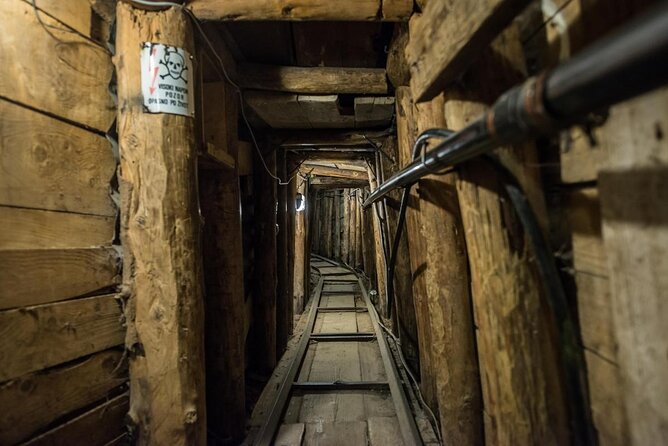
- The Tunnel of Hope anchors the tour: You pay €10.50 separately to enter Sarajevo’s best-known wartime site.
- The route connects five very different places: You visit the tunnel, Sniper Alley, Jewish Cemetery, Olympic bobsleigh track, and Yellow Fortress.
- Your guide matters greatly: Edis and Elvis have been praised for strong communication, useful explanations, and a human view of present-day Sarajevo.
- The Olympic track adds an unexpected contrast: Abandoned after the 1984 Winter Olympics and later located near the frontline, it shows how war can overtake places built for celebration.
- The tour stays small: A maximum of 15 people makes questions and conversation easier than on a large coach outing.
- The price is reasonable for the coverage: At $40.81 per person, you get transport, bottled water, and guiding, but not the tunnel admission or tips.
Why this Sarajevo war tour is worth your time
Sarajevo’s siege is not an abstract chapter that sits safely in a museum. The city’s hills, roads, cemeteries, and sports facilities all formed part of the wartime story. This tour helps you connect those locations instead of seeing them as isolated points on a map.
I value the route because it does not focus on only one memorial. You move from a practical supply tunnel to a road known for sniper fire, then to a Jewish cemetery used as a sniper position, an Olympic venue left near the front line, and a hilltop viewpoint above the city. Each stop changes the angle of the story.
You also get the benefit of a guide who can explain what you are seeing. The strongest praise has gone to guides Edis and Elvis, who were described as clear, friendly, and able to connect the war years with life in present-day Sarajevo. That last point matters. A tour about war can become frozen in the past, but Sarajevo is a living city, and the best guiding helps you understand both periods.
The subject matter is heavy. I would not choose this as your only activity in Sarajevo, especially if you prefer cheerful sightseeing. But for many people, it gives needed meaning to the city’s streets and hills.
More City Tours in Sarajevo
- ROSES OF SARAJEVO (Official WAR + CITY tour)- Story of a Survivor
★ 5.0 · 770 reviews - Sarajevo: Guided City Highlights Tour with Sarajevo Tunnel
★ 4.8 · 79 reviews - Sarajevo: Sarajevo City Market, Old Town Food Tasting Tour
★ 4.9 · 69 reviews
Starting at House of Spite and riding into the hills
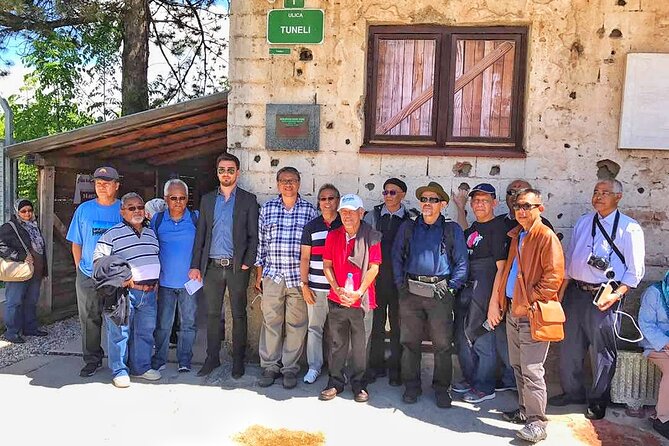
The tour starts at House of Spite, Veliki Alifakovac 1, at noon. It returns to the same meeting point, which makes planning simple if you are staying near central Sarajevo or using public transportation.
You ride in an air-conditioned vehicle, and bottled water is included. That practical detail matters because the route covers several areas, including the higher slopes around Trebević. You avoid the effort of arranging separate transport to places that are not all convenient to reach on foot.
The group can include up to 15 people. That is not a private tour, but it is still small enough for a guide to answer questions without turning every stop into a crowd-control exercise. The mobile ticket is convenient, and confirmation is provided at booking.
The stated duration is about three to four hours. Timing can vary slightly by traffic, the pace of the group, and the amount of discussion at each stop. I would keep the rest of your afternoon flexible.
The Tunnel of Hope: one hour at Sarajevo’s wartime lifeline
The Sarajevo War Tunnel, also called the Tunnel of Hope, is the central stop. You spend about an hour here, and the entrance fee of €10.50 per person is not included in the tour price.
The tunnel tells the story of resistance and survival during Sarajevo’s long siege. It was used to move supplies and maintain a link with the outside world when ordinary routes were blocked. Even without adding unnecessary drama, the purpose of the place is easy to grasp: a narrow passage became a lifeline for a city under attack.
The value of visiting with a guide is clear here. A short underground passage can be hard to understand on its own. Your guide gives the physical space a human scale and explains why the tunnel mattered.
You should expect the museum visit to be emotionally demanding. The tour description does not promise a large museum complex or a long indoor program, so think of this stop as a focused experience rather than a full day in a museum. The separate admission cost is modest compared with the overall tour, but remember to budget for it.
I would pay close attention to the explanations rather than treating the tunnel as a quick photograph. The site is famous, but its importance comes from what it represented to people trying to survive the siege.
Sniper Alley: seeing a familiar road differently
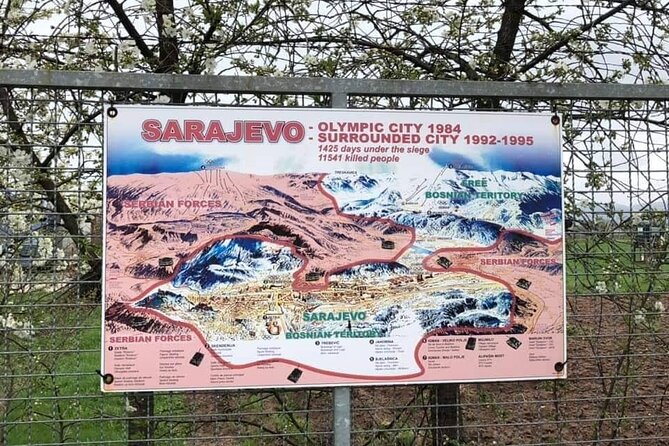
The next stop lasts about 30 minutes and is free to enter. Sniper Alley was one of the most dangerous areas to cross during the siege of Sarajevo.
A road can look ordinary until you know what happened there. This stop helps you think about movement through the city, the danger of crossing open areas, and the way familiar streets became part of wartime life. Your guide’s explanation is especially important because the meaning is not always obvious from a roadside view.
Do not expect a formal attraction with gates, displays, or an admission desk. Sniper Alley is valuable because it connects the conflict to the city itself. You are not looking at a sealed memorial removed from daily life. You are considering an urban route that people had to use.
The 30-minute stop should give you time for explanation and orientation without making the tour feel stalled. I would listen carefully here, since a good account of the place can make the rest of the route easier to understand.
Other tours covering the siege years and their sites:
- Fall of Yugoslavia, Sarajevo War Tour with Tunnel of Hope Museum and Frontlines
★ 5.0 · 1,314 reviews - Sarajevo: Tunnel Museum Yugoslavia War Tour with War Veteran
★ 5.0 · 1,111 reviews - Sarajevo: Tunnel of Hope Tour – Survival and Resilience
★ 4.8 · 630 reviews - Tunnel Museum: Bosnian & Yugoslav Wars Tour with War Veteran
★ 5.0 · 551 reviews
The Jewish Cemetery: a historic site with a wartime role
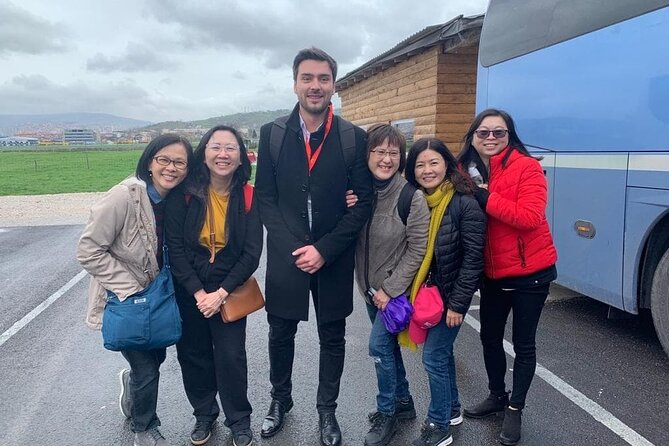
The Jewish Cemetery in Sarajevo receives about 30 minutes of the tour and has no separate admission fee. It is described as one of the oldest Jewish cemeteries in southeastern Europe, but during the Bosnian War it also served as a sniper nest.
That combination makes the stop particularly striking. The cemetery is not only a place connected with Sarajevo’s Jewish community and earlier centuries. It also became part of the military geography of the war.
I like this stop because it broadens the tour beyond the most familiar siege landmarks. You see how a place of remembrance could be drawn into the fighting. The guide’s role is to help you hold both facts together without reducing the cemetery to a battlefield location.
As with Sniper Alley, this is not presented as a conventional ticketed attraction. You are there for the setting and the explanation. Follow your guide’s directions and treat the site with the respect you would bring to any cemetery.
The Olympic bobsleigh track: celebration interrupted by war
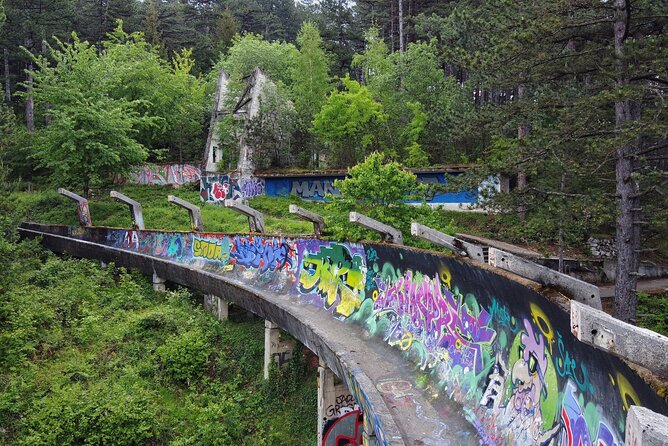
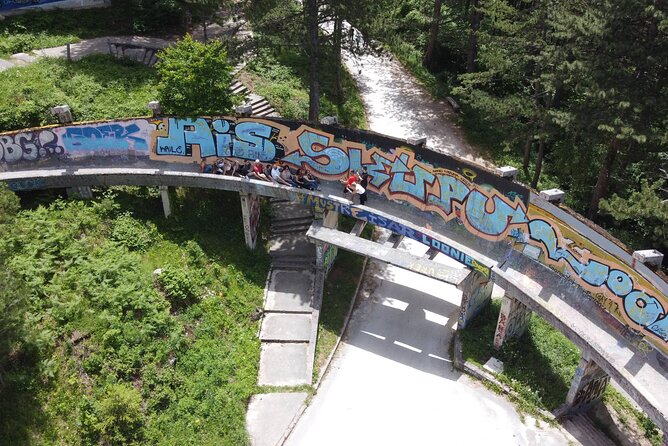
The Sarajevo Olympic bobsleigh and luge track gets about an hour, and admission is free. Built for the 1984 Winter Olympics, it is now one of the city’s best-known abandoned sights.
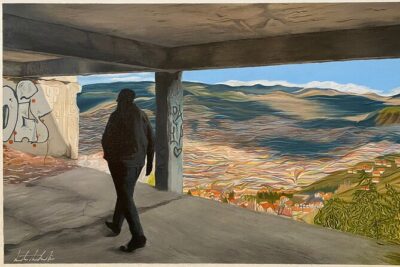
The track sits on Mount Trebević above the Old Town. During the war, it was located on the frontline. Today, it is known for its graffiti and weathered appearance, giving you a sharp contrast between Olympic optimism and wartime damage.
This may be the most visually unusual stop on the route. The tunnel explains survival through an enclosed passage. The bobsleigh track shows what happens when a place designed for international sport becomes part of a conflict zone. You can see why it has become a popular place to visit, even though its condition is a reminder of the damage left behind.
You spend about an hour here, which allows more time than a simple roadside pause. I would use that time to listen to the story behind the track rather than treating the graffiti as the whole attraction. The structure’s appeal comes from the collision of two very different chapters in Sarajevo’s recent past.
Because the site is abandoned, you should not expect the polished facilities of an active sports venue. The tour data does not provide details about surfaces, weather, or exact walking conditions, so practical caution is sensible.
Yellow Fortress: a short pause with a wide view
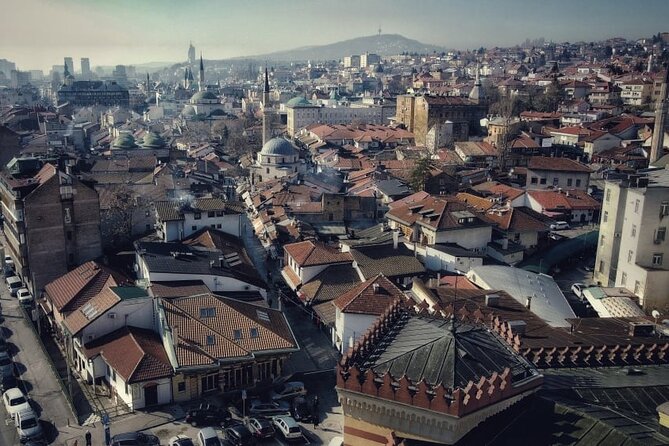
The final stop is the Yellow Fortress, located above Sarajevo City Hall. You spend about 15 minutes here, and there is no admission charge.
This is the tour’s most scenic pause. From the fortress, you get a broad view over the city and its surrounding hills. After several stops focused on danger, loss, and survival, the panorama gives you a chance to place the earlier sites within Sarajevo’s wider setting.
Fifteen minutes is brief, but that may be just right at the end of a serious tour. You can take photographs, look across the city, and hear a final explanation without adding another long visit to an already full afternoon.
I would not book this tour only for the view. Sarajevo has other places where you can enjoy a panorama at a slower pace. Here, the Yellow Fortress works best as a closing frame for the war tour.
The guide can make the difference
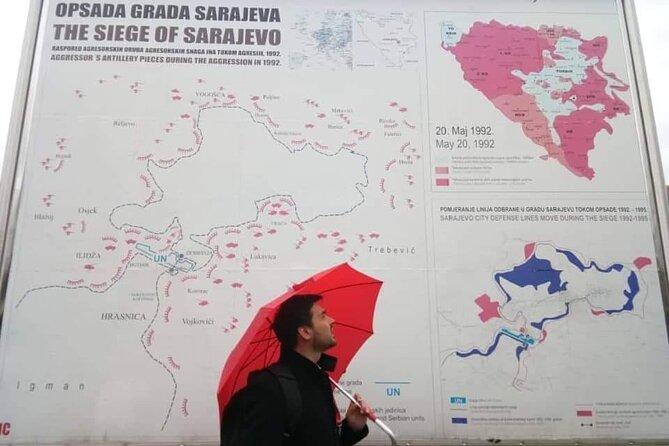
This experience relies heavily on guiding. The sites are spread across Sarajevo, and several have little formal signage or structure for independent interpretation. Without a guide, you could see a tunnel, a road, a cemetery, an abandoned track, and a fortress, yet miss how they fit together.
Edis has been praised for making the tour informative while handling the sadness of Sarajevo’s wartime experience with care. Elvis has also received strong praise for knowledge, sympathy, and communication. The exact guide depends on the departure, so you should not assume you will receive one specific person, but these names suggest the standard guests have valued.
The best part of the guiding is not simply the number of facts. It is the connection to modern Sarajevo. One guide was specifically praised for explaining what it is like to live in the city today, a useful balance when a tour spends much of its time looking back.
You should feel free to ask questions, especially at the tunnel and Olympic track. A small group of no more than 15 people gives you a reasonable chance to do that.
Is $40.81 good value?
At $40.81 per person, the price is fair for a half-day experience that includes an air-conditioned vehicle, bottled water, and an English-speaking guide. The route would be awkward to assemble independently in a short period, especially when you consider the uphill locations and the need to understand the sites in context.
The tunnel admission costs an additional €10.50 per person. Tips are also excluded. Those are not surprising extra costs, but they mean the headline price is not the complete amount you will spend.
I see the value in the transportation and interpretation more than in the individual admissions. Most stops are free, but free does not mean easy to understand. You are paying for the connections between places, the driving, and the guide’s explanation.
If you are watching every mark, you could visit some locations independently. You would likely lose time and context, though, and the tour is designed to cover a lot in a single afternoon. For a first visit to Sarajevo, I think the price is justified if the war’s impact is a central reason for your trip.
What to know about timing, comfort, and tone
The tour begins at noon and lasts approximately three to four hours. That schedule leaves your morning open and makes it easy to pair the tour with an early visit to Sarajevo’s old center.
The air-conditioned vehicle is useful for moving between locations, and bottled water is included. You should wear practical shoes, since at least some stops involve viewing outdoor sites and the bobsleigh track is abandoned. The supplied information does not specify the amount of walking or the exact condition of paths, so anyone with mobility concerns should ask the provider before booking.
Most people can participate, according to the tour details. The experience is offered in English. If you do not follow English comfortably, much of the value may be lost because the spoken explanation is central to the visit.
The tone is reflective and serious. I would avoid scheduling a loud party activity immediately afterward. Give yourself a quiet moment at the end, particularly if the Tunnel of Hope and Sniper Alley affect you strongly.
Who should book this Sarajevo experience?
I recommend it if you want to understand Sarajevo through the places shaped by the siege. It is a good fit for you if you value local explanation, have limited time, and want one organized route rather than several separate visits.
It also suits anyone interested in the strange contrast between the 1984 Olympics and the war that followed. The Olympic track adds a memorable layer that a tunnel-only visit cannot provide.
You may want to choose another activity if you prefer light sightseeing, dislike enclosed or emotionally serious sites, or want a relaxed panoramic tour. The Yellow Fortress view is attractive, but the main purpose is education and remembrance.
The tour also works best when you listen actively. This is not a ride where the scenery does all the work. The stories told between stops are a major part of what you pay for.
Should you book the Sarajevo War Tour?
I would book this tour if Sarajevo’s wartime past is important to you and you want to see several connected sites in one afternoon. The combination of the Tunnel of Hope, Sniper Alley, Jewish Cemetery, Olympic track, and Yellow Fortress gives you a fuller picture than any one stop can offer.
The strongest reasons to go are the route, the small group limit, and the quality of guiding associated with Edis and Elvis. The main cautions are the serious subject matter and the extra €10.50 tunnel fee.
Cancel at least 24 hours before the noon start time if your plans change and you want a full refund. If you can give the tour your full attention, it offers a thoughtful and practical way to understand Sarajevo beyond its cafés, market streets, and beautiful views.
FAQ
How long does the Sarajevo war tour last?
The tour lasts approximately three to four hours.
What time does the tour begin?
The scheduled start time is 12:00 pm.
Where does the tour start?
It starts at House of Spite, Veliki Alifakovac 1, Sarajevo 71000, Bosnia and Herzegovina.
Where does the tour end?
The experience ends back at the starting meeting point.
Is the Tunnel Museum entrance included?
No. Entrance to the Tunnel Museum costs €10.50 per person and is paid separately.
What is included in the tour price?
The price includes an air-conditioned vehicle, bottled water, and an English-speaking guide.
Is the tour offered in English?
Yes. The tour is offered in English.
How large is the tour group?
The activity has a maximum of 15 participants.
Can I cancel for a full refund?
Yes. You can cancel up to 24 hours before the experience start time for a full refund. Cancellations or changes made less than 24 hours before the start are not accepted for a refund.
Museums in Sarajevo
- Cable Car Olympic Tour With Museum
★ 5.0 · 17 reviews - SARAJEVO CONCEPTUAL ART TOUR (galleries, art and arhitecture)
★ 5.0 · 7 reviews - Sarajevo: History Museum of Bosnia and Herzegovina Ticket
★ 5.0 · 2 reviews
Newest around Sarajevo
- Understanding Srebrenica Genocide + Lunch with Local Family★ 4.9 · 14 reviews
- Private Full Day Safari Tour★ 5.0 · 8 reviews
- Sarajevo: Trebević Mountain Summit Hiking Tour★ 4.2 · 2 reviews
- From Sarajevo: Kozice Waterfalls Hiking Experience in Nature★ 5.0 · 2 reviews
- Sarajevo Under Siege: A War History Tour★ 5.0 · 10 reviews
- Mysterious Visoko Pyramids Driving and Walking Tour★ 5.0 · 7 reviews
- WAR TUNNEL – Sarajevo’s only way of a communication during the WAR – Top secret★ 5.0 · 12 reviews
- Ultimate Gastro Experience★ 4.5 · 14 reviews
War History & Siege Tours, compared.
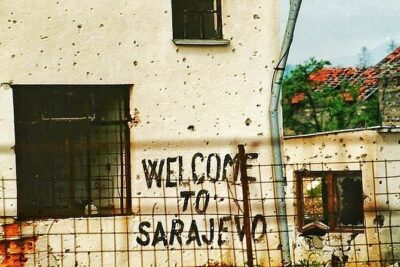
Fall of Yugoslavia, Sarajevo War Tour with Tunnel of Hope Museum and Frontlines
Read our review →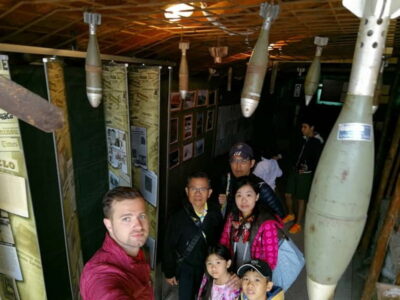
Tunnel Museum Yugoslavia War Tour with War Veteran
Read our review →
ROSES OF SARAJEVO (Official WAR + CITY tour)- Story of a Survivor
Read our review →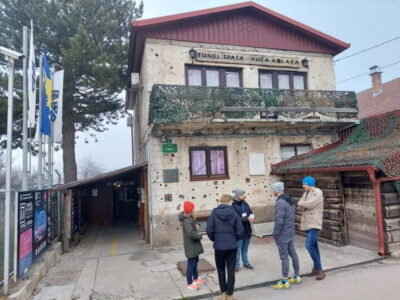
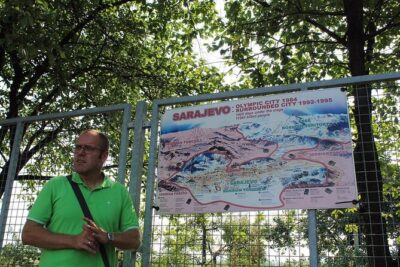
Tunnel Museum: Bosnian & Yugoslav Wars Tour with War Veteran
Read our review →
Bosnian War & Fall of Yugoslavia Tour with Tunnel
Read our review →
Sarajevo War Tour: A Veteran’s Story of the Siege (fees included)
Read our review →Browse the lists this tour appears in