
Review · MUSEUMS
SARAJEVO CONCEPTUAL ART TOUR (galleries, art and arhitecture)
Sarajevo’s art scene rewards curious walkers. I like the tour’s access to places you might miss alone, especially Brodac Gallery in a former Austro-Hungarian prison and the intimate Java Gallery. I also like the way art is tied to Sarajevo’s recent past, from the red-filled Sarajevo Roses to the Srebrenica memorial sculpture. The main consideration is that this is a focused contemporary-art walk, not a general sightseeing tour, so visitors seeking grand museums or famous landmarks may find its subject matter narrow.
The tour costs $33.64 per person and lasts about two to three hours. That is a fair price if you want context, a planned route, and contact with Sarajevo’s art scene rather than simply looking at buildings from the outside. The group is limited to 15 people, though the small size may vary in feel depending on the final booking.
In This Review
- Key points at a glance
- Why this Sarajevo art walk is different
- Brodac Gallery, art in a former prison
- Ferhadija and the Sarajevo Roses
- Java Gallery and Sarajevo’s current art scene
- Veliki Park and the Srebrenica memorial
- A coffee break at Gallery BORIS SMOJO
- FESTINA LENTE Bridge and the route’s final note
- What the guide adds to the experience
- Is $33.64 a good value?
- Who should book this tour?
- Should you book the Sarajevo Conceptual Art Tour?
- FAQ
- How long does the Sarajevo Conceptual Art Tour last?
- What time does the tour start?
- Where does the tour begin?
- Where does the tour end?
- What language is the tour offered in?
- How many people can join the tour?
- Is the tour near public transportation?
- Which galleries are included?
- Are gallery admissions included?
- Can I cancel for a full refund?
Key points at a glance
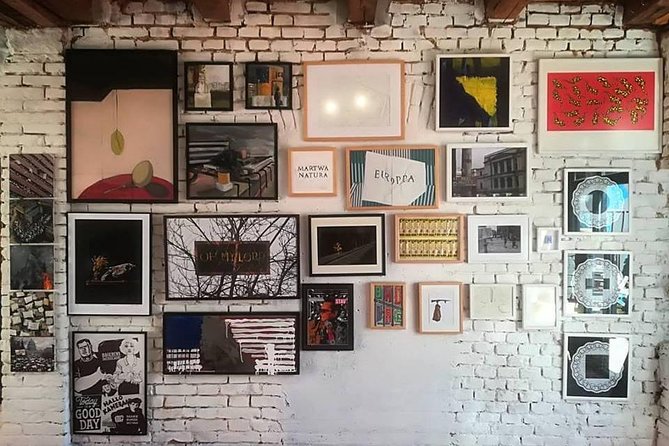
- A former prison becomes Brodac Gallery: See contemporary Bosnian art inside an old building with a striking past, and learn about its current gallery-bar character.
- Sarajevo Roses bring the siege into the street: Red resin fills the scars left by mortar explosions on Ferhadija’s pavement.
- Java Gallery supports local and international artists: This central exhibition space gives you a useful view of Sarajevo’s present-day art scene.
- The Srebrenica memorial is difficult but important: In Veliki Park, Mensud Kečo’s sculpture Nermine, dođi responds to one of the most distressing images from the genocide.
- The tour ends with art, coffee, and a bridge: You stop at Gallery BORIS SMOJO, then see the FESTINA LENTE bridge near Skenderija.
- Guide Mak adds personal wartime context: His own experiences and willingness to answer questions are a major part of the tour’s appeal.
Why this Sarajevo art walk is different
Sarajevo is often introduced through its Ottoman streets, Austro-Hungarian buildings, religious landmarks, and wartime history. This tour takes another route. It asks you to read the city through galleries, public sculpture, damaged pavement, and contemporary architecture.
That makes the experience useful for anyone who wants to understand how Sarajevo’s artists respond to the city around them. You are not only moving from one exhibition room to another. You are seeing how memory, conflict, identity, and public space meet.
I especially like the link between indoor and outdoor art. Brodac and Java show work in gallery settings, while the Sarajevo Roses and the sculpture in Veliki Park place difficult subjects directly in the city. The final stop adds a modern bridge to the mix, so the afternoon does not stay fixed in the past.
The walk is offered in English and begins at 1:00 pm from Đulagina 2. Its end point is in the Skenderija area. Since the route includes several central locations, it is practical for a visitor staying in or near central Sarajevo, and the meeting point is near public transportation.
Museums worth an hour in Sarajevo:
- Fall of Yugoslavia, Sarajevo War Tour with Tunnel of Hope Museum and Frontlines
★ 5.0 · 1,314 reviews - Sarajevo: Tunnel Museum Yugoslavia War Tour with War Veteran
★ 5.0 · 1,111 reviews - Tunnel Museum: Bosnian & Yugoslav Wars Tour with War Veteran
★ 5.0 · 551 reviews
Brodac Gallery, art in a former prison
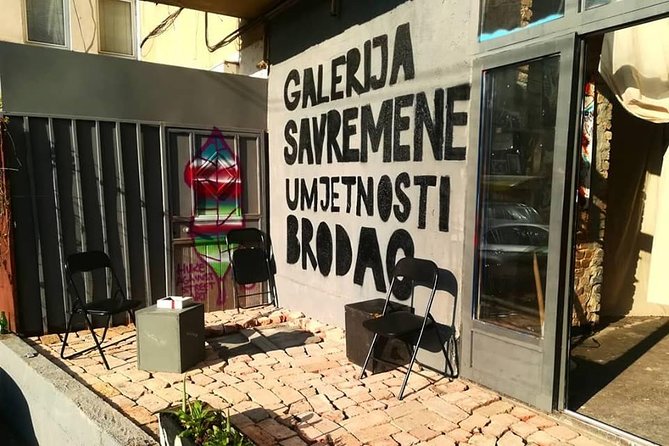
The first stop is Brodac Gallery, where the setting is nearly as interesting as the exhibition. The gallery occupies an old building that was used as a prison during the Austro-Hungarian occupation. Today, the space has a cozy gallery-bar feel and hosts contemporary Bosnian art exhibitions.
You have about 45 minutes here, with admission included. That is enough time for the guide to explain the building, introduce the work on display, and give you a first look at the city’s current art scene without rushing through the rooms.
Brodac is a good opening stop because it sets the tone. You begin with art that is not presented in a grand museum, but in a place with a rougher, more lived-in character. The building’s past gives the gallery a sense of weight, while the current use keeps the experience informal.
The gallery also serves Gelender, a local craft beer. The tour information does not say that a beer is included in the price, so treat it as an optional feature rather than part of the admission. If you enjoy seeing how local culture mixes with art spaces, this gallery-bar combination may be one of the most memorable stops.
The possible drawback is simple: exhibitions change. The exact works you see at Brodac will depend on what is showing when you visit. The setting and the gallery’s role in contemporary Bosnian art remain central, but you should not book this expecting one fixed collection.
Ferhadija and the Sarajevo Roses
From Brodac, the tour continues to Ferhadija Pedestrian Street. This central route runs from the area of Vječna Vatra and Titova Street toward Gazi Husrev-Begova Street, where it becomes Sarači Street.
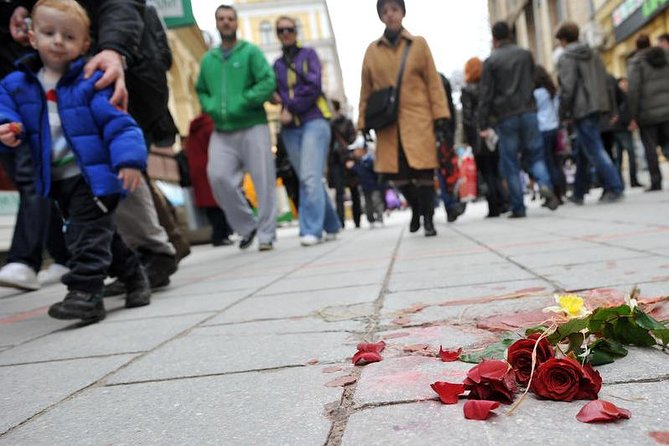
The stop lasts about 30 minutes, and there is no admission charge. The point is not ordinary sightseeing along a shopping street. Your guide draws attention to the Sarajevo Roses, the concrete scars created by mortar explosions during the Siege of Sarajevo.
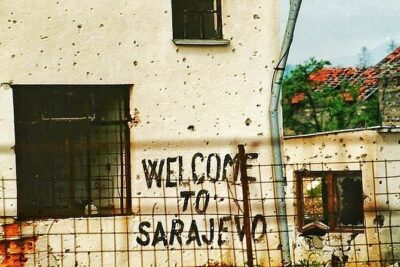
When a mortar round struck concrete, the impact often left a pattern that spread outward in a flower-like shape. Some of these marks were later filled with red resin, turning damage into a public memorial. The red shapes are modest in size, but their meaning is heavy. They mark a city where urban warfare was part of daily life and where thousands of shells exploded during the siege.
This is one of the tour’s strongest transitions from gallery art to public memory. You do not need a museum label to understand that the pavement itself has become an object of remembrance. The guide’s explanation helps you notice what might otherwise look like an unusual patch of red concrete.
Allow yourself time to take in the subject without treating the roses as simple photo stops. The tour gives you context, but the experience can still feel emotionally demanding. If war memorials are difficult for you, this part may require a slower pace and a little personal space.
Java Gallery and Sarajevo’s current art scene
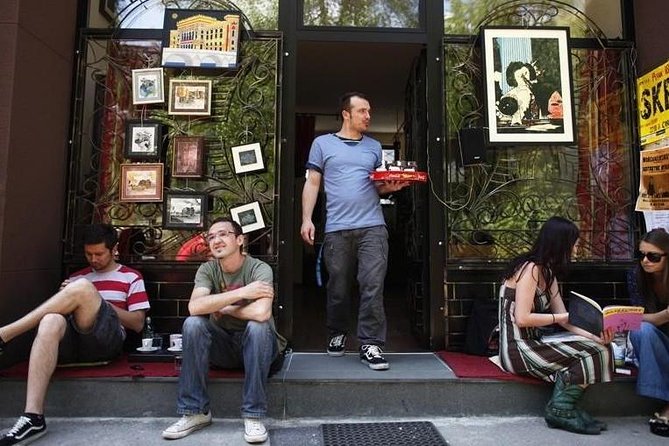
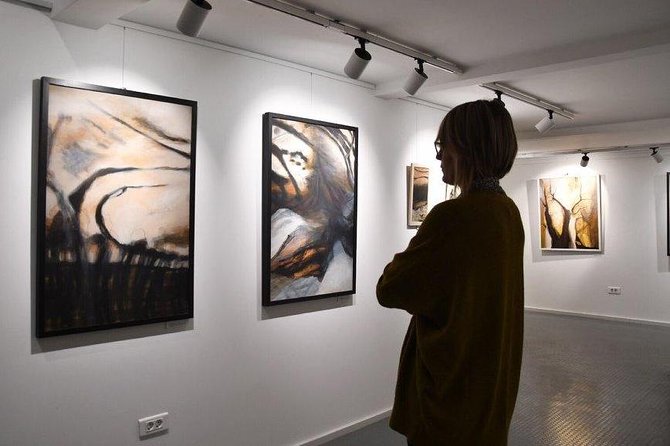
The next major gallery stop is Galerija Java, located at Titova 21 in the center of town. You spend about an hour here, and admission is included.
Java has played an important role in building Sarajevo’s contemporary art scene. Its work includes support for both Bosnian and international artists, with exhibitions covering different artistic mediums. That makes it a useful counterpoint to Brodac. Brodac gives you a gallery in a historically unusual building, while Java gives you a more established exhibition setting in the heart of the city.
An hour is the longest scheduled stop, which makes sense. Contemporary art often needs time. You may want to look closely at how artists use materials, space, and subject matter rather than race through a small room for a quick photograph.
The guide helps you place the exhibition within Sarajevo’s wider art life. This is where the tour’s structure pays off. Alone, you might enter a gallery, look around, and leave without knowing its role in the city. With a guide, you can ask questions and get a clearer sense of how artists in Bosnia and Herzegovina connect to international contemporary art.
The exact exhibition will vary, so your experience will depend partly on what Java is showing that day. That uncertainty is normal for a working gallery, but it also means the tour is not built around a frozen display. You are seeing art as part of an active scene.
Same corner of the country, a different kind of day:
- Sarajevo: Mostar, Konjic, Blagaj Tekke, Pocitelj & Waterfall
★ 4.9 · 1,666 reviews - Sarajevo: Grand Walking Tour Through Time and Cultures
★ 4.8 · 1,236 reviews - Sarajevo: Mostar, Konjic, Sufi House, Pocitelj & Kravice Falls
★ 5.0 · 1,179 reviews - ROSES OF SARAJEVO (Official WAR + CITY tour)- Story of a Survivor
★ 5.0 · 770 reviews
Veliki Park and the Srebrenica memorial
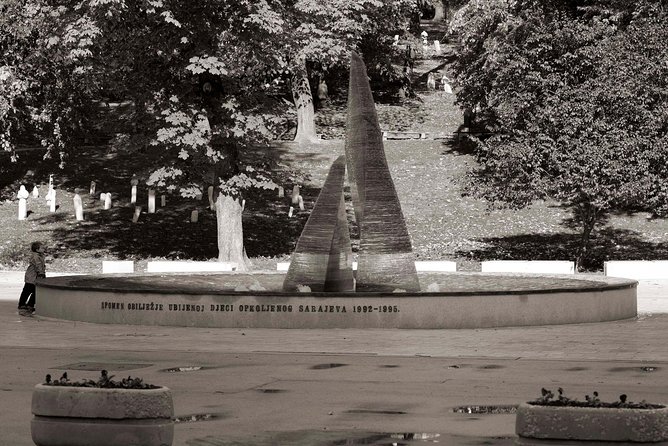
Veliki Park brings the tour into a more solemn register. Here you see Nermine, dođi, a sculpture by Bosnian artist and sculptor Mensud Kečo dedicated to the genocide in Srebrenica.
The sculpture uses concrete, reinforcement bars, plastic, and silicon. Its form responds to one of the most distressing documented photographs from Srebrenica. You have about 30 minutes at the park, with no admission charge.
This stop matters because the sculpture does not place the subject behind glass or inside a formal memorial hall. It is located in one of Sarajevo’s best-known parks, where an ordinary public setting is made impossible to separate from memory.
The materials are important. Concrete and reinforcement bars connect the sculpture to construction, damage, and the built environment. Plastic and silicon create a more vulnerable human presence. You do not need to know every detail of the artist’s process to understand that the work is intended to unsettle rather than decorate.
I would not describe this as a light afternoon activity. The Sarajevo Roses and the Srebrenica memorial ask you to confront painful events. That is also why the tour can offer more than a standard art outing. It shows how art can preserve memory when ordinary words or plaques feel inadequate.
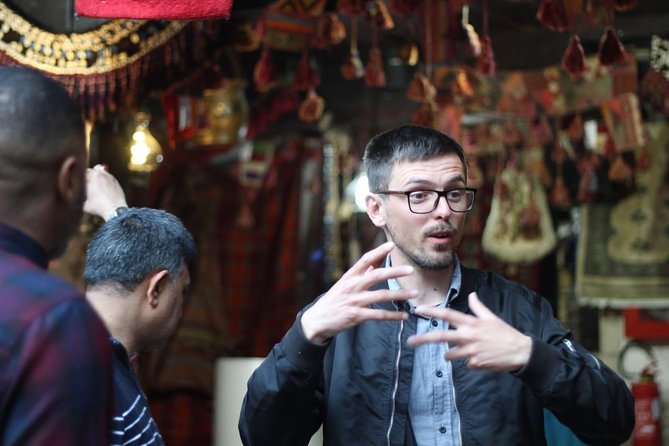
Your guide, Mak, is especially valuable here and throughout the walk. He shares his own experiences during the war and answers questions. A personal account can make the city’s recent past feel more immediate, though you should still expect the tone to remain respectful rather than theatrical.
A coffee break at Gallery BORIS SMOJO
The tour then reaches the Skenderija area, where you take a coffee break at Gallery BORIS SMOJO. The scheduled time is about 30 minutes, and admission is included.
The information provided does not describe the exact exhibition or confirm that coffee is included in the tour price. What it does make clear is that the gallery is part of the route and serves as the break before the final bridge visit. Think of this as a chance to pause, ask the guide follow-up questions, and let the heavier subjects of the previous stops settle.
This stop also keeps the tour from becoming a nonstop sequence of explanations. A short break is practical after several galleries and memorial sites, especially if you are trying to absorb unfamiliar names, artists, and events.
FESTINA LENTE Bridge and the route’s final note
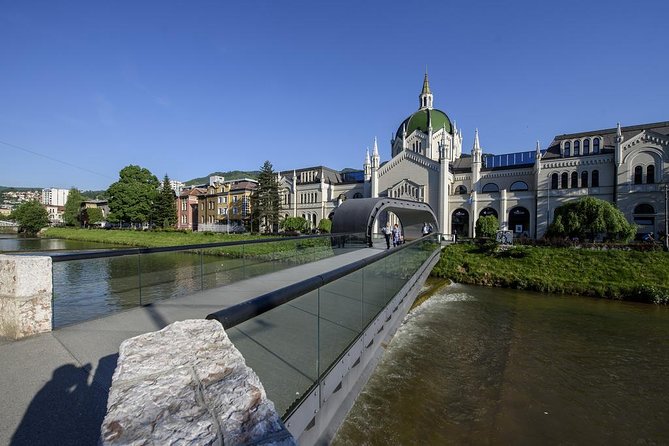
After the coffee break, you go to see the FESTINA LENTE bridge near Skenderija. The route ends in Skenderija, Sarajevo 71000.
The bridge provides a change of scale and mood. After viewing art inside galleries and memorial work in a park, you finish with a piece of modern urban design. Its name means make haste slowly, a fitting idea for a walking tour that asks you to stop, look, and think instead of simply collecting sights.
The supplied information does not give the bridge’s architectural details or describe a crossing experience, so I would not expect a long architecture lecture based on the tour alone. Instead, this appears to be a brief final look at Sarajevo’s contemporary public space.
Ending near Skenderija is useful if you plan to continue exploring that part of town. It also means the tour does not return you to the starting point, so plan your next move from the end location rather than assuming you will finish at Đulagina 2.
What the guide adds to the experience
The route is easy enough to plot on a map. The real value is the interpretation.
Mak is described as friendly, helpful, and willing to share personal wartime experiences. One particularly generous detail from a past booking is that he gave a guest a book he had written. That is not a promised feature of the tour, but it suggests a guide who treats conversation and questions as part of the experience.
You should use the time to ask about the artists, the galleries’ roles, and the way Sarajevo remembers the siege and Srebrenica. The tour is limited to a maximum of 15 people, which should make questions more manageable than on a large coach outing.
The personal wartime context is a strong point, but it also means the guide’s approach will shape your experience. Some visitors want a strictly academic art tour. This one appears more personal and connected to lived memory, which is a plus if you want human context and a consideration if you prefer a detached lecture.
Is $33.64 a good value?
At $33.64, the price is reasonable for a two to three-hour English-language walk with a planned route, gallery admissions, and a guide who can connect the art to Sarajevo’s recent past.
You are paying for more than entry to two galleries. The route links Brodac, Ferhadija, Java, Veliki Park, BORIS SMOJO, and the FESTINA LENTE bridge. Finding these places alone is possible, but the tour saves you the planning and gives the sites a shared theme.
The strongest value comes if you would otherwise walk past the Sarajevo Roses or visit a gallery without knowing its place in the city’s art life. The included admissions help, though the tour does not state that drinks or coffee are included. Bring extra money if you want to order Gelender or anything during the break.
This is not the best use of $33.64 for someone who wants a broad first-day overview of Sarajevo. You will not cover every major landmark, and the tour is not built around Ottoman architecture, churches, mosques, or museums. It is a specialist walk with a clear point of view.
Who should book this tour?
I would choose this experience if you like contemporary art, public sculpture, architecture, or the way cities deal with painful memories. It also suits repeat visitors who have already seen Sarajevo’s main historic sights and want another way to read the city.
It is a good match for solo visitors and couples who want an English-speaking guide without committing to a full-day excursion. The small-group limit should help keep the walk personal, and the central route makes it easy to fit into an afternoon.
You may want to skip it if your ideal holiday is built around cheerful sightseeing, grand interiors, or a packed list of famous monuments. The war-related stops are serious, and contemporary art can be open to interpretation. Go with patience and curiosity, not the expectation of a quick greatest-hits tour.
The start time is fixed at 1:00 pm. Confirmation arrives when you book, the tour is near public transportation, and most people can take part. Free cancellation is available if you cancel at least 24 hours before the start time. If the minimum number is not reached, the operator will offer another date or experience, or provide a full refund.
Should you book the Sarajevo Conceptual Art Tour?
Book it if you want Sarajevo explained through its artists, damaged streets, memorial sculpture, and modern public spaces. The combination of Brodac Gallery, the Sarajevo Roses, Java Gallery, the Srebrenica memorial, BORIS SMOJO, and FESTINA LENTE gives the afternoon a clear shape.
The biggest reasons to go are Mak’s personal guidance and the unusual access to places you might not find on your own. The main reason to hesitate is the narrow focus and serious subject matter.
For a modest price, this is a thoughtful choice for art-minded visitors who want to look beyond Sarajevo’s standard sightseeing route. You will leave with fewer postcard landmarks, but a sharper sense of how the city’s artists respond to its past and present.
FAQ
How long does the Sarajevo Conceptual Art Tour last?
The tour lasts approximately two to three hours.
What time does the tour start?
It starts at 1:00 pm.
Where does the tour begin?
The meeting point is Đulagina 2, Sarajevo 71000, Bosnia and Herzegovina.
Where does the tour end?
The tour ends in the Skenderija area at Skenderija, Sarajevo 71000, Bosnia and Herzegovina.
What language is the tour offered in?
The tour is offered in English.
How many people can join the tour?
The activity has a maximum group size of 15 travelers.
Is the tour near public transportation?
Yes. The experience is described as being near public transportation.
Which galleries are included?
The route includes Brodac Gallery, Galerija Java, and Gallery BORIS SMOJO.
Are gallery admissions included?
Admission is included at Brodac Gallery, Galerija Java, and Gallery BORIS SMOJO.
Can I cancel for a full refund?
Yes. You can receive a full refund if you cancel at least 24 hours before the experience start time. Changes or cancellations made less than 24 hours before the start time are not accepted for a refund.
Newest around Sarajevo
- Understanding Srebrenica Genocide + Lunch with Local Family★ 4.9 · 14 reviews
- Private Full Day Safari Tour★ 5.0 · 8 reviews
- Sarajevo: Trebević Mountain Summit Hiking Tour★ 4.2 · 2 reviews
- From Sarajevo: Kozice Waterfalls Hiking Experience in Nature★ 5.0 · 2 reviews
- Sarajevo Under Siege: A War History Tour★ 5.0 · 10 reviews
- Mysterious Visoko Pyramids Driving and Walking Tour★ 5.0 · 7 reviews
- WAR TUNNEL – Sarajevo’s only way of a communication during the WAR – Top secret★ 5.0 · 12 reviews
- Ultimate Gastro Experience★ 4.5 · 14 reviews
Museums, compared.
Fall of Yugoslavia, Sarajevo War Tour with Tunnel of Hope Museum and Frontlines
Read our review →
Tunnel Museum Yugoslavia War Tour with War Veteran
Read our review →
Tunnel Museum: Bosnian & Yugoslav Wars Tour with War Veteran
Read our review →

Browse the lists this tour appears in