
Review · WAR HISTORY & SIEGE TOURS
Sarajevo: Guided City Highlights Tour with Sarajevo Tunnel
The tunnel tells Sarajevo’s hardest story. This guided tour pairs the Tunnel of Hope with city sights tied to the siege, giving you both the physical setting and the human story behind it. I like the personal accounts from guides such as Armin, Ahmed, Ago, Enis, and Ejub, and I like that hotel pickup and drop-off make a serious, sometimes complicated outing easy to manage. The main drawback is that the tunnel visit can feel rushed if the group moves slowly, and the €10 admission fee is extra.
You will pass Markale Market, Sniper Alley, Sarajevo City Hall, Baščaršija, Olympic sites, and the Defenders’ Cemetery before reaching the tunnel museum. I especially appreciate that the guides explain the political background as well as daily life during the siege, instead of showing war sites without context. Still, this is emotionally heavy material, so it is not a light sightseeing trip for filling a spare hour.
In This Review
- Key points at a glance
- Why this Sarajevo tour matters
- Starting in the center at Gazi Husrev-begova Street
- Markale Market and the city’s central scars
- Sniper Alley and the road toward the tunnel
- The Tunnel of Hope, Sarajevo’s essential war site
- Guides who make the history understandable
- Timing, transport, and what the $29 covers
- Accessibility and comfort considerations
- Who will get the most from this experience
- Should you book the Tunnel of Hope tour?
- FAQ
- How long does the Sarajevo Tunnel tour last?
- Is hotel pickup included?
- Is the Tunnel of Hope entrance fee included?
- What language is the tour conducted in?
- Is the tour wheelchair accessible?
- Can I cancel or pay later?
Key points at a glance
- A local view of the siege: Guides explain Sarajevo’s wartime life through history and personal experience, sometimes including first-hand memories.
- The Tunnel of Hope is the centerpiece: You spend about 50 minutes walking through the museum and tunnel area, with a total visit of roughly two hours listed in the detailed schedule.
- More than a museum visit: The drive links Sniper Alley, Markale Market, Olympic locations, City Hall, Baščaršija, and other important sites.
- Strong value at $29: The fee covers transport, bottled water, a licensed English-speaking guide, and hotel pickup and drop-off, but not the tunnel ticket.
- Allow flexible timing: The advertised duration is four hours, while the core outing is also described as lasting two to three hours or 100 to 150 minutes, depending on transport and stops.
- Good for a short Sarajevo stay: It gives you a useful introduction to the siege and the city in one half-day outing, though the tunnel entrance is difficult for some wheelchair users.
Why this Sarajevo tour matters
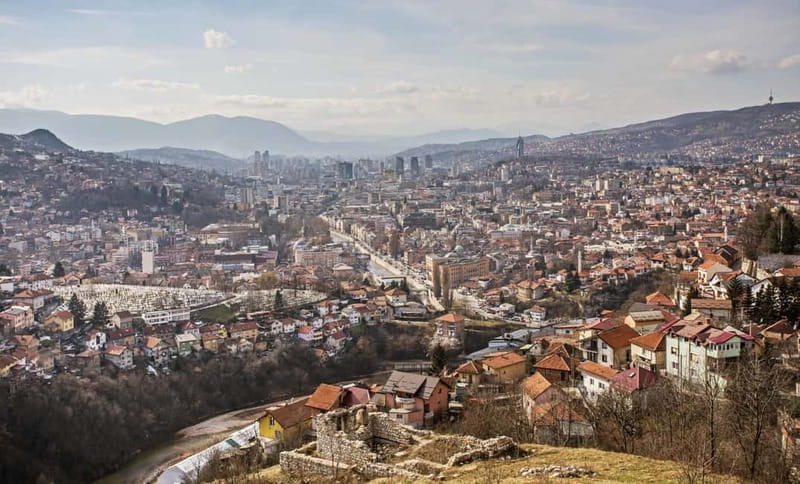
Sarajevo is a city where modern life and wartime memory share the same streets. A café, market, bridge, or apartment block can also be part of the story of the 1992 to 1995 siege. If you only visit the old town, you see the Ottoman and Austro-Hungarian sides of Sarajevo. This tour helps you understand the city that endured the longest siege in modern war history.
I like the structure because it does not treat the Tunnel of Hope as an isolated attraction. You begin in central Sarajevo, then move through places connected to the siege before reaching the tunnel near the airport. That sequence helps you connect the city center, the exposed streets, and the narrow underground route that kept people supplied.
The subject is painful. Markale Market, Sniper Alley, cemeteries, and the tunnel all carry serious meaning. You should expect the guide to discuss death, fear, shortages, shelling, political conflict, and the practical struggle of getting food and supplies into a surrounded city. The tone is intended to be thoughtful and explanatory, but individual guides may put different weight on political events and personal stories.
More City Tours in Sarajevo
- ROSES OF SARAJEVO (Official WAR + CITY tour)- Story of a Survivor
★ 5.0 · 770 reviews - Sarajevo: Sarajevo City Market, Old Town Food Tasting Tour
★ 4.9 · 69 reviews - Sarajevo: Nighttime City Highlights Walking Tour
★ 4.9 · 52 reviews
Starting in the center at Gazi Husrev-begova Street
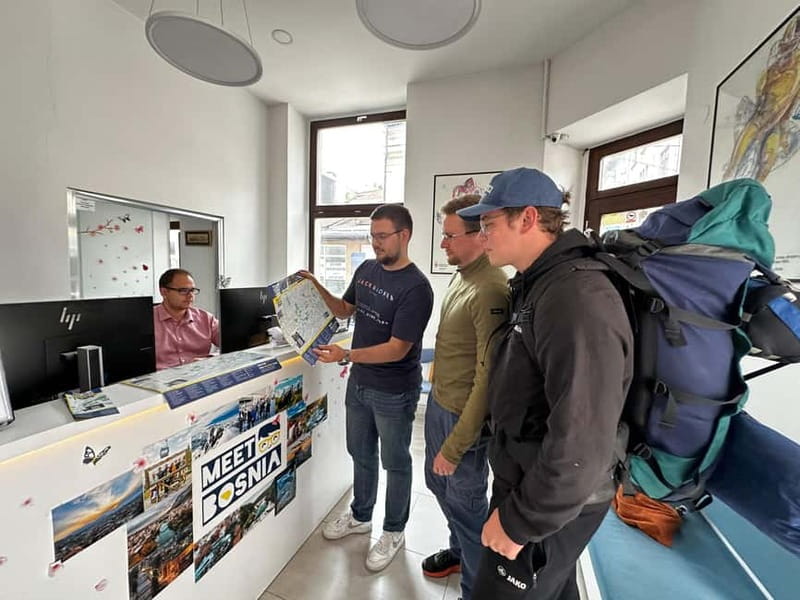
The usual meeting point is Meet Bosnia Travel on Gazi Husrev-begova Street, near the crossroads with Mula Mustafa Bašeskija. Hotel pickup is also included if you request it, so check the pickup details and wait at the agreed point 10 minutes early.
That small timing rule matters in Sarajevo, where a minivan may have several pickups and the route can involve city traffic. The vehicle is described as modern, roomy, and clean, with a professional driver and bottled water provided. One practical advantage is the return drop-off at your hotel, or near your accommodation when arrangements allow.
The tour is conducted in English. Several guides, including Armin, Enis, Ago, Ahmed, Alan, and Ejub, received especially warm praise for clear explanations and patient answers. One guide, Enko, was paired with Emin, who had volunteered during the conflict. That kind of personal connection can make the historical account feel immediate, although you should also remember that personal memories are one part of a larger and contested regional story.
Markale Market and the city’s central scars
A short photo stop at the City Market Hall, near Markale Market, introduces one of the most painful places in Sarajevo’s wartime story. The market is not treated simply as a sightseeing stop. It helps show how ordinary public places became dangerous during the siege.
You may not spend long here, so do not expect a full museum visit. The value is in the guide’s explanation and in seeing how close this area is to the everyday city center. If you want more time to look around or reflect, you may need to return independently.
The guide then connects the central market area with Sarajevo’s wider wartime geography. Streets that now look normal were once exposed routes. This is one of the tour’s strengths: you keep seeing present-day Sarajevo while learning what the same spaces meant during the war.
Sniper Alley and the road toward the tunnel
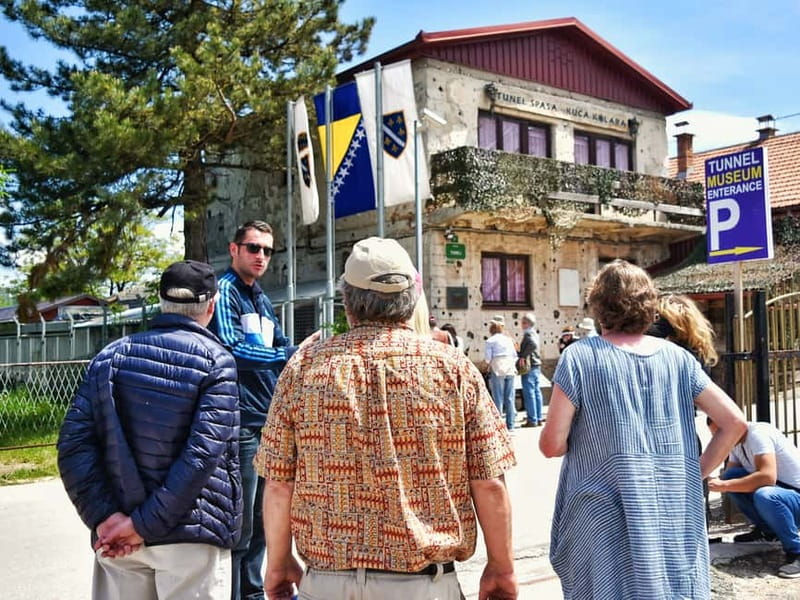
Sniper Alley is generally a pass-by stop with about 15 minutes devoted to explanation. The name refers to a major road through Sarajevo that became notorious during the siege because people crossing it faced sniper fire from surrounding positions.
This part is less about getting out and taking photographs. It is about understanding distance, exposure, and movement. A guide can point out how the road connected important parts of the city and why crossing it became such a serious risk.
The outing may also pass Sarajevo City Hall and Baščaršija. City Hall is one of Sarajevo’s best-known landmarks, while Baščaršija represents the city’s older commercial and cultural center. Seeing these places in the same trip as Sniper Alley gives you a broader picture than a war museum alone can provide.
You may also pass the Juan Antonio Samaranch Olympic Hall, the Olympic Stadium Koševo, the Defenders’ Cemetery, and areas associated with the Republic of Srpska. The exact amount of time at each place can vary. Some are guided pass-bys rather than formal stops, so keep your expectations realistic.
Other tours covering the siege years and their sites:
- Fall of Yugoslavia, Sarajevo War Tour with Tunnel of Hope Museum and Frontlines
★ 5.0 · 1,314 reviews - Sarajevo: Tunnel Museum Yugoslavia War Tour with War Veteran
★ 5.0 · 1,111 reviews - Sarajevo: Tunnel of Hope Tour – Survival and Resilience
★ 4.8 · 630 reviews - Tunnel Museum: Bosnian & Yugoslav Wars Tour with War Veteran
★ 5.0 · 551 reviews
The Tunnel of Hope, Sarajevo’s essential war site
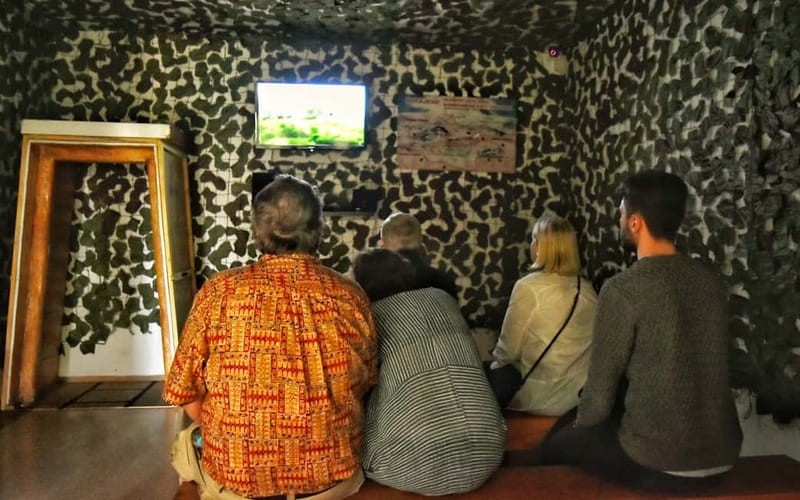
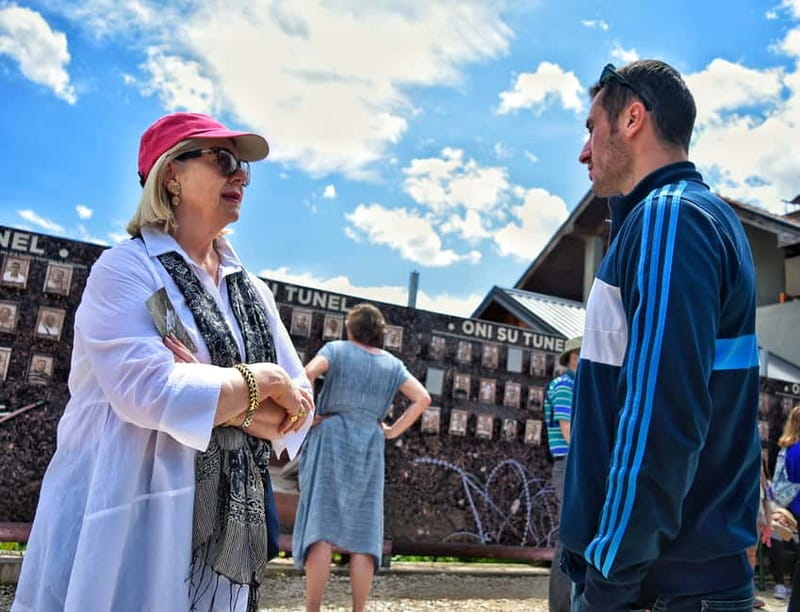
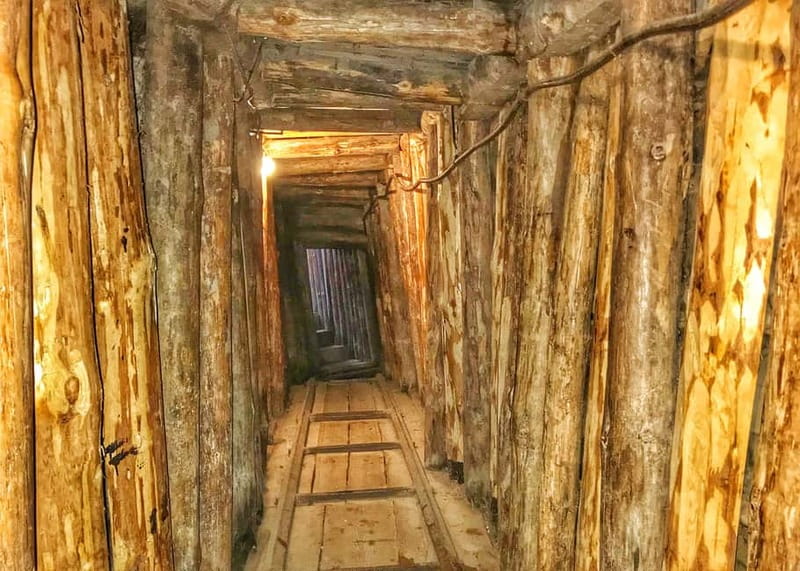
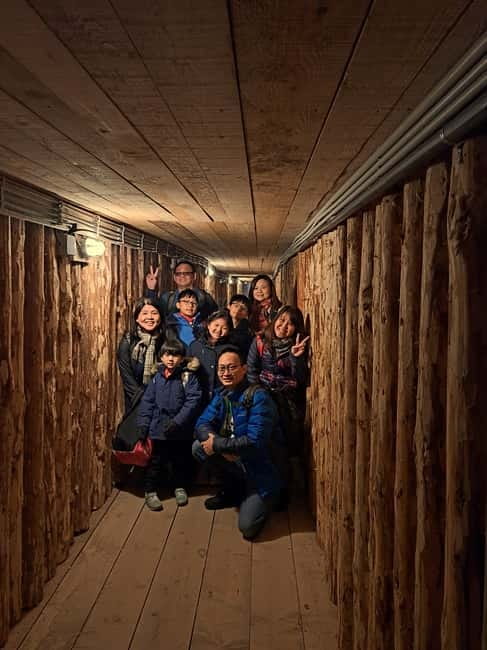
The tunnel is the heart of the outing. It was built beneath the airport area during the siege and provided a vital link between the besieged city and territory outside the encirclement. Its purpose was practical and urgent: people used it to move food, supplies, equipment, and other necessities when regular roads were blocked or too dangerous.
The museum helps explain how the tunnel was constructed and used. You can walk through a preserved section, but the passage is not a long underground expedition. The physical space is narrow and modest. That is exactly why it works. You are not entering a grand monument. You are seeing a functional route made under extreme pressure.
The detailed schedule allows about two hours for the Tunnel of Hope stop, while the shorter itinerary describes about 50 minutes of walking. In practice, you should expect a guided museum visit and tunnel walk, with the exact time shaped by traffic, group pace, and the guide’s presentation. One useful warning comes from the experience of the tour itself: if some people move slowly, the tunnel portion may feel compressed.
The guide’s explanation is important here. Without context, the tunnel can seem like a short, cramped corridor. With a clear account of why it was built and what it meant to people in Sarajevo, the space becomes much more powerful. You begin to understand that it was not just an engineering project. It was a lifeline.
The entrance ticket is not included. Adults pay €10, or 20 KM, and students pay €4, or 8 KM. Bring local currency if possible, since payment is specified in convertible marks. At $29 for the tour itself, the added museum fee is still modest, but it should be included in your day’s budget.
Guides who make the history understandable
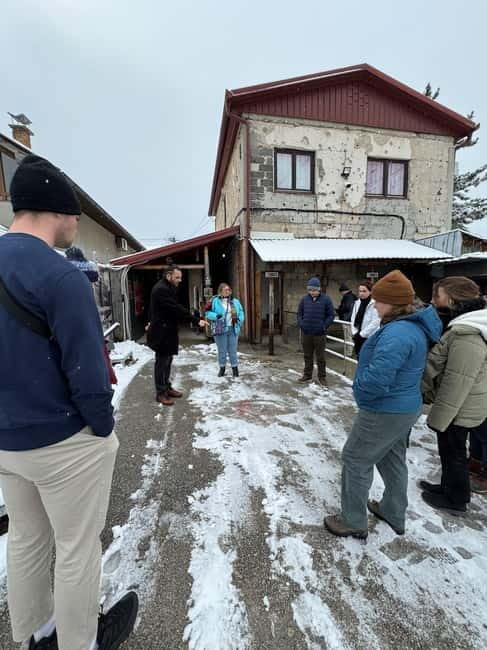
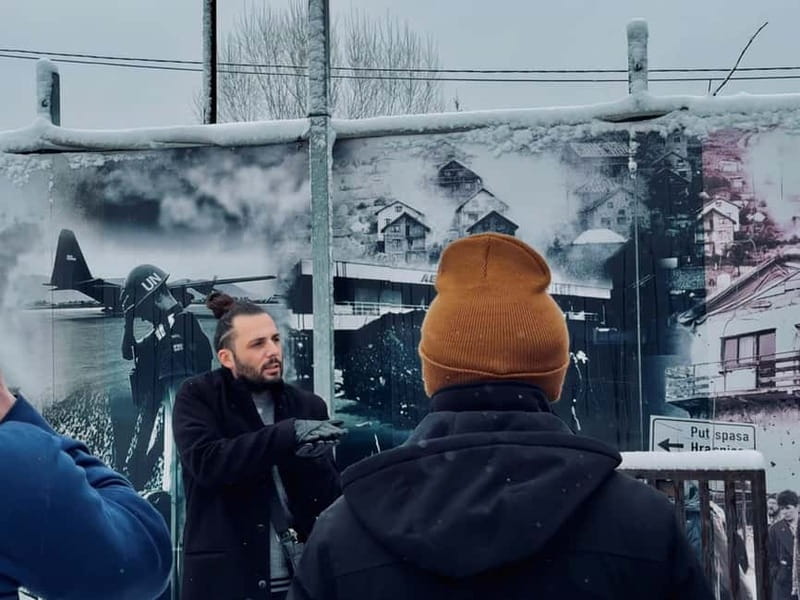
The strongest part of this experience is the guide’s ability to explain a difficult subject in plain English. Sarajevo’s wartime politics involve the breakup of Yugoslavia, the independence vote, ethnic and political divisions, military positions, and the wider Balkan conflict. A rushed explanation can leave you more confused than informed.
The best guide reports point to patient, detailed storytelling. Armin is praised for explaining the political background, the siege, and the region without losing sight of ordinary people. Ahmed is described as able to handle a long list of obscure questions. Enis explained the conflict in a simple but not shallow way, while Ago made time for a personal detour connected to a visitor’s work in Sarajevo after the war.
Some guides also add food suggestions, jokes, or small personal details. Those touches can make the drive more relaxed, but the tone remains serious. You should feel free to ask questions. The guides are specifically praised for taking questions from the group rather than delivering a fixed speech and moving on.
Personal testimony can be deeply affecting. One guide shared what it was like to endure the siege and emphasized courage, humanity, and the rejection of revenge. That is a meaningful message, but you may also want to read more widely if you are studying the political history in depth. This tour is an excellent introduction and a human account, not a complete academic treatment of every side of the conflict.
Timing, transport, and what the $29 covers
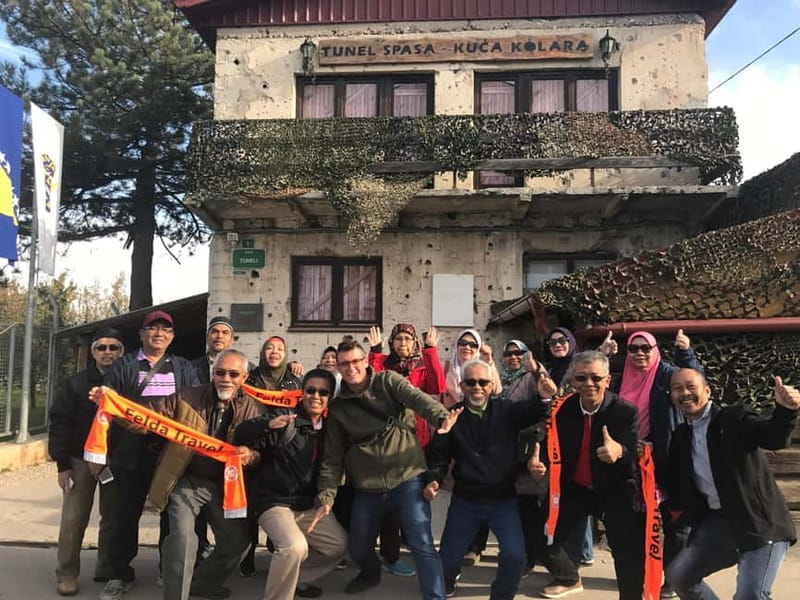
The headline duration is four hours, but the supplied timing is not perfectly consistent. The tour is also described as lasting two to three hours, with a detailed route totaling about 100 to 150 minutes plus pickup and return time. I would plan on a half-day block rather than scheduling a tight museum reservation immediately afterward.
The difference probably reflects the distance between the center and the tunnel, traffic, hotel pickups, and how long the group spends at the museum. Winter conditions can also affect timing. One outing ended at the Olympic village in snowy weather, adding a memorable seasonal touch, but snow and traffic may change the pace.
For $29 per person, you receive:
- Hotel pickup and drop-off
- A licensed English-speaking guide
- A professional driver
- A modern vehicle
- Bottled water
- Transport between the city sights and the tunnel
You pay separately for the Tunnel of Hope entrance and any personal expenses. The value is strongest if you want transport and historical interpretation in one package. Hiring a car or arranging separate transport to the tunnel would likely require more planning, while visiting alone would leave you without the guide’s explanation at the key sites.
The transport also makes it possible to see outlying locations in a short visit. You are not simply paying for a museum ticket. You are paying for the route, the historical connection between locations, and the ease of being collected and returned.
Accessibility and comfort considerations
The activity is listed as wheelchair accessible, but there is an important limit. Wheelchair users may have trouble entering the preserved tunnel itself, while the museum is accessible. If that applies to you, contact the provider before booking and ask exactly which parts can be visited with your chair.
The vehicle is described as roomy and clean, which helps during a drive that includes several pass-by explanations. Still, the outing deals with war and civilian suffering, so comfort is not only about the minivan. Give yourself time afterward if you expect the subject to affect you.
The tour can suit older children and adults who are ready for serious history, but the provided information does not set a specific minimum age. For any child in your group, use your judgment about whether discussions of violence and siege conditions are suitable.
Who will get the most from this experience
I would choose this tour if you have only a short time in Sarajevo and want a clear introduction to the city’s recent past. It is also a good fit if you prefer to ask questions rather than read labels silently, or if you want to visit the tunnel without arranging transport yourself.
History-minded visitors will appreciate the political background and the chance to see several connected sites. So will anyone who wants to understand why Sarajevo’s geography mattered during the siege. The tour is less suitable if you want a relaxed city sightseeing ride with only light historical commentary.
I would also recommend it for a first day in Sarajevo, provided you are ready for a serious subject. The route can give you useful bearings for later walks through the center. Some people have continued independently by tram after the tour, which can be a practical way to finish near the old town if that fits your schedule and the guide confirms the arrangements.
Book with an open mind. Different guides may tell the story in different voices, and one person noted that the presentation felt somewhat politically biased. That is worth remembering in any conflict-history tour. Listen carefully, ask respectful questions, and seek another source if you want a wider comparison of the war’s competing interpretations.
Should you book the Tunnel of Hope tour?
Yes, I would book it if you want a serious, human introduction to Sarajevo’s siege and need an efficient way to reach the tunnel. The combination of local guides, personal stories, central city landmarks, Sniper Alley, and the museum gives you much more than a standalone tunnel visit.
The $29 price is fair, especially with hotel transport and a licensed guide included. Add 20 KM for the adult entrance ticket, arrive 10 minutes early, and allow extra time beyond the shortest advertised duration.
Skip it if you are looking only for cheerful sightseeing, dislike guided interpretation, or need a fully accessible route through the tunnel itself. For most visitors who want to understand Sarajevo beyond its cafés and beautiful old streets, this is a moving and worthwhile half-day choice.
FAQ
How long does the Sarajevo Tunnel tour last?
The activity is advertised as four hours, but the core tour is also described as lasting two to three hours or about 100 to 150 minutes. Pickup, traffic, and return time can affect the total duration, so allow a half-day.
Is hotel pickup included?
Yes. Hotel pickup and hotel drop-off are included. You should be at the pickup point 10 minutes before the arranged departure time.
Is the Tunnel of Hope entrance fee included?
No. Adults pay 10 EUR, or 20 KM, and students pay 4 EUR, or 8 KM. Tickets are paid separately in local currency at the tunnel.
What language is the tour conducted in?
The live guided tour is conducted in English.
Is the tour wheelchair accessible?
The museum is accessible, but wheelchair users may have difficulty entering the preserved tunnel itself. Check with the provider before booking if this is important for your visit.
Can I cancel or pay later?
You can cancel up to 24 hours before the activity for a full refund. The booking option also allows you to reserve now and pay later.
Newest around Sarajevo
- Understanding Srebrenica Genocide + Lunch with Local Family★ 4.9 · 14 reviews
- Private Full Day Safari Tour★ 5.0 · 8 reviews
- Sarajevo: Trebević Mountain Summit Hiking Tour★ 4.2 · 2 reviews
- From Sarajevo: Kozice Waterfalls Hiking Experience in Nature★ 5.0 · 2 reviews
- Sarajevo Under Siege: A War History Tour★ 5.0 · 10 reviews
- Mysterious Visoko Pyramids Driving and Walking Tour★ 5.0 · 7 reviews
- WAR TUNNEL – Sarajevo’s only way of a communication during the WAR – Top secret★ 5.0 · 12 reviews
- Ultimate Gastro Experience★ 4.5 · 14 reviews
War History & Siege Tours, compared.
Fall of Yugoslavia, Sarajevo War Tour with Tunnel of Hope Museum and Frontlines
Read our review →
Tunnel Museum Yugoslavia War Tour with War Veteran
Read our review →
ROSES OF SARAJEVO (Official WAR + CITY tour)- Story of a Survivor
Read our review →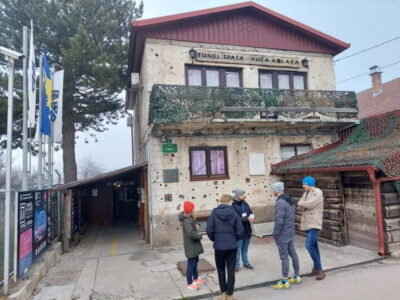
Tunnel Museum: Bosnian & Yugoslav Wars Tour with War Veteran
Read our review →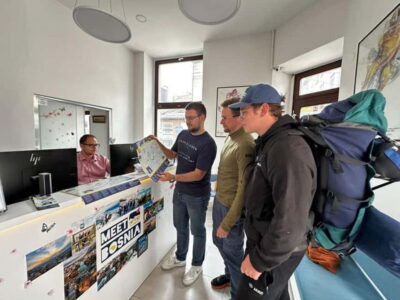
Bosnian War & Fall of Yugoslavia Tour with Tunnel
Read our review →
Sarajevo War Tour: A Veteran’s Story of the Siege (fees included)
Read our review →Browse the lists this tour appears in