
Review · WAR HISTORY & SIEGE TOURS
Sarajevo: Tunnel Museum Yugoslavia War Tour with War Veteran
History is still visible on Sarajevo’s hillsides. This four-hour tour connects the Tunnel of Hope with Sniper Alley, Trebevic Mountain, the Olympic bobsleigh track, the Jewish cemetery, and wartime cemeteries. I like the careful route, which links the city’s geography to the siege, and I especially value the chance to hear personal memories from a veteran or war survivor. The main consideration is emotional: this is not a light sightseeing trip, and some stories and locations can be painful.
The tour costs about $36 per person, with private and small-group options available. That is good value if you want the city’s 1990s history explained clearly in one half-day, though the price may vary depending on whether the Tunnel of Hope entrance fee is included. Ask about that option when booking.
In This Review
- Key points to know before you go
- Why this half-day tour works so well
- Entering the Tunnel of Hope Museum
- Passing Sniper Alley and seeing Sarajevo from the road
- Trebevic Mountain and the ruined Osmice hotel
- Walking the abandoned Olympic bobsleigh and luge track
- The Jewish cemetery and Bosnia’s unusual tombstones
- Yellow Bastion and the final view over the old city
- The Shehidi cemetery and Alija Izetbegovic’s grave
- Guide quality is the main reason to book
- Is $36 a fair price?
- Who should book this Sarajevo war tour?
- Should you book it?
- FAQ
- How long does the Sarajevo Tunnel Museum war tour last?
- Where does the tour begin?
- Is the Tunnel of Hope entrance fee included?
- Is the tour conducted in English?
- Can I book a private tour?
- Can I cancel the tour for a refund?
Key points to know before you go
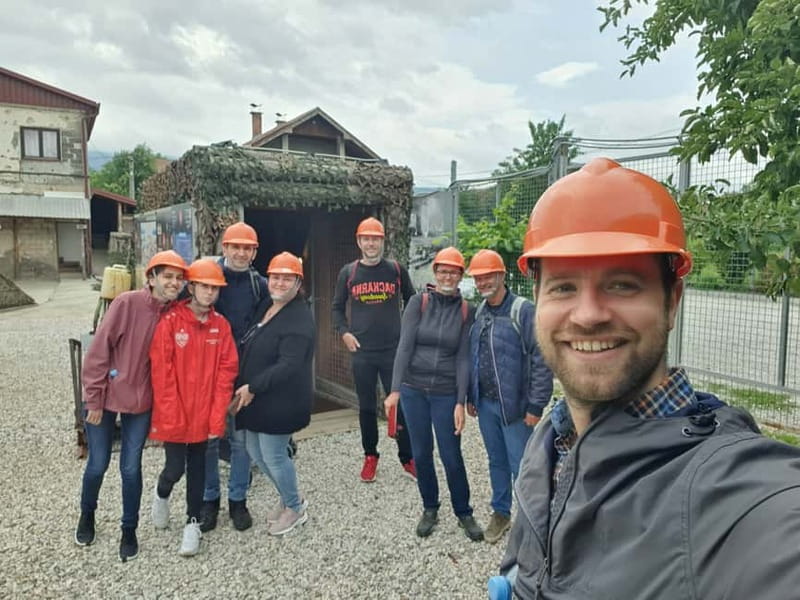
- The Tunnel of Hope gives the tour its emotional center: You walk through a preserved section of the passage that kept Sarajevo supplied during the siege.
- Your guide adds firsthand context: Guides such as Adnan, Adis, Mustafa, Samira, and Halid have been praised for explaining the war through personal experience as soldiers, civilians, or children who lived through it.
- Trebevic explains the military geography: The mountain’s views over Sarajevo also show why the surrounding heights were so important during the siege.
- The Olympic ruins add an unexpected layer: The abandoned bobsleigh and luge track turns a symbol of Sarajevo’s Olympic pride into a reminder of how war changed the city.
- You see more than a museum: The route includes the Jewish cemetery, Yellow Bastion, the Shehidi cemetery, and the grave of Alija Izetbegovic.
- Four hours is a useful length: You get serious historical context without giving up an entire day of sightseeing.
Why this half-day tour works so well
Sarajevo’s war history can feel difficult to understand from a city-center museum alone. The siege involved streets, hills, supply routes, apartment blocks, cemeteries, and mountain positions. This tour puts those pieces together while you move through the city and climb toward Trebevic.
The first 25 to 30 minutes are spent driving toward the Tunnel of Hope Museum. That transfer is not wasted time. Your guide introduces the breakup of Yugoslavia, the wars in Slovenia and Croatia, and the conflict in Bosnia and Herzegovina before you reach the museum. You also pass important buildings and locations that will make more sense once the presentation begins.
I like this order because it gives you a basic timeline first, then shows you physical places connected to it. The guide can point out the city as a wartime setting rather than treating the conflict as a list of dates.
The tour is conducted in English unless another language is requested. Transport is air-conditioned, and group sizes may be private or small. That matters here. The subject needs room for questions, and a smaller group usually makes it easier to ask about difficult details without feeling rushed.
Other tours covering the siege years and their sites:
- Fall of Yugoslavia, Sarajevo War Tour with Tunnel of Hope Museum and Frontlines
★ 5.0 · 1,314 reviews - ROSES OF SARAJEVO (Official WAR + CITY tour)- Story of a Survivor
★ 5.0 · 770 reviews - Sarajevo: Tunnel of Hope Tour – Survival and Resilience
★ 4.8 · 630 reviews
Entering the Tunnel of Hope Museum
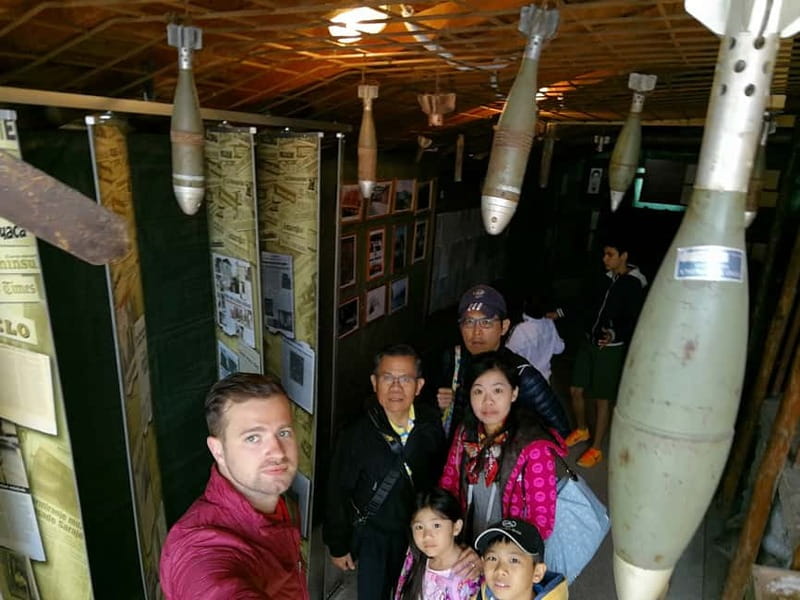
The Tunnel of Hope is the main reason to book this experience. During the siege of Sarajevo, the tunnel connected the city with territory beyond the airport runway. It provided a lifeline for food, medicine, equipment, and people when normal routes were blocked.
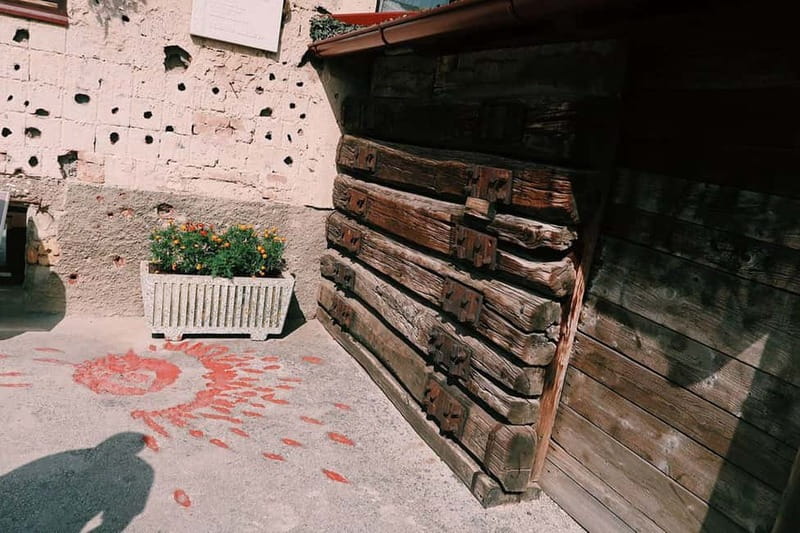
At the entrance, you see the Sarajevo Rose, a mark created where a mortar explosion struck the pavement and caused civilian deaths. Red resin fills some of these impact marks around the city. They are simple, quiet memorials, but they change how you read Sarajevo’s streets.
The museum includes a short film followed by a presentation lasting about an hour. This is where the guide explains the collapse of Yugoslavia, the regional wars, the siege of Sarajevo, and the tunnel’s construction and importance.
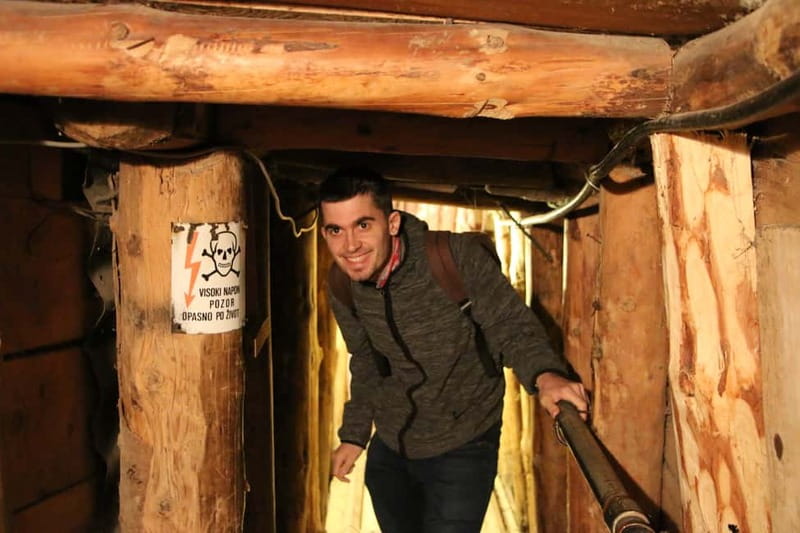
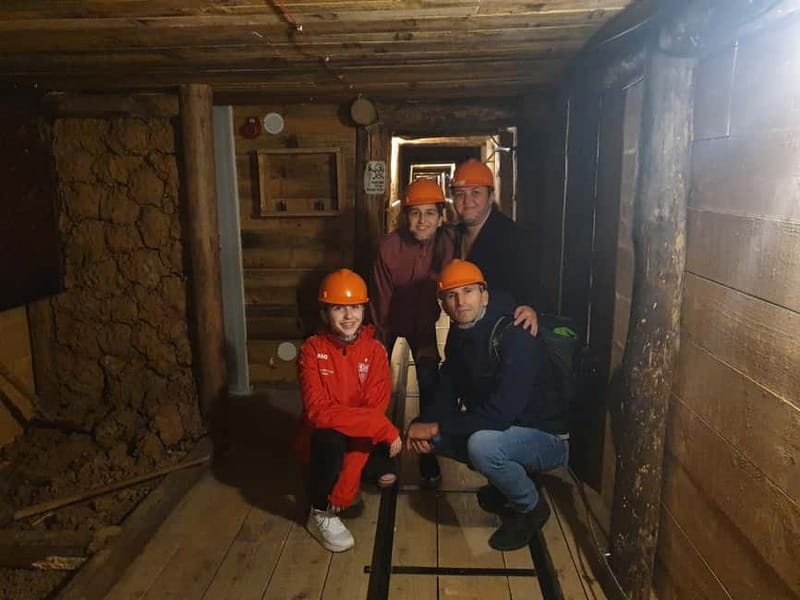
You walk through a preserved section of the tunnel. Do not expect a long underground expedition. The accessible portion is short, but its narrowness gives you a physical sense of the conditions. The value comes from the explanation around it. Without context, the tunnel is simply a cramped passage. With context, it becomes evidence of how a besieged population kept daily life going.
The presentation can be heavy. It deals with death, shortages, military pressure, and civilian suffering. I would not rush through this stop or treat it as a quick photo opportunity. Give yourself time to listen.
A guide with firsthand experience changes the tone. Adnan has been praised for explaining military strategy and civilian life with clarity, while Mustafa has shared memories of surviving the siege as a young teenager. Samira has also been described as combining broad political background with her own wartime experience. Your guide may be someone else, but the company’s guides are presented as veterans or survivors rather than only professional narrators.
Passing Sniper Alley and seeing Sarajevo from the road
The drive to and from the museum includes views of important city sites, including the area commonly known as Sniper Alley. The name refers to major roads and exposed routes that were dangerous during the siege because of fire from surrounding positions.
This part is easy to underestimate. You may not stop for a long walk at every location, but seeing the roads in relation to the hills helps explain why crossing the city was so risky. Sarajevo is surrounded by high ground, and the route makes that fact clear.
The tour may also pass Hotel Holiday, a building closely tied to the modern city and its wartime images. It is listed as a pass-by stop rather than a full visit, so think of it as part of the guide’s moving explanation, not a separate attraction with extended time.
The best way to use this part of the trip is to keep looking outward. Ask your guide which hills were controlled by which forces, how the city was supplied, and how ordinary people moved around during the siege. The geography is one of the tour’s strongest teaching tools.
Trebevic Mountain and the ruined Osmice hotel
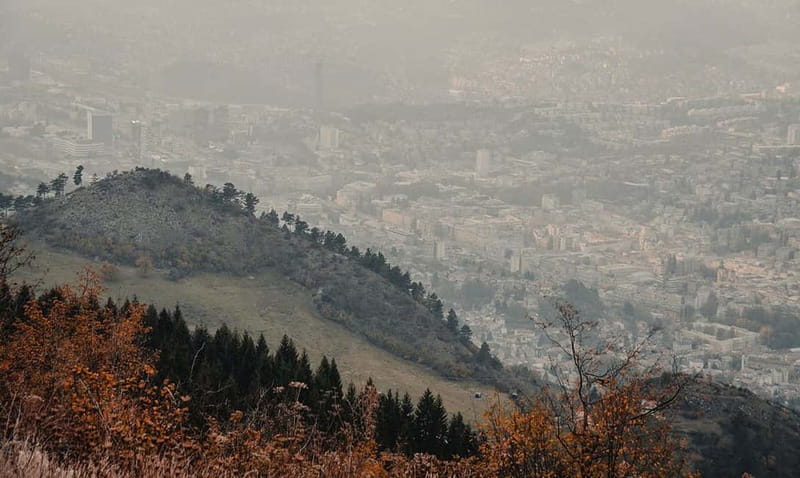
After the tunnel, the route heads toward Trebevic, the Olympic mountain closest to central Sarajevo. Trebevic hosted part of the 1984 Winter Olympic facilities and later became part of the front line during the siege.
The contrast is stark. A mountain associated with international sport and civic pride also offered commanding views over the city. Those same views helped make the surrounding heights valuable military positions.
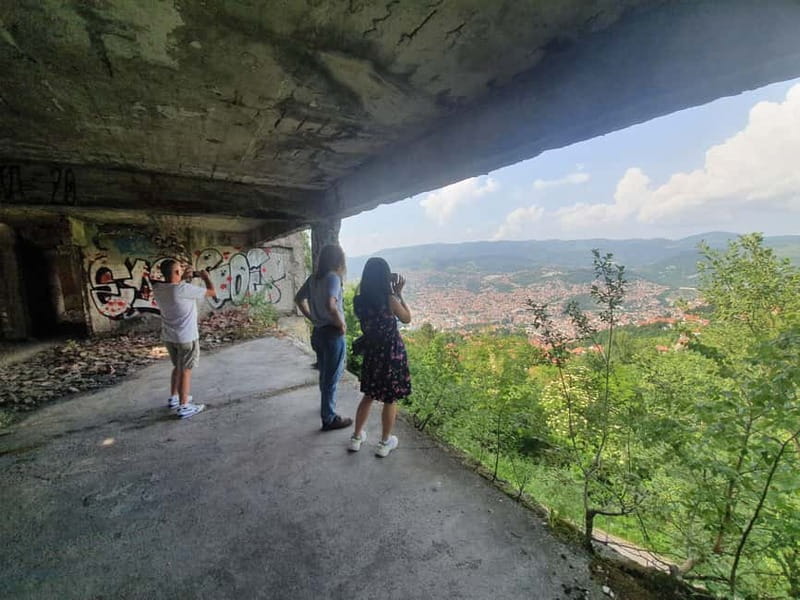
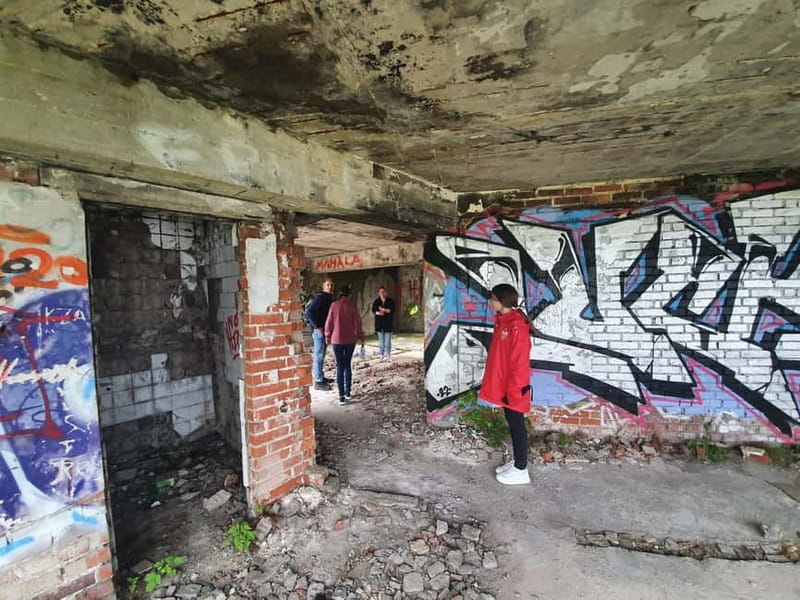
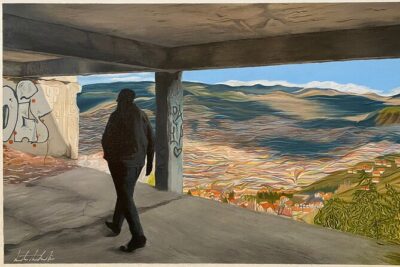
At the destroyed hotel-restaurant Osmice, you may enter the remains and walk through part of the ruined structure. This is a rougher stop than the museum. It is not a polished attraction, and conditions can feel abandoned and uneven. Wear sensible shoes and follow the guide’s instructions.
The building matters because it lets you see how war damage remains part of the mountain setting. At the same time, you should approach it with respect. Ruins are not merely dramatic backdrops, and the guide’s explanation is what gives the stop meaning.
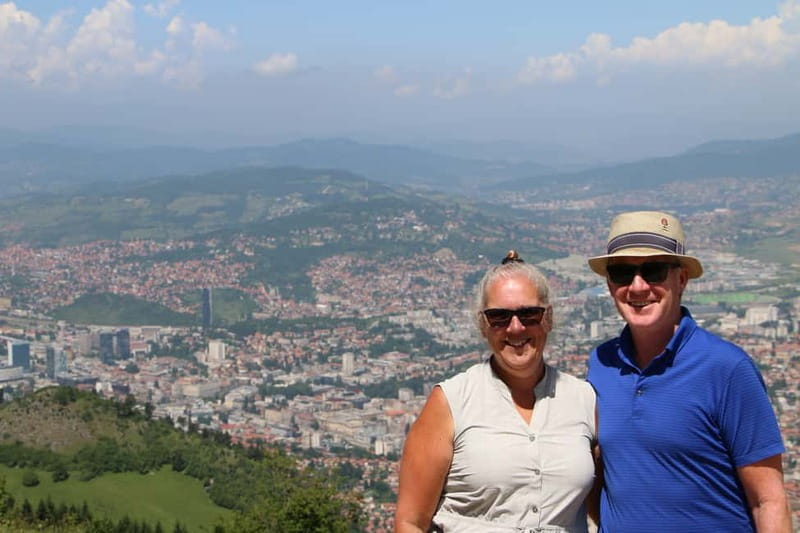
From Trebevic, you get one of the finest panoramic views of Sarajevo. The view is beautiful, but the guide will also explain that these heights were used against the city. That double meaning is central to the tour: the same place can offer peace to you now and still carry painful memories for residents.
Weather can affect this stop. Fog, clouds, or winter conditions may limit the panorama, but they can also make the abandoned Olympic area feel especially atmospheric. The tour does not promise clear mountain views, so keep expectations practical.
Museums worth an hour in Sarajevo:
- Tunnel Museum: Bosnian & Yugoslav Wars Tour with War Veteran
★ 5.0 · 551 reviews - Cable Car Olympic Tour With Museum
★ 5.0 · 17 reviews - SARAJEVO CONCEPTUAL ART TOUR (galleries, art and arhitecture)
★ 5.0 · 7 reviews - Sarajevo: A City Under Siege – War Tour With Tunnel Museum
★ 5.0 · 4 reviews
Walking the abandoned Olympic bobsleigh and luge track
The 1984 Sarajevo Olympic bobsleigh and luge track is one of the route’s most unusual stops. It sits in a wooded area on Trebevic and has been left in a damaged, abandoned state.
You have time for photographs, a guided visit, and some free time. The track is visually striking because its original purpose is easy to recognize, even as neglect and war damage have changed it. For many people, this becomes the lighter and more surprising part of a serious tour.
I would not treat it as a separate Olympic history visit. The focus is on the track’s connection to the city, the mountain, and the war. Your guide may explain how the area was used during the conflict and how Sarajevo’s Olympic identity was affected.
This stop can work well for families and younger visitors because it is more physical and visual than the museum presentation. Still, the whole tour concerns war, so it is best for children who can handle difficult history. One family found that even elementary-aged children stayed engaged because the guide connected large political events with personal stories.
The track also breaks up the indoor museum time. After an hour of film and presentation, being outside helps you process what you have heard.
The Jewish cemetery and Bosnia’s unusual tombstones
Below Trebevic, the tour visits Sarajevo’s Jewish cemetery, described as the second largest Jewish cemetery in Europe. The cemetery is an important part of the city’s multicultural story and another place where the hills and wartime positions come together.
The tombstones have distinctive shapes associated with Bosnia and Herzegovina. Their forms are believed to have been influenced by medieval Bosnian tombstones known as stecak. Your guide can explain how this local visual tradition fits into Sarajevo’s wider religious and cultural history.
This is a quieter stop, and I appreciate the change of pace. The cemetery gives the tour space to consider Sarajevo before the 1990s war, not only the siege itself. It also reminds you that the city’s identity cannot be reduced to one conflict.
You should expect a respectful visit rather than a long formal cemetery tour. The stop is listed for photographs, a guided explanation, and a short visit. Keep your voice low and avoid treating the graves as scenery.
Yellow Bastion and the final view over the old city
The route then heads toward the old Ottoman part of Sarajevo and stops at Yellow Bastion. This fortification offers another view over the city, including the historic center and surrounding slopes.
It is a useful final viewpoint because you can connect the older Ottoman city with the modern streets and wartime sites seen earlier. Sarajevo’s layers sit close together here. A short drive can take you from a medieval or Ottoman setting to buildings marked by recent conflict.
The stop is primarily for photographs and explanation. If you want a long visit inside a fortress, this tour may not provide that. Its strength is the guide’s interpretation and the view, not an extended architectural inspection.
Timing can affect the atmosphere. Some tours finish around sunset, and that can make a memorable close to a serious afternoon. The lighting may be lovely, but the real value is that you now understand the city below in a different way.
The Shehidi cemetery and Alija Izetbegovic’s grave
The final stop is the Shehidi, or Martyr, cemetery, where soldiers who died for an independent Bosnia and Herzegovina are buried. In the center is the grave of Alija Izetbegovic, Bosnia and Herzegovina’s first president.
This stop adds political and national context to the earlier focus on civilian survival. It also gives your guide an opportunity to explain how the war is remembered in Bosnia today.
The cemetery is not an attraction to rush through. I would listen carefully and ask questions about the memorial traditions, the conflict, and how different communities remember the same period. Guides such as Adnan have been praised for offering measured explanations rather than turning the tour into a simple political speech.
Because the tour ends here or nearby, you can continue into Sarajevo’s old town afterward. That makes the schedule practical. You can finish with coffee or a meal in the Ottoman quarter while continuing to think about what you have seen.
Guide quality is the main reason to book
The strongest part of this experience is the human explanation. The company uses war veterans and survivors, and several guides have shared firsthand memories of fighting, defending Sarajevo, or growing up during the siege.
Adnan is known for clear explanations, personal stories, and a calm approach to complicated political questions. Adis has been praised for connecting military geography with his own role in the defense of Sarajevo. Mustafa’s stories of surviving the war as a child or teenager add a civilian perspective, while Samira has been described as warm, patient, and careful when discussing painful memories.
Guide assignments can change, so you cannot assume you will receive a particular person. Still, the common strength is clear: the tour is not only a sequence of dates. You can ask questions and hear how large events affected daily life.
That personal element also requires sensitivity. A veteran guide may describe experiences that are difficult to hear. I would avoid pushing for sensational details and instead ask open questions about survival, the city, and how Sarajevo rebuilt its life.
Is $36 a fair price?
At about $36 per person, this is a strong half-day value if the price includes transport, the guide, and the Tunnel of Hope entrance fee. The museum entrance is listed as 10 EUR when the included-ticket option is selected, so check the exact booking choice before paying.
You are covering several locations spread across Sarajevo and Trebevic, which would be awkward to visit efficiently without a vehicle. You also receive about four hours of explanation from a guide who can connect the sites into one story.
A private option costs more than a shared small-group booking, but it may suit families or people who want extra time for questions. A small group keeps the cost down while still offering a more personal format than a large coach tour.
The tour does not include personal expenses. Plan for your own food, drinks, and any other purchases. Pickup from your Sarajevo hotel is optional on the private version, while the standard meeting point is the Info Bosnia Tourist Information Center on the main pedestrian street, close to the Sarajevo Meeting of Cultures marker.
Free cancellation up to 24 hours before departure and reserve-now, pay-later booking make it easier to fit the tour around changing plans.
Who should book this Sarajevo war tour?
I would choose this tour if you want to understand Sarajevo through its recent past, not just photograph its old buildings. It suits history-minded visitors, first-time arrivals who want a strong orientation, and anyone interested in military geography, memory, and civic resilience.
It is also a good choice if you have only a few days in Sarajevo. In four hours, you reach the tunnel, the mountains, Olympic ruins, a Jewish cemetery, viewpoints, and a wartime cemetery. You will not study every site in full, but you will see the key places in a coherent order.
I would think twice if you want a cheerful sightseeing outing or dislike emotionally heavy subjects. The mountain views and Olympic track bring variety, but the central theme remains war and the suffering of Sarajevo’s people.
Wear comfortable shoes, bring water, and allow room for changing mountain weather. Most important, arrive ready to listen. The tour works best when you treat the places as memorials and living history, not just unusual photo stops.
Should you book it?
Yes, if you want a serious and personal introduction to the Siege of Sarajevo. The Tunnel of Hope is essential, but the tour becomes much more useful because Trebevic shows you the high ground, the Olympic track shows the city’s broken continuity, and the cemeteries widen the story beyond military events.
Book the small-group option for the best balance of cost and conversation. Choose private if you are traveling with family or want to ask many questions. If possible, confirm whether the Tunnel entrance fee is included and be prepared for a guide assignment that may vary.
This is one of the better ways to understand why Sarajevo looks the way it does today. It is moving, sometimes upsetting, and far more meaningful than a quick museum visit on its own.
FAQ
How long does the Sarajevo Tunnel Museum war tour last?
The tour lasts four hours, including transportation between the meeting point, the Tunnel of Hope, Trebevic Mountain, the cemetery stops, Yellow Bastion, and the drop-off location.
Where does the tour begin?
The standard meeting point is the Info Bosnia Tourist Information Center on Sarajevo’s main pedestrian street, close to the Sarajevo Meeting of Cultures marker. Hotel pickup is available if the private option is selected.
Is the Tunnel of Hope entrance fee included?
The 10 EUR museum entrance fee is included when you select the option that includes admission. Check the exact option when booking because inclusion depends on the choice made.
Is the tour conducted in English?
Yes. English is the listed tour language, unless another language is requested.
Can I book a private tour?
Yes. Private and small-group options are available. Pickup and drop-off are included if the private option is selected.
Can I cancel the tour for a refund?
You can cancel up to 24 hours in advance for a full refund. Reserve-now, pay-later booking is also available.
Newest around Sarajevo
- Understanding Srebrenica Genocide + Lunch with Local Family★ 4.9 · 14 reviews
- Private Full Day Safari Tour★ 5.0 · 8 reviews
- Sarajevo: Trebević Mountain Summit Hiking Tour★ 4.2 · 2 reviews
- From Sarajevo: Kozice Waterfalls Hiking Experience in Nature★ 5.0 · 2 reviews
- Sarajevo Under Siege: A War History Tour★ 5.0 · 10 reviews
- Mysterious Visoko Pyramids Driving and Walking Tour★ 5.0 · 7 reviews
- WAR TUNNEL – Sarajevo’s only way of a communication during the WAR – Top secret★ 5.0 · 12 reviews
- Ultimate Gastro Experience★ 4.5 · 14 reviews
War History & Siege Tours, compared.
Fall of Yugoslavia, Sarajevo War Tour with Tunnel of Hope Museum and Frontlines
Read our review →
ROSES OF SARAJEVO (Official WAR + CITY tour)- Story of a Survivor
Read our review →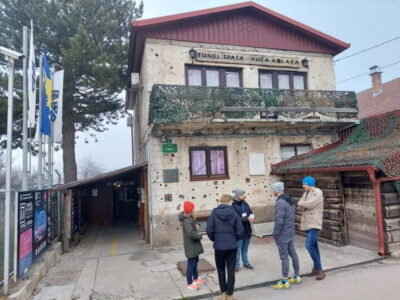
Tunnel Museum: Bosnian & Yugoslav Wars Tour with War Veteran
Read our review →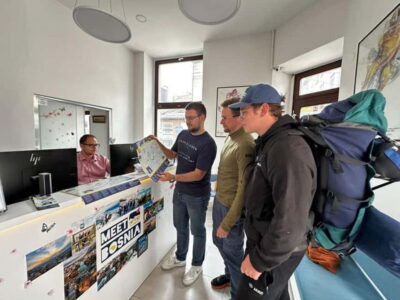
Bosnian War & Fall of Yugoslavia Tour with Tunnel
Read our review →
Sarajevo War Tour: A Veteran’s Story of the Siege (fees included)
Read our review →
Srebrenica Genocide Study Tour with War Veteran
Read our review →Browse the lists this tour appears in