
Review · WAR HISTORY & SIEGE TOURS
Understanding Srebrenica Genocide + Lunch with Local Family
Some journeys ask for your attention. This one earns it. From Sarajevo, you travel into eastern Bosnia with a guide who explains the breakup of Yugoslavia, the war, and the Srebrenica Genocide before you reach Potočari. I especially like the survivor-led visit at the memorial and the home-cooked lunch with a local family, two parts that turn a difficult history lesson into a human encounter.
The main drawback is the long road time. You spend about five hours in the van, and the full day lasts roughly 11 hours. Still, the route gives your guide time to explain how events in Bosnia and the Podrinje region led to Srebrenica, so the drive is not empty transfer time. The $100 price includes transport, guides, lunch, and hotel pickup, which makes the cost easier to justify.
This is not a light sightseeing outing, and it should not be treated like one. You will hear about mass killings, forced displacement, mass graves, and the failure of international protection. If you are prepared to listen with care, this is one of the most meaningful day trips you can take from Sarajevo.
In This Review
- Key points to know before booking
- Why Srebrenica requires a full day from Sarajevo
- The Potočari Memorial Centre and cemetery
- The former UN base and the museum’s evidence
- A home-cooked lunch with a family in Srebrenica
- A short look at Srebrenica town
- The guide makes or breaks a difficult subject
- Is the $100 price good value?
- Practical advice for handling the day
- Who should book this Srebrenica experience?
- Should you book it?
- FAQ
- Where does the tour begin and end?
- How long does the experience last?
- How much time do you spend at the Potočari Memorial Centre?
- Is the entrance fee to the memorial included?
- Is lunch included?
- How large is the group?
Key points to know before booking
- A survivor leads part of the Potočari visit: The local memorial guide shares firsthand experience and explains the site from a personal point of view.
- The former UN base is part of the story: You see exhibitions, documentary films, graffiti, photographs, and the Memorial Room connected to the genocide.
- Lunch supports life in Srebrenica today: The family meal gives you traditional food, conversation, and a direct way to support a community facing unemployment and discrimination.
- The van ride provides essential context: Your English-speaking guide explains the fall of Yugoslavia and the wider war in Bosnia before you arrive.
- Groups are limited to eight people: That small size suits a serious subject and leaves room for questions.
- Plan on an early, full day: Pickup is around 8 a.m., with a return to Sarajevo around 6 or 7 p.m.
Why Srebrenica requires a full day from Sarajevo
Srebrenica is not a quick stop on the way to somewhere else. It lies in eastern Bosnia and Herzegovina, in an area marked by steep mountain scenery, small towns, and villages connected to the war of the 1990s. From Sarajevo, the drive takes about two and a half hours each way.
That distance is the first practical fact to accept. You will spend much of the day in a van, but this is also where the tour builds its foundation. A good explanation of Srebrenica cannot begin at the cemetery alone. You need to understand Yugoslavia’s breakup, the aggression against Bosnia and Herzegovina, and the particular suffering of eastern Bosnia, also known as Podrinje.
Your guide uses the road to put the day in order. You pass towns and villages where similar wartime events took place, and the scenery gives way to a serious conversation about how political collapse became organized violence. The aim is not to drown you in dates. It is to show why Srebrenica was part of a wider campaign rather than an isolated incident.
This context matters because the memorial can otherwise feel like a collection of tragic facts without a clear timeline. The guide helps connect the places outside the van window with the events you will study later. That makes the long transfer more useful than a simple shuttle ride.
Other tours covering the siege years and their sites:
- Fall of Yugoslavia, Sarajevo War Tour with Tunnel of Hope Museum and Frontlines
★ 5.0 · 1,314 reviews - Sarajevo: Tunnel Museum Yugoslavia War Tour with War Veteran
★ 5.0 · 1,111 reviews - ROSES OF SARAJEVO (Official WAR + CITY tour)- Story of a Survivor
★ 5.0 · 770 reviews
The Potočari Memorial Centre and cemetery
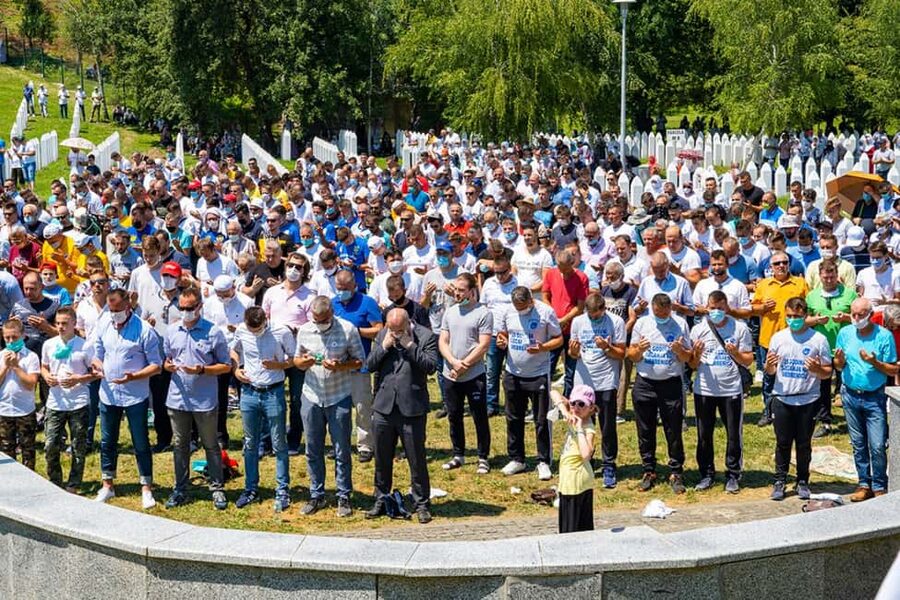
The first major stop is the Potočari Memorial Centre, where you spend about three hours. The entrance itself is free, but the tour arranges the visit in advance so you have access to a local guide or survivor and can make better use of your time.
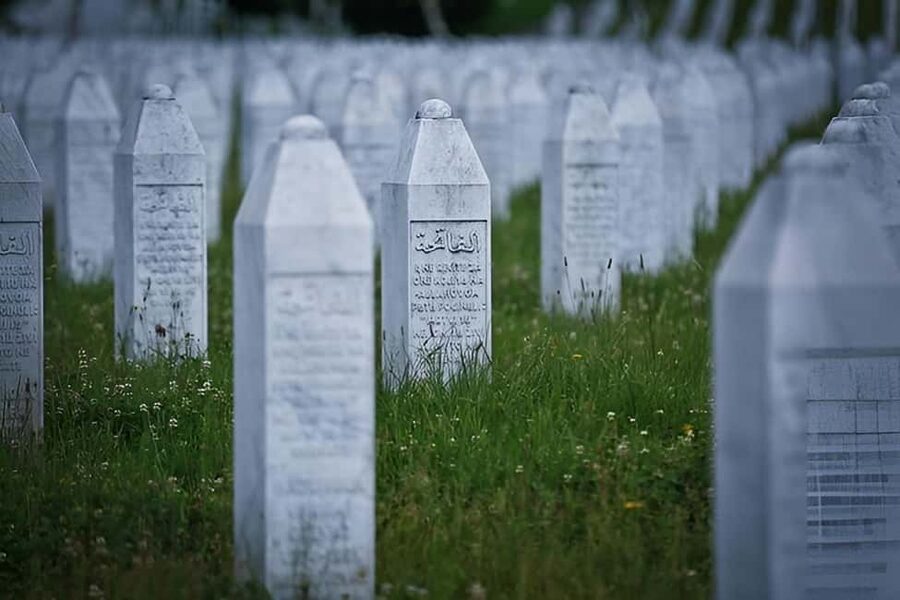
The cemetery is the most visible part of the site. Rows of white gravestones mark victims of the Srebrenica Genocide, and the scale of the burial ground is difficult to take in quickly. Give yourself time here. This is not a place for hurried photographs or casual conversation.
The local guide is a survivor of the events. That personal connection changes the tone of the visit. You are not only receiving a prepared account from someone who studied the subject. You are hearing the story from a person whose life was directly shaped by it.
The guide can answer questions about the genocide, the war, and the memorial itself, including questions of a personal nature. You should still use judgment and respect. Curiosity is useful, but this is not a setting for pressing someone to recount pain simply to satisfy your interest.
The former UN base and the museum’s evidence
The former UN base adds another layer to the visit. Here, the museum examines the Srebrenica Genocide and what it presents as the failure of the international community. The site includes documentary films, a chronological photo exhibition, the Memorial Room, and graffiti left behind in the base.
These details matter because they show the international setting around the events. The memorial is not only about the people who were killed. It also asks how an area under international protection could become the scene of mass murder.
You may see material about mass graves, personal stories, and the base’s role during the conflict. The documentary films and photo displays can be emotionally hard, so take breaks if you need them. Three hours gives the guide room to explain the exhibits without forcing you to rush from one display to the next.
The museum is not designed as a polished attraction. Its power comes from direct evidence and personal accounts. Some of the material may feel stark or heavy-handed, particularly if you prefer a more detached museum style. That is part of the purpose, though. The site asks you to confront the consequences of decisions made by governments, armies, and international institutions.
A home-cooked lunch with a family in Srebrenica
The most distinctive part of the day comes after the memorial, when you share lunch with a local family. The meal takes about an hour and a half and is prepared at home rather than served in a standard restaurant.
I like this choice for two reasons. First, you get traditional food in a setting where conversation matters as much as the meal. Second, your money goes directly into a local community affected by unemployment, genocide denial, and discrimination against the predominantly Bosniak population in Srebrenica.
The lunch is not presented as a staged cultural show. The purpose is to meet people living with the region’s past and present. Families may share beautiful memories as well as painful ones, and the conversation can help you understand that Srebrenica is not frozen in 1995. People continue to work, raise families, and try to maintain a life there.
Food can open a door that a museum sometimes cannot. Around a table, you can ask about daily life, local customs, and the community’s future. You also get a better sense of the region beyond its wartime identity.
Recent experiences with this tour have praised the meal for being generous and delicious, with one person calling it the best traditional food they had in Bosnia. You should keep your expectations practical: the point is not a restaurant-style tasting menu. It is a warm local meal and a chance to support residents through responsible tourism.
Same corner of the country, a different kind of day:
- Sarajevo: Mostar, Konjic, Blagaj Tekke, Pocitelj & Waterfall
★ 4.9 · 1,666 reviews - Sarajevo: Grand Walking Tour Through Time and Cultures
★ 4.8 · 1,236 reviews - Sarajevo: Mostar, Konjic, Sufi House, Pocitelj & Kravice Falls
★ 5.0 · 1,179 reviews - Sarajevo: Tunnel of Hope Tour – Survival and Resilience
★ 4.8 · 630 reviews
A short look at Srebrenica town
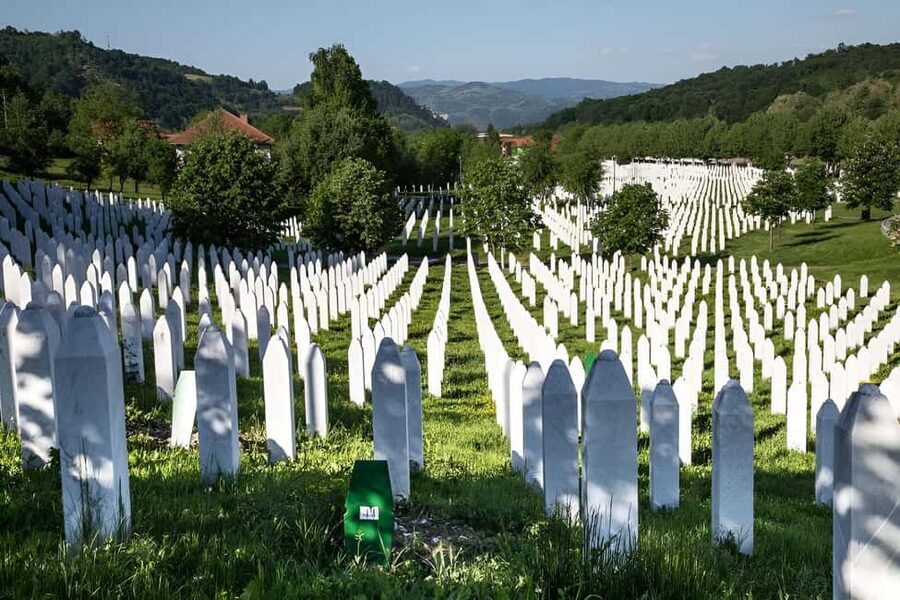
After lunch, the tour includes a guided visit of Srebrenica lasting about 15 minutes. That is brief, so do not expect a long walking tour or a broad exploration of the town.
The short stop works as a final look at the place where people live today. After the cemetery and former UN base, seeing the town helps you connect the memorial’s history with ordinary present-day surroundings.
The limited time is also a drawback. If you want extensive independent exploration, shopping, or photography, this schedule will feel tight. The day’s focus remains the genocide and the local family visit, not a full town tour.
The guide makes or breaks a difficult subject
Your main guide accompanies you from Sarajevo and speaks English. This person provides the historical framework during the drive, answers questions, and helps you move between the memorial, lunch, and town visit.
The guides bring different personal backgrounds. One guide named Edo is described as having fought in the war himself, giving him a direct connection to the period and a large amount of subject knowledge. A personal wartime connection can make the explanations vivid, but it can also make the day more emotionally intense.
The guide’s role is especially important because Srebrenica is a subject where facts, memory, politics, and grief often collide. You want clear explanations, but you also need room for complexity and respectful questions. The tour is designed for that kind of exchange, with no need to keep your questions until the end.
The small group limit of eight helps. You are less likely to feel lost in a crowd, and there is more space for conversation with the guide and local family. Shared tours are the standard arrangement unless you book privately, so the group may include people with different levels of background knowledge and different emotional reactions.
Is the $100 price good value?
At $100 per person, this is not the cheapest day trip from Sarajevo. The drive is long, and a large part of the day takes place in the van. One practical criticism is that the price could feel high when you count the travel time.
The cost includes hotel pickup and drop-off, transfers, an experienced English-speaking guide, the arrangements at Potočari, a local memorial guide, and lunch with a survivor family. The memorial entrance is free, but the advance arrangement is valuable because it helps secure a personal guide or survivor-led visit.
I see the price as fair if you want a structured, informed experience. Organizing the transport, memorial visit, local guide, and family meal on your own would require more planning, and you might miss the historical connections supplied during the drive.
The responsible tourism element also matters. Your lunch payment helps direct tourism income to Srebrenica residents rather than keeping all spending within Sarajevo. It does not solve the region’s economic and political problems, but it offers a more direct form of support than simply passing through the town.
Practical advice for handling the day
Wear comfortable shoes. You will spend time at the memorial complex and may walk between different parts of the site. Bring water, especially in warmer weather, and bring a camera only if you can use it respectfully.
A headscarf is listed among the recommended items. Smart-casual clothing is requested, which is sensible for a memorial, a former UN base, and a private family home. Dress with the tone of the day in mind.
Do not plan another major activity for the evening. Pickup is around 8 a.m., and you should expect to return to Sarajevo around 6 p.m. or as late as 7 p.m. The road trip, memorial, films, cemetery, conversation, and lunch make for a long and emotionally demanding schedule.
You can cancel up to 24 hours before departure for a full refund, and you can reserve now and pay later. Those terms are useful if your Bosnia plans are still changing, but the key decision is emotional readiness rather than booking flexibility.
Who should book this Srebrenica experience?
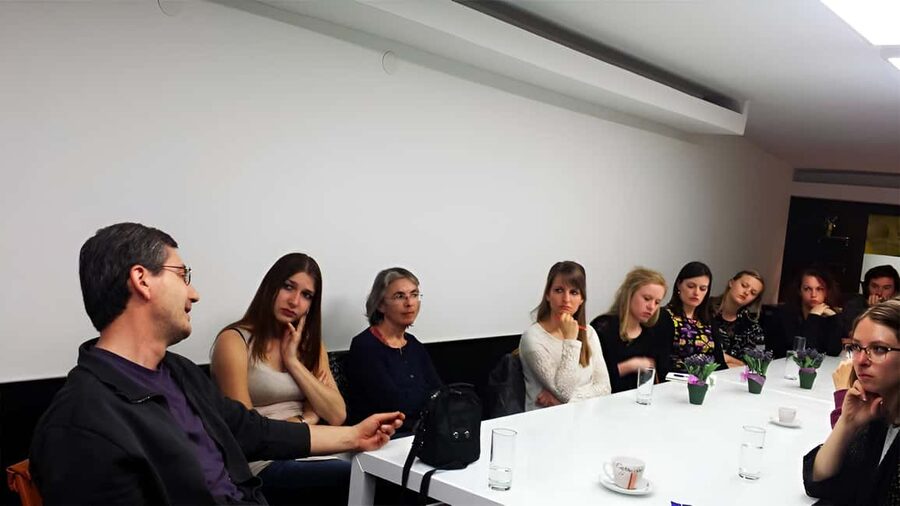
I recommend it to you if you want to understand the Bosnian War through both historical explanation and personal testimony. It suits visitors who prefer a serious, human-scale experience instead of a quick stop for photographs.
It is also a strong choice if you value responsible tourism. The family lunch is not an extra decoration added to the itinerary. It is one of the clearest ways to meet people from Srebrenica and contribute to local livelihoods.
This tour may not suit you if you want a relaxed day in the countryside, a short transfer, or a light introduction to Bosnia. The subject is painful, the day is long, and the museum content can be difficult. You should also leave room for silence and reflection rather than expecting constant entertainment.
Should you book it?
Book this tour if you have one full day in Sarajevo and want to understand why Srebrenica matters within the wider story of Bosnia and Herzegovina. The survivor guide, former UN base, cemetery, and family lunch work together in a way that a self-guided visit may not.
The best reason to go is the combination of careful historical context and direct human contact. The strongest caution is the five hours of driving and the emotional weight of the subject. For a serious, well-organized day that supports local residents, the $100 cost is reasonable, and the 4.9 rating from 14 verified bookings reflects the experience’s strong reputation.
FAQ
Where does the tour begin and end?
Pickup and drop-off are provided in Sarajevo. The driver can meet you in front of your hotel or at the tour office.
How long does the experience last?
The full experience lasts about 11 hours. Pickup is around 8 a.m., and arrival back in Sarajevo is expected around 6 p.m. or 7 p.m.
How much time do you spend at the Potočari Memorial Centre?
The planned visit lasts about three hours and includes the cemetery, museum material, documentary films, photo exhibitions, the Memorial Room, and the former UN base.
Is the entrance fee to the memorial included?
Entrance to the Potočari Memorial Centre is free. The tour arranges the visit in advance so you can meet a local guide or genocide survivor and receive a more informed tour.
Is lunch included?
Yes. You share a home-cooked meal with a local survivor family in the Srebrenica area. The meal supports local residents and provides an opportunity to discuss life and history with people from the community.
How large is the group?
The shared tour is limited to eight participants. Private tours are available only when booked specifically as private.
Newest around Sarajevo
- Private Full Day Safari Tour★ 5.0 · 8 reviews
- Sarajevo: Trebević Mountain Summit Hiking Tour★ 4.2 · 2 reviews
- From Sarajevo: Kozice Waterfalls Hiking Experience in Nature★ 5.0 · 2 reviews
- Sarajevo Under Siege: A War History Tour★ 5.0 · 10 reviews
- Mysterious Visoko Pyramids Driving and Walking Tour★ 5.0 · 7 reviews
- WAR TUNNEL – Sarajevo’s only way of a communication during the WAR – Top secret★ 5.0 · 12 reviews
- Ultimate Gastro Experience★ 4.5 · 14 reviews
- Mostar & Kravica Waterfall: Full-Day Adventure from Sarajevo★ 5.0 · 2 reviews
War History & Siege Tours, compared.
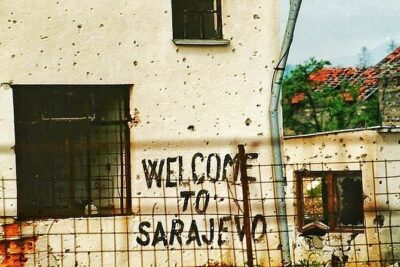
Fall of Yugoslavia, Sarajevo War Tour with Tunnel of Hope Museum and Frontlines
Read our review →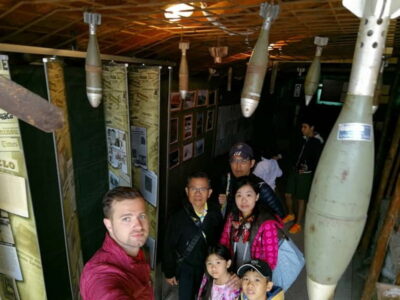
Tunnel Museum Yugoslavia War Tour with War Veteran
Read our review →
ROSES OF SARAJEVO (Official WAR + CITY tour)- Story of a Survivor
Read our review →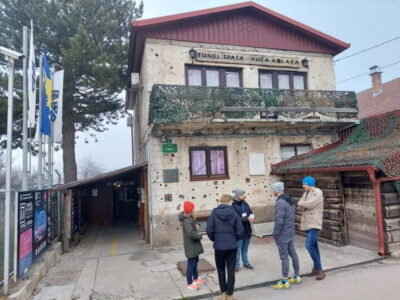
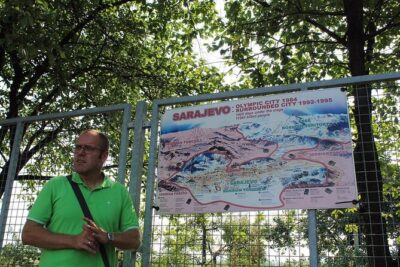
Tunnel Museum: Bosnian & Yugoslav Wars Tour with War Veteran
Read our review →
Bosnian War & Fall of Yugoslavia Tour with Tunnel
Read our review →
Sarajevo War Tour: A Veteran’s Story of the Siege (fees included)
Read our review →Browse the lists this tour appears in