
Review · WAR HISTORY & SIEGE TOURS
Sarajevo Under Siege: A War History Tour
Sarajevo remembers every street. This three-hour private tour brings the city’s wartime story into focus through personal accounts, the Tunnel of Salvation, Sniper Alley, and the ruins and memorials that still shape daily life. I especially like the White Fortress viewpoint at the start and the guide’s connection to the neighborhood where he grew up during the siege.
I also like the thoughtful route, which moves from a broad view of Sarajevo to intimate family history, then to the military and political divisions that followed. Guides including Suvad and Evan have been praised for clear explanations and sensitive storytelling. The main consideration is emotional weight: this is not a light sightseeing outing, and the Tunnel entrance costs extra.
In This Review
- Key points to know before you book
- Why Sarajevo’s siege history needs a full afternoon
- White Fortress gives you the map in one glance
- A childhood neighborhood, not just another war site
- Sniper Alley makes ordinary errands feel extraordinary
- The Tunnel of Salvation is the tour’s essential stop
- Lukavica explains Bosnia’s difficult postwar map
- Sarajevo City Hall links culture with wartime loss
- A private vehicle makes the three-hour route work
- What the $30.10 price really covers
- Who will appreciate this Sarajevo war tour
- Practical advice for making the most of it
- Should you book Sarajevo Under Siege?
- FAQ
- How long does Sarajevo Under Siege last?
- What time does the tour start?
- Where does the tour start and finish?
- Is hotel pickup available?
- Is the tour private?
- What language is the tour offered in?
- Is the Tunnel of Salvation entrance included?
- Can I cancel for a full refund?
Key points to know before you book
- A personal war story: The tour includes the neighborhood where the guide lived as a child, the street where he played, and the place where his father was buried.
- The Tunnel of Salvation: You walk through part of the original wartime tunnel, see artifacts, and watch a short documentary.
- A useful city overview: The White Fortress gives you a strong visual introduction to Sarajevo’s position and wartime geography.
- Postwar divisions are part of the route: A drive through Lukavica explains the border between the Federation of Bosnia and Herzegovina and Republika Srpska.
- Private transport keeps the route practical: Your group travels in an air-conditioned vehicle with WiFi, rather than trying to connect distant sites by public transportation.
- Budget for the entrance fee: The tour price is $30.10 per person, with an additional adult entrance fee of €10.25 or a student fee of €5.25.
Why Sarajevo’s siege history needs a full afternoon
Sarajevo’s 1992 to 1995 siege can feel abstract if you only read about it in a museum. This tour makes the geography understandable. You see the hills, roads, airport area, neighborhoods, and former front lines that shaped the city’s daily struggle.
The route also avoids reducing the war to dates and military movements. Personal memories are central. You hear about childhood under shelling, the search for food and water, and the fear of crossing streets watched by snipers. That human scale is the strongest reason to choose this experience.
I would not book it as a casual introduction to Sarajevo if you want only food, architecture, and cheerful city stories. I would book it if you want to understand why Sarajevo feels the way it does today, and why modern streets can carry such heavy memories.
More History Tours in Sarajevo
- Sarajevo Full Day Tour: History, Culture, Nature, War & Olympics
★ 5.0 · 27 reviews - Sarajevo genuine walking tour: Steps through history
★ 5.0 · 22 reviews - SARAJEVO STREET ART TOUR (art, history & mystery) – sARTajevo!
★ 5.0 · 18 reviews
White Fortress gives you the map in one glance
The tour begins at Bijela Tabija, or the White Fortress, a historic fortification built in the 16th century. Its main gift is the view. From the hillside, you can see Sarajevo spread below you and begin to understand the city’s position between surrounding heights.
Your guide uses this setting to explain Sarajevo’s importance from Ottoman times through the siege. It is a smart first stop because the rest of the tour depends on geography. Once you can see the valley and hills, Sniper Alley and the former front lines become easier to picture.
The stop lasts about 30 minutes, and admission is listed as free. Bring sturdy shoes and be ready for an outdoor viewpoint rather than a polished indoor attraction. The setting is scenic, but the subject quickly turns serious. The contrast is striking: a broad city view introduces a place where ordinary movement once became dangerous.
A childhood neighborhood, not just another war site
Near Zetra Olympic Hall, the guide shares his connection to the area. This was the neighborhood where he lived during the siege, close to a former maternity hospital that was heavily bombed.
The stop includes the street where he grew up and played, along with the place where his father was buried. These details give the tour a personal center. You are not simply being shown a site connected to a headline. You are hearing how war altered a child’s neighborhood and a family’s life.
The listed visit lasts about 15 minutes, so do not expect a long cemetery or museum visit here. Its value comes from the explanation. Guides such as Suvad have been praised for sharing firsthand experience with care, while Evan has also received strong praise for personal stories and clear narration.
This is the point where the tour may become difficult emotionally. That is not a flaw, but you should know it in advance. The guide’s story is likely to make the history more immediate than a standard sightseeing talk.
Sniper Alley makes ordinary errands feel extraordinary
The vehicle then follows one of Sarajevo’s most infamous wartime roads, commonly known as Sniper Alley. During the siege, the avenue was exposed to sniper fire. Crossing it could mean risking your life simply to reach work, collect food, find water, or seek medical help.
Today, the road is surrounded by the signs of a functioning city. That normal appearance is part of the lesson. You can look at the modern buildings and struggle to picture the same avenue as a place of constant danger.
This is a drive-through section rather than a long walking stop. That keeps the schedule moving, but it also means the guide’s explanation matters. Ask questions if you want help connecting what you see now with the wartime photographs and accounts you may already know.
I like this part because it shows how war is often experienced. Not every important moment happens at a famous monument. Sometimes it is a person deciding if the trip for bread is worth crossing an exposed road.
Other tours covering the siege years and their sites:
- Fall of Yugoslavia, Sarajevo War Tour with Tunnel of Hope Museum and Frontlines
★ 5.0 · 1,314 reviews - Sarajevo: Tunnel Museum Yugoslavia War Tour with War Veteran
★ 5.0 · 1,111 reviews - ROSES OF SARAJEVO (Official WAR + CITY tour)- Story of a Survivor
★ 5.0 · 770 reviews - Sarajevo: Tunnel of Hope Tour – Survival and Resilience
★ 4.8 · 630 reviews
The Tunnel of Salvation is the tour’s essential stop
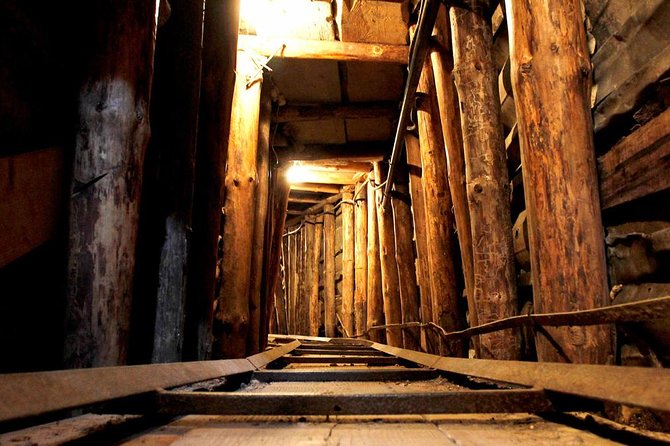
The Tunnel of Salvation, also called the Tunnel of Hope, is the central site on this route. Dug beneath the airport runway in 1993, the passage connected besieged Sarajevo with the outside world.
The tunnel carried food, medicine, and other supplies into the city. It also offered a route for people trying to escape or maintain contact with areas beyond the siege. You walk through a surviving section of the original passage, view wartime objects, and watch a short documentary.
The visit lasts about 1 hour and 20 minutes, making it the longest part of the experience. That extra time is worthwhile. The tunnel gives physical meaning to the word lifeline. Its cramped form helps you grasp the effort involved in keeping a city supplied under attack.
The entrance fee is not included. Adults pay €10.25, while students pay €5.25. Treat that as part of the real cost when comparing this tour with other Sarajevo activities.
The museum setting may feel more direct and somber than the outdoor stops. You should not expect a large attraction with many polished displays. The power comes from the original passage, artifacts, film, and the explanation around them.
If you choose only one site connected to the siege, I would make it this one. The Tunnel of Salvation explains both the practical problem of surviving the blockade and the determination that kept Sarajevo connected.
Lukavica explains Bosnia’s difficult postwar map
The tour continues through Lukavica, an area that was once part of the front line and is now within Republika Srpska. This section moves beyond the siege itself and explains how the Dayton Peace Agreement shaped Bosnia and Herzegovina after the fighting ended.
You learn about the two entities that make up the country today: the Federation of Bosnia and Herzegovina and Republika Srpska. The guide points out former front-line areas and explains how political boundaries affected Sarajevo.
This is one of the tour’s most useful sections for understanding present-day Bosnia. The war did not end with every disagreement resolved. Identity, territory, memory, and public symbols remain contested.
The route includes graffiti and murals honoring wartime figures such as Ratko Mladić. These images can be unsettling, but they show why memory remains politically divided. You are not being offered a neat ending. Instead, you are shown how reconciliation remains a long process.
I appreciate that the tour includes this difficult material. Many war tours stop at destruction and mourning. This one also asks you to consider what happens afterward, when people share a country but not always the same account of the past.
Sarajevo City Hall links culture with wartime loss
The final landmark is Sarajevo City Hall, known as Vijećnica. Built in 1896 during the Austro-Hungarian period, the building once housed the National Library.
In August 1992, Serbian forces shelled it, and the fire destroyed almost two million books and manuscripts. That loss was not only architectural. It was a blow to Sarajevo’s written memory and cultural identity.
The building has since been restored. Its return to public life gives the tour a closing note of repair without pretending that restoration erases the damage. You see how a city can rebuild a structure while still carrying the memory of what was lost inside it.
Since the tour begins and ends at Vijećnica, this landmark also provides a useful orientation point. The listed meeting address is on Hafiza Ibrahima Trebinjca, and pickup is available from hotels or locations in Sarajevo’s city center.
A private vehicle makes the three-hour route work
This is a private activity, so only your group participates. That matters on a subject where you may want to pause, ask questions, or let a difficult story settle without keeping pace with a large group.
Transport is provided in an air-conditioned vehicle, with private transportation and WiFi on board. The sites are spread across the city and its outskirts, so a vehicle is more practical than trying to connect them by bus or on foot.
The tour starts at 1:30 pm and lasts about three hours. Pickup begins 15 minutes before the start time. If you are staying in central Sarajevo, you can request collection from your hotel or another city-center location. If you are outside the center, contact the provider in advance to arrange the details.
The activity ends back at the meeting point. That makes it easy to continue with dinner or an evening walk, although the subject matter may leave you wanting a quiet break first.
What the $30.10 price really covers
The advertised price is $30.10 per person. For a private three-hour tour with a vehicle, guide, and several locations, that is a fair price, especially if you are sharing the experience with family or friends.
You must add the Tunnel of Salvation entrance fee. Adults pay €10.25, and students pay €5.25. The final amount therefore depends on your admission category and the exchange rate used when you pay.
The value is not just the number of stops. You are paying for transportation between sites, local interpretation, and a guide who can connect military events with personal memory. The guide’s firsthand connection to Sarajevo is especially important here. A basic ride past war sites would cost less in meaning, even if it looked cheaper on paper.
The private format is also useful if you have limited time. In three hours, you cover the viewpoint, personal neighborhood, Sniper Alley, the tunnel, Lukavica, and City Hall. You will not study each site at length, but you get a well-shaped introduction.
Who will appreciate this Sarajevo war tour
I would recommend it to you if you:
- Want a clear explanation of the Siege of Sarajevo
- Prefer local stories to a list of dates
- Need private transport between scattered sites
- Have only part of a day available
- Want to understand Bosnia’s postwar political divisions
- Are comfortable with serious and sometimes painful subject matter
It may not suit you if you want a relaxed city tour or dislike discussing recent conflict. The route includes death, bombing, displacement, snipers, and political memorials. Give yourself enough time afterward before scheduling something carefree.
The tour is offered in English. The guide team has also included Suvad and Evan, with particularly strong praise for personal storytelling, sensitivity, and willingness to answer questions. If language is important to you, confirm the guide arrangements at booking.
Practical advice for making the most of it
Wear comfortable shoes for the White Fortress and the tunnel visit. The outdoor portion and the underground passage call for practical clothing rather than dress shoes.
Keep your questions ready. The tour is private, and the guide can respond to the points that matter most to you. Ask about the city’s geography, the tunnel’s wartime role, the guide’s family story, or the postwar border.
Plan for the admission fee in addition to the tour price. Students should bring whatever proof of student status is accepted, since the listed student entrance price is lower.
The activity requires good weather and a minimum number of participants. If poor weather cancels it, you are offered another date or a full refund. If the minimum is not met, you are offered another date or experience, or a full refund.
Free cancellation is available up to 24 hours before the 1:30 pm start time. Changes or cancellations made within 24 hours are not refunded, so avoid leaving the decision until the last minute.
Should you book Sarajevo Under Siege?
Book it if you want Sarajevo’s wartime story explained through places and people. The White Fortress gives you the map, the personal neighborhood gives you the human cost, Sniper Alley shows the danger of daily movement, and the Tunnel of Salvation explains how the city endured.
The strongest feature is the guide’s personal connection, especially when the route reaches the street where he grew up and the place where his father was buried. The most important site is the Tunnel of Salvation, and the extra entrance fee is justified if you want a physical sense of the siege.
Skip it if your Sarajevo visit is meant to be light and easy. Choose it if you want a serious, well-organized look at the city’s recent past, with private transport and enough time for questions. At $30.10 per person plus admission, it offers strong value for a focused three-hour history experience.
FAQ
How long does Sarajevo Under Siege last?
The tour lasts approximately three hours.
What time does the tour start?
The scheduled start time is 1:30 pm. Pickup begins 15 minutes before the tour.
Where does the tour start and finish?
It starts at Vijećnica, Sarajevo City Hall, and ends back at the same meeting point.
Is hotel pickup available?
Yes. Pickup is offered from hotels or locations within Sarajevo city center. Arrangements for locations outside the center can be made in advance.
Is the tour private?
Yes. Only your group participates in this private activity.
What language is the tour offered in?
The tour is offered in English.
Is the Tunnel of Salvation entrance included?
No. The adult entrance fee is €10.25 per person, and the student entrance fee is €5.25 per person.
Can I cancel for a full refund?
Yes. You can cancel at least 24 hours before the start time for a full refund. Poor weather or failure to meet the minimum number of participants may also lead to a different date or a full refund.
Newest around Sarajevo
- Understanding Srebrenica Genocide + Lunch with Local Family★ 4.9 · 14 reviews
- Private Full Day Safari Tour★ 5.0 · 8 reviews
- Sarajevo: Trebević Mountain Summit Hiking Tour★ 4.2 · 2 reviews
- From Sarajevo: Kozice Waterfalls Hiking Experience in Nature★ 5.0 · 2 reviews
- Mysterious Visoko Pyramids Driving and Walking Tour★ 5.0 · 7 reviews
- WAR TUNNEL – Sarajevo’s only way of a communication during the WAR – Top secret★ 5.0 · 12 reviews
- Ultimate Gastro Experience★ 4.5 · 14 reviews
- Mostar & Kravica Waterfall: Full-Day Adventure from Sarajevo★ 5.0 · 2 reviews
War History & Siege Tours, compared.
Fall of Yugoslavia, Sarajevo War Tour with Tunnel of Hope Museum and Frontlines
Read our review →
Tunnel Museum Yugoslavia War Tour with War Veteran
Read our review →
ROSES OF SARAJEVO (Official WAR + CITY tour)- Story of a Survivor
Read our review →
Tunnel Museum: Bosnian & Yugoslav Wars Tour with War Veteran
Read our review →
Bosnian War & Fall of Yugoslavia Tour with Tunnel
Read our review →
Sarajevo War Tour: A Veteran’s Story of the Siege (fees included)
Read our review →Browse the lists this tour appears in