
Review · WAR HISTORY & SIEGE TOURS
Sarajevo: Bosnian War & Fall of Yugoslavia Tour with Tunnel
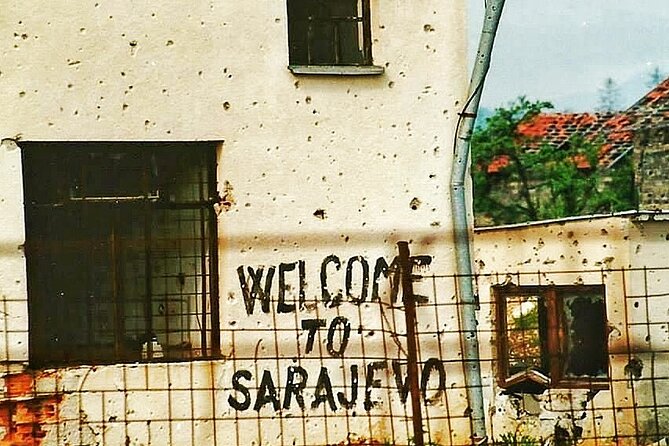
Sarajevo’s past is impossible to miss. This four-hour tour links the Tunnel of Hope, Sniper Alley, Olympic sites, cemeteries, and hilltop viewpoints into a clear account of how Yugoslavia broke apart and how Sarajevo survived its long siege. I especially like the mix of city streets and mountain sites, plus the chance to hear personal memories from guides such as Almir, Ago, Emin, and Ahmed. The main drawback is that this is a serious, sometimes upsetting experience, and the Tunnel of Hope entry may cost extra depending on the booking option.
At $36 per person, the tour offers strong value for a short stay in Sarajevo. Air-conditioned transport saves you from piecing together distant sites, while the small-group format leaves room for questions. You should still allow time for the subject matter to sink in, since the tour moves quickly and some stops are mainly viewed from the vehicle.
In This Review
- Key points to know before booking
- Why this Sarajevo war tour matters
- Yellow Fortress and Sarajevo’s first wide view
- City sites that make the war personal
- The Tunnel of Hope, Sarajevo’s wartime lifeline
- Trebević Mountain and the ruined Olympic world
- Cemeteries, white stones, and the cost of independence
- The guides make or break the experience
- Price, pace, and practical value
- Who should book this tour?
- Should you book the Sarajevo war tour?
- FAQ
- How long does the Sarajevo Bosnian War tour last?
- What is included in the tour price?
- Is entry to the Tunnel of Hope included?
- Does the tour include lunch?
- Can I bring luggage on the tour?
- Is the tour available as a private experience?
Key points to know before booking

- The Tunnel of Hope gives the tour its emotional center: You watch a short wartime film, see part of the passage, and hear how the tunnel linked besieged Sarajevo with free territory.
- Trebević shows a sharp Olympic-to-war contrast: The mountain hosted the 1984 Winter Olympics, then became a frontline. The ruined Hotel Osmice and bobsleigh track make that change visible.
- Yellow Fortress offers Sarajevo’s clearest panorama: You look down over the city while considering the years of shelling it endured.
- Personal stories add weight: Guides including Almir, Ago, Emin, Ahmed, and Arman have been praised for explaining the war through local experience, not just dates and political names.
- You cover a lot in four hours: The route includes Sniper Alley, the Holiday Inn, cemeteries, the Olympic Hall, the maternity clinic, and other major sites, with much of the journey by van.
- Check the tunnel ticket option: The base price is listed as $36, while one recent booking account noted an additional 20 BAM for Tunnel of Hope admission.
Why this Sarajevo war tour matters
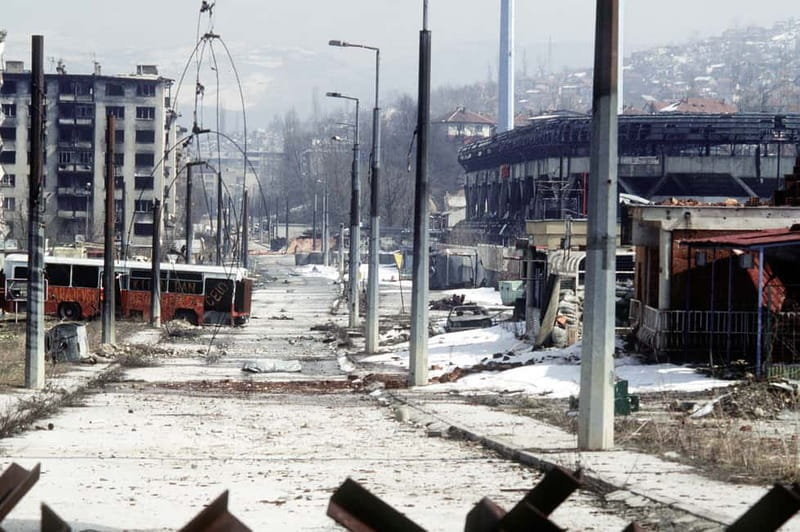
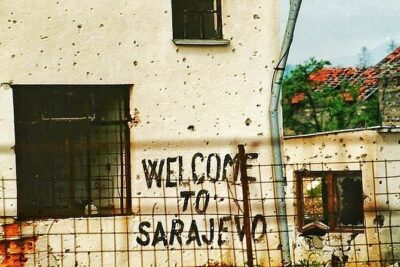
Sarajevo is often introduced as a city where Ottoman, Austro-Hungarian, and modern European influences meet. That is true, but it only tells half the story. The city’s recent past explains the damaged facades, white cemetery rows, shell marks, and the quiet seriousness you may notice in certain streets.
This tour helps you connect those details. Instead of seeing a scarred building as a random piece of urban decay, you learn what happened there and how it fitted into the siege of Sarajevo. The guide explains the breakup of Yugoslavia, the wars in Slovenia and Croatia, the creation of new states, and the conflict that followed in Bosnia and Herzegovina.
I like that the route does not stay inside a museum. You move through Sarajevo, pass ordinary public buildings, climb toward the mountains, and look at the city from places that once had military importance. The result feels more like a history lesson spread across the city than a standard sightseeing circuit.
The tone is generally serious but not grim from start to finish. Several guides have been praised for using gentle humor at suitable moments and for presenting painful subjects with care. That balance matters. A guide who only recites violence can leave you numb, while a guide who avoids the hard parts misses the point.
Other tours covering the siege years and their sites:
- Fall of Yugoslavia, Sarajevo War Tour with Tunnel of Hope Museum and Frontlines
★ 5.0 · 1,314 reviews - Sarajevo: Tunnel Museum Yugoslavia War Tour with War Veteran
★ 5.0 · 1,111 reviews - ROSES OF SARAJEVO (Official WAR + CITY tour)- Story of a Survivor
★ 5.0 · 770 reviews
Yellow Fortress and Sarajevo’s first wide view
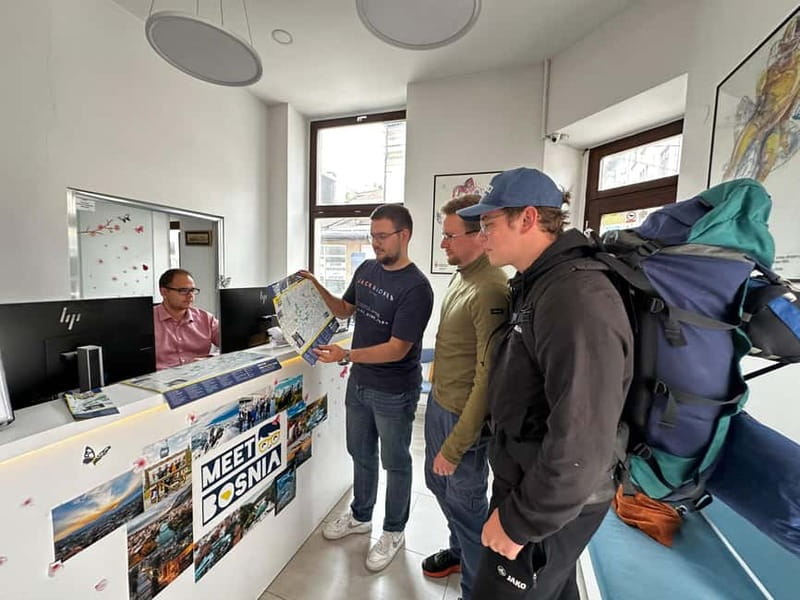
The route may begin with pickup in Sarajevo and a stop at Yellow Fortress. This old defensive position gives you an immediate sense of the city’s shape, with the historic center below and hills rising around it.
The view is useful before the heavier stops because it helps you understand Sarajevo’s geography. The city is surrounded by high ground, and that geography shaped the siege. From the hills, the city appears compact and enclosed. From the city, those same slopes could feel threatening.
You get around 15 minutes here for a guided visit, walking, and photographs. That is enough for the view and a first explanation, but not enough for a long independent wander. Wear shoes that are comfortable on uneven surfaces, even though this is not a strenuous hike.
Yellow Fortress also returns near the end of the tour in the supplied tour description, while the detailed stop order places it first. Since the route information presents these in different sequences, confirm the day’s order with the operator. Either way, the viewpoint is one of the most useful places for understanding Sarajevo as a physical setting.
City sites that make the war personal
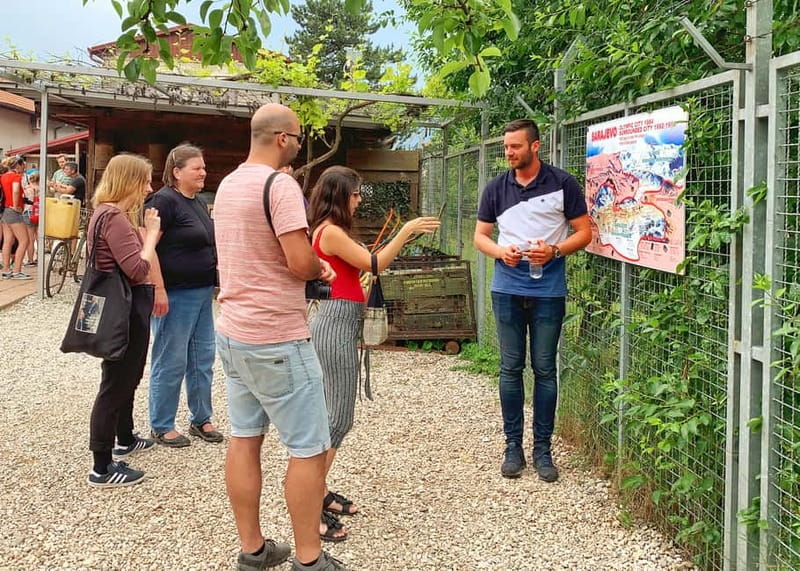
Much of the early route is viewed from the vehicle, with short guided stops or drive-bys. These include the City Market Hall, Juan Antonio Samaranch Olympic Hall, the gynecology and maternity clinic, Lav Cemetery, Hotel Holiday, and Zmaja od Bosne, commonly linked with Sarajevo’s wartime road known as Sniper Alley.
Do not expect a long walk at each of these places. Some stops last only five or ten minutes. Their value comes from the guide’s explanation and from seeing how close the wartime locations are to daily city life.
The market and maternity clinic are especially important because they bring the story away from military maps. Public markets and hospitals are civilian spaces. The tour’s focus is not only on battles and frontlines, but also on how people tried to shop, give birth, work, and survive under fire.
The Olympic Hall and nearby sites add another layer. Sarajevo had recently welcomed the world for the 1984 Winter Olympics. Less than a decade later, buildings connected with civic life and international celebration were caught in war. You begin to see how quickly a city can move from hosting a global event to protecting itself from attack.
Hotel Holiday is another memorable pass-by. During the siege, the hotel became closely associated with journalists and international reporting from Sarajevo. You may not spend long outside it, so listen closely as the guide places the building within the wider story.
The vehicle portions are not wasted time. They allow you to cover ground between sites and give the guide a chance to explain how the different neighborhoods relate to one another. The tradeoff is that you will not have much time to inspect every building at street level.
The Tunnel of Hope, Sarajevo’s wartime lifeline
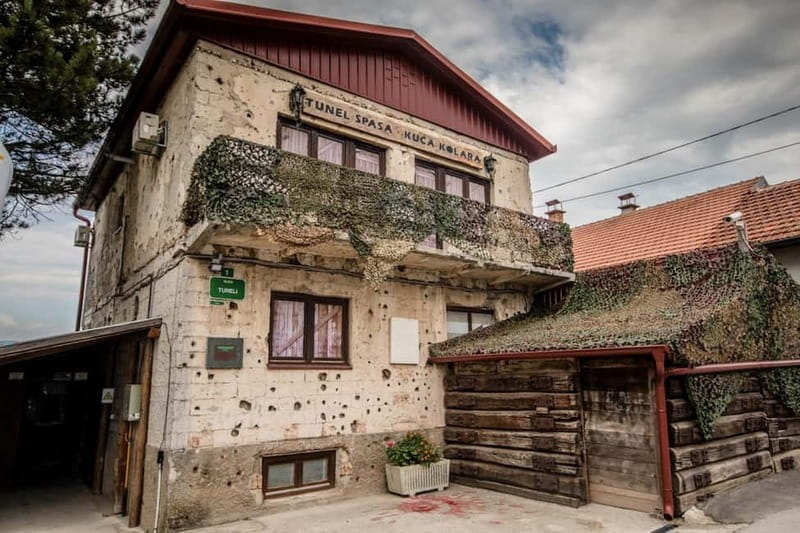
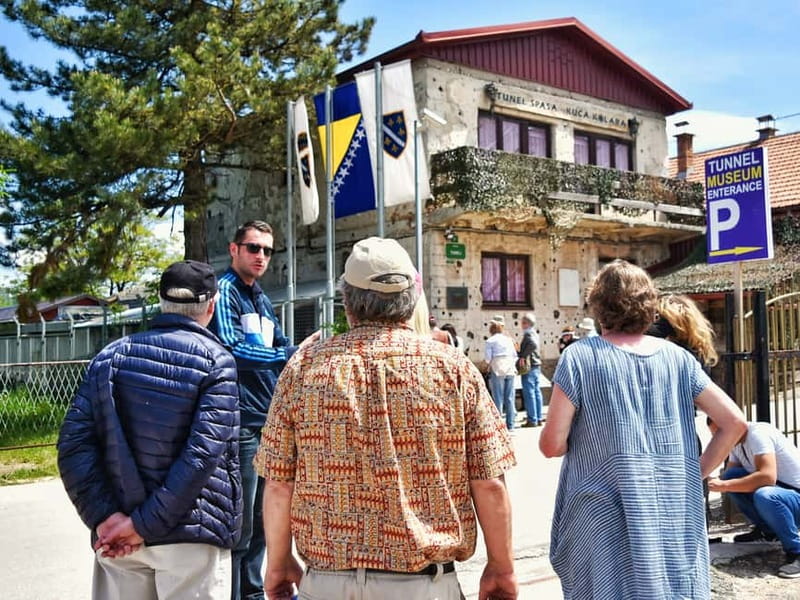
After roughly 25 to 30 minutes of driving from the city area, the tour reaches the Sarajevo Tunnel Museum, also called the Tunnel of Hope. This is the central stop, and the visit lasts about 45 minutes in the detailed schedule, with the broader tour description allowing around an hour for the presentation and museum experience.
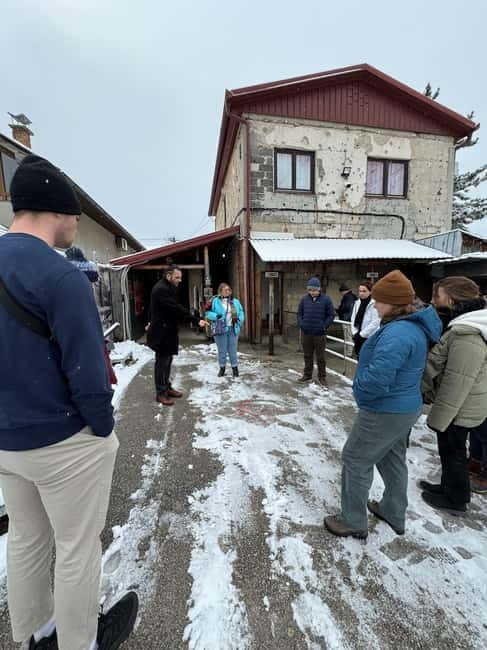
Outside the museum, you see one of Sarajevo’s famous Sarajevo Roses. These red-filled marks record places where mortar shells killed civilians. They are easy to overlook if you do not know what they mean, so the guide’s explanation gives the symbol its proper weight.
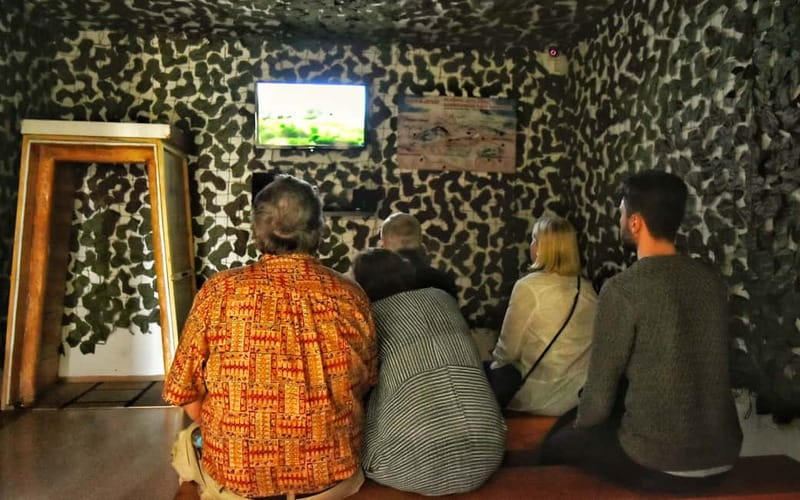
Inside, you watch an original short film made during the war years. Your guide then explains the collapse of Yugoslavia, the beginning of the Siege of Sarajevo, and the tunnel’s role in keeping the city connected to territory outside the besieged zone.
The tunnel was small, plain, and practical. That is precisely why the stop works. You are not looking at a grand monument. You are seeing a narrow passage that became a route for supplies, communication, and survival. The experience makes the siege less abstract.
One point deserves attention before you pay. The activity price is listed as $36, but the tunnel admission is included only if you choose the appropriate option. A booking account specifically mentioned paying 20 BAM more for entry. Check the exact package so the final cost is clear.
The museum visit may feel short. One person wished for more time in both the tunnel museum and the ruined hotel area. I agree that history this dense could fill half a day, but the limited duration keeps the tour manageable for people with only one or two days in Sarajevo.
Same corner of the country, a different kind of day:
- Sarajevo: Mostar, Konjic, Blagaj Tekke, Pocitelj & Waterfall
★ 4.9 · 1,666 reviews - Sarajevo: Grand Walking Tour Through Time and Cultures
★ 4.8 · 1,236 reviews - Sarajevo: Mostar, Konjic, Sufi House, Pocitelj & Kravice Falls
★ 5.0 · 1,179 reviews - Sarajevo: Tunnel of Hope Tour – Survival and Resilience
★ 4.8 · 630 reviews
Trebević Mountain and the ruined Olympic world
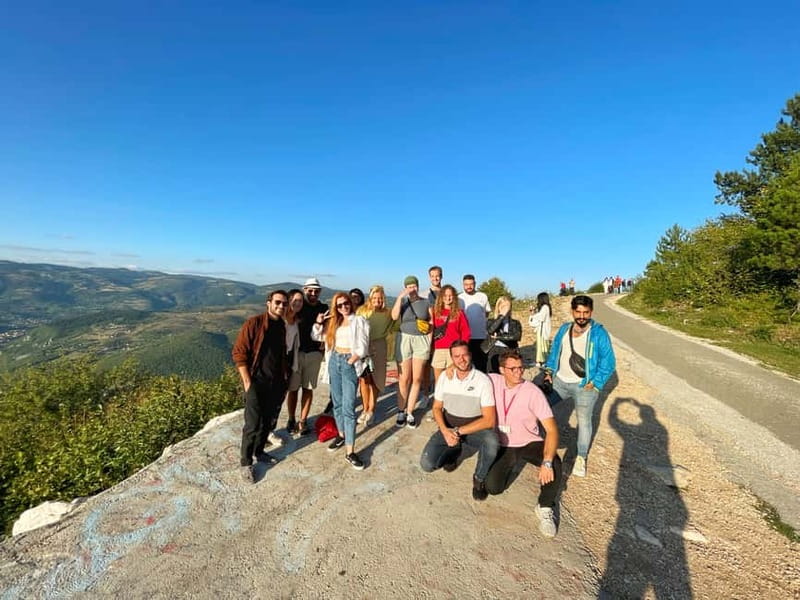
From the tunnel, the van heads toward Trebević Mountain, one of Sarajevo’s Olympic mountains. The change in setting is striking. You leave the dense city and climb into an area associated first with sporting joy, then with frontline positions.
The 1984 Winter Olympics are not a side note here. They show Sarajevo as a modern, outward-looking city before the war. The bobsleigh track, now damaged and marked by time, is a powerful physical reminder of that earlier moment.
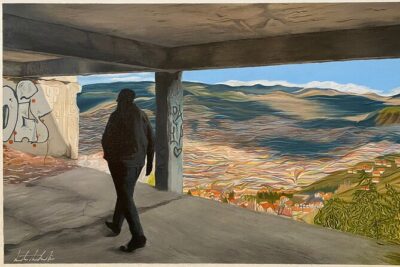
The tour includes a guided visit and walk of about 20 minutes. You may also see the destroyed Hotel Osmice, surrounded by silent ruins. These remains are not polished attractions, and that is part of their force. You see how a place designed for recreation can become a military position and then an abandoned shell.
The mountain also provides one of Sarajevo’s finest views. From here, you can look toward the city and understand why the slopes were so important during the siege. The same broad view that delights a photographer also explains how artillery positions could threaten neighborhoods below.
You should not treat this as a full mountain excursion. It is a short visit by vehicle, with some walking among ruins and around the Olympic site. One person chose to walk down from the mountain rather than return by bus and reported that it took more than an hour. That is a separate choice, not part of the standard four-hour plan, and you should only consider it if the guide confirms the route and timing.
Cemeteries, white stones, and the cost of independence
The final section includes the Martyr Cemetery, also known as Shehidi Cemetery, according to the tour description. Many defenders of Sarajevo are buried there, along with Alija Izetbegović, Bosnia and Herzegovina’s first president.
The rows of white gravestones make the cost of the conflict visible without requiring a long explanation. A guide may describe military events, but the cemetery shifts attention back to individual lives and families.
This is a quiet stop, and you should behave accordingly. It is not simply another photo point. The tour presents the cemetery as a place to consider the price paid for Bosnia and Herzegovina’s independence and the lives lost during the defense of Sarajevo.
Because the detailed itinerary lists Lav Cemetery as an earlier pass-by, you may encounter more than one burial ground during the outing. The schedule can involve brief views from the vehicle as well as a longer stop. Ask your guide if you want to know which cemetery you are passing and which one allows a walk.
The guides make or break the experience
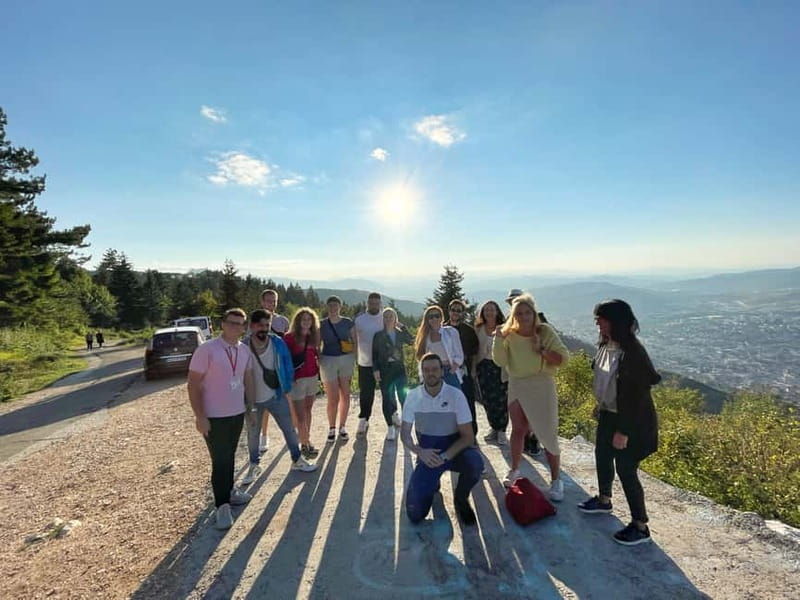
The strongest part of this tour is the guiding. Many guides have received praise for clear English, patience, and the ability to answer a large number of questions. Arme, for example, handled questions from one family that included an 11-year-old child, while Ahmed was praised for combining careful delivery with personal stories and occasional humor.
Several guides share memories of growing up during the siege. Almir, Ago, Emin, Arman, and others have explained how the war affected ordinary families, not only political leaders and armies. These stories can be painful, so you should expect an emotional presentation rather than a detached lecture.
Guide quality can vary from one departure to another because several people lead the tour. The repeated praise for different guides is encouraging, but I would not book solely to request one named person unless the company confirms availability. You can ask at the time of booking, though the assigned guide may depend on the schedule.
The drivers also matter. Zrno was praised for being kind and skilled, and one group noted the easy chemistry between its guide and driver. Comfortable, air-conditioned transport is a real benefit here because the route covers city streets and mountain roads in a short time.
Price, pace, and practical value
At $36 per person, this is a good buy if you want context rather than just transport to a museum. You get hotel pickup, a professional English-speaking guide, air-conditioned car or minivan transport, and a small-group or private format depending on the option you choose.
The tour also offers a voucher for a traditional Bosnian lunch at a family-owned restaurant. This is not lunch during the four-hour outing. You collect the voucher from the office and use it during your free time in Sarajevo, so treat it as a useful extra rather than part of the tour schedule.
You may bring luggage or leave it securely at the company office. That is helpful if you are changing hotels or taking the tour between other plans.
The tour is listed as wheelchair accessible, but the route includes walking at the Yellow Fortress, the tunnel site, and Trebević ruins. Ask the operator for current details about each stop if mobility is a concern. The tour has free cancellation up to 24 hours before departure, and you can reserve while paying later, which helps if your Sarajevo plans are still shifting.
The pace is brisk. You cover a long list of sites in four hours, and some stops are brief. I would choose this tour early in your Sarajevo stay, then return later to places you want to explore more slowly.
Who should book this tour?
I recommend it most strongly if you:
- Want a clear introduction to the breakup of Yugoslavia and the Bosnian War
- Have limited time in Sarajevo
- Prefer a guide who can explain events at the actual locations
- Want to visit the Tunnel of Hope without arranging separate transport
- Are comfortable with difficult subjects and personal wartime stories
- Enjoy combining city history with mountain views and Olympic sites
Families can take it, and one 11-year-old reportedly stayed engaged, but parents should decide if the war footage and discussion suit their children. History and politics fans will get plenty from the route, while anyone seeking a light sightseeing morning may find the subject too heavy.
Should you book the Sarajevo war tour?
Yes, if you want to understand Sarajevo beyond its cafes, old streets, and beautiful views. The Tunnel of Hope, Trebević, Yellow Fortress, Sniper Alley, and the cemeteries give you a strong framework for the city’s recent past, while local guides add the human detail that no guidebook can supply.
Book it knowing that the tour is compact and emotionally demanding. Confirm the tunnel admission price, expect short stops at some city sites, and leave room afterward for a quiet meal or walk. For $36, it is one of the most useful ways to get your bearings in Sarajevo and to see why this city is remembered not only for what happened to it, but for how its people endured.
FAQ
How long does the Sarajevo Bosnian War tour last?
The tour lasts four hours, including transport, guided visits, walking stops, and the return to Sarajevo.
What is included in the tour price?
Hotel pickup, transport in an air-conditioned car or minivan, a professional English-speaking guide, and small-group or private tour service are included. Tunnel of Hope admission is included only with the applicable booking option.
Is entry to the Tunnel of Hope included?
It depends on the option selected when booking. One booking account reported paying an additional 20 BAM, so check the final package details before departure.
Does the tour include lunch?
Lunch is not part of the four-hour program. A voucher for a traditional Bosnian lunch at a family-owned restaurant is provided, and you can use it during your free time in Sarajevo.
Can I bring luggage on the tour?
Yes. You can bring luggage with you or leave it securely at the company office while you explore.
Is the tour available as a private experience?
Yes. Private and small-group options are available, with an English-speaking live guide.
Newest around Sarajevo
- Understanding Srebrenica Genocide + Lunch with Local Family★ 4.9 · 14 reviews
- Private Full Day Safari Tour★ 5.0 · 8 reviews
- Sarajevo: Trebević Mountain Summit Hiking Tour★ 4.2 · 2 reviews
- From Sarajevo: Kozice Waterfalls Hiking Experience in Nature★ 5.0 · 2 reviews
- Sarajevo Under Siege: A War History Tour★ 5.0 · 10 reviews
- Mysterious Visoko Pyramids Driving and Walking Tour★ 5.0 · 7 reviews
- WAR TUNNEL – Sarajevo’s only way of a communication during the WAR – Top secret★ 5.0 · 12 reviews
- Ultimate Gastro Experience★ 4.5 · 14 reviews
War History & Siege Tours, compared.
Fall of Yugoslavia, Sarajevo War Tour with Tunnel of Hope Museum and Frontlines
Read our review →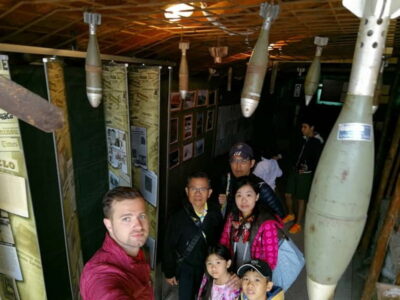
Tunnel Museum Yugoslavia War Tour with War Veteran
Read our review →
ROSES OF SARAJEVO (Official WAR + CITY tour)- Story of a Survivor
Read our review →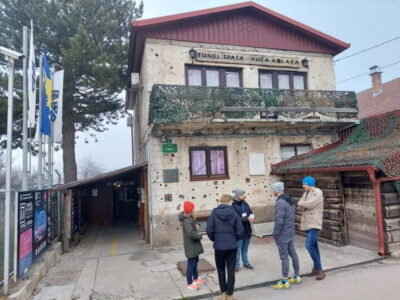
Tunnel Museum: Bosnian & Yugoslav Wars Tour with War Veteran
Read our review →
Sarajevo War Tour: A Veteran’s Story of the Siege (fees included)
Read our review →
Srebrenica Genocide Study Tour with War Veteran
Read our review →Browse the lists this tour appears in