
Review · WAR HISTORY & SIEGE TOURS
Times of Misfortune – Life Under Siege and the Tunnel of Hope
Sarajevo tells its hardest stories from the road. This three-and-a-half-hour tour connects wartime sites across the city with a visit to the Tunnel of Hope, and I like its mix of personal testimony and important landmarks. I also like that transport is included, so you can cover far more ground than you could on foot. The main drawback is that the Tunnel Museum ticket costs extra, and several city sights are viewed only from the vehicle.
The tour costs $32.58 per person and operates in English with a maximum group size of 20. Guide Nermin receives especially warm praise for sharing his own memories of the siege, first as someone who lived through it and, according to one account, as a former police officer. That personal connection can make the subject clearer, but you should still expect a serious, sometimes painful outing rather than a light city tour.
In This Review
- Key points to know before booking
- Why Sarajevo needs a guided wartime tour
- Starting at Sarajevo Insider in the old center
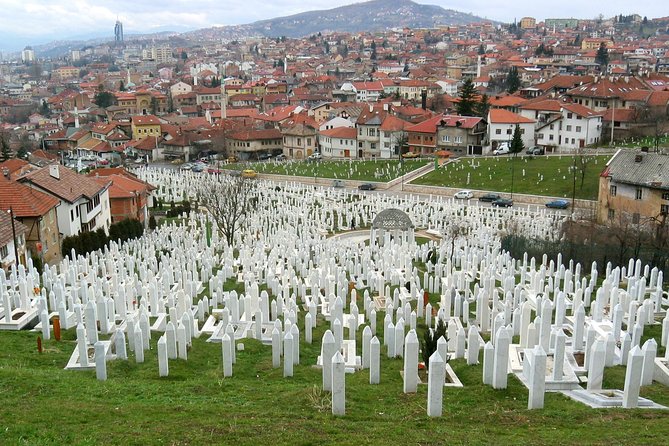
- Yellow Fortress and Kovači Cemetery
- City Hall, Markale, and the central wartime sites
- Olympic Sarajevo and the scars of war
- Sarajevo’s maternity hospital and the danger of ordinary streets
- The Tunnel of Hope is the tour’s central visit
- What the $32.58 price gives you
- Who will get the most from this Sarajevo tour
- Timing, weather, and cancellation details
- FAQ
- How long does the Times of Misfortune tour last?
- Where does the tour start and finish?
- Is transportation included?
- Is the Tunnel of Hope museum ticket included?
- What language is the tour offered in?
- How many people can join the tour?
- Can I cancel the tour for a refund?
- Should you book Times of Misfortune?
Key points to know before booking
- Nermin’s personal stories are a major strength: His firsthand account helps connect military events with ordinary life inside Sarajevo during the siege.
- The Tunnel of Hope is the emotional center: You spend about 1 hour and 15 minutes at the museum, learning how the tunnel linked the city with the outside world.
- The tour covers a wide area: Yellow Fortress, Kovači Cemetery, the Olympic sites, the maternity hospital, Sniper Alley, and central wartime landmarks are all included.
- Most central sights are drive-by stops: City Hall, Markale Market, the Presidency Building, and several other locations are seen from the vehicle rather than explored on foot.
- The museum ticket is not included: Adults pay 20 BAM, listed as €10.50, while students pay 8 BAM, listed as €4.50.
- The tour is best for serious history-minded visitors: It suits anyone wanting context for Sarajevo’s 1992 to 1995 siege, especially those who prefer a guide to explain the sites as they pass.
Why Sarajevo needs a guided wartime tour
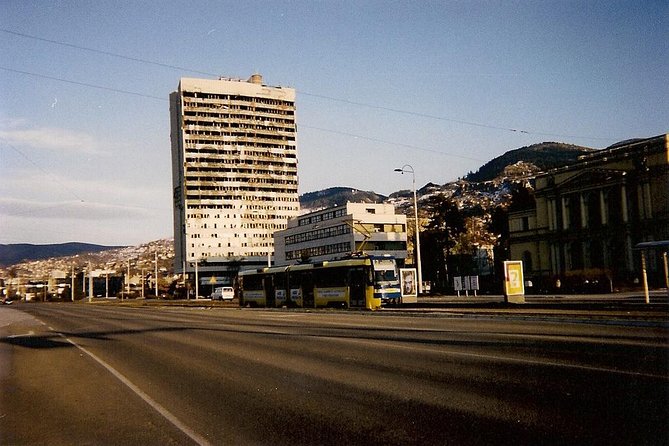
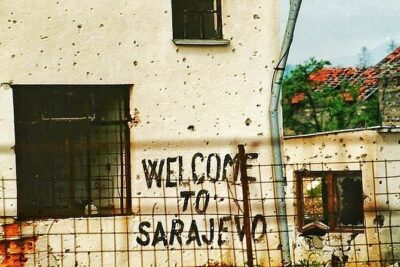
Sarajevo is easy to admire as a beautiful European capital, but its recent past is written into the streets, hills, buildings, and cemeteries. The Siege of Sarajevo lasted from 1992 to 1995 during the breakup of Yugoslavia. A map, a few memorials, and a museum visit can help, but they do not always show how closely the military events affected daily life.
This tour gives you a broad view of that story. Instead of keeping you in the old city, it takes you uphill to wartime defensive positions, through central streets linked to key events, and out toward the airport area where the Tunnel of Hope once provided a vital route.
I like that arrangement because it gives you both geography and human detail. You see where Sarajevo sits in relation to the surrounding hills, then learn why those hills mattered. You pass buildings that made international news, then hear how residents coped with danger, shortages, and isolation.
The guide makes a real difference here. Nermin is praised for explaining the events through his own experience, and one account describes him as a former police officer. That does not replace a wider historical account, but it can give the tour a directness that a standard lecture often lacks.
Other tours covering the siege years and their sites:
- Fall of Yugoslavia, Sarajevo War Tour with Tunnel of Hope Museum and Frontlines
★ 5.0 · 1,314 reviews - Sarajevo: Tunnel Museum Yugoslavia War Tour with War Veteran
★ 5.0 · 1,111 reviews - ROSES OF SARAJEVO (Official WAR + CITY tour)- Story of a Survivor
★ 5.0 · 770 reviews
Starting at Sarajevo Insider in the old center
The meeting point is Sarajevo Insider, at Zelenih beretki 30. The tour ends back at this same location, which makes planning easier if you have other arrangements in the city.
After meeting the guide, you board the included transportation. The vehicle matters because the route reaches several distant parts of Sarajevo, including the Tunnel of Hope. A walking tour could explain the central sites well, but it would not cover this full route in roughly three and a half hours.
The maximum group size is 20 people. That is small enough for a guide to speak directly to the group, though the exact feel will depend on how many places are filled. One booking has been described as a private-feeling outing with only one participant, but you should treat that as a possibility rather than a promise.
The tour is offered in English. Confirmation arrives when you book, and the activity is near public transportation. Most people can take part, though the supplied information does not provide detailed accessibility notes, so you may want to ask the operator if you have specific mobility needs.
Yellow Fortress and Kovači Cemetery
The first major stop is the Yellow Fortress, where you have about 20 minutes. The fortress gives you a broad view over Sarajevo and helps explain the city’s wartime position. The surrounding hills were not simply scenic backdrops. During the siege, high ground gave military forces a commanding view over streets and neighborhoods below.
This is one of the tour’s most useful early stops because it gives you physical context before the heavier stories unfold. Look across the city and consider how exposed Sarajevo’s residents were. The view also helps you understand why moving through the city could be so dangerous.
Next comes Kovači Cemetery, with about five minutes to pause. This national memorial honors Bosnia’s defenders from the 1992 to 1995 war. The stop is brief, so it is more a moment of reflection than a full cemetery visit.
I would not expect a long explanation at Kovači, especially if the guide is keeping the wider schedule on track. Still, its place in the route is meaningful. The Yellow Fortress shows the city from above, while Kovači brings the human cost back to ground level.
City Hall, Markale, and the central wartime sites
Several important locations are viewed as the vehicle passes through central Sarajevo. City Hall is connected with the war, including its destruction and later symbolic restoration. Its ornate appearance can make it easy to think of the building only as a grand civic landmark. The guide’s explanation adds the wartime chapter.
Markale City Market is another significant pass-by point. It was a functioning marketplace, but it also became associated with major moments in the siege. You will not have a dedicated market visit here, so this portion works best as a narrated glimpse rather than a full stop.
The tour also passes Trg Djece Sarajeva, or the Square of Sarajevo Children. Its name points to the civilian experience of the war, particularly the children who lived through it. The Presidency Building, the seat of Bosnia and Herzegovina’s presidency, adds a political dimension to the route.
These drive-by stops are valuable, but you should know what you are getting. You may have limited time to take photographs, and traffic or the vehicle’s position may affect your view. If you want to study each building closely, you will need to return independently.
Same corner of the country, a different kind of day:
- Sarajevo: Mostar, Konjic, Blagaj Tekke, Pocitelj & Waterfall
★ 4.9 · 1,666 reviews - Sarajevo: Grand Walking Tour Through Time and Cultures
★ 4.8 · 1,236 reviews - Sarajevo: Mostar, Konjic, Sufi House, Pocitelj & Kravice Falls
★ 5.0 · 1,179 reviews - Sarajevo: Tunnel of Hope Tour – Survival and Resilience
★ 4.8 · 630 reviews
Olympic Sarajevo and the scars of war
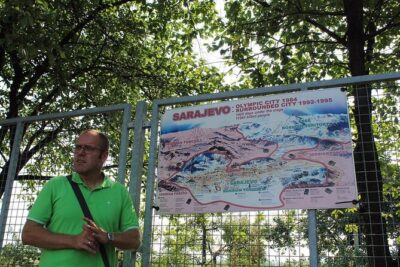
The next stop is the Asim Ferhatović Hase Stadium, part of Sarajevo’s Olympic story, along with Hall Zetra. You spend about 10 minutes here. These sites show Sarajevo’s two very different identities: an international Olympic host and a city later damaged and isolated by war.
That contrast is central to understanding modern Sarajevo. The Olympic facilities represented confidence, cooperation, and international attention. Only a few years later, the same city became a symbol of siege and civilian endurance.
The short stop does not turn the stadium into a full sports-history visit. Instead, it gives the guide a place to explain how quickly the city’s public image changed. I find that contrast more useful than a simple list of dates because it shows how recent the siege was and how sharply it altered life.
Sarajevo’s maternity hospital and the danger of ordinary streets
The Sarajevo Maternity Hospital is given about 10 minutes. Here you learn about the medical staff who continued working during the siege. The stop shifts attention away from political leaders and military positions, focusing instead on childbirth, medical care, and the people who kept essential services running.
That change in focus is important. A war story can become too centered on commanders, buildings, and battles. The maternity hospital shows how civilians and medical workers faced danger while trying to maintain the basic routines of life.
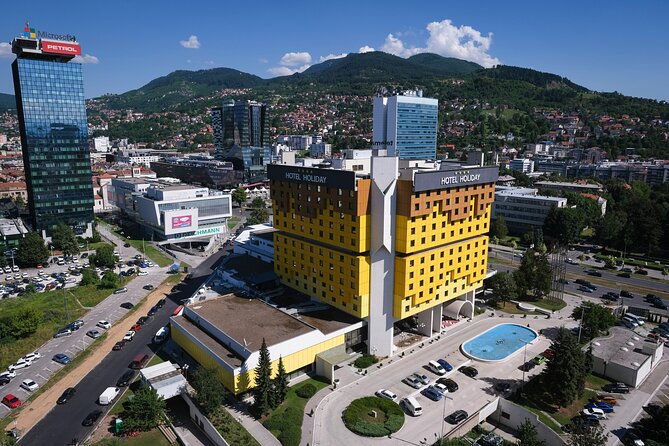
The route then passes Parliament and the Holiday Inn Hotel. These buildings are tied to wartime journalism and political decisions. The Holiday Inn became closely associated with reporters covering the siege, while Parliament represented the political crisis unfolding around them.
You also drive along Sniper Alley, one of Sarajevo’s most dangerous streets during the siege. The name itself explains the fear attached to this route. From a vehicle, you cannot reproduce the experience of crossing the street under fire, but the guide can show how an ordinary urban corridor became a place of extreme risk.
RTV Dom, the television building, is another pass-by sight. It was an important broadcasting center during key moments of the war. Taken together, these stops show the siege through several lenses: medicine, politics, journalism, media, and daily movement through the city.
The Tunnel of Hope is the tour’s central visit
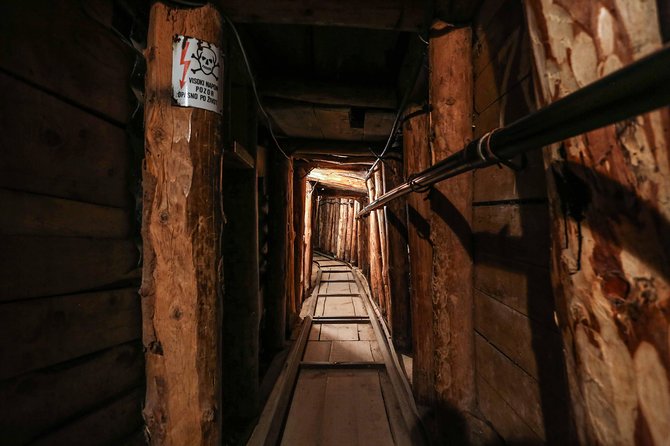
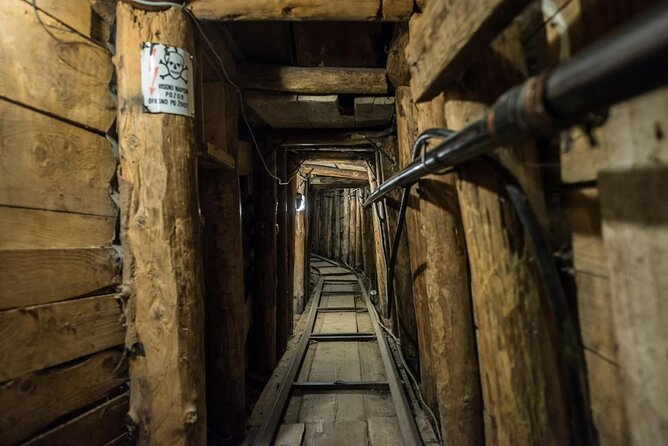
The final major stop is the Sarajevo War Tunnel, also called the Tunnel of Hope Museum. You spend about 1 hour and 15 minutes here, making it the longest portion of the tour.
The tunnel was built to connect Sarajevo with the outside world during the siege. It provided a route under the airport area and helped maintain contact and supplies when normal roads were blocked or dangerous. The museum explains how it was constructed, what it was used for, and why it mattered to people inside the surrounded city.
This is the part I would most want to understand before booking. You are not simply visiting an old passage. You are seeing the remains of an improvised lifeline created under extraordinary pressure. The narrow underground route gives practical meaning to words such as isolation and blockade.
The museum also includes stories and a film about the siege. Those additions help place the tunnel in the wider events rather than treating it as a stand-alone object. The film may be difficult viewing because the subject is civilian suffering, so prepare for a sober hour rather than an entertaining museum stop.
The Tunnel of Hope ticket is not included in the tour price. Adults pay 20 BAM, listed as €10.50, and students pay 8 BAM, listed as €4.50. The extra charge is modest compared with the total cost, but you should budget for it before you arrive.
The museum is the clear emotional high point for many people who take this tour. The personal stories from the guide and the physical evidence at the tunnel work together. One of the strongest accounts of the tour describes the tunnel as the most impressive part, while another says it helped connect memories from news reports and books with the real geography of Sarajevo.
What the $32.58 price gives you
At $32.58 per person, the tour offers a useful amount of coverage for a half-day outing. You get a licensed English-speaking guide, transportation, the central city route, the hillside viewpoint, the Olympic sites, the maternity hospital, and the Tunnel of Hope visit.
The price is easier to justify because the route is spread across the city. You are paying not only for narration but also for transport between places that would be awkward to combine on foot. A local guide can also explain why a particular street or building matters as you pass it, which is difficult to reproduce with a guidebook alone.
The museum admission is the main additional cost. Since the Tunnel of Hope is the longest stop and the heart of the tour, I would include that fee when comparing this outing with other Sarajevo activities.
This is not the right choice if you want a relaxed sightseeing circuit with plenty of time for cafés, photographs, or interior visits. It is a focused wartime history tour, and its value comes from the guide’s interpretation and the range of locations covered.
Who will get the most from this Sarajevo tour
I would recommend it to you if you want a clear introduction to the Siege of Sarajevo and prefer learning through places rather than reading alone. It is especially useful if you have only a short stay and want to reach the Tunnel of Hope without arranging separate transport.
You will likely get the most from it if you are comfortable with difficult subject matter. The tour covers death, danger, destruction, and civilian hardship. The tone is respectful, but the material cannot be separated from the suffering caused by the war.
The tour also suits people who value firsthand explanation. Nermin’s personal connection is repeatedly praised, and that is likely to be the feature that turns a sequence of sites into a more understandable story. Guides can vary, of course, but the supplied information identifies him by name and highlights his role in making the events feel immediate.
You may prefer another activity if you want a highly detailed architectural tour of Sarajevo, a food outing, or a walk focused on Ottoman and Austro-Hungarian sights. This tour visits some major city landmarks, but the purpose is to explain wartime Sarajevo, not to cover every period of the city’s past.
Timing, weather, and cancellation details
Allow about three and a half hours from the meeting point and back. The tour is booked, on average, about 10 days ahead, so reserving in advance is sensible if your schedule is fixed.
The activity requires good weather. If poor weather forces cancellation, you are offered another date or a full refund. It also requires a minimum number of participants. If that minimum is not reached, the operator offers another date or activity, or a full refund.
You can cancel for a full refund up to 24 hours before the starting time. Changes or cancellations made less than 24 hours ahead are not accepted for a refund, and the cut-off follows local Sarajevo time.
FAQ
How long does the Times of Misfortune tour last?
The tour lasts approximately 3 hours and 30 minutes, including the city route and the visit to the Tunnel of Hope Museum.
Where does the tour start and finish?
It starts at Sarajevo Insider, City Tours and Excursions, at Zelenih beretki 30 in Sarajevo. It ends back at the same meeting point.
Is transportation included?
Yes. Transportation and a licensed guide are included in the tour price.
Is the Tunnel of Hope museum ticket included?
No. Adults pay 20 BAM, listed as €10.50, and students pay 8 BAM, listed as €4.50.
What language is the tour offered in?
The tour is offered in English.
How many people can join the tour?
The maximum group size is 20 people.
Can I cancel the tour for a refund?
Yes. You can cancel up to 24 hours before the start time for a full refund. Cancellations or changes made less than 24 hours before the tour are not accepted for a refund.
Should you book Times of Misfortune?
Book this tour if you want Sarajevo’s wartime story explained by a local guide and tied to real places across the city. The Tunnel of Hope, the Yellow Fortress, Sniper Alley, Kovači Cemetery, and the maternity hospital each add a different piece to the story, while Nermin’s firsthand account can make the history feel more human.
Skip it if you want a cheerful introduction to Sarajevo or prefer exploring at your own pace. For most history-minded visitors, though, the $32.58 price is fair, especially with transportation included. Add the museum admission to your budget, bring patience for a serious subject, and expect the Tunnel of Hope to be the moment that stays with you longest.
Newest around Sarajevo
- Understanding Srebrenica Genocide + Lunch with Local Family★ 4.9 · 14 reviews
- Private Full Day Safari Tour★ 5.0 · 8 reviews
- Sarajevo: Trebević Mountain Summit Hiking Tour★ 4.2 · 2 reviews
- From Sarajevo: Kozice Waterfalls Hiking Experience in Nature★ 5.0 · 2 reviews
- Sarajevo Under Siege: A War History Tour★ 5.0 · 10 reviews
- Mysterious Visoko Pyramids Driving and Walking Tour★ 5.0 · 7 reviews
- WAR TUNNEL – Sarajevo’s only way of a communication during the WAR – Top secret★ 5.0 · 12 reviews
- Ultimate Gastro Experience★ 4.5 · 14 reviews
War History & Siege Tours, compared.
Fall of Yugoslavia, Sarajevo War Tour with Tunnel of Hope Museum and Frontlines
Read our review →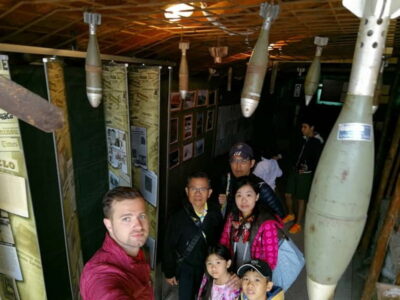
Tunnel Museum Yugoslavia War Tour with War Veteran
Read our review →
ROSES OF SARAJEVO (Official WAR + CITY tour)- Story of a Survivor
Read our review →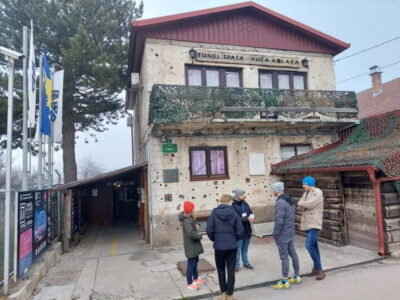
Tunnel Museum: Bosnian & Yugoslav Wars Tour with War Veteran
Read our review →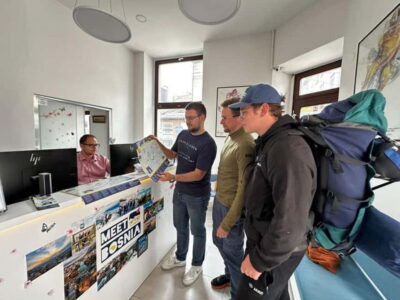
Bosnian War & Fall of Yugoslavia Tour with Tunnel
Read our review →
Sarajevo War Tour: A Veteran’s Story of the Siege (fees included)
Read our review →Browse the lists this tour appears in