
Review · WAR HISTORY & SIEGE TOURS
Sarajevo Full Day Tour: History, Culture, Nature, War & Olympics
Sarajevo tells many stories in one day. This tour connects the Bosna River Springs, the 1984 Olympic bobsleigh track, the Siege of Sarajevo, and the city’s Ottoman, Jewish, Catholic, and Orthodox heritage. I especially like the mix of outdoor scenery and serious history, plus the chance to see both the hills and the Old Town without arranging several separate excursions. The small group, capped at 15 people, also gives you a better chance to ask questions than a large coach tour.
The main drawback is the pace. Six to seven hours is a lot of ground to cover, and several stops are short. The old center includes plenty of walking, while the war sites can be emotionally heavy. Lunch is now included, but you should still confirm how and when it will be handled so the afternoon does not become a race against your appetite.
In This Review
- Key points to know before booking
- Why this tour works for a first day in Sarajevo
- Vrelo Bosne: a calm start beside the river springs
- The Tunnel Museum and the Siege of Sarajevo
- The Olympic bobsleigh track above the city
- Yellow Fortress and Sarajevo from above
- Jewish Cemetery and Sniper Alley
- Sarajevo City Hall and the turn toward the Old Town
- Kazandziluk and Bascarsija: Sarajevo’s Ottoman heart
- Morica Han and Bosnian coffee
- Gazi Husrev-beg Mosque, the clock tower, and the covered market
- East meets West in a few city blocks
- Three religious landmarks in one final walk
- Lunch, transport, and the pace of the day
- Guides and the value of personal explanation
- Who should book this Sarajevo day tour?
- Should you book it?
- FAQ
- What is included in the Sarajevo full-day tour?
- What is not included in the tour price?
- What time does the tour begin?
- How long does the tour last?
- How large is the tour group?
- Is lunch included?
- Can I cancel for a full refund?
Key points to know before booking
- Bosna River Springs begins the day: Forty minutes at Vrelo Bosne introduces the natural setting that gives Bosnia its name.
- The Tunnel Museum explains the siege: Admission is included, and the stop gives the war section real focus.
- The Olympic bobsleigh track has a complicated past: It recalls Sarajevo’s 1984 Winter Olympics and its later use near the wartime front line.
- The Old Town walk crosses several cultures: You see mosques, cathedrals, a synagogue museum, Ottoman markets, and the place where East meets West.
- Pickup and lunch add value: Hotel pickup, bottled water, Bosnian coffee, museum admission, and lunch are part of the package.
- Personal war stories can shape the experience: Guides such as Ahmed, Enes, Edis, Elvis, Adnan, and Alan have been praised for clear explanations and, at times, family memories of the conflict.
Why this tour works for a first day in Sarajevo
Sarajevo can be hard to read at first. The Old Town is compact, but the city’s key sights are spread from the western suburbs to the hills above the center. You can easily spend a morning on Ottoman streets and miss the springs, the Olympic sites, or the Tunnel of Hope.
This tour solves that problem with an air-conditioned vehicle and hotel pickup at 9:00 a.m. You get a broad introduction before deciding where to return for a slower look. I would choose it for a first full day, especially if you have limited time in Bosnia and Herzegovina.
The route covers nature, modern sports, wartime history, imperial history, and religious heritage. That range is the point. You are not simply checking off monuments. You are seeing how Sarajevo’s setting and past fit together.
The $114.45 price is not cheap for a day in Sarajevo, but it includes transport, a guide, water, lunch, Bosnian coffee, and entrance fees to Vrelo Bosne and the Tunnel Museum. With a maximum of 15 people, the cost makes more sense if you value convenience and explanation. A self-guided day could cost less, but you would need to arrange transport to distant sites and do the historical homework yourself.
More History Tours in Sarajevo
- Sarajevo genuine walking tour: Steps through history
★ 5.0 · 22 reviews - SARAJEVO STREET ART TOUR (art, history & mystery) – sARTajevo!
★ 5.0 · 18 reviews - BOSNIAN PYRAMIDS TOUR (nature, history & archeology)
★ 5.0 · 17 reviews
Vrelo Bosne: a calm start beside the river springs
The first stop is Vrelo Bosne, the park where the Bosna River begins. You have about 40 minutes here, with admission included.
This is a welcome opening. Sarajevo’s war history can dominate any visit, so starting among springs, trees, and clear water gives you a sense of the country’s natural side. The river is also central to the national identity, since Bosnia takes its name from the Bosna.
Do not expect a long nature walk. Forty minutes is enough for a look around and photographs, but not for a leisurely park outing. If natural scenery is a major reason for your visit, you may wish you had more time. Still, as part of a city tour, this is a smart inclusion.
The Tunnel Museum and the Siege of Sarajevo
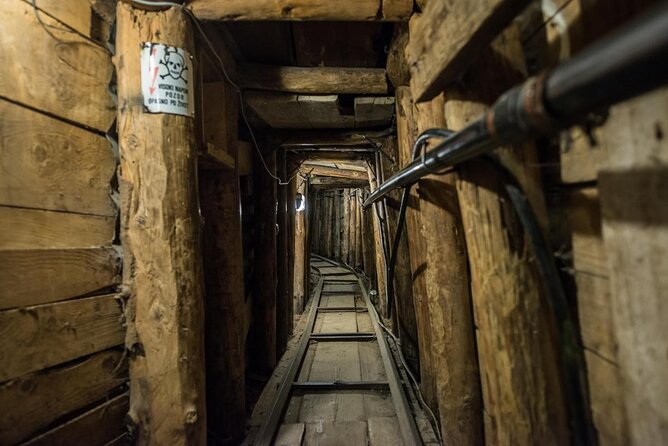
The Tunnel Museum is one of the day’s most important stops. You spend about 40 minutes there, and the entrance fee is included.
The tunnel was used during the Siege of Sarajevo, when the city was cut off. The visit gives physical meaning to a period that can otherwise feel like a series of dates and political terms. You see the scale of the passage and learn why it mattered for movement and survival during the war.
This section benefits greatly from the guide. Ahmed and Edis, among others, have been praised for explaining the conflict in a clear way and for sharing personal or family memories. One guide described living through the siege as a child, while another used family experiences to explain how the war still affects Bosnian society.
That personal element can make the stop more powerful, but it also means you should be ready for difficult material. This is not a light museum visit. The tone is serious, and the subject deserves attention.
The Olympic bobsleigh track above the city
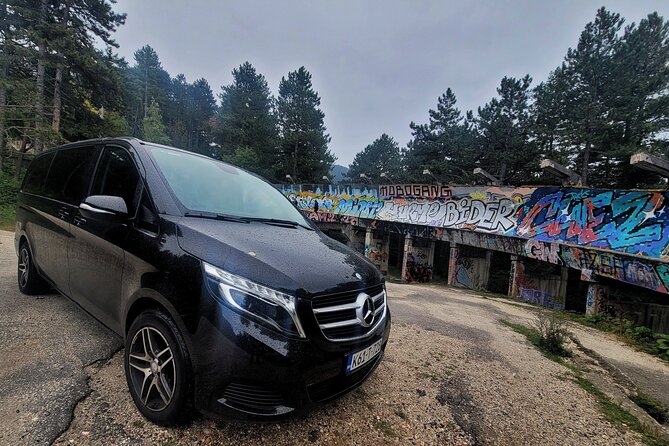
Next comes the Sarajevo Olympic bobsleigh and luge track, with about 40 minutes to explore. There is no entrance fee listed for this stop.
Sarajevo hosted the 1984 Winter Olympics, a moment that brought the city international attention. The abandoned track later lay near the front line during the war, giving it a second, much darker chapter.
I like this stop because it links two very different images of Sarajevo: a city celebrating an international sporting event and a city caught in conflict. The track itself is also a striking place for photographs, with the surrounding hills and the remains of the Olympic facility.
The track is not presented as a polished modern attraction. Its worn condition is part of the story. Wear sturdy shoes, and expect some walking around an old outdoor site. The 40-minute visit is enough for an introduction, though anyone fascinated by Olympic architecture may want more time.
Other tours covering the siege years and their sites:
- Fall of Yugoslavia, Sarajevo War Tour with Tunnel of Hope Museum and Frontlines
★ 5.0 · 1,314 reviews - Sarajevo: Tunnel Museum Yugoslavia War Tour with War Veteran
★ 5.0 · 1,111 reviews - ROSES OF SARAJEVO (Official WAR + CITY tour)- Story of a Survivor
★ 5.0 · 770 reviews - Sarajevo: Tunnel of Hope Tour – Survival and Resilience
★ 4.8 · 630 reviews
Yellow Fortress and Sarajevo from above
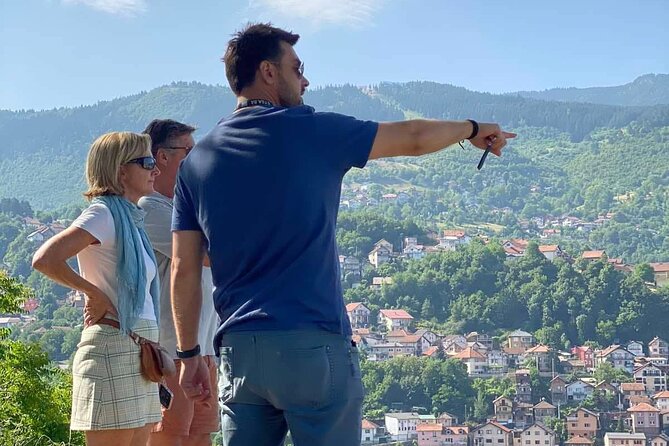
Yellow Fortress takes about 30 minutes and has no separate admission charge. This is the main panoramic stop, giving you a view over Sarajevo from the hillside.
The view helps you understand the city’s shape. The narrow valley, surrounding slopes, dense center, and exposed hills all matter when you later hear about the siege and Sniper Alley. A guide can point out places that are difficult to understand from street level.
Bring a camera, but also listen to the explanation. The viewpoint is not only about a pretty photograph. It is one of the places where geography explains history.
Jewish Cemetery and Sniper Alley
The Jewish Cemetery is another short stop, around 30 minutes. It introduces Jewish heritage while also showing one of the positions associated with snipers during the siege.
The combination is unsettling but important. Sarajevo’s religious communities lived close together, and the cemetery’s wartime role reflects how ordinary parts of the city became linked to danger. The stop also prepares you for the next section, which takes about an hour.
Sniper Alley refers to the central city corridor known during the war for the threat of gunfire. Along the route, the guide discusses the War Hotel, the Bosnian Romeo and Juliet Bridge, UN forces, journalists, and international friends who helped Sarajevo survive.
This is one of the longer history stops, and that is useful. The subject cannot be explained well in a rushed five-minute speech. You have time to connect the locations with the wider story.
The exact amount of time spent outside the vehicle may vary, so be ready for a mix of driving, looking, and listening. The emotional weight is also considerable. If you prefer a light sightseeing day, this tour may feel intense.
Sarajevo City Hall and the turn toward the Old Town
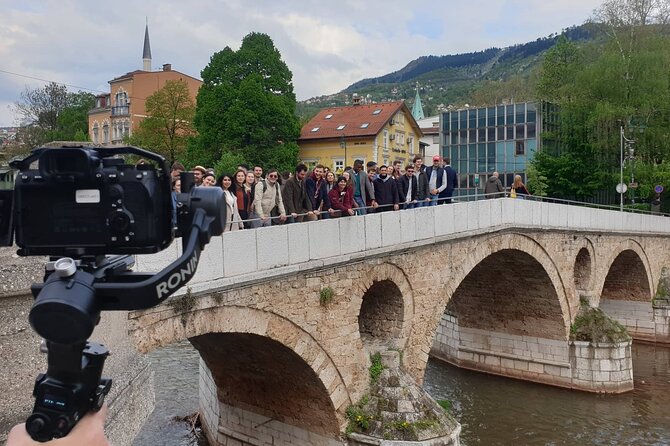
The tour then visits Sarajevo City Hall inside, with about 30 minutes allocated to the building. The admission fee is not included.
City Hall, also known as Vijećnica, is one of Sarajevo’s major landmarks. The interior adds an architectural dimension after the war-related stops, and it helps shift the tour toward the city’s older cultural center.
Since entry is not included, carry some local currency or a payment method accepted at the site. The tour price covers the Tunnel Museum and Vrelo Bosne, but not every paid attraction on the route. If you want to spend longer inside City Hall, ask the guide how that affects the schedule.
Kazandziluk and Bascarsija: Sarajevo’s Ottoman heart
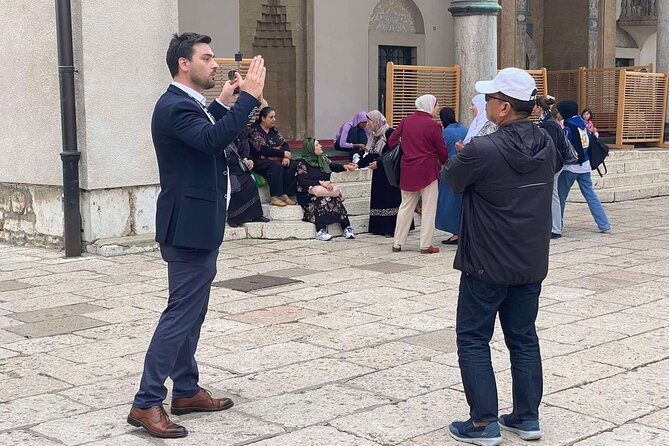
The Old Town section begins on Kazandziluk, the copper-smith street. You have about 10 minutes here, enough to see the traditional craft shops and get a quick introduction to Sarajevo’s working heritage.
Bascarsija Square and the Sebilj fountain follow, also for about 10 minutes. This is the symbolic center of the Old Town, once a place of trade and still one of Sarajevo’s most recognizable meeting points.
The short timing keeps the overall day moving, but it does not allow much browsing. If you enjoy handmade copperware, note the street and return later. I would not plan to buy anything substantial during this first pass unless you are comfortable shopping quickly.
Morica Han and Bosnian coffee
Morica Han receives about 20 minutes and includes Bosnian coffee. This former caravanserai served as lodging for merchants during the Ottoman period. Today, it offers a quieter pause among the Old Town’s streets.
The coffee stop matters because it is not just a drink break. Bosnian coffee is part of the social rhythm of the city, and sitting in a former caravan inn gives the moment some context. It also provides a chance to ask the guide about places to eat and explore later.
The break is brief. Think of it as a taste, not a full café visit. You will not have time for a long, slow coffee ceremony if the rest of the route is to stay on schedule.
Gazi Husrev-beg Mosque, the clock tower, and the covered market
The tour continues to Gazi Husrev-beg Mosque, the largest mosque in the Old Town, for about 10 minutes. The guide explains Gazi Husrev-beg’s role and the way he invested in Sarajevo’s development.
The mosque’s entrance fee is not included. Appropriate dress and visitor rules may apply, so ask your guide before entering. Since the stop is short, it is best viewed as an introduction rather than a detailed architectural visit.
Nearby, the Old Sarajevo Clock Tower receives about five minutes. Its lunar time system is a small but memorable detail, showing how local religious and civic traditions shaped daily life.
Gazi Husrev-beg’s Bezistan, a covered Ottoman market, gets about 10 minutes. This is another place where the old commercial city becomes visible. The compact stop helps you understand how mosques, markets, inns, and workshops once worked together as one urban system.
East meets West in a few city blocks
The Sarajevo Meeting of Culture is marked by a brief five-minute stop. It identifies the point where the city’s eastern Ottoman character meets its western Austro-Hungarian side.
That transition is one of Sarajevo’s most interesting features. You do not need a long lecture to notice the change. Within a short walk, the street pattern, buildings, shops, and religious landmarks shift.
The Jewish Museum of Bosnia and Herzegovina follows, with about 15 minutes planned. It covers Jewish heritage from the 16th century to today. Admission is not included, so decide in advance if you want to pay for entry.
The museum stop is short, but it adds an essential piece to the city’s story. Sarajevo is not explained by one faith or one empire. This part of the route makes that clear.
Three religious landmarks in one final walk
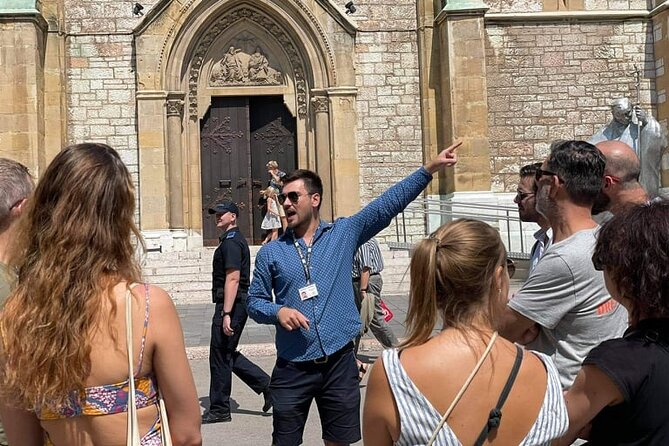
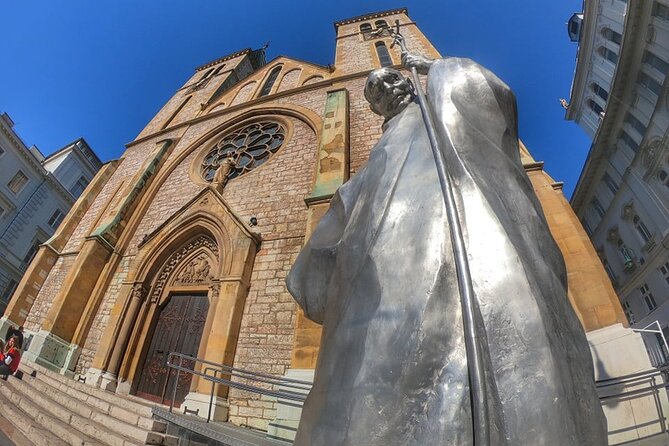
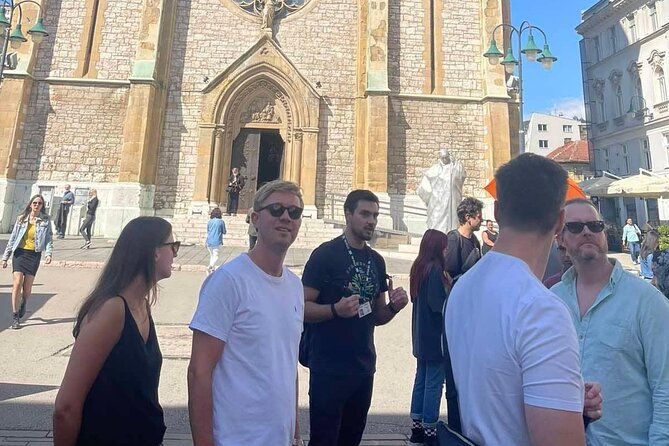
The final Old Town sights include the Cathedral of the Sacred Heart, the Serbian Orthodox Cathedral, and the surrounding historic streets.
The Catholic cathedral receives about 10 minutes, as does the Serbian Orthodox Cathedral. These visits, along with the mosque and Jewish Museum, show how several religious traditions share the central city.
Do not expect full guided tours of each building. The schedule gives you a quick look and an explanation of their place in Sarajevo. If you want quiet time for prayer, detailed art study, or a longer museum visit, return independently.
This final sequence is especially useful for first-time visitors. It turns the phrase East meets West into something you can see within a short distance, rather than a slogan left on a guidebook page.
Lunch, transport, and the pace of the day
Lunch is included, along with bottled water and an air-conditioned vehicle. This is a meaningful improvement over an outing where you must keep stopping to find food. A previous experience had a delayed meal and left the group hungry by midafternoon, so I would still ask at pickup when lunch is planned.
The vehicle matters because the itinerary moves between springs, the tunnel, the Olympic track, viewpoints, and the center. Hotel pickup is offered from your lobby or another location in Sarajevo, which saves time and avoids navigating unfamiliar roads.
You should still expect a fair amount of walking in the Old Town. One account described the day as involving plenty of walking, though the explanations kept it enjoyable. Wear comfortable shoes and bring water, even though a bottle is supplied.
The tour lasts roughly six to seven hours. That makes it full but manageable for most people. It is not ideal if you want to sit down at every landmark or spend an hour inside each museum.
Guides and the value of personal explanation
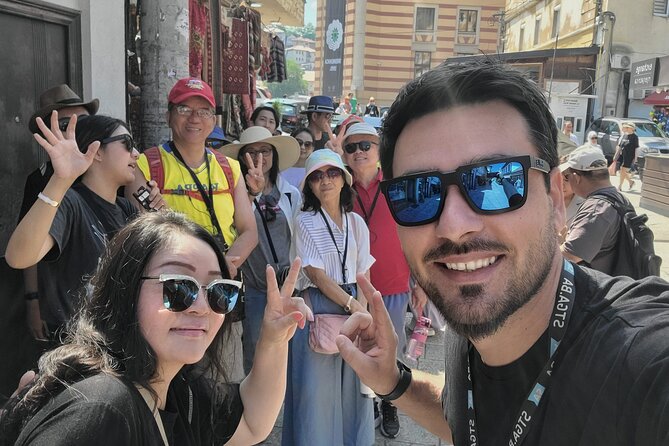
The strongest part of this experience is the guide’s role. Several guides have been praised for clear history lessons, humor, patience, and personal stories. Enes is described as lively and easy to understand, while Elvis is noted for detailed presentations and friendly handling of the day. Ahmed, Edis, Adnan, and Alan are also associated with warm, well-informed guiding.
Names and guiding style can vary by date, so you cannot book a particular personality unless the company confirms it. Still, the format gives the guide room to answer questions, take photographs, and explain how the war, religion, politics, and daily life connect.
I would ask questions. Sarajevo rewards curiosity, and a good guide can clarify sensitive subjects that are hard to understand from a quick online search.
Who should book this Sarajevo day tour?
I would recommend it to you if:
- You have one full day in Sarajevo and want a strong first orientation.
- You want both natural scenery and city history.
- You prefer a guide to explain the Siege of Sarajevo and the Olympic sites.
- You value hotel pickup and included transport.
- You are comfortable with serious wartime material and a busy schedule.
- You want a small group rather than a large sightseeing bus.
I would hesitate if you already know Sarajevo well or want long, unhurried museum visits. You may also prefer a slower plan if war history is not a major interest.
The tour is suitable for most people, but the amount of walking and the emotional subject matter are worth considering. It is offered in English, and confirmation is provided at booking.
Should you book it?
Book this tour if you want the broadest useful introduction to Sarajevo in one day. The combination of Vrelo Bosne, the Tunnel Museum, the Olympic bobsleigh track, the hillside views, and the Old Town gives you a clear sense of the city’s past and character.
At $114.45 per person, the value comes from the included pickup, vehicle, lunch, coffee, water, guide, and key entrance fees. You are paying for context as much as transport. The schedule is busy, and not every attraction’s admission is covered, but the day gives you a strong foundation for exploring Sarajevo on your own afterward.
I would book it early if your dates are fixed, since it is commonly reserved well in advance. Cancel at least 24 hours before the start time for a full refund. Poor weather or too few bookings can also lead to a different date or a full refund.
FAQ
What is included in the Sarajevo full-day tour?
The tour includes an air-conditioned vehicle, bottled water, a guide, hotel pickup in Sarajevo, lunch, Bosnian coffee, admission to the Tunnel Museum, and admission to Vrelo Bosne.
What is not included in the tour price?
Tips are not included. Admission to Sarajevo City Hall, Gazi Husrev-beg Mosque, and the Jewish Museum of Bosnia and Herzegovina is also not included.
What time does the tour begin?
The tour begins at 9:00 a.m. Pickup is offered from your hotel lobby or another location in Sarajevo.
How long does the tour last?
The experience lasts approximately six to seven hours.
How large is the tour group?
The maximum group size is 15 people.
Is lunch included?
Yes. Lunch is included in the current tour arrangement.
Can I cancel for a full refund?
Yes. You must cancel at least 24 hours before the local start time to receive a full refund. Changes or cancellations made less than 24 hours before the start time are not accepted for a refund.
Newest around Sarajevo
- Understanding Srebrenica Genocide + Lunch with Local Family★ 4.9 · 14 reviews
- Private Full Day Safari Tour★ 5.0 · 8 reviews
- Sarajevo: Trebević Mountain Summit Hiking Tour★ 4.2 · 2 reviews
- From Sarajevo: Kozice Waterfalls Hiking Experience in Nature★ 5.0 · 2 reviews
- Sarajevo Under Siege: A War History Tour★ 5.0 · 10 reviews
- Mysterious Visoko Pyramids Driving and Walking Tour★ 5.0 · 7 reviews
- WAR TUNNEL – Sarajevo’s only way of a communication during the WAR – Top secret★ 5.0 · 12 reviews
- Ultimate Gastro Experience★ 4.5 · 14 reviews
War History & Siege Tours, compared.
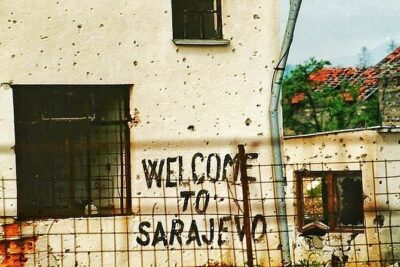
Fall of Yugoslavia, Sarajevo War Tour with Tunnel of Hope Museum and Frontlines
Read our review →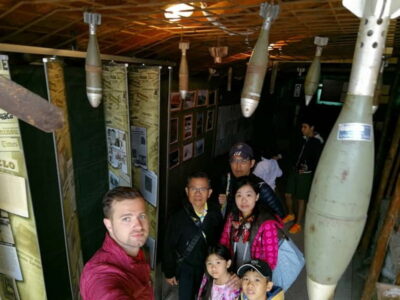
Tunnel Museum Yugoslavia War Tour with War Veteran
Read our review →
ROSES OF SARAJEVO (Official WAR + CITY tour)- Story of a Survivor
Read our review →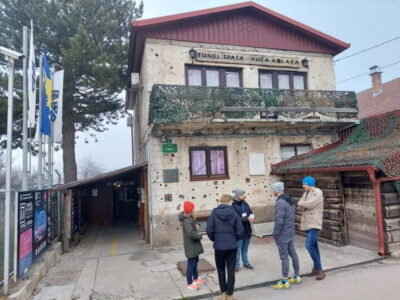
Tunnel Museum: Bosnian & Yugoslav Wars Tour with War Veteran
Read our review →
Bosnian War & Fall of Yugoslavia Tour with Tunnel
Read our review →
Sarajevo War Tour: A Veteran’s Story of the Siege (fees included)
Read our review →Browse the lists this tour appears in