
Review · WAR HISTORY & SIEGE TOURS
Sarajevo Siege Tour with War Veteran Guide (Fees Included)
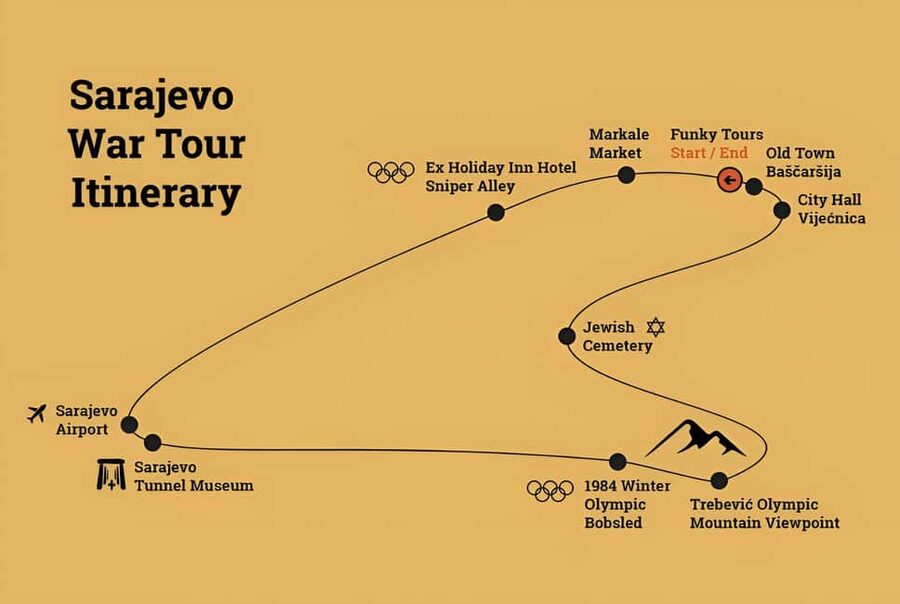
History feels different when explained by someone who lived it. This four-hour Sarajevo tour links the Tunnel of Hope, Sniper Alley, Trebević Mountain, the Olympic bobsled track, and the Jewish Cemetery with the story of the city’s long siege. I especially like the survivor guide format and the fact that transportation, taxes, and the 10.50 EUR tunnel entrance fee are included.
I also like the small-group setup, limited to eight people, plus pickup and return within Sarajevo. Guides such as Adnan and Mustafa have been praised for clear explanations, personal stories, and patient answers. The main consideration is emotional: this is not a light sightseeing trip. The damage, sniper positions, civilian suffering, and first-person accounts can stay with you long after the van returns to town.
In This Review
- Key points to know before booking
- Why this four-hour tour matters in Sarajevo
- From Hotel Holiday to Sarajevo’s Sniper Alley
- Inside the Tunnel of Hope
- Trebević Mountain and the Olympic bobsled track
- The Jewish Cemetery and the view toward the city
- What the guide adds to the experience
- Price, group size, and what is covered
- Who should book this Sarajevo tour?
- Should you book the Siege Tour?
- FAQ
- How long does the Sarajevo Siege Tour last?
- Is pickup included?
- Which entrance fee is included?
- Is the tour conducted in English?
- How many people are in the shared group?
- Does the tour run in winter?
Key points to know before booking
- A local survivor leads the story: Guides explain the breakup of Yugoslavia and the Siege of Sarajevo from personal experience, not just from a script.
- The Tunnel of Hope is the tour’s core stop: You watch a short film, walk through part of the wartime tunnel, and see related objects in the museum.
- Trebević connects Olympic pride with wartime destruction: The mountain offers access to the abandoned bobsled track and former front-line locations.
- The Jewish Cemetery reveals Sarajevo’s military geography: It served as a major sniper position overlooking the city and Sniper Alley.
- The $47 price is unusually tidy: Transfers, government taxes, VAT, and the 10.50 EUR tunnel admission are covered.
- Four hours covers serious ground: Expect a shared vehicle, several walks, and a tightly arranged half day rather than a slow museum visit.
Why this four-hour tour matters in Sarajevo
Sarajevo can look peaceful today, with cafés, restored buildings, and busy streets. That calm makes it easy to miss how recently the city was surrounded, shelled, and cut off. The Siege of Sarajevo lasted from 1992 to 1996 and shaped nearly every part of modern Sarajevo.
This tour helps you connect separate places into one clear story. The former Holiday Inn explains how international journalists reported from the city. The tunnel explains how food, medicine, fuel, and people moved in and out. Trebević shows where fighting took place above the city, while the Jewish Cemetery demonstrates how close front lines and civilian life could be.
I like that the day is built around places rather than a long indoor lecture. You hear the background in the van, then see the actual roads, buildings, hills, and military positions. That makes the subject easier to understand, even if you know little about the breakup of Yugoslavia before arriving.
The personal guide is the defining feature. Adnan and Mustafa have both received especially warm praise for their ability to explain events clearly and answer difficult questions. One account described the experience as both informative and disturbing, with the emotional effect continuing two days later. That is useful warning, not a complaint. The tour asks you to pay attention.
Other tours covering the siege years and their sites:
- Fall of Yugoslavia, Sarajevo War Tour with Tunnel of Hope Museum and Frontlines
★ 5.0 · 1,314 reviews - Sarajevo: Tunnel Museum Yugoslavia War Tour with War Veteran
★ 5.0 · 1,111 reviews - ROSES OF SARAJEVO (Official WAR + CITY tour)- Story of a Survivor
★ 5.0 · 770 reviews
From Hotel Holiday to Sarajevo’s Sniper Alley
The day begins with pickup in Sarajevo, either at the tour office or at the address you provide. The vehicle then passes the former Hotel Holiday, now called Hotel Holiday, near the route known as Sniper Alley.
The hotel was built for the 1984 Winter Olympics, a reminder of the city’s earlier international image. During the war, it became a base for foreign journalists reporting on Bosnia and the siege. Its location beside one of the city’s most dangerous routes gave reporters a close view of the fighting, while also making the building part of Sarajevo’s wartime story.
You do not make a long interior visit here. The stop is mainly a pass-by and a short walk along Sniper Alley, with the guide explaining what happened in this part of the city. That arrangement is practical because the tour has several major stops to fit into four hours.
This opening works well as a bridge between ordinary Sarajevo and wartime Sarajevo. You may be looking at a functioning hotel and a normal city street, but the guide points out how the same area was once associated with sniper fire and danger. The contrast is sharp.
The limitation is that you should not expect a large memorial installation or extended time at the hotel. This is a brief orientation stop. Its value comes from the guide’s explanation and the connection to the next locations.
Inside the Tunnel of Hope
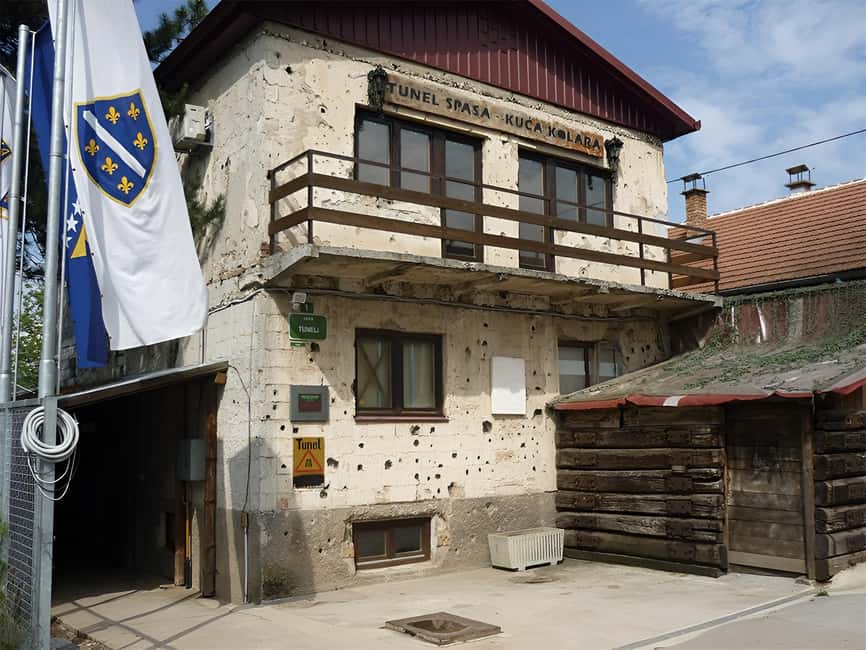
The War Tunnel Museum, also called the Tunnel of Hope, is the most important stop of the day. During the siege, this narrow passage acted as a vital link for a city surrounded and cut off from normal supplies.
At the museum, you watch a short film about the war in Sarajevo and the tunnel. You then walk through the section open to the public before viewing exhibits connected with the siege. The route is not presented as a polished attraction. Its power comes from seeing how small and confined the passage was compared with the enormous needs of a trapped city.
Your guide adds the human scale. Instead of hearing only dates and military terms, you can ask what daily life was like, how the tunnel functioned, and how the wider war developed. The tour description specifically encourages personal questions, and the strongest praise has gone to guides who keep answering well during the drive and at each location.
The entrance fee, listed at 10.50 EUR per person, is included in the $47 tour price. That matters because the tunnel is the one stop with a separate admission charge, and the price does not come as an unpleasant surprise at the door. VAT and government taxes are included too.
Allow for a serious mood here. The film and displays deal with war, destruction, and civilian survival. If you prefer to process difficult subjects slowly, pay attention to your own limits. The tour does not treat the siege as a picturesque backdrop.
The tunnel visit is also where the value of a survivor guide becomes clearest. A regular city tour can point out the entrance and repeat the basic facts. A guide who lived through the siege can provide a more direct sense of what those facts meant. That does not replace museum interpretation, but it gives the stop greater emotional force.
Trebević Mountain and the Olympic bobsled track
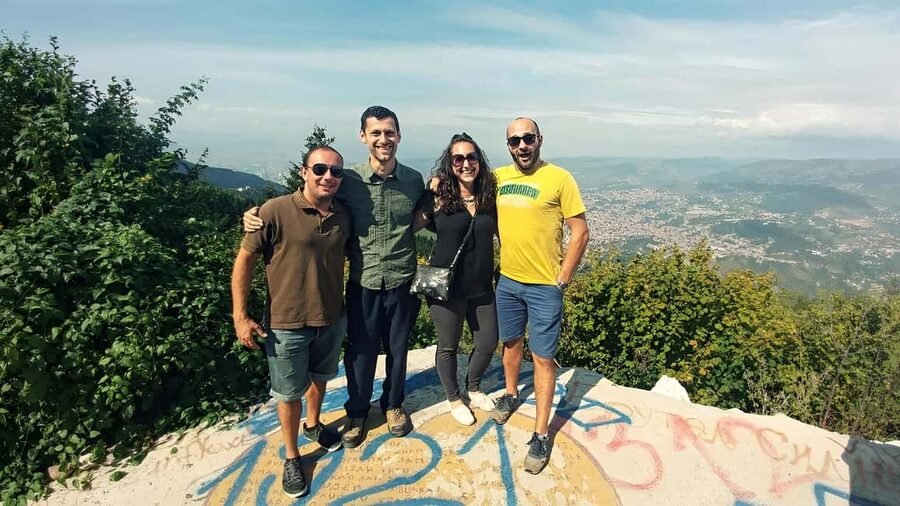
After the tunnel, the vehicle climbs toward Trebević Mountain. During the siege, much of this mountain formed part of the first line, with fighting across several positions. The route includes places such as Zlatište, Osmice, Trebević Vidikovac, and other damaged sites.
This portion is valuable because it changes your view of Sarajevo. From the city, the surrounding hills can appear like a beautiful frame. During the war, those same heights provided military positions overlooking streets and neighborhoods below. The guide helps you understand why the hills mattered so much.
The main attraction here is the Sarajevo bobsled track, built for the 1984 Winter Olympics. Before the war, it represented Sarajevo’s place on the world sporting stage. During the siege, it lay along a front line. Today, the abandoned concrete track carries graffiti from artists around the world.
I like the way this stop brings two very different chapters of Sarajevo together. The Olympics represented confidence, cooperation, and modern city life. The damaged bobsled track shows how quickly that public image was overtaken by war. It is also one of the more visually memorable places on the tour.
You visit the track on foot, so sensible shoes are a good idea. The supplied information confirms a guided walk, but it does not give a precise walking distance or trail condition. If mobility is a concern, ask Funky Tours about the exact route before booking, even though the activity is listed as wheelchair accessible.
Do not expect the bobsled track to feel like a restored Olympic venue. Its appeal is precisely its abandoned condition. Graffiti, weathered concrete, and wartime associations make it atmospheric, but the site is not a formal museum with a full visitor program.
Same corner of the country, a different kind of day:
- Dubrovnik: Kravica Waterfalls, Mostar and Pocitelj Day Trip
★ 4.5 · 3,045 reviews - Sarajevo: Mostar, Konjic, Blagaj Tekke, Pocitelj & Waterfall
★ 4.9 · 1,666 reviews - From Mostar: Blagaj, Počitelj & Kravice Waterfalls Day Tour
★ 5.0 · 1,310 reviews - Sarajevo: Grand Walking Tour Through Time and Cultures
★ 4.8 · 1,236 reviews
The Jewish Cemetery and the view toward the city
The final major stop is Sarajevo’s Jewish Cemetery, described as one of the largest Jewish cemeteries in Europe. It is important for its Jewish heritage, but the tour focuses especially on its role during the siege.
The cemetery became a front-line area and a sniper position for the Army of Republika Srpska. From this higher ground, forces could overlook the city and the route known as Sniper Alley. That gives you another piece of Sarajevo’s wartime geography: cemeteries, hills, roads, hotels, and homes were all pulled into the conflict.
I find this stop especially useful because it avoids reducing the cemetery to a single story. You see a place of Jewish remembrance, then learn how the same site was used in the military encirclement of Sarajevo. The guide’s explanation helps keep both parts visible.
The visit also works as a final link back to the beginning of the day. Hotel Holiday and Sniper Alley introduced the danger at street level. The cemetery helps you understand how the surrounding heights shaped that danger.
As with Trebević, this is an outdoor stop, and conditions can change by season. The tour operates throughout the year, so winter visitors should be prepared for colder weather and possible ground conditions that make walking less comfortable. No meals or drinks are included, so plan accordingly before pickup.
What the guide adds to the experience
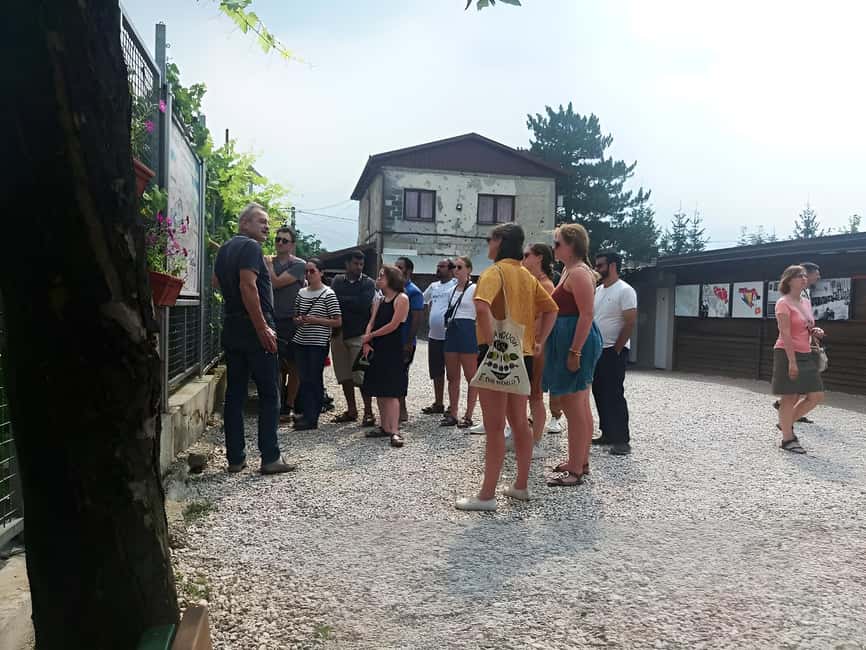
The guide is not simply driving between points. The tour includes an English-speaking local expert guide and driver, and the most highly praised part of the experience is the personal account.
Adnan has been described as charismatic and engaging, with a strong first-person understanding of the siege. Mustafa has also received repeated praise for answering questions, explaining each location, and placing the war within the breakup of Yugoslavia. The guide assigned to your date may differ, but the format is built around a local survivor.
That personal element can change the pace of the day. You can ask about the origins of the war, the death of Yugoslavia, the siege itself, and specific places you pass in the vehicle. You do not need to limit yourself to prepared questions, although some subjects may be difficult to discuss.
The best approach is to arrive curious and respectful. This is not a theatrical performance, and the guide’s experience should not be treated as entertainment. The value comes from listening carefully and allowing room for complicated answers.
I also like that much of the explanation happens during transfers. With four hours covering several parts of Sarajevo Canton, drive time is used for context rather than treated as dead time. That helps the itinerary feel fuller without turning every stop into a rushed speech.
Price, group size, and what is covered
At $47 per person, this is a strong value for a four-hour guided tour, especially because the price includes the main entrance fee. You also get tour transfers, free pickup, return to your hotel, VAT, and government taxes.
The included 10.50 EUR admission to the War Tunnel Museum makes the cost easier to judge. If you arranged separate transport to the tunnel, Trebević, and the cemetery, you would also lose the guide’s explanation between stops. Here, the fee covers both access and the connections that make the places meaningful.
The tour is shared unless you specifically book a private option. The group limit is eight people, which is small enough for questions without guaranteeing a private experience. If you want a completely personal schedule, confirm the private option and its price before booking.
There is no food or drink included. Since the tour lasts four hours, eat beforehand or carry what you need, while respecting any museum or vehicle rules. Personal travel insurance is also excluded and should be arranged in your home country.
Pickup is included, and the vehicle waits at the address you provide. At the end, you are returned to your hotel or another Sarajevo drop-off point according to the arrangements made with the operator. Check the starting time when booking because departure times vary by availability.
Free cancellation is available up to 24 hours in advance for a full refund, and you can reserve now and pay later. These terms are useful if your Sarajevo schedule is still moving around.
Who should book this Sarajevo tour?
I would recommend it most strongly if you want to understand modern Sarajevo beyond the old town and Austro-Hungarian buildings. It is also a good fit if you have a serious interest in the Bosnian War, the breakup of Yugoslavia, military geography, or firsthand local testimony.
The tour suits first-time visitors because it gives you a fast framework for the city. After four hours, streets and hills that seemed unrelated begin to form one story.
It may be less suitable if you want a relaxed mountain outing or a conventional Olympic tour. The bobsled track is not presented as a restored sports attraction, and the mountain stops are tied closely to wartime destruction.
Think carefully about children and sensitive adults. The tour is listed as wheelchair accessible, but the exact walking conditions at the tunnel, bobsled track, and cemetery are not described in detail. More importantly, the subject matter is serious. The experience includes war footage, destroyed sites, sniper positions, and personal memories.
Should you book the Siege Tour?
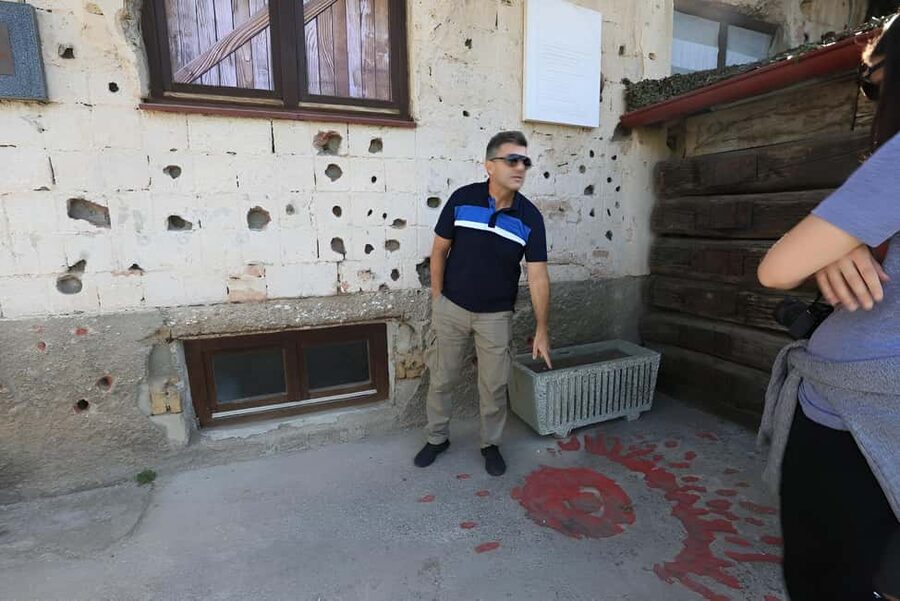
Book it if you want the most direct way to connect Sarajevo’s wartime sites in one half day. The survivor guide, included tunnel fee, pickup, and small group make the $47 price fair, and the personal explanations are the reason to choose this over simply visiting the museum alone.
I would not book it expecting cheerful sightseeing or a polished attraction at every stop. You will see an abandoned Olympic structure, a former front line, a cemetery used as a sniper position, and a tunnel built for survival. That is exactly why the tour is valuable.
Choose it early in your Sarajevo stay if possible. The context can help you read the city afterward, and you will have time to return to any site that deserves a quieter visit. With an overall rating of 5 from 18 reviews, plus particularly strong praise for Adnan and Mustafa, this is one of the city’s most useful guided introductions to the Siege of Sarajevo.
FAQ
How long does the Sarajevo Siege Tour last?
The tour lasts four hours, including transportation between the Sarajevo pickup point and the tour stops.
Is pickup included?
Yes. Pickup is included in Sarajevo, and the vehicle waits at the address you provide. Return to your hotel is also included at the end of the tour.
Which entrance fee is included?
The War Tunnel Museum entrance fee is included. The stated admission cost is 10.50 EUR per person.
Is the tour conducted in English?
Yes. The tour has a live English-speaking guide.
How many people are in the shared group?
The small group is limited to eight participants. Tours are shared unless you specifically book a private option.
Does the tour run in winter?
Yes. The tour operates throughout the year. The listed price does not include food, drinks, or personal travel insurance.
Newest around Bosnia and Herzegovina
- Trebinje Tour with Luxury Transportation and Wine Tasting★ 5.0 · 6 reviews
- Understanding Srebrenica Genocide + Lunch with Local Family★ 4.9 · 14 reviews
- From Mostar: Via Ferrata Blagaj★ 5.0 · 2 reviews
- Private Full Day Safari Tour★ 5.0 · 8 reviews
- Sarajevo: Trebević Mountain Summit Hiking Tour★ 4.2 · 2 reviews
- From Sarajevo: Kozice Waterfalls Hiking Experience in Nature★ 5.0 · 2 reviews
- Sarajevo Under Siege: A War History Tour★ 5.0 · 10 reviews
- Mysterious Visoko Pyramids Driving and Walking Tour★ 5.0 · 7 reviews
War History & Siege Tours, compared.
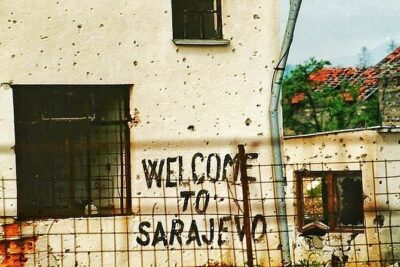
Fall of Yugoslavia, Sarajevo War Tour with Tunnel of Hope Museum and Frontlines
Read our review →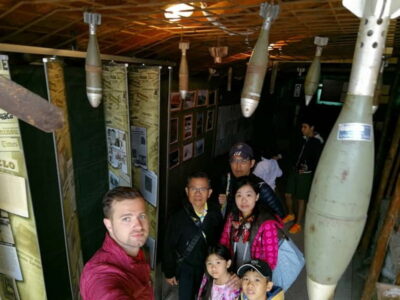
Tunnel Museum Yugoslavia War Tour with War Veteran
Read our review →
ROSES OF SARAJEVO (Official WAR + CITY tour)- Story of a Survivor
Read our review →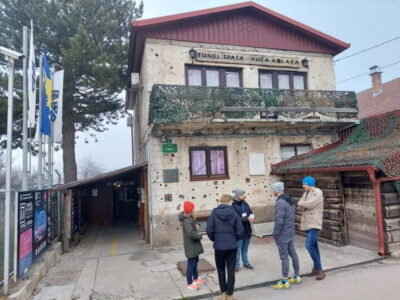
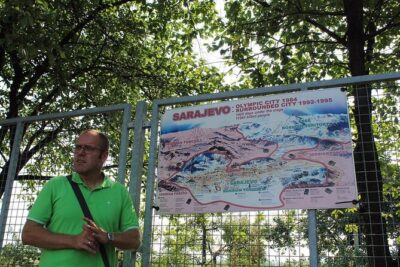
Tunnel Museum: Bosnian & Yugoslav Wars Tour with War Veteran
Read our review →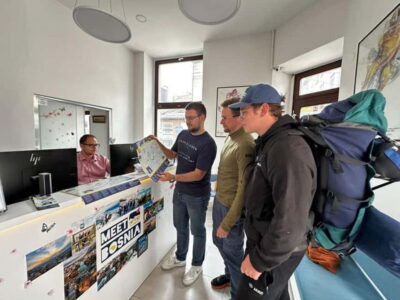
Bosnian War & Fall of Yugoslavia Tour with Tunnel
Read our review →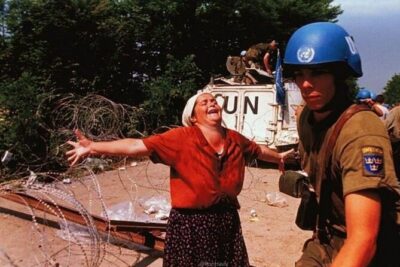
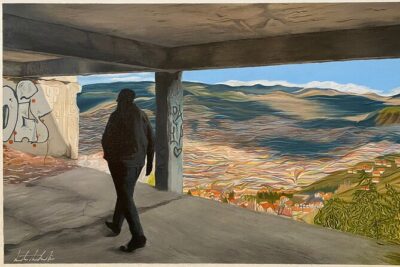
Sarajevo War Tour: A Veteran’s Story of the Siege (fees included)
Read our review →Browse the lists this tour appears in