
Review · WAR HISTORY & SIEGE TOURS
SARAJEVO SIEGE TIMES ’92-’95 / Sarajevo Roses & Tunnel of Hope /
Some places explain history by showing you the ground where it happened. This private Sarajevo tour connects the city’s wartime story with the Yellow Fortress views and the Tunnel of Hope, while guide Faruk adds personal memories from living through the war as a young teenager. I like the way the tour links geography to military events, and I like the mix of famous sites with quieter places such as the Jewish Cemetery. The main drawback is that the Tunnel of Hope entrance fee, listed as €10 per person, is extra.
You’ll spend about three to four hours moving between viewpoints, war sites, and the Olympic bobsled track above the city. The tour costs $47.66 per person and includes hotel or private accommodation pickup, but it is best suited to people who want a serious, personal account of Sarajevo rather than a light sightseeing outing.
In This Review
- Five things to know before booking
- Why this Sarajevo war tour matters
- Yellow Fortress gives you the city’s wartime geography
- Understanding daily life during the siege
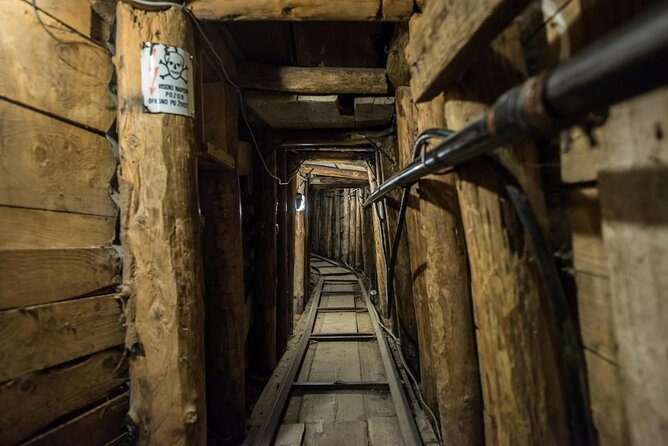
- The Tunnel of Hope was Sarajevo’s lifeline
- Trebević viewpoint shows the war line from above
- The Olympic bobsled track carries a strange wartime contrast
- The Jewish Cemetery and the first sniper attacks
- What Faruk adds to the experience
- Is $47.66 a fair price?
- Who should book this tour?
- Practical tips for a better morning
- Should you book Sarajevo Siege Times?
- FAQ
- Where does this Sarajevo tour take place?
- How long does the experience last?
- What time does the tour start?
- Is hotel pickup available?
- Is this a private tour?
- Is the tour offered in English?
- How much does the tour cost?
- Is the Tunnel of Hope entrance included?
- Can most people participate?
- What happens if the weather is poor?
- Can I cancel for a full refund?
Five things to know before booking
- Faruk’s personal story shapes the tour: He lived through the war as a young teenager, giving the history a direct human voice.
- The Yellow Fortress sets the scene: You can look across Sarajevo’s valley while learning how the city’s position affected the siege.
- The Tunnel of Hope explains survival: This was Sarajevo’s only connection with the outside world during the later siege years.
- The Olympic bobsled track became a war line: The visit shows how a place built for sport was pulled into the conflict.
- The tour is private: Only your group participates, allowing the pace and discussion to feel more personal.
- Budget for the tunnel: The listed tour price does not cover the €10 Tunnel of Hope entrance fee.
Why this Sarajevo war tour matters
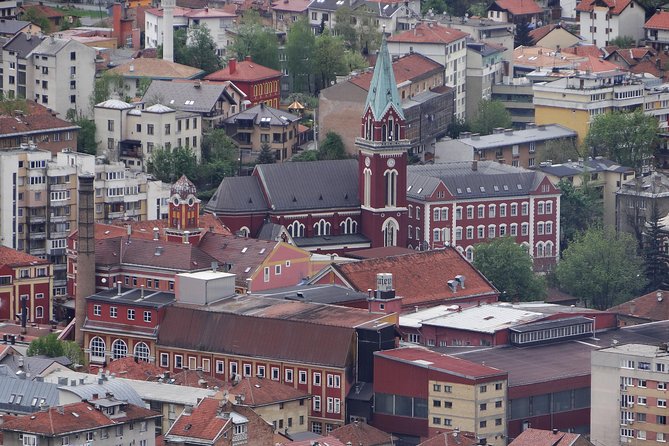
Sarajevo’s siege lasted from 1992 to 1995. That simple fact can feel distant when read in a book. It becomes easier to understand when you look down over the city from a fortress, trace the roads used by civilians, and see the hills where armed forces surrounded the urban center.
This tour focuses on that connection between place and event. You are not simply taken from one museum room to another. The stops help explain how the city was surrounded, how civilians moved under danger, and how Sarajevo remained connected to the rest of Bosnia and the wider world.
The experience also covers the fall of Yugoslavia and the first days of the attacks. That wider background matters. Without it, the siege can seem like an isolated event. With it, you gain a clearer sense of how political collapse turned into violence in Sarajevo and across Bosnia and Herzegovina.
I especially like that the route includes both famous and less obvious locations. The Tunnel of Hope is the central stop, but the Yellow Fortress, Trebević viewpoint, bobsled track, and Jewish Cemetery each add a different piece to the story.
Other tours covering the siege years and their sites:
- Fall of Yugoslavia, Sarajevo War Tour with Tunnel of Hope Museum and Frontlines
★ 5.0 · 1,314 reviews - Sarajevo: Tunnel Museum Yugoslavia War Tour with War Veteran
★ 5.0 · 1,111 reviews - ROSES OF SARAJEVO (Official WAR + CITY tour)- Story of a Survivor
★ 5.0 · 770 reviews
Yellow Fortress gives you the city’s wartime geography
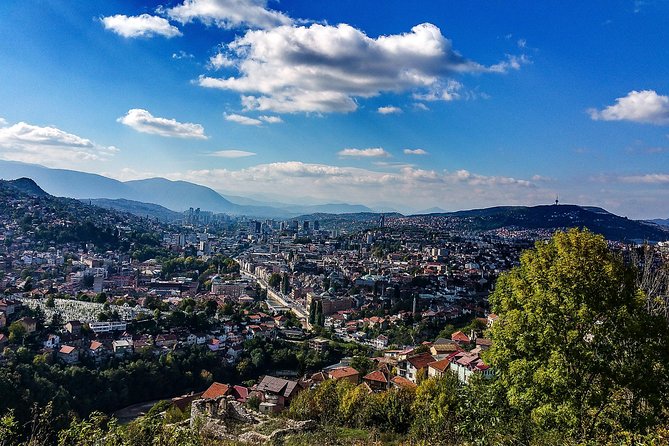
The tour begins at the Yellow Fortress, where you look across the Sarajevo valley. This is an important first stop because the city’s shape is part of the story. From above, you can begin to understand how surrounding high ground could be used to watch and attack the urban area below.
You spend about 20 minutes here. That is enough time to get your bearings without turning the opening into a long lecture. Faruk explains the city’s past, the fall of Yugoslavia, and the beginning of the siege.
The view also gives the tour a calm opening before the subject becomes more difficult. You see Sarajevo as a living city, not only as a place marked by war. That contrast is useful. It reminds you that the people below were going about ordinary life while the surrounding hills became military positions.
This is also where the guide introduces the siege period and the way the city was enclosed. You may find this stop especially helpful if you know little about Sarajevo before arriving. If you already have a strong grasp of the political background, the value comes more from seeing the city’s layout in person.
Understanding daily life during the siege
The middle part of the tour deals with war life in Sarajevo. The focus is not only on battles or political leaders. You learn about civilians, sniper fire, attacks, and the daily pressure of living in a city under siege.
The tour describes how people crossed streets and exposed areas while trying to avoid sniper positions. It also addresses the first attacks on the city and the way violence spread through civilian areas.
One of the hardest subjects covered is the civilian protest against the war. The tour refers to 4,500 days of civilian protest in Bosnia and Herzegovina and Yugoslavia. That detail underlines the length of the crisis and the persistence of ordinary people who opposed the violence.
Another important point is the reaction of the wider world. The tour discusses the explosion that drew international attention to Sarajevo while innocent people continued to be killed. The language used in the description is strong, and the subject is not softened. You should expect a sober experience, especially at the stops connected with civilian deaths and sniper positions.
Faruk’s role matters here. He experienced the war as a teenager, so his explanations can bring personal weight to dates and military terms. A direct account from someone who lived through the period often helps you understand the fear and uncertainty in a way that a standard city tour cannot.
At the same time, the personal approach can make the tour emotionally demanding. I would not choose this outing if I wanted a carefree morning. It is better for you if you are prepared to listen closely and treat the subject with respect.
The Tunnel of Hope was Sarajevo’s lifeline
The Tunnel of Hope is the tour’s most important stop. You spend about one hour here, considerably longer than at the viewpoints. During the siege, the tunnel provided Sarajevo with a route out of the city and a connection with the rest of Bosnia and the outside world.
That makes the visit more than a short historical photo stop. The tunnel helps explain how a city under siege could keep functioning at all. It was a practical link for people and supplies when ordinary routes were closed or too dangerous.
The tour description calls it Sarajevo’s only blood line during the siege years from 1993 to 1995. That wording reflects the tunnel’s human importance. It was not simply an engineering project. It was part of the city’s effort to survive.
The entrance fee is listed separately at €10 per person. This is the most important cost detail to note before booking. The main tour price is $47.66 per person, but you should add the tunnel fee to your budget.
You have roughly an hour at the site, so you can expect the tunnel to receive serious attention rather than being rushed through. The exact amount of time inside may depend on site conditions, but the tour gives you enough time to understand why the route mattered.
If you only have time for one war-related attraction in Sarajevo, the Tunnel of Hope is a strong choice. On this tour, it is even more useful because Faruk has already explained the siege and the city’s geography before you arrive.
Same corner of the country, a different kind of day:
- Sarajevo: Mostar, Konjic, Blagaj Tekke, Pocitelj & Waterfall
★ 4.9 · 1,666 reviews - Sarajevo: Grand Walking Tour Through Time and Cultures
★ 4.8 · 1,236 reviews - Sarajevo: Mostar, Konjic, Sufi House, Pocitelj & Kravice Falls
★ 5.0 · 1,179 reviews - Sarajevo: Tunnel of Hope Tour – Survival and Resilience
★ 4.8 · 630 reviews
Trebević viewpoint shows the war line from above
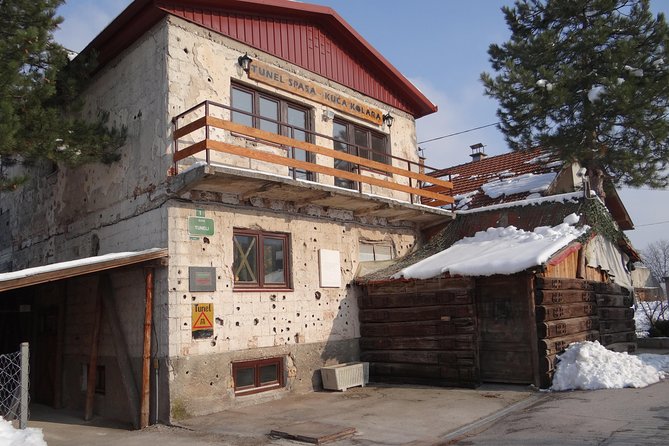
Trebević Vidikovac provides a 15-minute panoramic view across Sarajevo. The stop is short, but its purpose is clear: you see the valley from a position connected with the wartime front line.
This viewpoint works as a visual companion to the Yellow Fortress. The first stop introduces the city from one angle. Trebević shows another section of the surrounding ground and helps explain how Sarajevo could be watched from above.
Do not expect a long walk or extended visit here. The scheduled time is brief. You are likely stopping for the view and the explanation, not for a major hike or a lengthy independent exploration.
That short timing is useful for keeping the overall experience within three to four hours. It also means the tour covers several locations without turning into a full-day commitment. Still, if panoramic stops are your main interest, you may wish the schedule allowed more time.
The Olympic bobsled track carries a strange wartime contrast
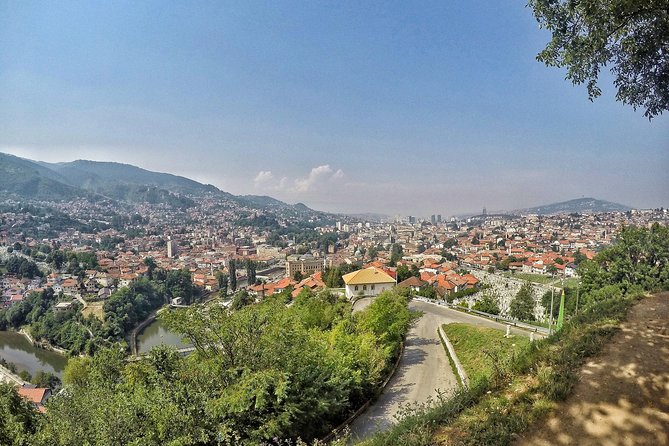
The Sarajevo Olympic bobsleigh and luge track is one of the tour’s most unusual locations. Built for sport, it later became part of the war line during the siege. You spend about 50 minutes walking along the track and hearing how its role changed.
This is the kind of place that gives the tour emotional contrast. The track recalls Sarajevo’s Olympic past, yet its wartime use points to the city’s destruction and division. The two stories occupy the same physical space.
The experience is described as an adventure walk, so you should expect to walk around the track rather than simply stop for a quick photograph. The available details do not specify the exact walking surface or level of difficulty, so ask the operator if you have concerns about mobility or footing.
I like this stop because it avoids presenting the siege only through formal memorials. A sports venue turned into a military position shows how completely the conflict altered everyday spaces. It also helps connect Sarajevo’s prewar identity with the years that followed.
The 50-minute visit gives it enough time to feel worthwhile. You can take in the remains, listen to the explanation, and consider how a place made for international competition became associated with fighting.
The Jewish Cemetery and the first sniper attacks
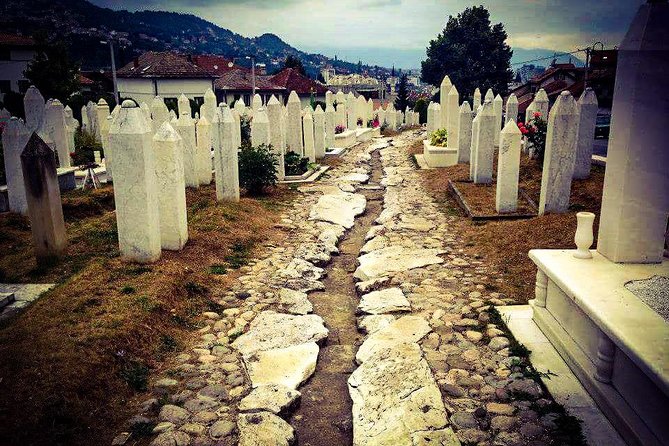
The Jewish Cemetery is another serious stop, scheduled for about 20 minutes. It is connected with sniper positions and the first sniper shots directed at civilians.
The cemetery’s location adds another layer to the tour. It is not only a burial ground or historic site. During the siege, it became associated with danger from above and with the exposure civilians faced while moving through the city.
This stop may be brief, but it helps make the sniper threat more concrete. Earlier explanations about street crossings and city attacks can feel abstract. Here, you connect those accounts with a specific position and a specific kind of danger.
You should expect the mood to remain quiet and reflective. The tour does not treat the cemetery as a casual sightseeing stop. It forms part of a wider account of how ordinary residents were targeted and how the city’s geography shaped their daily choices.
What Faruk adds to the experience
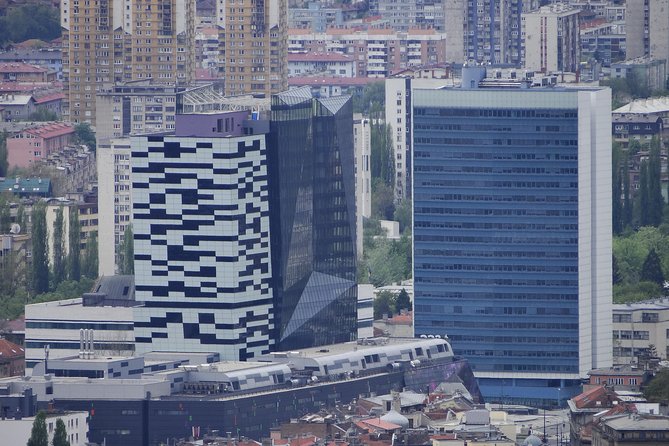
The strongest personal feature of this tour is Faruk. He lived through the war as a young teenager and shares memories of that period while explaining the places on the route.
That does not replace historical evidence or broader context, but it gives the tour a human scale. You hear about the siege from someone who was not only studying it afterward. His experience can help you understand how the conflict affected young people and families living in Sarajevo.
The available feedback describes Faruk as friendly, intelligent, and good-humored. That balance is valuable. The subject is painful, but a guide who can remain approachable makes it easier to ask questions and stay engaged.
I also appreciate that the tone is not described as relentlessly grim. There is room for warmth and humor without making light of the war. That can make a difficult subject easier to absorb over several hours.
Because this is a private tour, your group is the only group taking part. That gives you more room to ask about specific sites or pause when you need a moment. It also means the quality of the experience depends heavily on the guide and the conversation your group creates.
Is $47.66 a fair price?
At $47.66 per person, the tour offers pickup, a private vehicle-based route between several sites, and about three to four hours of guided interpretation. The price is more than a basic city walk, but the route covers locations spread across Sarajevo and its surrounding high ground.
The private format is the key value. You are not sharing the experience with a large group, and you can receive a more personal account from Faruk. For a small group, that may make the cost reasonable, especially when you consider the time saved arranging transport between the fortress, tunnel, viewpoints, bobsled track, and cemetery.
Remember to add the €10 Tunnel of Hope entrance fee per person. The supplied details also mention an included admission fee, but they separately list the tunnel entrance as not included. I would confirm the exact payment arrangement before departure so there is no confusion.
Pickup is offered from hotels or private accommodations. You need to provide the hotel name or accommodation address so the morning pickup can be organized. The stated start time is 8:30 a.m., which leaves much of the day free afterward.
The tour requires good weather. If conditions are poor, the operator may offer another date or a full refund. It also requires a minimum number of participants, despite being a private activity for your own group, so check the confirmation if your plans are tight.
Who should book this tour?
I would recommend it to you if you want to understand Sarajevo through its wartime geography and personal stories. It suits people interested in modern European history, the breakup of Yugoslavia, military history, memorial sites, and civilian survival.
It is also a good fit if you have limited time in Sarajevo. In one morning, you reach several places that would be difficult to connect efficiently on your own. Hotel pickup removes some of the transport planning.
You should think twice if you want a relaxed sightseeing tour with only brief historical comments. The material includes civilian deaths, sniper attacks, protest, and the hardship of the siege. This is not a decorative city tour.
Families with older children or teenagers may find it meaningful, but the subject matter is serious. The details provided say most people can participate, yet they do not give a specific accessibility description for the walking sections. Ask ahead if someone in your group has mobility concerns.
Practical tips for a better morning
- Allow three to four hours, even though the listed stop times total less than that. Pickup and driving between locations form part of the schedule.
- Bring money for the €10 Tunnel of Hope entrance fee.
- Give the operator your hotel or private accommodation address before the morning of the tour.
- Wear practical clothing for the bobsled track walk.
- Keep your schedule flexible because poor weather can lead to a new date or cancellation.
- Be ready for a personal conversation. Faruk’s own experience is a major part of the tour’s appeal.
- Plan a quiet activity afterward if you think the war history will affect you emotionally.
Should you book Sarajevo Siege Times?
Book it if you want a focused, private account of Sarajevo’s siege told through real locations. The strongest reasons are Faruk’s personal connection, the Tunnel of Hope, and the way the Yellow Fortress, Trebević viewpoint, bobsled track, and Jewish Cemetery fit together into one explanation of the city.
The tour gives you more than a list of monuments. It shows how hills, streets, sports facilities, cemeteries, and underground routes shaped life during the war. Add the tunnel fee to the advertised price, accept that the subject is heavy, and this is a worthwhile choice for a thoughtful morning in Sarajevo.
Free cancellation is available if you cancel at least 24 hours before the start time. Changes or cancellations made inside that period are not refunded, and the operator may change the date or provide a refund if weather or minimum participation prevents the tour from running.
FAQ
Where does this Sarajevo tour take place?
The tour takes place in Sarajevo, Bosnia and Herzegovina, with stops at the Yellow Fortress, Tunnel of Hope, Trebević Vidikovac, the Sarajevo Olympic bobsleigh and luge track, and the Jewish Cemetery.
How long does the experience last?
The full experience lasts approximately three to four hours.
What time does the tour start?
The stated start time is 8:30 a.m.
Is hotel pickup available?
Yes. Pickup is offered from hotels and private accommodations. You need to provide the hotel name or accommodation address so pickup can be arranged.
Is this a private tour?
Yes. Only your group participates in the private tour or activity.
Is the tour offered in English?
Yes. The experience is offered in English.
How much does the tour cost?
The listed price is $47.66 per person.
Is the Tunnel of Hope entrance included?
The Tunnel of Hope entrance is listed as an additional €10 per person. You should budget for this separate fee.
Can most people participate?
The provided information says most people can participate. The experience is also near public transportation.
What happens if the weather is poor?
The experience requires good weather. If it is canceled because of poor weather, you will be offered a different date or a full refund.
Can I cancel for a full refund?
Yes. You can cancel at least 24 hours before the experience start time for a full refund. Cancellations or changes made less than 24 hours before the start time are not accepted or refunded.
Newest around Sarajevo
- Understanding Srebrenica Genocide + Lunch with Local Family★ 4.9 · 14 reviews
- Private Full Day Safari Tour★ 5.0 · 8 reviews
- Sarajevo: Trebević Mountain Summit Hiking Tour★ 4.2 · 2 reviews
- From Sarajevo: Kozice Waterfalls Hiking Experience in Nature★ 5.0 · 2 reviews
- Sarajevo Under Siege: A War History Tour★ 5.0 · 10 reviews
- Mysterious Visoko Pyramids Driving and Walking Tour★ 5.0 · 7 reviews
- WAR TUNNEL – Sarajevo’s only way of a communication during the WAR – Top secret★ 5.0 · 12 reviews
- Ultimate Gastro Experience★ 4.5 · 14 reviews
War History & Siege Tours, compared.
Fall of Yugoslavia, Sarajevo War Tour with Tunnel of Hope Museum and Frontlines
Read our review →
Tunnel Museum Yugoslavia War Tour with War Veteran
Read our review →
ROSES OF SARAJEVO (Official WAR + CITY tour)- Story of a Survivor
Read our review →
Tunnel Museum: Bosnian & Yugoslav Wars Tour with War Veteran
Read our review →
Bosnian War & Fall of Yugoslavia Tour with Tunnel
Read our review →
Sarajevo War Tour: A Veteran’s Story of the Siege (fees included)
Read our review →Browse the lists this tour appears in