
Review · WALKING TOURS
Sarajevo: Nighttime City Highlights Walking Tour
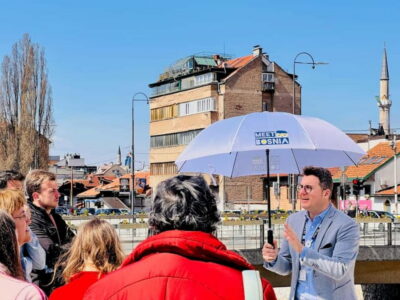
Sarajevo tells its story after sunset. This two-hour walk is a fine way to see the city center when the summer heat has eased, while a licensed English-speaking guide connects Ottoman, Austro-Hungarian, Jewish, and religious landmarks into one clear introduction. I especially like the small group limit of 10 people and the way the route brings you from the spot of Franz Ferdinand’s assassination into Sarajevo’s old bazaar and its major houses of worship. The main catch is pace: there are many stops in two hours, so you should expect brief explanations rather than long visits inside museums or religious buildings.
I also like the human side of the experience. Guides such as Dennis, Nedim, Suad, Kenan, Fariz, Hana, Ilma, Mirza, and Admir have been praised for friendly storytelling, humor, and personal insight. If you want a first look at Sarajevo’s history and a practical sense of where everything sits, this tour offers good value at $23 per person, though food and drinks cost extra and the route is mainly about seeing and understanding rather than stopping for a full meal.
In This Review
- Key points before you book
- Why an evening walk works so well in Sarajevo
- From Franz Ferdinand to the Latin Bridge
- The Emperor’s Mosque and Sarajevo City Hall
- Inat kuća and the story behind the name
- Bravadžiluk, Kazandžiluk, and Luledžina
- Sebilj and Morića Han in the old bazaar
- Gazi Husrev-beg Mosque and Sarajevo’s Ottoman heart
- The Sarajevo Meeting of Cultures
- Jewish heritage and Sarajevo’s Catholic and Orthodox cathedrals
- What $23 buys you
- Who will enjoy this walk most
- FAQ
- How long is the Sarajevo Nighttime City Highlights Walking Tour?
- What language is the tour conducted in?
- How much does the tour cost?
- Where does the tour meet?
- Is the tour wheelchair accessible?
- How large is the group?
- Are food and drinks included?
- Can I cancel for a refund?
- Can I reserve now and pay later?
- Should you book this Sarajevo night walk?
Key points before you book
- Start beside the assassination site: The meeting point is across from the Franz Ferdinand assassination location and next to the Sarajevo Museum 1878-1918.
- See Sarajevo’s main cultural crossroads: The route links mosques, churches, a synagogue museum, Ottoman market streets, and Austro-Hungarian buildings.
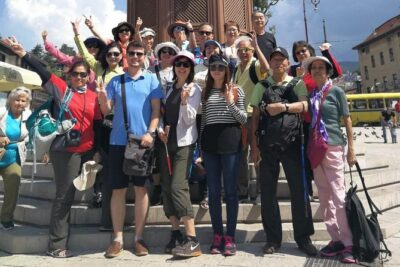
- Small groups matter here: With no more than 10 participants, it should be easier to hear the guide and ask questions.
- Night changes the mood: The walk is designed for Sarajevo’s evening atmosphere, especially appealing during hot summer nights.
- Expect a fast-moving introduction: Sixteen named stops in two hours means short visits and guided explanations rather than extended time at each site.
- The guides are the star: Dennis, Nedim, Suad, Kenan, Fariz, Hana, Ilma, Mirza, and Admir have all been praised for warmth, humor, and clear storytelling.
Why an evening walk works so well in Sarajevo
Sarajevo is compact enough to explore on foot, yet its story can feel complicated at first. Ottoman streets sit close to Austro-Hungarian buildings. Mosques, Catholic and Orthodox cathedrals, and Jewish heritage sites share the central area. A guide gives you the links between those places instead of leaving you to admire each building as an isolated photo stop.
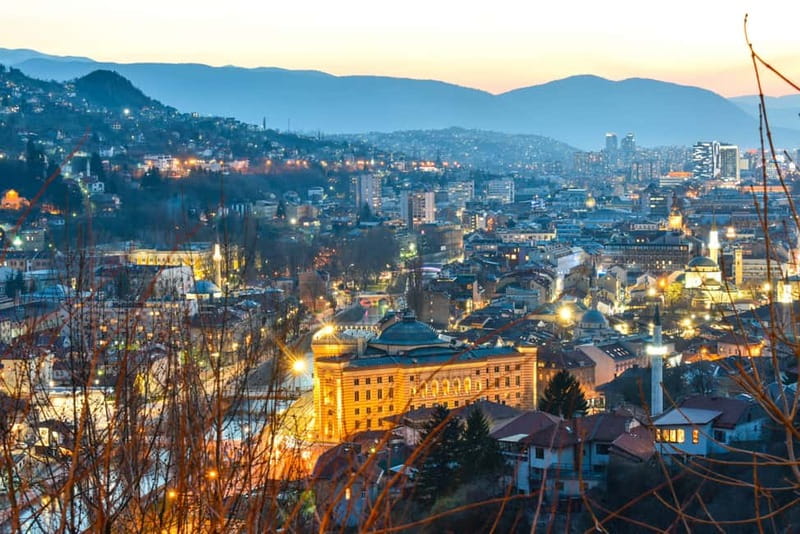
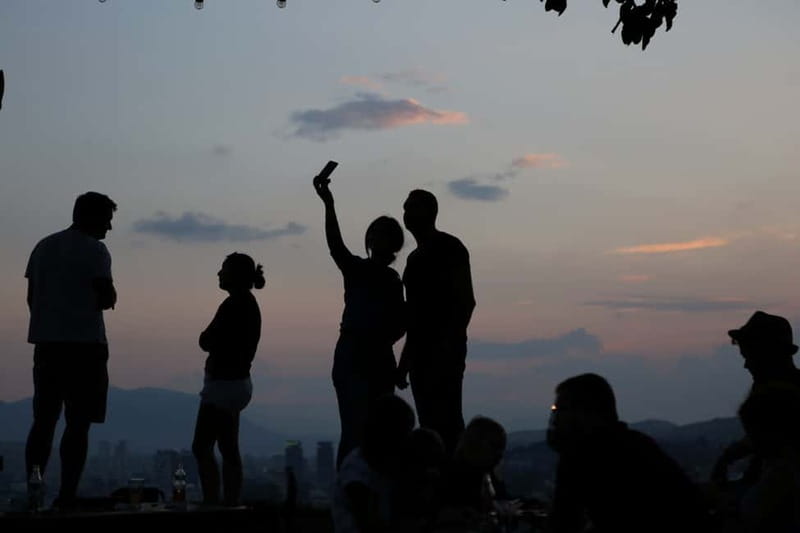
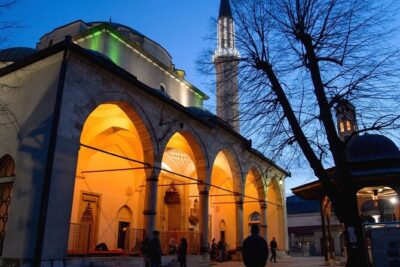
The timing adds something useful. In summer, the tour lets you walk after the hottest part of the day. The city’s evening mood also suits a route built around streets, squares, and façades. You get a sense of how Sarajevo feels as a lived-in capital, not just as a collection of monuments.
I would book this early in your stay. One person who took the walk on a first day found it helpful for getting oriented, and that is exactly the practical value here. You learn the shape of the center, spot places to return to, and gain enough background to make later independent visits more rewarding.
The guide is central to the experience. Dennis has been praised for bringing events to life with warmth and humor. Nedim has been described as a gifted storyteller who explains Sarajevo and the wider region clearly. Suad’s enthusiasm and local guidance helped one group find its way around, while Mirza shared personal experiences alongside the history.
Those details matter because Sarajevo’s past includes painful subjects. A good guide needs to explain them plainly without turning the walk into a dry lecture. The comments about friendliness, humor, patience, and personal stories suggest that the best guides make difficult material approachable.
More City Tours in Sarajevo
- ROSES OF SARAJEVO (Official WAR + CITY tour)- Story of a Survivor
★ 5.0 · 770 reviews - Sarajevo: Guided City Highlights Tour with Sarajevo Tunnel
★ 4.8 · 79 reviews - Sarajevo: Sarajevo City Market, Old Town Food Tasting Tour
★ 4.9 · 69 reviews
From Franz Ferdinand to the Latin Bridge
You meet outside Insider City Tours and Excursions, across from the location connected with the assassination of Archduke Franz Ferdinand and beside the Sarajevo Museum 1878-1918. This is a strong starting point because it places you at one of the most famous addresses in European history before the walk moves into the city’s older streets.
The Latin Bridge is next. You stop for photos and a guided explanation, with time to walk around the area. The bridge itself is important, but the value of this stop comes from the surrounding context. The guide helps connect the assassination, Sarajevo, and the political tensions that helped set Europe on the road to the First World War.
Do not expect a long museum visit at the opening. The activity is a walking tour, and the listed stops are described as photo stops and guided walks. If you want to spend serious time reading museum displays, return separately.
The Emperor’s Mosque and Sarajevo City Hall
The route then takes you to the Emperor’s Mosque. This introduces the Ottoman period and the Islamic character of Sarajevo. It also helps explain why the city feels so different from many European capitals. The mosque is one part of a much broader story about the city’s religious and cultural life.
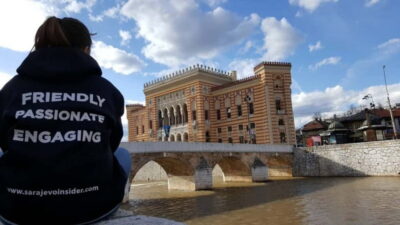
The tour continues to Sarajevo City Hall, one of the city’s most recognizable buildings. Its architecture gives you a clear change of visual mood from the mosque and old bazaar. At night, a building like this can be especially enjoyable to view from outside, when you can focus on its shape and setting without trying to rush through an interior visit.
At both stops, you should pay attention to the guide’s connections between periods. The point is not just to collect photographs. You are watching Sarajevo shift from Ottoman influence to Austro-Hungarian administration, with each era leaving its own mark.
Inat kuća and the story behind the name
Across from City Hall is Inat kuća, often translated as the House of Spite. The name alone tells you that this is not simply an architectural stop. It represents the stubborn, sometimes humorous relationship between local people and outside rulers.
This is the sort of place where a guide adds real value. A quick photograph will not explain why the house matters, but a short story can make the building memorable. The tour includes a guided stop here rather than simply passing by, so you get the local character behind the façade.
The route’s strength is becoming clear at this point. It does not treat history as a list of dates. It uses bridges, houses, mosques, and city buildings to show how power and daily life shaped the center.
More Walking Tours in Sarajevo
- Sarajevo: Grand Walking Tour Through Time and Cultures
★ 4.8 · 1,236 reviews - Sarajevo: 2 Hours Old Town Walking Tour With Local Guide
★ 5.0 · 505 reviews - Private Walking Tour, Food Tasting and Bosnian Coffee in Sarajevo
★ 5.0 · 255 reviews - Sarajevo Grand Walking Tour
★ 5.0 · 232 reviews
Bravadžiluk, Kazandžiluk, and Luledžina
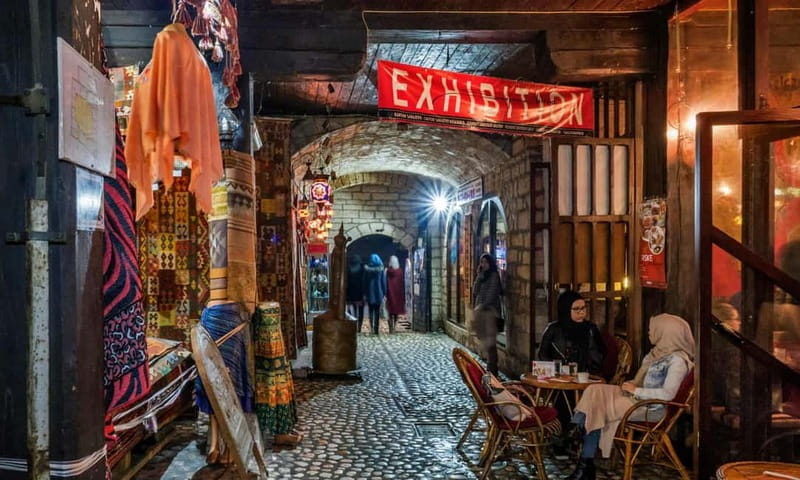
The walk moves into Bravadžiluk and Kazandžiluk, streets associated with Sarajevo’s old commercial quarter. Their names and traditional character point toward the crafts and trade that helped form the bazaar. You will walk through these areas with guided explanations and photo opportunities.
Kazandžiluk is particularly useful for understanding Sarajevo as a working town, not only a political setting. The street is tied to coppersmithing and the craft traditions of the old market. The supplied details do not promise a workshop demonstration or shopping stop, so think of this section as an introduction to the quarter rather than a hands-on craft visit.
Luledžina follows as another old-town street stop. These smaller streets are part of what makes Sarajevo feel distinct. You move through a setting where the city’s Ottoman-era pattern remains visible, then continue toward the central Sebilj fountain.
This section may feel quick. With several stops packed into one tour, you will hear the story of the streets but may not have much free time to browse. If you want to shop or linger over coffee, note the locations and return afterward.
Sebilj and Morića Han in the old bazaar
Sebilj is one of Sarajevo’s best-known meeting points and a natural center of the old bazaar. Here you have a proper visit and guided explanation, not just a passing glance. The fountain gives the group a recognizable place to pause and helps you understand the layout of the surrounding market streets.
This is also a useful point for the city’s social side. Sarajevo’s appeal is not only its buildings. It is the way cafés, small streets, religious sites, and market life sit close together. The tour’s emphasis on atmosphere makes sense here.
Morića Han adds another layer. A han was an inn for merchants and travelers, and this stop helps you picture the commercial life that once ran through Sarajevo. The building gives the old quarter a sense of movement and trade, even if your visit is brief.
The tour does not include food or drinks. That is worth remembering here, since the bazaar is the obvious place to pause for a Bosnian coffee or a snack. One guide, Mirza, was specifically praised for allowing time to buy Bosnian coffee, but this should not be treated as a guaranteed scheduled inclusion. If you want refreshments, ask your guide at the start.
Gazi Husrev-beg Mosque and Sarajevo’s Ottoman heart
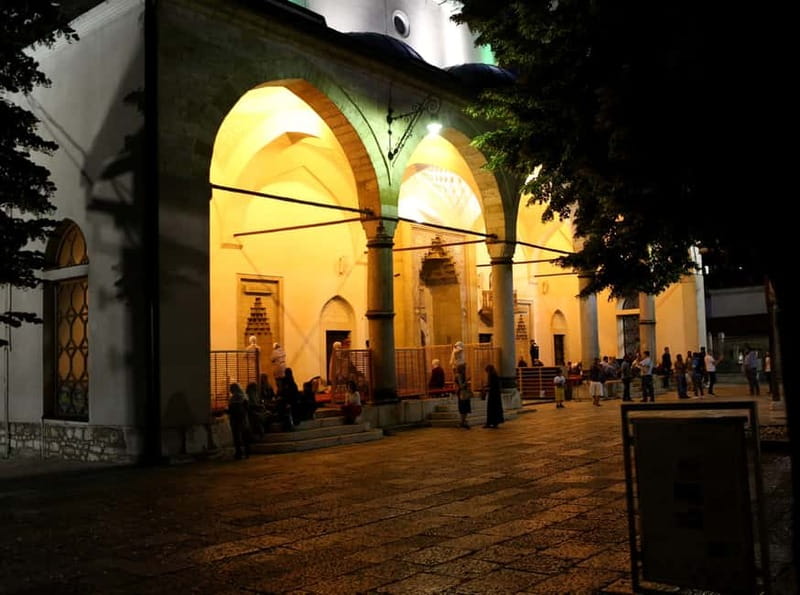
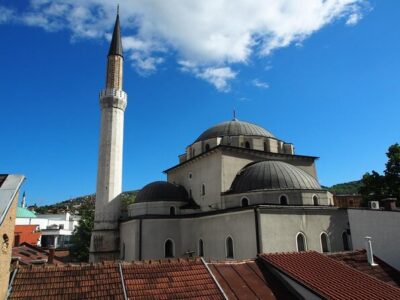
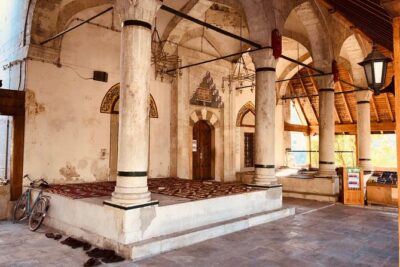
The Gazi Husrev-beg Mosque is one of the major stops on the route. It anchors the Ottoman center and gives you a stronger sense of Sarajevo’s Islamic heritage than the shorter earlier mosque stop.
A respectful approach is important. The tour includes a guided visit and photo stop, but the supplied information does not promise entry conditions or an interior tour at a specific time. One group appreciated that its guide waited while participants prayed, which suggests a considerate tone, but you should still follow the guide’s instructions and local customs.
This stop can be especially meaningful if you are trying to understand how different faiths have shared the city over time. The guide’s role is to set the mosque within Sarajevo’s wider story rather than present it as a sight disconnected from the churches and Jewish sites coming later.
The Sarajevo Meeting of Cultures
The Sarajevo Meeting of Cultures is a small but powerful point on the route. It marks the meeting of the Ottoman and Austro-Hungarian parts of the city. In practical terms, it helps you see the change in street character within a short walk.
This is one of the tour’s most useful orientation stops. You can look in one direction and see the old bazaar’s eastern influence, then turn toward the more European streets shaped by the Austro-Hungarian period. The city’s famous mixture of East and West becomes something you can observe rather than merely hear described.
The guide can also use this spot to explain why Sarajevo feels culturally layered. You are not moving between distant districts. The transition happens in the center, on foot, which makes the city’s past unusually easy to read.
Jewish heritage and Sarajevo’s Catholic and Orthodox cathedrals
The Museum of the Jews of Bosnia and Herzegovina comes next. The tour gives you a photo stop and guided explanation, adding Jewish heritage to the story of a city already introduced through Ottoman and Austro-Hungarian landmarks.
Do not confuse this with a long museum visit. The schedule lists a guided stop, but not extended time inside exhibitions. If the museum is important to your trip, use the tour as background and plan a separate visit if opening hours allow.
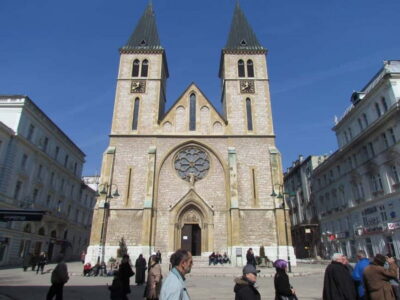
The final religious stops are the Sacred Heart Cathedral and the Cathedral Church of the Nativity of the Theotokos. Together, they show the Catholic and Orthodox traditions present in Sarajevo. Their inclusion is one of the route’s strongest features because it prevents the city from being reduced to one faith or one historical period.
The Sacred Heart Cathedral adds a distinctly Catholic landmark to the walk. The Cathedral Church of the Nativity of the Theotokos represents Sarajevo’s Orthodox community. You get a visual and historical counterpoint to the mosques visited earlier, all within the central walking route.
By the end, the tour has introduced four important strands of the city’s identity: Islamic, Catholic, Orthodox, and Jewish. That does not explain every part of Sarajevo, but it gives you a useful framework for exploring further.
What $23 buys you
At $23, the tour offers solid value if you want a guide to do the connecting work. You receive two hours with a licensed guide, a small group capped at 10, and a route covering major landmarks that would be easy to see but harder to understand on your own.
The price is less compelling if you want long interior visits, a meal, or a specialist focus on one period. Food and drinks are not included, and the number of stops means the guide must keep things moving. Still, for a first orientation, the cost is modest compared with booking several separate visits or trying to decode the city without context.
The free cancellation policy allows you to cancel up to 24 hours before the tour for a full refund. You can also reserve now and pay later, which is useful when you are still arranging your Sarajevo schedule.
The activity is wheelchair accessible. The language offered is English, and the group type is small rather than private by default. One booking became a private walk because it had only one participant, but you should not count on that outcome.
Who will enjoy this walk most
I would recommend it to you if this is your first visit to Sarajevo, especially if you want a clear starting point before exploring alone. It also suits anyone who likes architecture, political history, religious heritage, and local stories in one compact route.
The tour is a good fit for people who prefer a guide with personality. The strongest praise has focused on friendliness, humor, enthusiasm, and the ability to explain complicated subjects in a simple way. Guides have included Dennis, Nedim, Suad, Kenan, Fariz, Hana, Ilma, Mirza, and Admir, and each has been described warmly.
You may want something else if you dislike group walking, need long breaks, or want to spend an hour inside one museum. The tour is also less useful if you have already studied Sarajevo closely and are looking for specialist wartime research or an extended visit to one landmark.
Wear comfortable shoes and arrive ready to walk for two hours. Since the route includes many photo stops, keep your camera or phone handy, but listen first. The best part of this experience is not simply getting pictures of the buildings. It is learning why those buildings share the same few streets.
FAQ
How long is the Sarajevo Nighttime City Highlights Walking Tour?
The tour lasts two hours.
What language is the tour conducted in?
The live tour guide speaks English.
How much does the tour cost?
The listed price is $23 per person.
Where does the tour meet?
It meets at Insider City Tours and Excursions, across from the Franz Ferdinand assassination location and next to the Sarajevo Museum 1878-1918.
Is the tour wheelchair accessible?
Yes, the activity is listed as wheelchair accessible.
How large is the group?
It is a small-group tour limited to 10 participants.
Are food and drinks included?
No. Food and drinks are not included in the price.
Can I cancel for a refund?
Yes. You can cancel up to 24 hours in advance for a full refund.
Can I reserve now and pay later?
Yes. The booking terms allow you to reserve your place and pay later.
Should you book this Sarajevo night walk?
Book it if you want an affordable, well-organized introduction to Sarajevo’s center, especially on your first evening or first full day. The route covers an unusually broad mix of Ottoman, Austro-Hungarian, Jewish, Catholic, and Orthodox sites, and the small group gives the guide room to explain rather than simply point.
I would choose this tour for its people as much as its stops. The repeated praise for guides such as Dennis, Nedim, Suad, Kenan, Fariz, Hana, Ilma, Mirza, and Admir points to a warm, story-led experience. Just keep your expectations sensible: this is a brisk overview, not a series of long museum visits. At $23, it earns its price by helping you see Sarajevo as one connected city, not a pile of beautiful buildings.
Newest around Sarajevo
- Understanding Srebrenica Genocide + Lunch with Local Family★ 4.9 · 14 reviews
- Private Full Day Safari Tour★ 5.0 · 8 reviews
- Sarajevo: Trebević Mountain Summit Hiking Tour★ 4.2 · 2 reviews
- From Sarajevo: Kozice Waterfalls Hiking Experience in Nature★ 5.0 · 2 reviews
- Sarajevo Under Siege: A War History Tour★ 5.0 · 10 reviews
- Mysterious Visoko Pyramids Driving and Walking Tour★ 5.0 · 7 reviews
- WAR TUNNEL – Sarajevo’s only way of a communication during the WAR – Top secret★ 5.0 · 12 reviews
- Ultimate Gastro Experience★ 4.5 · 14 reviews
Walking Tours, compared.
Private Walking Tour, Food Tasting and Bosnian Coffee in Sarajevo
Read our review →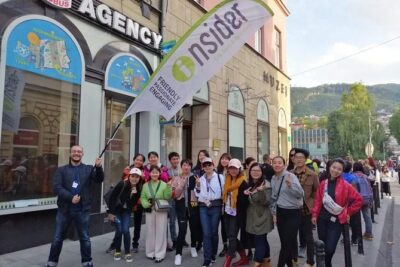
Browse the lists this tour appears in