
Review · WAR HISTORY & SIEGE TOURS
Sarajevo Assassination: The Spark of World War I
A few Sarajevo streets changed the world. This focused two-hour tour follows the people, buildings, and decisions tied to the 1914 assassination of Archduke Franz Ferdinand, giving you far more context than a quick stop at Latin Bridge.
I like the small-group format, capped at 15 people, and the way the tour connects the famous shooting site with lesser-known places such as Saint Mark Cemetery and Konak. I also like the practical length: you get a serious history lesson in the morning, then keep the rest of your day for Sarajevo’s old town, museums, or a slower coffee break.
The main consideration is cost beyond the $29.59 tour fee. Entry to the two museums adds 25 BAM, or about €13, per person, and the itinerary includes several brief photo stops rather than long visits at every location.
In This Review
- Key points before you book
- Why this Sarajevo tour works
- Starting at Saint Mark Cemetery
- Reading the Presidency and the Austro-Hungarian city
- Markale Market and the cathedral route
- Latin Bridge, where the story turns
- The Sarajevo Museum 1878 to 1918
- Konak, the brewery, and imperial decision-making
- Sarajevo City Hall and the final view of the day
- What the $29.59 price really covers
- Getting there and planning your morning
- Who should book this experience?
- Should you book Sarajevo Assassination: The Spark of World War I?
- FAQ
- Where does the tour start?
- What time does the tour begin?
- How long does the tour last?
- Where does the tour end?
- What language is the tour offered in?
- What is included in the tour price?
- Are museum admission fees included?
- How many people can join the tour?
- Is the tour available for most people?
- Can I cancel for a full refund?
Key points before you book
- Gavrilo Princip’s grave: Visit Saint Mark Cemetery and the Vidovdan Heroes Chapel, where Princip and his fellow conspirators were secretly buried.
- Two-hour historical route: See 11 locations, with the longest stops at the cemetery, Latin Bridge, and the Sarajevo Museum 1878 to 1918.
- Museum fees are extra: Plan for 5 BAM at the 1878 to 1918 Museum and 20 BAM at the Sarajevo VRX Museum.
- Small group size: The tour accepts no more than 15 people, a useful balance between personal attention and a lower price.
- Easy central start: Meet at Sarajevo Insider, Zelenih beretki 30, at 10:00 am.
- A memorable detail: One participant with a background in teaching this subject received a book about the five conspirators and praised the guide’s enthusiasm, humor, and added detail.
Why this Sarajevo tour works
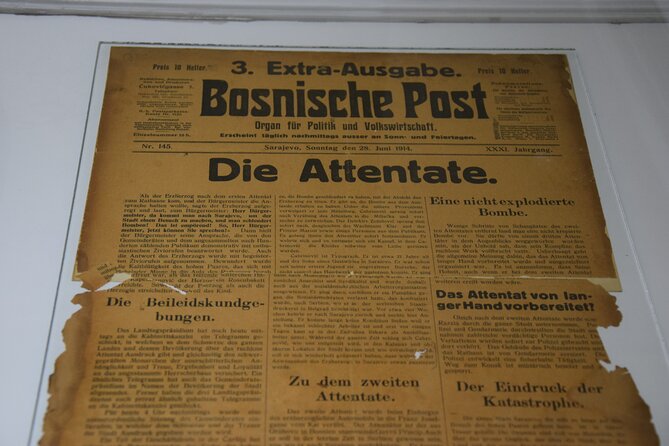
The assassination of Franz Ferdinand is often reduced to a single image: Gavrilo Princip beside Latin Bridge, pistol raised, history turning sharply. That version misses the setting. Sarajevo in 1914 was an Ottoman city being reshaped by Austro-Hungarian rule, with new government buildings, commercial projects, roads, and political tensions all packed into a small area.
This tour helps you read the city as part of the story. You see where imperial officials worked, where the archduke appeared in public, where the motorcade passed, and where the conspirators were later memorialized. The route is useful because it gives you a sequence of places rather than one isolated monument.
I also appreciate the restraint in the schedule. At roughly two hours, this is not an all-day lecture. The guide has enough time to explain the main events, but you are not committing an entire morning to a single subject.
The group limit of 15 matters here. Sarajevo’s central streets and historic sites are best handled by a compact group. You can hear the guide more easily, and the tour remains affordable compared with a private experience.
Other tours covering the siege years and their sites:
- Fall of Yugoslavia, Sarajevo War Tour with Tunnel of Hope Museum and Frontlines
★ 5.0 · 1,314 reviews - Sarajevo: Tunnel Museum Yugoslavia War Tour with War Veteran
★ 5.0 · 1,111 reviews - ROSES OF SARAJEVO (Official WAR + CITY tour)- Story of a Survivor
★ 5.0 · 770 reviews
Starting at Saint Mark Cemetery
The first stop, Saint Mark Cemetery, gives the tour an unexpected opening. Instead of beginning at the assassination site, you start with the aftermath and the people who carried out the plot.
Gavrilo Princip and his fellow conspirators were buried secretly by Austro-Hungarian authorities. The Vidovdan Heroes Chapel now commemorates the Young Bosnia movement, linking the burial site to the political ideas that helped set the crisis in motion.
You have about 20 minutes here, the longest stop on the first part of the route. That is enough time to understand who Princip was, why the conspirators mattered, and how the authorities treated their remains.
This stop also gives the tour a more human scale. The assassination was not the work of one isolated gunman acting without a network. The cemetery points you toward the wider group and the consequences they faced.
Reading the Presidency and the Austro-Hungarian city
The Presidency of Bosnia and Herzegovina building receives only about five minutes, but its location helps explain how Bosnia was governed. Built during Austro-Hungarian administration, this imposing structure once housed imperial officials overseeing the province.
The building is important less for a long visit than for the political setting it provides. The motorcade carrying Franz Ferdinand passed nearby on June 28, 1914. You can connect the administrative center with the public route taken by the imperial party.
The short stop at the Eternal Flame works in a similar way. The monument itself honors the victims of World War II, not the 1914 assassination. Yet it sits close to Austro-Hungarian-era buildings, allowing the guide to point out how the city’s imperial architecture framed the political unrest of the period.
At only three minutes, the Eternal Flame is a quick orientation point. Do not expect a full explanation of World War II Sarajevo here. Its value is the nearby setting and the chance to connect different periods of the city’s past.
Markale Market and the cathedral route
Pijaca Markale, or Markale Market, began during Austro-Hungarian rule and reflected the empire’s efforts to modernize Sarajevo’s trade and public life. The stop lasts about five minutes.
The market adds ordinary daily life to a story often dominated by soldiers, officials, and nationalist organizations. On the morning of the assassination, local people gathered in the city without knowing that the imperial motorcade would soon bring Sarajevo into the center of international affairs.
The nearby Cathedral of the Sacred Heart, Katedrala Srca Isusova, offers a strong architectural example of Austro-Hungarian influence. Built in 1889, its Neo-Gothic design marked the imperial presence in Bosnia.
You spend about five minutes here. The cathedral also stood along the motorcade route, so the stop helps you picture the procession moving through a city where Ottoman traditions and Austro-Hungarian institutions existed side by side.
These brief stops are best understood as pieces of a route, not as separate sightseeing visits. If you want to enter the cathedral or spend time at the market, you will need to return independently.
Same corner of the country, a different kind of day:
- Sarajevo: Mostar, Konjic, Blagaj Tekke, Pocitelj & Waterfall
★ 4.9 · 1,666 reviews - Sarajevo: Grand Walking Tour Through Time and Cultures
★ 4.8 · 1,236 reviews - Sarajevo: Mostar, Konjic, Sufi House, Pocitelj & Kravice Falls
★ 5.0 · 1,179 reviews - Sarajevo: Tunnel of Hope Tour – Survival and Resilience
★ 4.8 · 630 reviews
Latin Bridge, where the story turns
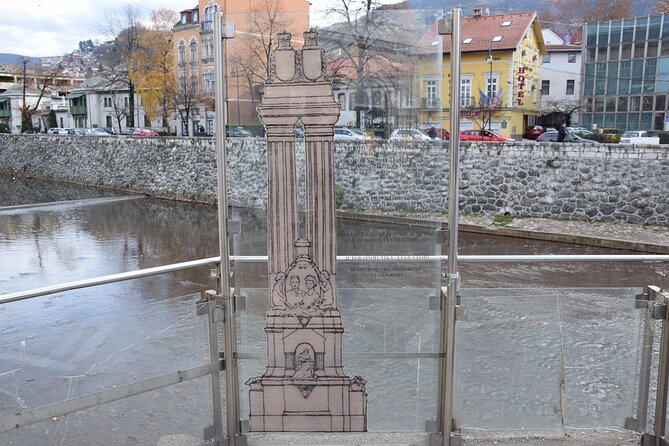
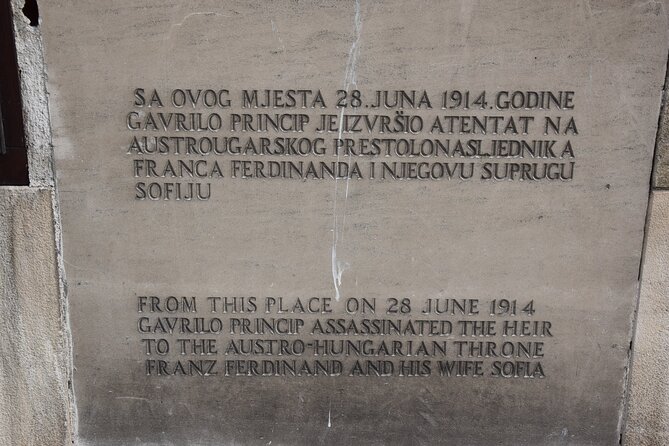
Latin Bridge is the central stop for most people. This Ottoman-era bridge became famous because Gavrilo Princip fired the fatal shots nearby, killing Franz Ferdinand and his wife, Sophie.
You have about 15 minutes here. That is enough to hear the sequence of events and picture the motorcade’s movements, though the exact visual experience depends on traffic, pedestrians, and the guide’s presentation.
The importance of Latin Bridge is not just that a shooting happened here. The location shows how close together Sarajevo’s Ottoman and Austro-Hungarian worlds were. A bridge, street corner, nearby buildings, and a motorcade route became part of a chain that led to Austria-Hungary’s ultimatum to Serbia and the wider outbreak of World War I.
A useful detail from the experience is the reference to the door of the coffee shop from which the fatal shot was fired. That kind of precise location can make the event easier to picture than a general statement that Princip shot the archduke near the bridge.
You should expect this to be an outdoor explanation rather than a long museum visit. Bring your attention to the guide’s story, then take a few minutes to look at the bridge and surrounding streets.
The Sarajevo Museum 1878 to 1918
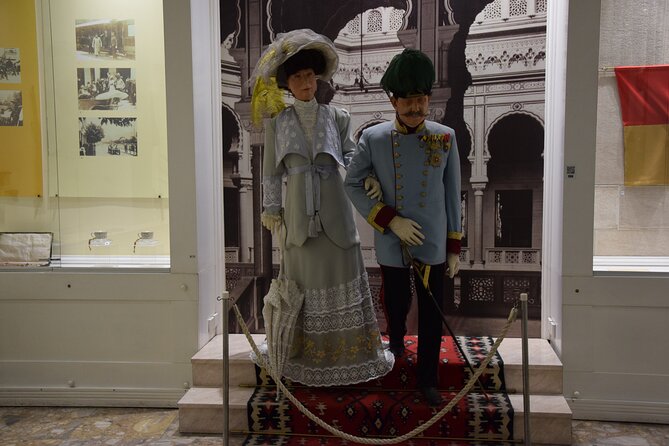
Near Latin Bridge, the Sarajevo Museum 1878 to 1918 provides the most direct historical follow-up. Its displays cover Austro-Hungarian rule, Franz Ferdinand’s visit, the assassination, and the nationalist movements of the period.
The scheduled visit lasts about 15 minutes, and admission is not included. The entrance fee is 5 BAM, or about €3 per person.
Fifteen minutes is a short museum visit, so you should think of this as a guided introduction rather than a full examination of every exhibit. The museum is still valuable because it puts objects and visual material alongside the outdoor sites.
I would pay the extra fee if you want more than a quick retelling. The museum helps clarify how Sarajevo changed after 1878 and why the city’s political atmosphere mattered. It also gives you a better sense of the people involved, rather than treating the assassination as a detached date in a textbook.
If your interest is mainly architectural or photographic, you might choose to skip the museum and use the time elsewhere. The tour can still function without it, but the historical picture will be thinner.
Konak, the brewery, and imperial decision-making
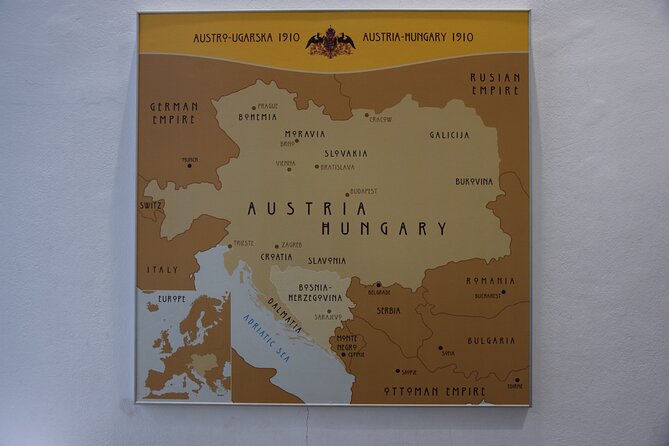
Konak was once the residence of Austro-Hungarian governors and played a role in hosting officials during Franz Ferdinand’s visit. You spend about three minutes here.
That is not enough time for a long architectural inspection, but the location connects the archduke’s visit with the officials responsible for managing Bosnia. Hours before the shooting, Konak was part of the setting for imperial decisions and protocol.
Sarajevo Brewery, or Sarajevska Pivara, receives the same brief treatment. The brewery represented industrial progress and served as a place for social gatherings. On the day of the assassination, it became one of the city’s silent witnesses to the unfolding crisis.
These two stops are quick, but they prevent the tour from becoming only a Princip-and-bridge story. You see administration, industry, public life, and ceremony, all within the same compact part of Sarajevo.
Sarajevo City Hall and the final view of the day
The final stop is Sarajevo City Hall, known locally as Vijećnica. This grand building is one of the clearest symbols of Austro-Hungarian influence in the city.
Franz Ferdinand attended an official reception here shortly before the assassination. The building therefore gives the tour a strong closing image: the archduke taking part in a formal public appearance, with the day’s danger still ahead.
You have about 10 minutes at City Hall, and admission is not included. The tour information does not state the entrance fee, so check locally if you want to return inside after the tour.
Ending here works well because the building brings together the main themes: imperial authority, public ceremony, architecture, and the fragile political conditions of 1914. It also leaves you in a central part of Sarajevo, where you can continue exploring on your own.
What the $29.59 price really covers
At $29.59 per person, the tour is priced as an affordable guided introduction rather than a fully ticketed museum package. Your fee includes a licensed guide, an air-conditioned vehicle, a city map, and the guided route.
The small group is the strongest value point. A maximum of 15 people keeps the price lower than a private tour while still giving the guide a workable group to manage.
You should budget another 25 BAM if you plan to enter both museums:
- Sarajevo Museum 1878 to 1918: 5 BAM
- Sarajevo VRX Museum: 20 BAM
The VRX Museum offers a virtual presentation of Sarajevo under Austro-Hungarian rule and the moments leading up to the assassination. Its scheduled portion lasts about 15 minutes.
The extra 20 BAM is a larger addition than the traditional museum fee, so decide based on your interests. If you prefer physical artifacts and historical displays, the 1878 to 1918 Museum is the cheaper choice. If a digitally presented version of the story appeals to you, the VRX stop adds another angle.
Getting there and planning your morning
The meeting point is Sarajevo Insider, Zelenih beretki 30, Sarajevo 71000. The start time is 10:00 am, and the activity returns to the meeting point.
The stated duration is about two hours. The listed stop times add up to roughly 100 minutes, leaving the rest for movement between locations and explanations. That is a sensible arrangement for a compact city tour, but you should not expect every stop to receive equal attention.
An air-conditioned vehicle is included, though the supplied details do not specify which parts are driven and which are walked. Wear comfortable shoes and be ready for a mix of short stops. The tour is offered in English.
Confirmation arrives when you book, and most people can participate. The activity requires a minimum number of participants. If that minimum is not reached and the tour is canceled, you are offered another date or experience, or a full refund.
Free cancellation is available until 24 hours before the start time. Canceling or changing the booking less than 24 hours ahead does not qualify for a refund.
Who should book this experience?
I would choose this tour if you want a clear introduction to Sarajevo’s role in the events of 1914 and prefer a guide to connect the sites. It suits history students, teachers, first-time visitors, and anyone who wants more context before exploring Sarajevo alone.
The experience is especially useful if Latin Bridge is on your must-see list but you do not want to stand there with only a few facts. The cemetery, government buildings, cathedral, market, museums, and City Hall give the assassination a wider setting.
It may be less suitable if you want long museum visits or a slow architectural tour. Several stops last only three to five minutes, so the schedule favors breadth over detailed inspection.
One particularly strong feature is the guide’s style. A participant who teaches the assassination story found that the tour added new details, including the fates of five conspirators, and praised the delivery for its enthusiasm and humor. A book about those conspirators was also provided at the end. That suggests the experience is not limited to memorizing dates and famous names.
Should you book Sarajevo Assassination: The Spark of World War I?
Book it if you want a focused, affordable way to understand why Sarajevo mattered in 1914. The tour gives you the famous shooting location, but it also explains the political and urban setting around it.
The best plan is to reserve the morning, pay for at least the 1878 to 1918 Museum if your budget allows, and keep the afternoon free for Sarajevo’s other sights. At $29.59, the guided context and small group make good value, provided you understand that the museum tickets cost extra and several stops are brief.
FAQ
Where does the tour start?
The tour starts at Sarajevo Insider, located at Zelenih beretki 30, Sarajevo 71000, Bosnia and Herzegovina.
What time does the tour begin?
The scheduled start time is 10:00 am.
How long does the tour last?
The tour lasts approximately two hours.
Where does the tour end?
The activity ends back at the original meeting point.
What language is the tour offered in?
The tour is offered in English.
What is included in the tour price?
The price includes a licensed guide, an air-conditioned vehicle, and a city map.
Are museum admission fees included?
No. Admission to the Sarajevo Museum 1878 to 1918 costs 5 BAM per person, and entry to the Sarajevo VRX Museum costs 20 BAM per person.
How many people can join the tour?
The tour has a maximum group size of 15 people.
Is the tour available for most people?
Yes. Most people can participate, according to the provided activity information.
Can I cancel for a full refund?
Yes, if you cancel at least 24 hours before the experience starts. Cancellations or changes made less than 24 hours before the start time are not refunded.
Newest around Sarajevo
- Understanding Srebrenica Genocide + Lunch with Local Family★ 4.9 · 14 reviews
- Private Full Day Safari Tour★ 5.0 · 8 reviews
- Sarajevo: Trebević Mountain Summit Hiking Tour★ 4.2 · 2 reviews
- From Sarajevo: Kozice Waterfalls Hiking Experience in Nature★ 5.0 · 2 reviews
- Sarajevo Under Siege: A War History Tour★ 5.0 · 10 reviews
- Mysterious Visoko Pyramids Driving and Walking Tour★ 5.0 · 7 reviews
- WAR TUNNEL – Sarajevo’s only way of a communication during the WAR – Top secret★ 5.0 · 12 reviews
- Ultimate Gastro Experience★ 4.5 · 14 reviews
War History & Siege Tours, compared.
Fall of Yugoslavia, Sarajevo War Tour with Tunnel of Hope Museum and Frontlines
Read our review →
Tunnel Museum Yugoslavia War Tour with War Veteran
Read our review →
ROSES OF SARAJEVO (Official WAR + CITY tour)- Story of a Survivor
Read our review →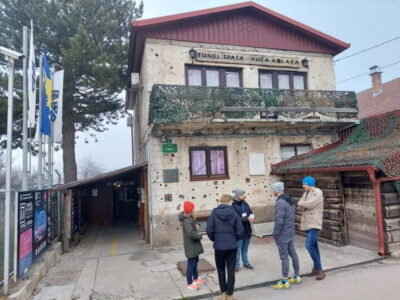
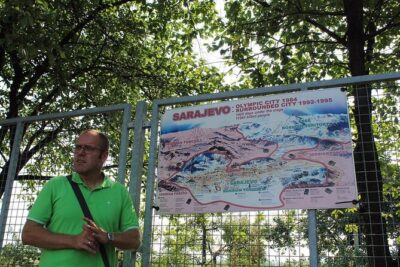
Tunnel Museum: Bosnian & Yugoslav Wars Tour with War Veteran
Read our review →
Bosnian War & Fall of Yugoslavia Tour with Tunnel
Read our review →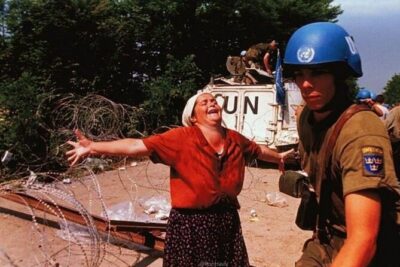
Sarajevo War Tour: A Veteran’s Story of the Siege (fees included)
Read our review →Browse the lists this tour appears in