
Review · WAR HISTORY & SIEGE TOURS
Sarajevo 1425 days under the siege – War Tour
History feels different when told beside the places where it happened. This Sarajevo war tour links the Tunnel of Hope with Sniper Alley, Trebević Mountain, and the Olympic bobsleigh track. I like the personal accounts from guides who lived through the siege, and I like that hotel pickup and drop-off are included. The main drawback is that the Tunnel of Hope entrance fee costs an extra €10, and the subject matter is painful rather than light sightseeing.
The tour lasts about three to four hours and costs $48.39 per person. Guides such as Emina Koso and Enes have received especially warm praise for their personal stories and clear explanations. You should also confirm whether your booking is public or private before setting out, since expectations about the format have caused trouble for at least one customer.
In This Review
- Key points to know before booking
- Why Sarajevo’s siege still matters
- Starting in Sarajevo with Sniper Alley and wartime memorials
- Entering the Tunnel of Hope
- Looking over Sarajevo from Trebević Vidikovac
- Walking the 1984 Olympic bobsleigh track
- The Jewish Cemetery and the final wartime view
- What the guides add to the experience
- Price, transport, and group size
- Who will appreciate this Sarajevo tour
- Should you book the 1425 Days Under Siege tour?
- FAQ
- How long does the Sarajevo war tour last?
- How much does the tour cost?
- Is hotel pickup included?
- Is admission to the Tunnel of Hope included?
- What will I see at the Tunnel of Hope Museum?
- Does the tour visit the Sarajevo Olympic bobsleigh track?
- Is the tour offered in English?
- Can I cancel for a full refund?
Key points to know before booking
- The Tunnel of Hope is the emotional center: You walk through about 25 meters of the original wartime tunnel after seeing a map, museum displays, and a 17-minute film.
- Personal stories shape the tour: Some guides were children during the siege and explain what daily life felt like from that viewpoint.
- You see Sarajevo from several angles: The route includes city streets, Trebević Mountain, the Jewish Cemetery, and the former Olympic bobsleigh track.
- Hotel pickup saves time: Pickup and return to your Sarajevo hotel are included, along with private transportation and bottled water.
- The €10 museum ticket is extra: The advertised tour price does not cover admission to the Tunnel of Hope Museum.
- The mood is serious: This is a memorial and history experience, not a cheerful sightseeing outing.
Why Sarajevo’s siege still matters
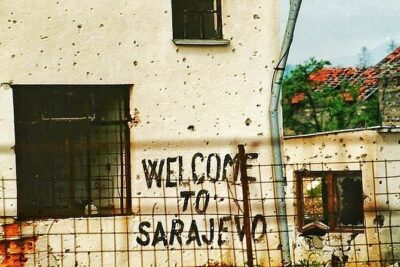
Sarajevo was under siege for 1,425 days, making it one of the longest sieges in modern warfare. The city’s residents faced shelling, sniper fire, shortages, and the constant problem of moving through streets that could suddenly become dangerous.
This tour helps you connect that broad history to actual places. You do not simply hear dates inside a museum. You see the routes used by civilians, look across former enemy lines, and walk through a narrow tunnel that served as a lifeline when normal roads were blocked.
I find that combination especially useful in Sarajevo. The city is easy to enjoy for its cafés, Ottoman streets, Austro-Hungarian buildings, and mountain setting. Yet a visit that ignores the siege misses a central part of modern Sarajevo. This tour gives you a structured way to face that past without spending days trying to piece the story together on your own.
The tone is direct and human. Several guides, including Emina and Enes, have spoken about living through the war as children. That does not replace historical context, but it gives the events a human scale. You hear what the conflict meant for ordinary families, not only for military units and political leaders.
Other tours covering the siege years and their sites:
- Fall of Yugoslavia, Sarajevo War Tour with Tunnel of Hope Museum and Frontlines
★ 5.0 · 1,314 reviews - Sarajevo: Tunnel Museum Yugoslavia War Tour with War Veteran
★ 5.0 · 1,111 reviews - ROSES OF SARAJEVO (Official WAR + CITY tour)- Story of a Survivor
★ 5.0 · 770 reviews
Starting in Sarajevo with Sniper Alley and wartime memorials
If you do not use hotel pickup, the meeting point is the Spirit Tours office at Ferhadija 19, in the passage beside the Cathedral of Jesus’s Sacred Heart. Free hotel pickup is also offered, which is the more convenient choice if you are staying in Sarajevo and want to avoid arranging a taxi early in the day.
The tour begins in the vehicle with an introduction to Sarajevo’s wartime story. On the way to the tunnel, your guide points out Sniper Alley, the memorial to Sarajevo’s murdered children, and other locations connected with the siege.
Sniper Alley is not a traditional attraction with an entrance gate or a viewing platform. It refers to parts of the city where movement was exposed to sniper fire during the war. Seeing these streets as part of an ordinary modern city can be unsettling. Cars move, people walk, and daily life continues. Your guide’s explanation helps you understand why familiar roads became symbols of fear.
The memorial to the children killed during the siege is another important pause. It honors 1,621 children and uses bronze and glass to create a mother protecting her children. A bronze ring represents a strong circle of defense. The memorial is designed to make you stop and think, not rush through with a camera.
The details of this opening section depend partly on traffic and the guide’s presentation, but it provides the necessary frame for the rest of the day. You learn what you are looking at before reaching the most important stop.
Entering the Tunnel of Hope
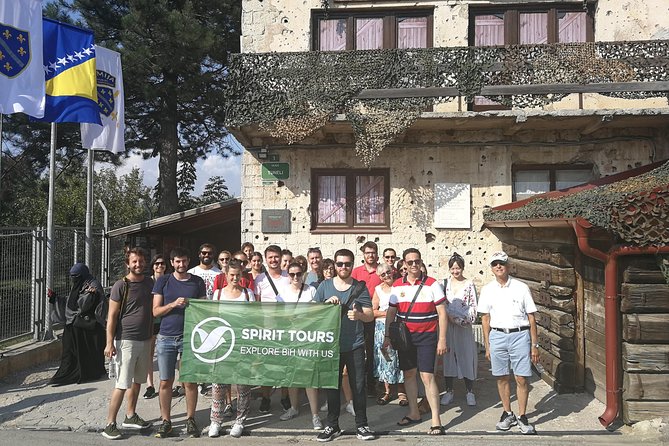
The Tunnel of Hope Museum is the tour’s main destination. Admission costs €10 per person and is not included in the $48.39 tour price. Bring that extra amount with you so a small payment does not interrupt the day.
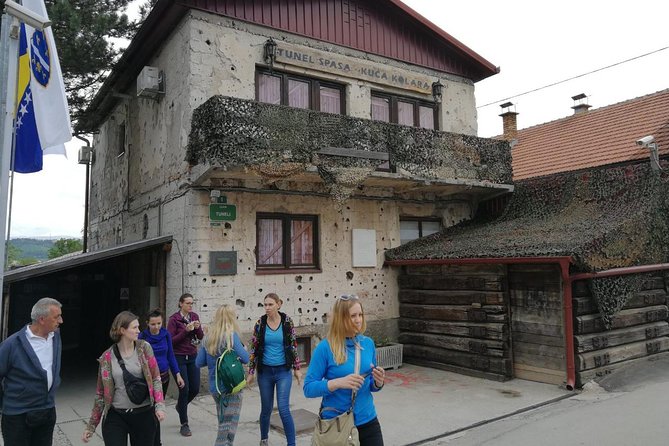
The tunnel was dug by Sarajevo’s citizens during the siege. It connected the city with the area beyond the airport and provided a route for supplies, people, and communication when regular access was cut off. The original tunnel was much longer, but the museum preserves about 25 meters for visitors to walk through.
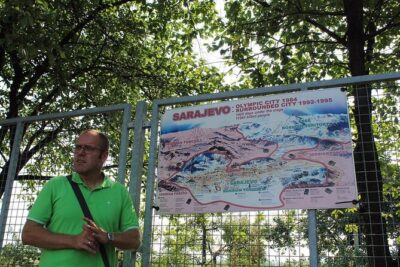
Before entering, you see a large map of Sarajevo during the siege. This helps you understand the military positions and why the tunnel was so important. You also watch a 17-minute film and view the museum displays, which add photographs and wartime context.
Then comes the short walk through the tunnel. It is not a long passage, but the narrow space makes the experience immediate. You can better imagine the physical effort and fear involved in using such a route under wartime conditions. The tunnel is not presented as an adventure attraction. Its value comes from showing how civilians built a practical answer to a terrible problem.
You may have a short break afterward to take photographs and look around independently if you request it. Keep your expectations in check. The museum is modest, and the preserved tunnel section is short. The power of the stop comes from the story, the map, and the setting rather than from a large collection of objects.
I like that the tour gives the tunnel enough time, roughly 90 minutes including the museum visit and related explanation. A quick photo stop would not do this place justice.
Looking over Sarajevo from Trebević Vidikovac
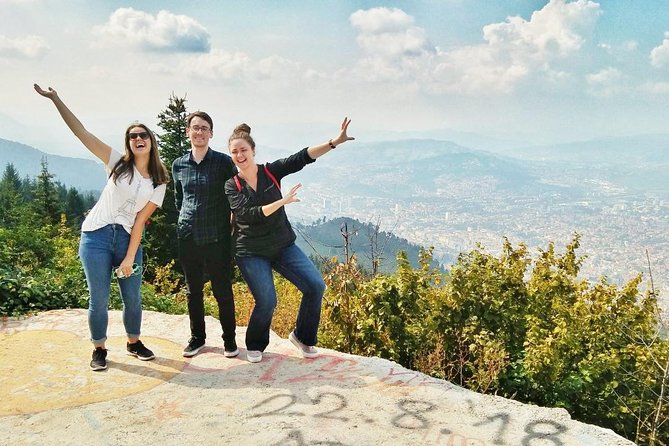
After the tunnel, the route continues from the Federation of Bosnia and Herzegovina into Republika Srpska, one of the country’s two political entities. Your guide explains this change and uses the viewpoint at Trebević to show where opposing forces were positioned during the siege.
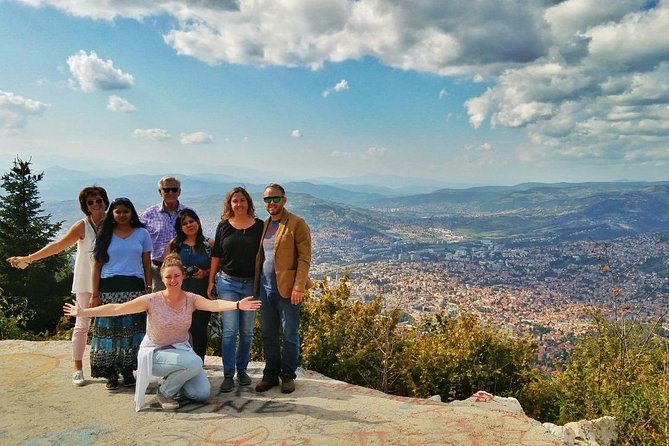
Trebević Vidikovac sits about 1,230 meters above sea level. The view gives you a broad look at Sarajevo, including the long valley and the city’s tight relationship with the surrounding mountains. It is also a useful place to understand why the city was so exposed during the war.
The stop lasts about 20 minutes and has no admission charge. That is enough time for photographs and a concise explanation. The viewpoint adds a welcome change after the tunnel, but it is not a long mountain excursion. You should think of it as a historical lookout, not a hiking stop.
The views are also among the tour’s lighter moments. You can appreciate Sarajevo’s setting while listening to an account of the hills’ military importance. That contrast is one of the strongest parts of the route.
Same corner of the country, a different kind of day:
- Sarajevo: Mostar, Konjic, Blagaj Tekke, Pocitelj & Waterfall
★ 4.9 · 1,666 reviews - Sarajevo: Grand Walking Tour Through Time and Cultures
★ 4.8 · 1,236 reviews - Sarajevo: Mostar, Konjic, Sufi House, Pocitelj & Kravice Falls
★ 5.0 · 1,179 reviews - Sarajevo: Tunnel of Hope Tour – Survival and Resilience
★ 4.8 · 630 reviews
Walking the 1984 Olympic bobsleigh track
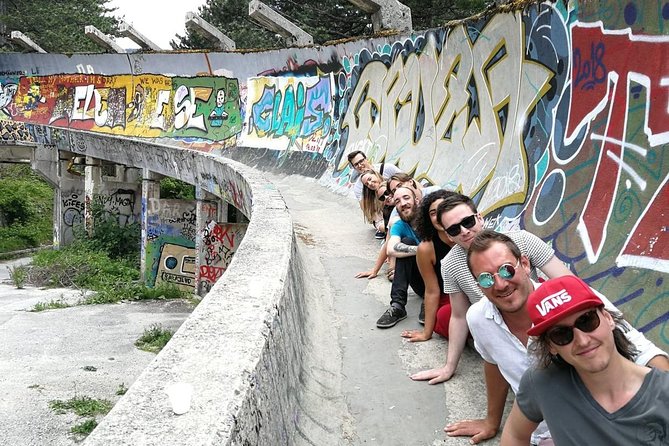
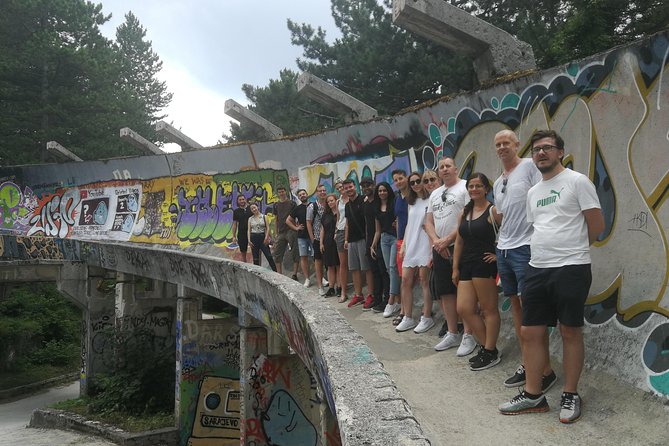
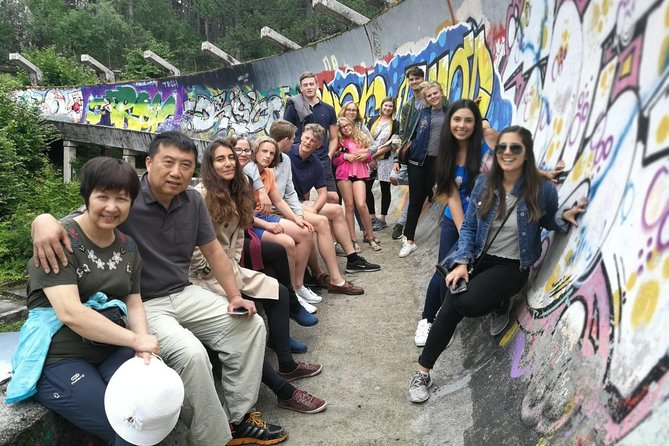
Trebević also holds Sarajevo’s Olympic bobsleigh and luge track, built for the 1984 Winter Olympics. The tour takes you along part of the track and explains why the abandoned structure has become one of the city’s most recognizable sights.
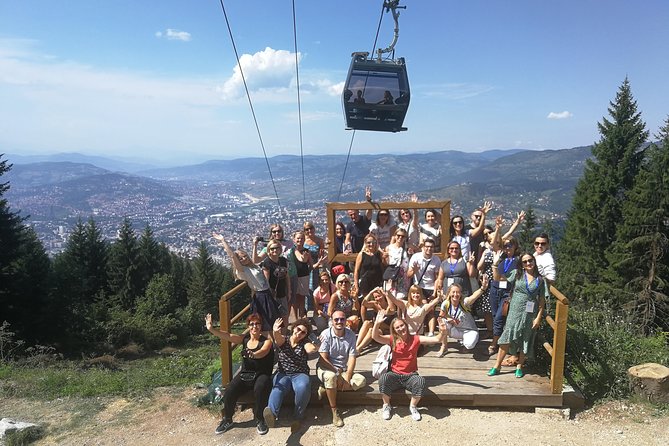
The route includes a view of the cable car, which reopened on April 6, 2018. You then walk toward the beginning of the track. The concrete curves, graffiti, and surrounding trees create striking photographs, but the stop matters for more than its appearance. The track connects Sarajevo’s proud Olympic past with the destruction and military use of the mountain during the siege.
The walk lasts about 30 minutes. Wear shoes suitable for walking on an old outdoor structure and take care near uneven surfaces. The provided information does not describe extensive hiking, but this is still not a purely sit-down stop.
Guides are happy to take photographs here, which can be useful if you are traveling alone or want a picture of the full group. Still, do not let the photo opportunity distract from the history. The track is memorable precisely because two very different chapters of Sarajevo’s recent past meet in one place.
The Jewish Cemetery and the final wartime view
The final listed stop is Sarajevo’s Jewish Cemetery, described as the second largest in Europe and a candidate for UNESCO World Heritage status. During the siege, the cemetery became a battleground between the Bosnian Army and Serbian forces.
The stop lasts about 15 minutes and is free to enter. It is brief, but your guide uses the cemetery to explain the military positions around Sarajevo and the damage caused by fighting in the hills.
Cemeteries can be difficult places to understand quickly, especially when the visit is short. Here, the value comes from seeing how a sacred site became part of the front line. It also adds another layer to the city’s long religious and cultural story without turning the tour into a general sightseeing program.
The route may also include the memorial to the 1,621 children killed during the siege. Its bronze and glass design is simple but powerful. If you have already seen it while driving through the city, the guide’s explanation gives the memorial more meaning.
What the guides add to the experience
The best part of this tour is the guide’s ability to connect the locations. A map alone cannot explain what it meant to carry water through a dangerous street, wait for supplies, or live as a child while the city was surrounded.
Emina Koso has been praised for sharing her own experience and for offering useful extra information about Sarajevo. Enes has also received strong praise for telling his personal story and making the tour engaging without losing its serious purpose.
That personal connection is valuable, but it also means the quality may vary depending on who leads your outing. Ask your guide questions. You might learn more about daily routines, damaged buildings, or how residents moved around the city than the formal route description promises.
The mood remains solemn. You should not expect jokes, casual entertainment, or a carefree afternoon. At the same time, one account describes the presentation as factual, honest, and human, with room for friendly conversation. That balance is what you want from a war tour.
The strongest experience comes when the guide explains what you are seeing rather than reciting a memorized timeline. If personal testimony matters to you, request a guide who can share lived experience when you book, though the supplied details do not guarantee a particular guide.
Price, transport, and group size
At $48.39 per person, the tour offers good value if you want several distant sites covered in one half-day outing. You receive an air-conditioned vehicle, private transportation, bottled water, a professional guide, and hotel pickup and return.
The price does not include the €10 Tunnel of Hope Museum ticket. That cost is reasonable to factor into your budget, since the museum is the central stop and skipping it would weaken the tour considerably.
The advertised maximum is 50 people, though the vehicle arrangement and booking format should be confirmed in advance. Some bookings may feel close to private, especially if numbers are low. One customer had a serious problem because they expected a private tour while the agency treated it as public. Confirm exactly what you are paying for, particularly if the distinction matters to you.
The tour is often booked well ahead, about 38 days in advance on average. That suggests you should reserve early if your Sarajevo dates are fixed, especially during busy periods.
Free cancellation is available up to 24 hours before the start time. Within 24 hours, the payment is not refunded. Poor weather or failure to reach the minimum number of participants can also lead to a different date, another experience, or a full refund.
Who will appreciate this Sarajevo tour
I would choose this tour if you want the main siege sites explained efficiently and prefer transportation between them. It is also a strong choice for a first visit, since the route gives you a clear foundation for exploring Sarajevo independently later.
The tour suits:
- People interested in recent European history
- Visitors who want personal wartime accounts
- Anyone with only a few days in Sarajevo
- Families with older children who can handle serious subject matter
- Solo visitors who want transport and a guide
- Photographers interested in the bobsleigh track and Trebević views
It may not suit you if you want a relaxed sightseeing trip, a long mountain walk, or an entertaining group activity. The subject is civilian suffering, and the tour does not soften that reality.
Most people can participate, and service animals are allowed. The tour is near public transportation, but the included hotel pickup is simpler. Since the experience requires good weather, keep some flexibility in your schedule if possible.
Should you book the 1425 Days Under Siege tour?
Yes, if you want to understand Sarajevo through the places that shaped its recent past. The Tunnel of Hope, Sniper Alley, the child memorial, Trebević, the Olympic bobsleigh track, and the Jewish Cemetery form a useful three to four hour route.
I especially like the mix of firsthand stories and physical sites. The experience is strongest with a guide such as Emina or Enes, whose wartime memories give the history a personal voice. The extra €10 museum fee is a fair cost, and the included transport makes the price sensible.
Before booking, clarify whether your reservation is public or private and confirm the pickup details. If you are prepared for a serious morning and want more than Sarajevo’s postcard sights, this is one of the most meaningful tours you can take in the city.
FAQ
How long does the Sarajevo war tour last?
The tour lasts approximately three to four hours.
How much does the tour cost?
The listed price is $48.39 per person.
Is hotel pickup included?
Yes. Free pickup from your Sarajevo hotel is offered, and the tour returns you to your hotel. You can also meet at the Spirit Tours office at Ferhadija 19, beside the Cathedral of Jesus’s Sacred Heart.
Is admission to the Tunnel of Hope included?
No. Admission to the Tunnel of Hope Museum costs €10 per person and must be paid separately.
What will I see at the Tunnel of Hope Museum?
You will see a large map of Sarajevo during the siege, watch a 17-minute film, view museum exhibits, and walk through about 25 meters of the preserved tunnel.
Does the tour visit the Sarajevo Olympic bobsleigh track?
Yes. You walk along part of the bobsleigh and luge track from the 1984 Winter Olympics. The stop lasts about 30 minutes.
Is the tour offered in English?
Yes. The tour is offered in English.
Can I cancel for a full refund?
Yes, if you cancel at least 24 hours before the experience begins. Cancellations made less than 24 hours before the start time are not refunded.
Newest around Sarajevo
- Understanding Srebrenica Genocide + Lunch with Local Family★ 4.9 · 14 reviews
- Private Full Day Safari Tour★ 5.0 · 8 reviews
- Sarajevo: Trebević Mountain Summit Hiking Tour★ 4.2 · 2 reviews
- From Sarajevo: Kozice Waterfalls Hiking Experience in Nature★ 5.0 · 2 reviews
- Sarajevo Under Siege: A War History Tour★ 5.0 · 10 reviews
- Mysterious Visoko Pyramids Driving and Walking Tour★ 5.0 · 7 reviews
- WAR TUNNEL – Sarajevo’s only way of a communication during the WAR – Top secret★ 5.0 · 12 reviews
- Ultimate Gastro Experience★ 4.5 · 14 reviews
War History & Siege Tours, compared.
Fall of Yugoslavia, Sarajevo War Tour with Tunnel of Hope Museum and Frontlines
Read our review →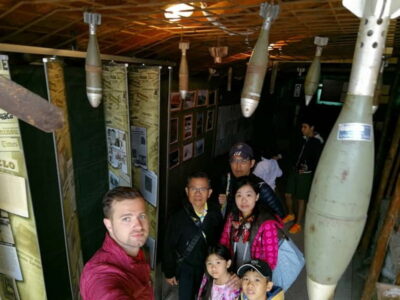
Tunnel Museum Yugoslavia War Tour with War Veteran
Read our review →
ROSES OF SARAJEVO (Official WAR + CITY tour)- Story of a Survivor
Read our review →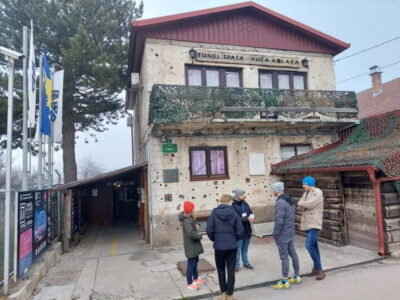
Tunnel Museum: Bosnian & Yugoslav Wars Tour with War Veteran
Read our review →
Bosnian War & Fall of Yugoslavia Tour with Tunnel
Read our review →
Sarajevo War Tour: A Veteran’s Story of the Siege (fees included)
Read our review →Browse the lists this tour appears in