
Review · WAR HISTORY & SIEGE TOURS
Inside the Siege: Sarajevo’s Story of Survival
Sarajevo’s past is written into its streets. This small-group tour connects the city’s wartime sites with clear historical explanation and personal stories, making a difficult subject easier to understand without reducing it to dates and military terms. I especially like the view from Yellow Fortress and the chance to visit the Tunnel of Hope, the secret route that kept Sarajevo supplied during the siege. I also like that the guide brings a local point of view, with strong English and plenty of time for questions.
The main consideration is the vehicle. Small groups can mean a more personal afternoon, but one group of four found the car a little tight. You should also budget another €10 per person for the Tunnel of Hope Museum, paid separately in local currency. Even so, the combination of sixteen-person maximum capacity, personal storytelling, and major siege sites makes this a strong choice for understanding Sarajevo.
In This Review
- Key points before you book
- Why this Sarajevo war tour matters
- Yellow Fortress and the view over the former front lines
- Cemeteries, defenders, and the cost of the siege
- Asim Ferhatovic Hase Stadium and Sarajevo’s Olympic memory
- Sniper Alley and the Presidency Building
- The Tunnel of Hope Museum: the essential stop
- The final drive back across Sarajevo
- Guide style and the value of a small group
- Is $54.22 a fair price?
- Timing, meeting point, and cancellation
- Who should book this tour?
- Should you book Inside the Siege?
- FAQ
- How long does Inside the Siege: Sarajevo’s Story of Survival last?
- What time does the tour begin?
- Where does the tour meet?
- Where does the tour end?
- Is the Tunnel of Hope Museum ticket included?
- What language is the tour offered in?
- How many people can join the tour?
- Can I cancel for a full refund?
Key points before you book
- Yellow Fortress sets the scene: The opening view shows Sarajevo’s bowl-shaped setting and the former front lines around the city.
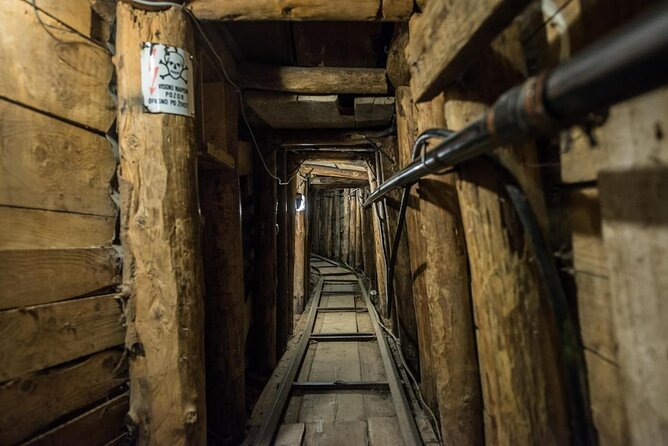
- The Tunnel of Hope is the centerpiece: You spend about 50 minutes at Sarajevo’s wartime lifeline, with the museum ticket paid separately.
- The route links places, not just facts: Cemeteries, massacre sites, Sniper Alley, the Presidency Building, and an Olympic stadium all become part of one story.
- Local voices matter here: Adis Hamzic and his assistant are praised for clear English, warmth, humor, and a balanced explanation of the war.
- The tour lasts roughly two to three hours: It begins at 1:00 pm, uses an air-conditioned vehicle, and returns to the starting point.
- The price is reasonable for the format: At $54.22 per person, you are paying for private transport, a local guide, and access to sites spread across the city.
Why this Sarajevo war tour matters
Sarajevo’s siege lasted from 1992 to 1996, but a short visit can easily leave you with only disconnected images: damaged buildings, memorials, hills, and a tunnel. This tour helps join those pieces together.
The route explains the war from Sarajevo’s point of view, while still aiming for a balanced account. That matters because the subject is painful and politically charged. A good guide needs to explain what happened without turning the afternoon into a lecture or a one-sided speech. The feedback about Adis and his assistant points to a relaxed style, with room for humor, conversation, and difficult questions.
I would choose this tour early in a Sarajevo visit if you want the city to make more sense afterward. It gives you a framework for noticing memorials, cemeteries, hillsides, and buildings during the rest of your stay. It also helps explain why ordinary streets can carry such emotional weight.
This is not a light sightseeing trip. You will visit places connected to civilian deaths, children killed during the siege, and people who fought to protect the city. The guide’s manner is therefore important. The strongest praise focuses on warmth, clarity, and a personal local perspective, rather than dramatic storytelling for its own sake.
Other tours covering the siege years and their sites:
- Fall of Yugoslavia, Sarajevo War Tour with Tunnel of Hope Museum and Frontlines
★ 5.0 · 1,314 reviews - Sarajevo: Tunnel Museum Yugoslavia War Tour with War Veteran
★ 5.0 · 1,111 reviews - ROSES OF SARAJEVO (Official WAR + CITY tour)- Story of a Survivor
★ 5.0 · 770 reviews
Yellow Fortress and the view over the former front lines
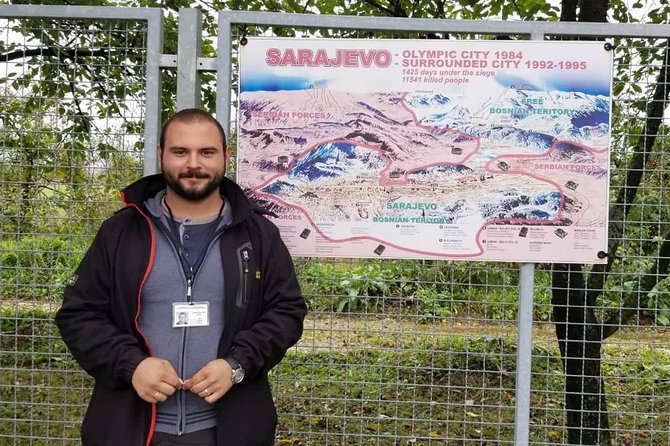
The tour begins at Yellow Fortress, where you get a broad view over Sarajevo. The stop lasts about 15 minutes and has no separate admission fee.
This is a smart place to begin because geography does much of the explaining. From above, you can see how the city sits within a tight valley surrounded by higher ground. The view helps you understand why the hills mattered during the siege and why movement through the city was so dangerous.
Your guide can point out the direction of the former front lines and connect the view to the stories that follow. I find this kind of introduction more useful than beginning with a list of dates. You first see the physical setting, then learn how that setting shaped daily life.
The stop is brief, so do not expect a long visit or a major indoor attraction. Its value is the orientation. Bring a phone or camera if you want the view, but give your attention to the explanation too. This is one of those moments when looking carefully at the city adds weight to everything that follows.
Cemeteries, defenders, and the cost of the siege
The route continues to places that honor those who fought to protect Sarajevo, along with sites connected to civilian massacres during the siege. These stops are not presented as abstract war memorials. They bring the conflict back to individual lives and to the city’s neighborhoods.
The itinerary does not give exact stop times for each memorial, so the pace can vary depending on the group and the guide’s explanation. That is useful if you want to ask questions, but it also means the experience is not a tightly timed museum tour.
One especially important stop honors the 1,601 children killed during the siege. The number is devastating, but the memorial makes the loss more personal and direct. I would expect this section to be emotionally difficult, particularly for families or anyone traveling with children.
The guide’s role is crucial here. The strongest comments about Adis describe a person who answers questions patiently and explains events in a way that is easy to follow. That helps prevent the memorials from becoming quick photo stops. You have time to understand what they represent.
Please approach these places with respect. This is not the sort of excursion where you rush from one attraction to the next collecting pictures. The best experience comes from listening, looking, and allowing a little quiet.
Asim Ferhatovic Hase Stadium and Sarajevo’s Olympic memory
Asim Ferhatovic Hase Stadium is the second named stop, with about 10 minutes scheduled and no admission charge.
The stadium hosted events during the 1984 Winter Olympics, a period when Sarajevo was known around the world for a very different reason. During the war, parts of the site were later used as a cemetery. That contrast is one of the most striking ideas in the tour: a place built for celebration and international attention became connected with death and mourning.
A ten-minute stop is enough for a focused explanation, but not for a full stadium visit. You will likely spend more time hearing how the location fits into Sarajevo’s story than exploring the venue itself.
I like this stop because it widens the tour beyond the siege alone. Sarajevo was not only a besieged city. It was also an Olympic host, a political center, and a home to ordinary people with lives before and after the war. The stadium helps you see that larger picture.
Same corner of the country, a different kind of day:
- Sarajevo: Mostar, Konjic, Blagaj Tekke, Pocitelj & Waterfall
★ 4.9 · 1,666 reviews - Sarajevo: Grand Walking Tour Through Time and Cultures
★ 4.8 · 1,236 reviews - Sarajevo: Mostar, Konjic, Sufi House, Pocitelj & Kravice Falls
★ 5.0 · 1,179 reviews - Sarajevo: Tunnel of Hope Tour – Survival and Resilience
★ 4.8 · 630 reviews
Sniper Alley and the Presidency Building
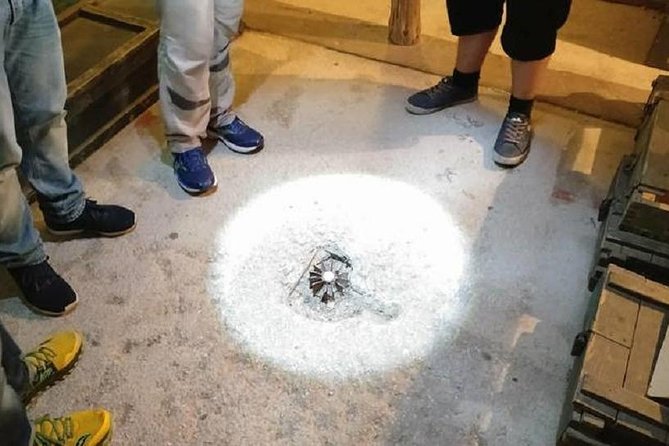
The drive then takes in Sniper Alley, one of the most dangerous streets during the war because of sniper fire. The name is memorable, but the reality behind it was grim. Crossing an exposed road could become a life-threatening act, and ordinary errands took on military risk.
You may see this stretch from the vehicle rather than spend a long time walking along it. That is one reason the air-conditioned transport is useful. The tour covers sites spread across Sarajevo, and a vehicle lets you connect them without spending the entire afternoon navigating between them yourself.
The Presidency Building adds a political layer. It was an important center during the war and remains one of Sarajevo’s key historical sites. Together, Sniper Alley and the Presidency Building show two sides of the siege: the danger faced on the street and the decisions made at the political center.
This part of the route benefits from a guide who can explain what you are seeing without pretending every building tells its own story. A damaged facade or busy road may look ordinary today. The context turns it into evidence of how the city functioned under pressure.
The Tunnel of Hope Museum: the essential stop
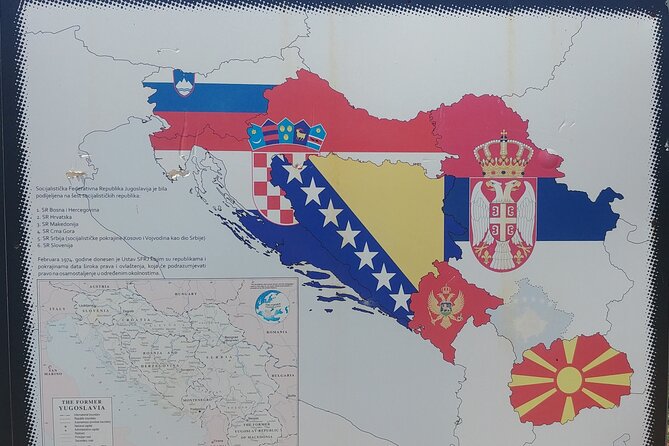
The Tunnel of Hope Museum receives about 50 minutes, making it the longest stop of the afternoon. The entrance costs €10 per person and is not included in the tour price. You pay separately on-site in local currency.
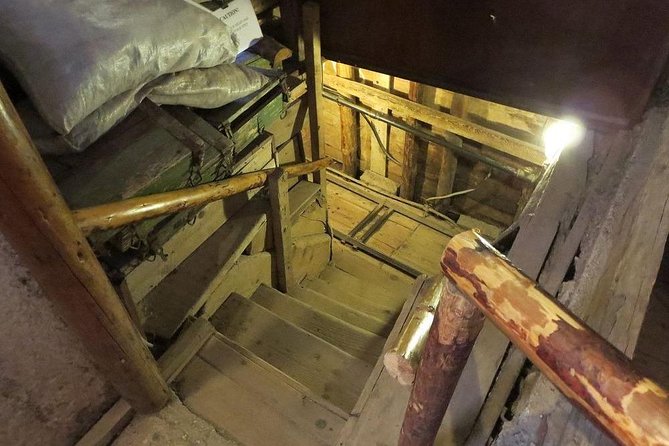
This tunnel was Sarajevo’s secret lifeline during the siege. It was used to move supplies and support survival when the city was cut off. The museum gives the tour its most tangible connection to wartime endurance because you are not only hearing about shortages and isolation. You are seeing the place associated with the route that helped the city keep going.
The longer visit is welcome. Fifty minutes allows your guide to explain the tunnel’s purpose and gives you time to take in the museum at a steadier pace. Compared with the short roadside or memorial stops, this feels like the main historical site of the tour.
Do not treat the €10 ticket as a minor surprise. Add it to the advertised $54.22 when comparing costs. Payment is made separately and in local currency, so it is sensible to have suitable cash available. The supplied details do not specify card facilities, so I would not rely on a card unless the operator confirms it.
The tunnel is also the clearest reason to choose a guided visit instead of simply hiring a car and driving around Sarajevo. You can reach a site independently, but the meaning of the place depends heavily on the explanation around it. The guide connects the tunnel to the city’s wider experience of siege, supply, fear, and survival.
The final drive back across Sarajevo
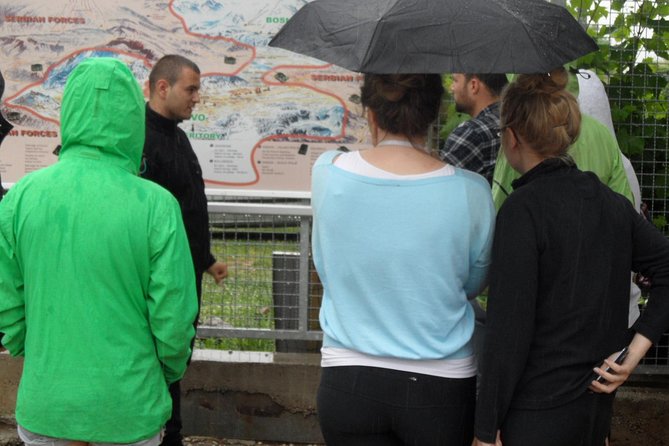
After the museum, the route returns by a scenic panoramic drive, ending with another broad view of Sarajevo. The tour finishes back at the original meeting point.
This closing drive gives you a chance to gather the day’s ideas. You have seen the city from above, passed through places tied to civilian suffering, visited a former Olympic venue, followed the route of Sniper Alley, and entered the story of the tunnel. The final view brings those locations back into one physical picture.
Because the tour lasts about two to three hours, the afternoon does not consume an entire day. That makes it easy to combine with time in Sarajevo’s old town, although you should avoid booking another fixed activity too close to the 1:00 pm start or the expected return.
Guide style and the value of a small group
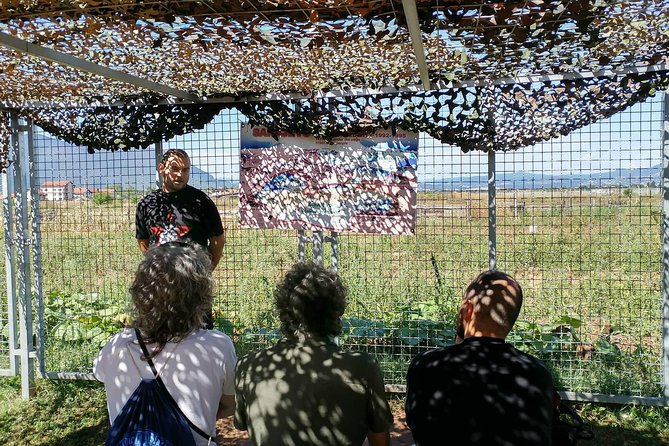
The guide may be Adis Hamzic or his assistant. Adis is praised for a balanced explanation of Sarajevo’s past, excellent English, a friendly manner, and a sense of humor used carefully. His assistant is also described as offering a younger person’s perspective alongside a strong grasp of the historical material.
That combination is one of the tour’s biggest strengths. You can ask questions, make conversation, and get practical suggestions for places to visit in the old town. Several comments describe the guides as charismatic, easy to follow, and willing to answer questions rather than simply recite a prepared speech.
The maximum group size is 16, though some departures have been much smaller. A group of four creates a more conversational experience, but the compact vehicle may feel cramped. This is the tradeoff: fewer people usually means more direct contact with the guide, while a larger group may make the vehicle feel less crowded.
The tour is offered in English. Confirmation comes at booking, service animals are allowed, and the meeting point is near public transportation. Most people can participate, but the supplied information does not provide detailed mobility guidance for the tunnel or each stop. If you have specific access needs, ask the operator before booking.
Is $54.22 a fair price?
At $54.22 per person, the tour is not the cheapest way to see Sarajevo. You are paying for an air-conditioned vehicle, a professional local guide, and a route that reaches places spread around the city. The Tunnel of Hope admission is extra, adding €10 per person.
I think the price is fair if you value explanation and convenience. A self-guided route may cost less, but it would require arranging transport and researching the history of each site. Here, the guide supplies the links between locations and gives you the local perspective that makes the stops meaningful.
The value is strongest for first-time visitors, people with only a short stay, and anyone who wants a serious introduction to the Bosnian War. It is less suitable if you prefer slow independent exploration, dislike vehicle tours, or want to spend a full day at one museum.
The 5 out of 5 rating from 26 ratings and the 100 percent recommendation figure suggest a very strong satisfaction record. Those numbers are encouraging, but the practical details matter more for your decision: the car can be snug, the subject is heavy, and the tunnel fee is separate.
Timing, meeting point, and cancellation
The tour starts at 1:00 pm from Mula Mustafe Bašeskije 65 in Sarajevo and returns there at the end. Allow a little time to find the meeting point, and arrive ready for a city drive rather than a walking-only outing.
The activity runs for approximately two to three hours. The exact finish may depend on traffic, questions, and the pace at the Tunnel of Hope, so avoid scheduling an immediately following activity.
Free cancellation is available if you cancel at least 24 hours before the local start time. Changes or cancellations made less than 24 hours ahead are not accepted for a refund. The tour also requires a minimum number of participants, and if that minimum is not met, you are offered another date or experience, or a full refund.
Who should book this tour?
I would recommend it to you if you want the facts of the siege explained through real places. It suits first-time visitors, history-minded people, and anyone who wants a local guide rather than a general city sightseeing loop.
It is also a good fit if you have limited time. In one afternoon, you see major points around Sarajevo and visit the Tunnel of Hope without arranging several separate transfers.
I would think twice if you want a cheerful attraction or a relaxed scenic drive with only light historical commentary. The memorials and civilian deaths are central to the experience. You should be ready for an emotionally serious afternoon.
Should you book Inside the Siege?
Yes, if your aim is to understand Sarajevo rather than simply photograph it. The Tunnel of Hope, the view from Yellow Fortress, and the stops connected to children, civilians, defenders, and political leaders create a clear arc from geography to daily life and survival.
Book it knowing that the vehicle may be snug, the tunnel fee is extra, and the subject deserves attention. If those points suit you, $54.22 is a sensible price for an intimate, well-explained introduction to Sarajevo’s wartime story.
FAQ
How long does Inside the Siege: Sarajevo’s Story of Survival last?
The tour lasts approximately two to three hours.
What time does the tour begin?
The tour starts at 1:00 pm.
Where does the tour meet?
The meeting point is Mula Mustafe Bašeskije 65, Sarajevo 71000, Bosnia and Herzegovina.
Where does the tour end?
The experience ends back at the original meeting point.
Is the Tunnel of Hope Museum ticket included?
No. The entrance fee is €10 per person and is paid separately on-site in local currency.
What language is the tour offered in?
The tour is offered in English.
How many people can join the tour?
The maximum group size is 16 people.
Can I cancel for a full refund?
Yes. You can cancel for a full refund up to 24 hours before the experience start time. Cancellations or changes made less than 24 hours before the start are not refunded.
Newest around Sarajevo
- Understanding Srebrenica Genocide + Lunch with Local Family★ 4.9 · 14 reviews
- Private Full Day Safari Tour★ 5.0 · 8 reviews
- Sarajevo: Trebević Mountain Summit Hiking Tour★ 4.2 · 2 reviews
- Sarajevo Under Siege: A War History Tour★ 5.0 · 10 reviews
- From Sarajevo: Kozice Waterfalls Hiking Experience in Nature★ 5.0 · 2 reviews
- Mysterious Visoko Pyramids Driving and Walking Tour★ 5.0 · 7 reviews
- WAR TUNNEL – Sarajevo’s only way of a communication during the WAR – Top secret★ 5.0 · 12 reviews
- Ultimate Gastro Experience★ 4.5 · 14 reviews
War History & Siege Tours, compared.
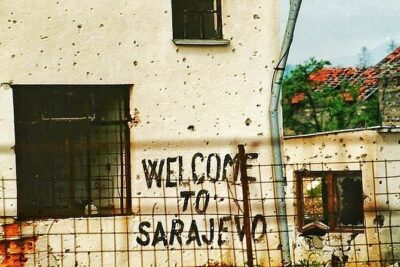
Fall of Yugoslavia, Sarajevo War Tour with Tunnel of Hope Museum and Frontlines
Read our review →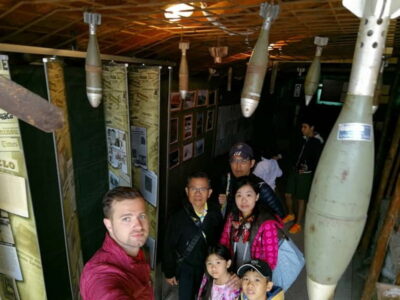
Tunnel Museum Yugoslavia War Tour with War Veteran
Read our review →
ROSES OF SARAJEVO (Official WAR + CITY tour)- Story of a Survivor
Read our review →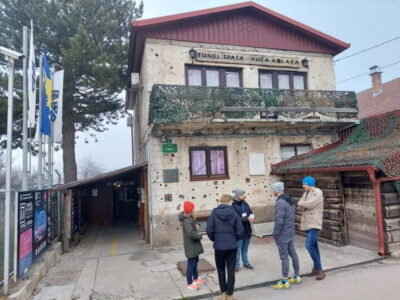
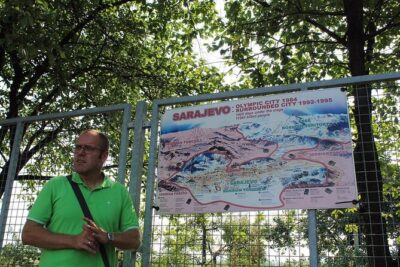
Tunnel Museum: Bosnian & Yugoslav Wars Tour with War Veteran
Read our review →
Bosnian War & Fall of Yugoslavia Tour with Tunnel
Read our review →
Sarajevo War Tour: A Veteran’s Story of the Siege (fees included)
Read our review →Browse the lists this tour appears in