
Review · WALKING TOURS
Sarajevo Essential Full Walking Tour
Sarajevo reveals its story one street at a time. This $18.15 walking tour links the city’s Catholic, Orthodox, Jewish, and Muslim landmarks with Ottoman bazaars, Austro-Hungarian buildings, and powerful reminders of the First World War and the 1990s siege. I like that the route gives you a useful first look at Sarajevo without asking you to spend half a day on your feet.
I especially like the mix of major sights and small details, from the Sarajevo Meeting of Cultures marker to the coppersmiths of Kazandziluk. I also like the focus on local explanation rather than simply pointing at buildings. The main drawback is group size: although the tour is presented as a small-group experience, it can allow up to 50 people, so the atmosphere may not always feel personal.
In This Review
- Key points before you book
- Why this Sarajevo walk works well
- Sacred Heart Cathedral and Sarajevo’s religious mix
- Gazi Husrev-beg Mosque and the Ottoman heart
- Vijećnica, the Spite House, and the Miljacka
- Latin Bridge and the event that changed Europe
- Bezistan, Tašlihan, and Austro-Hungarian Sarajevo
- Orthodox Sarajevo and the multicultural monument
- Sarajevo Roses and the city’s recent wounds
- What $18.15 gets you
- Who should take this tour?
- Should you book Sarajevo Essential Full Walking Tour?
- FAQ
- How long does the Sarajevo Essential Full Walking Tour last?
- Where does the walking tour start and finish?
- Is hotel pickup available?
- Are museum and City Hall admission fees included?
- Is food included in the tour price?
- What is the maximum group size?
Key points before you book

- A compact introduction to Sarajevo: The route takes about one to two hours and covers 16 stops in the historic center.
- Four faiths in a short walk: You see Catholic, Muslim, Orthodox, and Jewish landmarks within a relatively small area.
- The most important wartime stop: Latin Bridge connects Sarajevo to the assassination of Archduke Franz Ferdinand and the start of the First World War.
- A real craft tradition: Kazandziluk remains a coppersmith street, giving the tour a useful link to living Sarajevo rather than only monuments.
- Good value for a first day: At $18.15, the tour costs less than many longer city walks and includes a professional local guide.
- Expect some extra costs: Food and drinks are not included, and admission to the Museum of the Jews of Bosnia and Herzegovina and Sarajevo City Hall is not included.
Why this Sarajevo walk works well
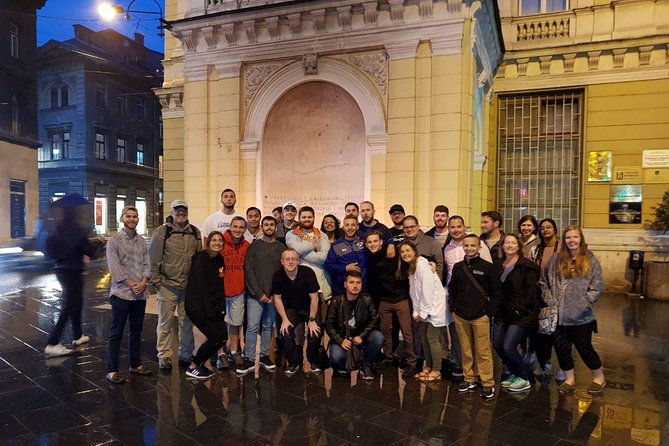
This route is useful because Sarajevo’s story is not contained in one square or one museum. The city’s identity comes from the close meeting of Ottoman, Austro-Hungarian, Jewish, Catholic, Orthodox, and Islamic traditions. You can walk from a Catholic cathedral to a mosque, pass a covered Ottoman market, and reach an Austro-Hungarian hotel in a matter of minutes.
That compact setting makes a guided walk especially worthwhile. I can look at a beautiful building and understand its age, but a guide helps explain why it is there and how it fits with everything around it. The route also gives you practical orientation for later exploring, shopping, eating, and choosing which museums deserve more of your time.
The advertised duration is one to two hours. The listed stop times add up to roughly two hours, so I would plan on the longer end rather than assuming a brisk one-hour walk. You will cover many stops, but several are short exterior visits. This is an introduction, not a full museum tour.
The meeting point is the Spirit Tours office at Ferhadija 19. The tour returns there at the end. Hotel, apartment, or hostel pickup can be arranged in advance if needed, but the standard meeting point is in the city center and near public transportation.
More Walking Tours in Sarajevo
- Sarajevo: Grand Walking Tour Through Time and Cultures
★ 4.8 · 1,236 reviews - Sarajevo: 2 Hours Old Town Walking Tour With Local Guide
★ 5.0 · 505 reviews - Private Walking Tour, Food Tasting and Bosnian Coffee in Sarajevo
★ 5.0 · 255 reviews
Sacred Heart Cathedral and Sarajevo’s religious mix
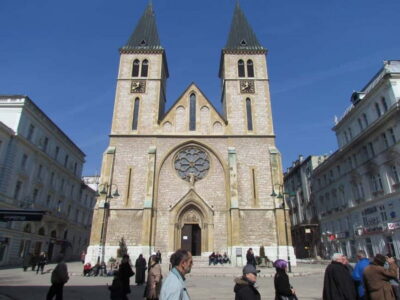
The first stop is the Cathedral of Jesus’ Sacred Heart, Sarajevo’s largest Catholic church. Built in 1889 in Neo-Gothic style, it serves as the seat of the Archdiocese of Vrhbosna. The visit is scheduled for about ten minutes, with no admission charge.
This is a useful starting point because it immediately shows that Sarajevo is not only an Ottoman city. The cathedral reflects the Austro-Hungarian period and the presence of a long-established Catholic community. I would take a moment to look at the building’s scale and pointed forms before moving on. The short stop means you should not expect a detailed architectural tour inside.
The next stop is the Museum of the Jews of Bosnia and Herzegovina, located within the City Museum of Sarajevo in Bosnia and Herzegovina’s oldest synagogue. The planned visit lasts about five minutes, and admission is not included.
That timing suggests a brief introduction rather than a full museum visit. If Jewish history in Sarajevo matters to you, note the museum and consider returning later with more time. The tour’s value here is showing how close the city’s different religious communities have historically lived and worshipped.
The Sarajevo Meeting of Culture marker on Ferhadija Street makes that idea visible. Near Gazi Husrev Bey’s Bezistan, the marker points to the meeting of two dominant cultural traditions that shaped the city. You get about five minutes here, enough for the guide to explain the symbolism and for you to notice the change in the streets around you.
Gazi Husrev-beg Mosque and the Ottoman heart
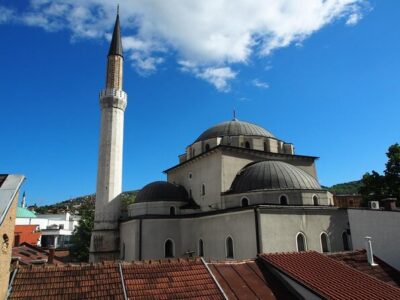
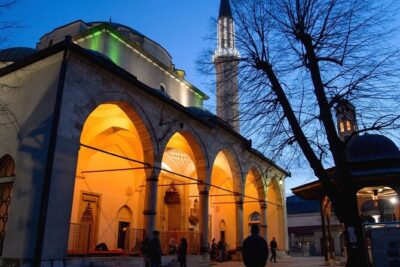
Gazi Husrev-beg Mosque is one of the central sights on the walk. Built in the 16th century, it is the largest historical mosque in Bosnia and Herzegovina and one of the finest Ottoman structures in the Balkans. The scheduled stop is ten minutes, with free admission.
This is one of the places where a guide adds real value. The mosque is not an isolated monument. It belongs to the wider Ottoman urban complex around the covered bazaar, fountain, shops, and religious buildings. You will get a clearer sense of how Sarajevo functioned as a city, not just how one building looked.
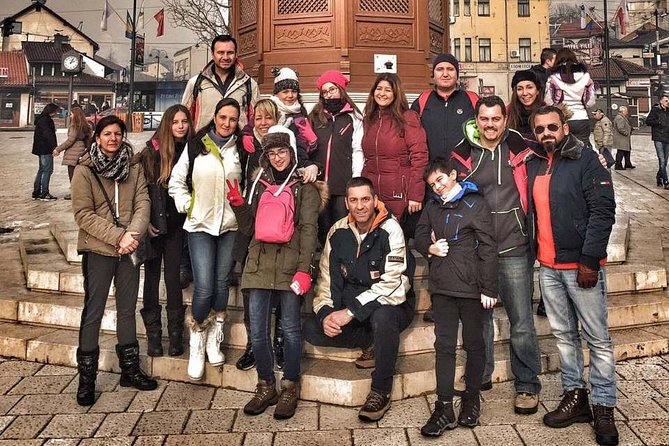
Next comes Sebilj, the wooden Ottoman-style fountain in Baščaršija Square. Mehmed Pasha Kukavica built it in 1753. The stop lasts about five minutes and is free.
Sebilj is one of Sarajevo’s most recognizable public symbols, but it is also a place where the tour may feel crowded or lively. Give yourself a moment to notice the fountain’s timber design and its place at the center of the old market quarter. It is a good point for photographs, though the guide’s explanation is more valuable than simply checking off the landmark.
Kazandziluk, or Coppersmith Street, is one of my favorite stops in the route. The street has retained its traditional appearance for centuries, and the coppersmith trade still operates there. The visit lasts about ten minutes.
This is the kind of stop that makes a city walk feel grounded. You are not only looking at old walls. You are seeing a craft connected to the district’s Ottoman commercial past. One review specifically praised the chance to visit a coppersmith shop and see examples of decorative objects. I would pay attention to the workmanship and ask the guide how the craft fits into modern Sarajevo.
Vijećnica, the Spite House, and the Miljacka
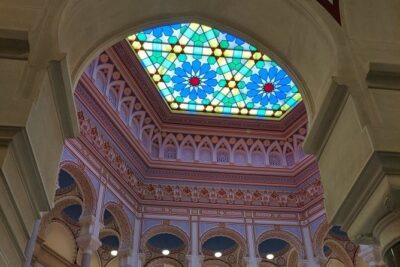
Sarajevo City Hall, or Vijećnica, is one of the most striking buildings on the route. It was the grandest structure built in Sarajevo during the Austro-Hungarian occupation and is described as a symbol of world civilizations meeting in the city. The stop lasts about ten minutes, but admission is not included.
You can appreciate the exterior during the walk, then decide if the interior deserves a separate visit. Since the tour does not include entry, anyone wanting a fuller look should budget for an additional ticket. The brief stop works well for orientation, but it cannot replace time inside the building.
At Čumurija Bridge, you hear the story of the nearby Spite House. The owner reportedly resisted the building of City Hall and insisted that his house be moved rather than demolished. The building later became a national restaurant and a protected cultural and historical site.
The story is memorable because it gives Sarajevo a little humor amid the heavier history. I like this kind of detail. It shows how city planning, pride, and daily life can leave a mark on the street. The stop is only about five minutes, so you will hear the tale and see the setting rather than spend time dining there.
The Emperor’s Mosque follows. It is Sarajevo’s oldest mosque and one of the oldest in Bosnia and Herzegovina. It is believed to have been built soon after Sarajevo’s founding in 1462 by Isa Bey Ishaković, in honor of Sultan Mehmed II, known as the Conqueror.
The scheduled visit is five minutes and free. That is enough to place the mosque in Sarajevo’s early development, but not enough for a long architectural inspection. If religious buildings are a major interest, make a note of the mosque and return independently after the walk.
Same corner of the country, a different kind of day:
- Sarajevo: Mostar, Konjic, Blagaj Tekke, Pocitelj & Waterfall
★ 4.9 · 1,666 reviews - Fall of Yugoslavia, Sarajevo War Tour with Tunnel of Hope Museum and Frontlines
★ 5.0 · 1,314 reviews - Sarajevo: Mostar, Konjic, Sufi House, Pocitelj & Kravice Falls
★ 5.0 · 1,179 reviews - Sarajevo: Tunnel Museum Yugoslavia War Tour with War Veteran
★ 5.0 · 1,111 reviews
Latin Bridge and the event that changed Europe
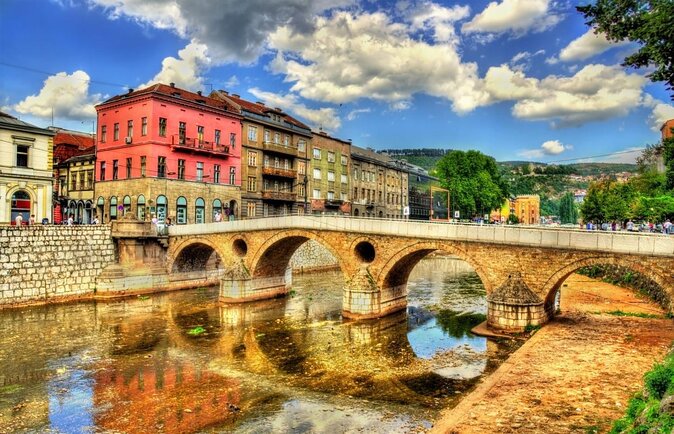
Latin Bridge is the most historically charged stop. It is also known as Principov Most and is tied to Gavrilo Princip’s assassination of Archduke Franz Ferdinand and his wife, Sophie. The event, known as the Sarajevo Assassination, helped trigger the First World War.
The stop lasts about ten minutes and costs nothing to view. This is the point where a local guide can make a large difference. The physical setting is modest, and without context it would be easy to miss its importance. The explanation helps connect a precise location in Sarajevo to a conflict that reshaped Europe.
I would listen carefully here rather than treat the bridge as a quick photo stop. The story is often simplified into a single dramatic moment, but the guide can help place it within the political tensions of the Austro-Hungarian period. The tour does not promise a museum visit, so this is mainly an outdoor history lesson.
Bezistan, Tašlihan, and Austro-Hungarian Sarajevo
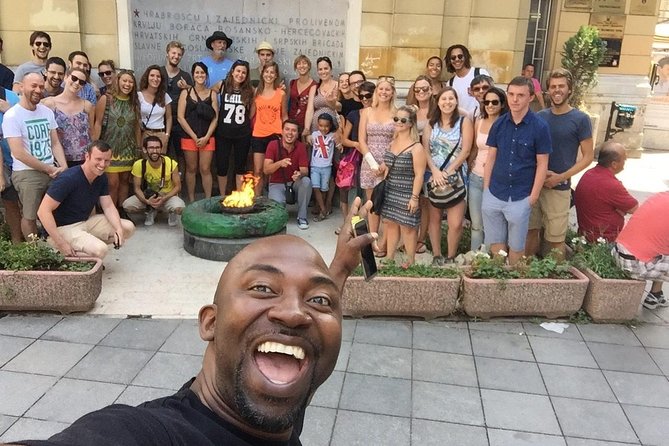
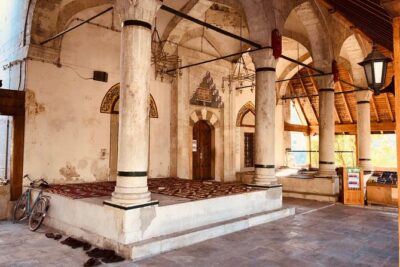
Gazi Husrev-beg’s Bezistan is a preserved Ottoman covered bazaar built in 1555. It still serves its original basic purpose as a place of trade. The five-minute stop gives you a quick look at the commercial side of the old town.
I like this stop because markets reveal how a city works. A mosque tells you about faith, while a bazaar tells you about buying, selling, storage, and everyday movement. You can return later if you want time to browse properly. The tour gives you the historical frame first.
Tašlihan was built in 1543 as part of Gazi Husrev-Bey’s waqf, or charitable foundation. It once included a fountain, mosque, courtyard, shops, and storage rooms. Several fires badly damaged it, leaving only parts of the former complex.
The five-minute visit is a reminder that Sarajevo’s past is not made only of complete monuments. Some places survive as fragments. I find that useful because it prevents the old town from feeling like a perfectly preserved stage set. Fire, rebuilding, trade, and political change all shaped what you see today.
The route then reaches Hotel Europe, an Austro-Hungarian building in the center of Sarajevo. It sits just a short walk from the old town and provides another sharp change in architectural character.
This contrast is one of the tour’s main strengths. You move from Ottoman commercial streets to Austro-Hungarian civic and hotel architecture without needing a bus or long transfer. The five-minute stop is short, but it helps you compare the city’s two major historical periods.
Orthodox Sarajevo and the multicultural monument
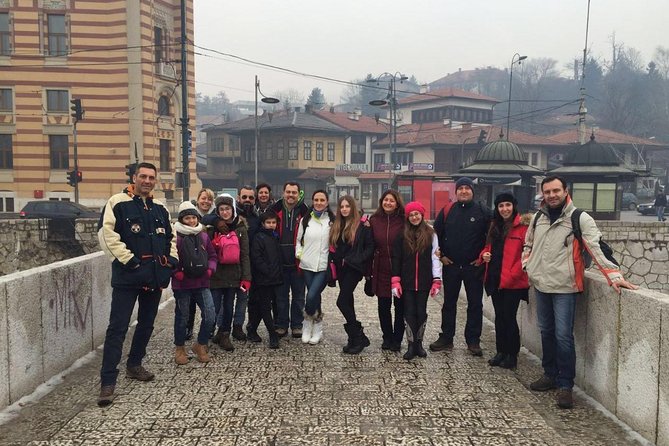
The Cathedral Church of the Nativity of the Theotokos is the largest Serbian Orthodox church in Sarajevo and one of the largest Orthodox churches in the Balkans. The stop lasts about five minutes and is free.
Along with the Catholic cathedral, the mosques, and the Jewish museum, this church helps explain Sarajevo’s religious range. The buildings are not spread across distant suburbs. They are part of the central city experience, which is why a guided route can make the multicultural theme easy to grasp.
The Monument to the Multiethnic Human sits between three major religious symbols: the Catholic cathedral, the Muslim mosque, and the Christian Orthodox church. The inscription, in Italian and Bosnian, says that the multicultural person is constructing the world.
This is a ten-minute stop and one of the clearest statements of the tour’s central idea. Sarajevo is not simply a place where different traditions once passed through. Its identity has been shaped by their proximity and interaction. I would take time to look at the monument’s position, not just the sculpture itself.
Sarajevo Roses and the city’s recent wounds
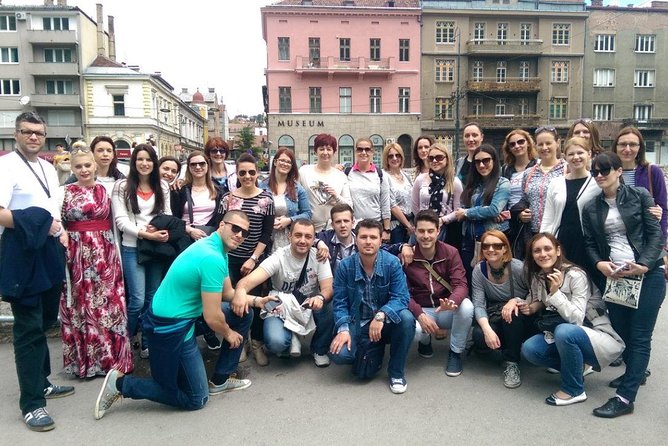
The final stop is a Sarajevo Rose. These memorials mark concrete scars created by mortar explosions. The damaged surface was later filled with red resin, turning a place of death into a public remembrance.
The tour allows about ten minutes here. It is a quiet ending after the earlier architectural and political stops. The Sarajevo Rose brings the city’s story into the recent past and shows that remembrance is part of ordinary streets, not confined to a distant museum.
Because the walking route covers both Ottoman and Austro-Hungarian history before reaching the war memorial, the final stop gives the whole tour a wider frame. Sarajevo’s past is not a single period. It is a sequence of cultural growth, conflict, rebuilding, and continued daily life.
What $18.15 gets you
At $18.15 per person, this is a strong value if you want a quick, guided introduction to central Sarajevo. The fee includes a local professional guide and covers a long list of important places. You are paying for interpretation and route planning, not for admission to every building.
The two main extra costs are entry to the Museum of the Jews of Bosnia and Herzegovina and Sarajevo City Hall. Food and drinks are also not included. Since most stops are exterior visits, the tour remains inexpensive, but you should not confuse the low price with an all-inclusive museum pass.
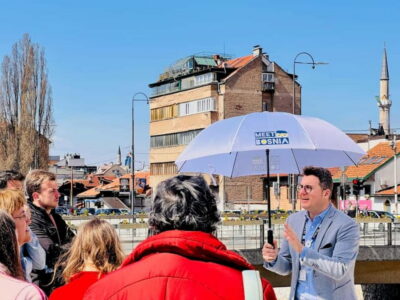
The tour receives a 5 out of 5 rating from 198 reviews, with 99 percent of people recommending it. The praise centers on the guide’s ability to explain the city clearly and make a short walk worthwhile. One especially strong experience involved Adnan, known as Ado, who was described as educated, authoritative, easy to listen to, and open to questions. The private feel in that case came from there being only two people on the walk, which is possible but not guaranteed.
The stated maximum is 50 people. That is the practical point to weigh against the praise. A small party can make it easy to ask questions and hear every explanation. A larger group may still cover the route well, but you may have less personal contact with the guide.
Who should take this tour?
I would recommend this walk to anyone arriving in Sarajevo who wants a clear map of the center and a short explanation of its main cultural layers. It suits first-time visitors, people with limited time, and anyone who prefers to learn the basic story before choosing which sites to revisit.
It is also a good fit if you want to see a range of landmarks without arranging separate visits. The route brings together the Sacred Heart Cathedral, Gazi Husrev-beg Mosque, the Orthodox cathedral, the old bazaars, City Hall, Latin Bridge, and a Sarajevo Rose.
You may want something else if you prefer long museum visits, slow photography, or a very small private group. The walk moves quickly, and the maximum group size is larger than the phrase small-group might suggest. People who already know central Sarajevo may find the overview less useful than a specialist history or war-focused tour.
Wear comfortable shoes and plan to spend more than the minimum one-hour estimate. The route is in the city center, but sixteen stops in roughly two hours means you will be moving regularly. If you want to enter City Hall or the Jewish museum, set aside extra time after the walk.
Should you book Sarajevo Essential Full Walking Tour?
Book it if you want a compact, affordable orientation to Sarajevo with real historical range. The route gives you much more than a parade of old buildings. You get the Ottoman market quarter, religious landmarks, Austro-Hungarian architecture, the First World War connection at Latin Bridge, living copper craft, and a Sarajevo Rose.
The best reason to book is the guide. A well-prepared local guide can make the short visits feel connected, and Ado’s reported style, clear, authoritative, and easy to follow, is exactly what this route needs. The main caution is the possible group size and the lack of included museum admissions.
For $18.15, I consider it a sensible first-day purchase. It will not replace a full museum visit or a longer history tour, but it can help you understand where you are and what deserves a closer look.
FAQ
How long does the Sarajevo Essential Full Walking Tour last?
The tour lasts approximately one to two hours. The scheduled stops add up to about two hours, so plan for the longer estimate.
Where does the walking tour start and finish?
It starts at the Spirit Tours office, Ferhadija 19, Sarajevo 71000, Bosnia and Herzegovina. The activity ends back at the same meeting point.
Is hotel pickup available?
Yes. Hotel, apartment, or hostel pickup can be arranged in advance if required. The regular meeting point is the BH Spirit City Tours and Excursions office.
Are museum and City Hall admission fees included?
No. Admission to the Museum of the Jews of Bosnia and Herzegovina and Sarajevo City Hall is not included. Most of the other listed stops are free to visit.
Is food included in the tour price?
No. Food and drinks are not included.
What is the maximum group size?
The activity can have a maximum of 50 people. It is offered in English and includes a local professional guide.
Newest around Sarajevo
- Understanding Srebrenica Genocide + Lunch with Local Family★ 4.9 · 14 reviews
- Sarajevo: Trebević Mountain Summit Hiking Tour★ 4.2 · 2 reviews
- Private Full Day Safari Tour★ 5.0 · 8 reviews
- From Sarajevo: Kozice Waterfalls Hiking Experience in Nature★ 5.0 · 2 reviews
- Sarajevo Under Siege: A War History Tour★ 5.0 · 10 reviews
- Mysterious Visoko Pyramids Driving and Walking Tour★ 5.0 · 7 reviews
- WAR TUNNEL – Sarajevo’s only way of a communication during the WAR – Top secret★ 5.0 · 12 reviews
- Ultimate Gastro Experience★ 4.5 · 14 reviews
Walking Tours, compared.
Private Walking Tour, Food Tasting and Bosnian Coffee in Sarajevo
Read our review →
Browse the lists this tour appears in