
Review · OLD TOWN WALKS
Sarajevo: 2 Hours Old Town Walking Tour With Local Guide
Sarajevo tells many stories in a few streets. This two-hour walk brings together Ottoman lanes, Austro-Hungarian buildings, Jewish heritage, Catholic and Orthodox landmarks, and the spot where the First World War began. I like the small maximum of 10 people, which gives you room to ask questions, and I like the clear focus on cultures meeting in one compact old town. The main thing to consider is pace: you see many places quickly, but several interiors are viewed from outside or require optional admission.
I would use this tour on your first day in Sarajevo. It gives you a useful map of the center, explains the city’s major historical layers, and leaves you ready to return to the places that catch your interest. Guides such as Ahmed, Ilma, Hanan, Benjamin, Azra, Sara, Arna, and Cecilia have been praised for strong English, patience, and personal local insight.
At $14.51 per person, this is a very good deal for a guided orientation. It is not a war-sites tour focused on the 1990s siege, and it does not include food, drinks, or entry fees. If you want a short introduction to Sarajevo’s older story and its famous landmarks, this is a smart starting point.
In This Review
- Key points to know before booking
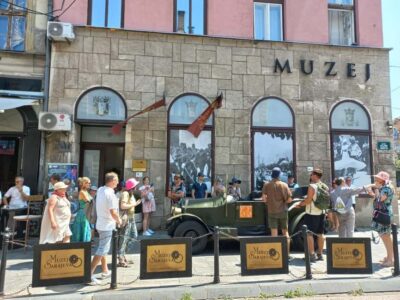
- Starting at Meet Bosnia Tours on Gazi Husrev-begova Street
- The oldest Orthodox church and Sarajevo’s layered faiths
- Baščaršija, Sebilj, and the copperworkers’ lane
- Sarajevo City Hall and the Austro-Hungarian chapter
- Morića Han, a caravanserai with a practical past
- Gazi Husrev-beg Mosque and Sarajevo’s unusual clock
- The Jewish Museum and Sarajevo Meeting of Cultures
- The Sacred Heart Cathedral and Catholic Sarajevo
- Latin Bridge and the event that changed Europe
- Why the two-hour format works
- Small groups, changing guides, and the human touch
- Weather, footwear, and what to bring
- Is $14.51 good value?
- Who should book this Sarajevo walking tour?
- Should you book it?
- FAQ
- How long does the Sarajevo Old Town walking tour last?
- Where does the tour begin?
- Where does the tour end?
- What language is offered?
- How many people can join the tour?
- Are admission tickets included?
- Are food and drinks included?
- Can I cancel for a full refund?
Key points to know before booking
- The route covers Sarajevo’s meeting point of cultures: You move between Ottoman, Austro-Hungarian, Orthodox, Jewish, and Catholic landmarks.
- The group is capped at 10 people: A smaller group makes it easier to hear the guide and ask detailed questions.
- The walk is best on your first day: You finish at the Latin Bridge with a better sense of where Sarajevo’s main sights are.
- Most of the old town is compact and walkable: The route fits a lot into two hours, though the pace can feel brisk.
- The focus is historical and cultural: The tour discusses Ottoman and Austro-Hungarian Sarajevo, Jewish life, religious diversity, and the assassination of Franz Ferdinand.
- Entry fees are separate: The Jewish Museum, Sarajevo City Hall, and Gazi Husrev-beg Mosque may involve admission costs, and the tour does not include food or drinks.
Starting at Meet Bosnia Tours on Gazi Husrev-begova Street
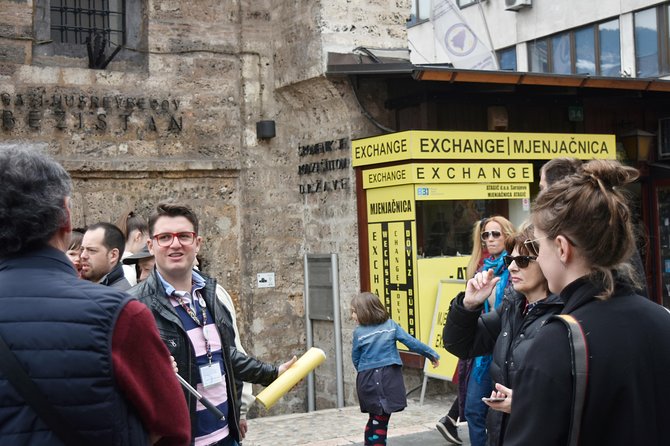
The tour begins at the Meet Bosnia Tours office at Gazi Husrev-begova 75, near the crossroads of Mula Mustafe Bašeskije Street. This is a practical meeting point in the old town, close to the route’s first sights and easy to reach by public transportation.
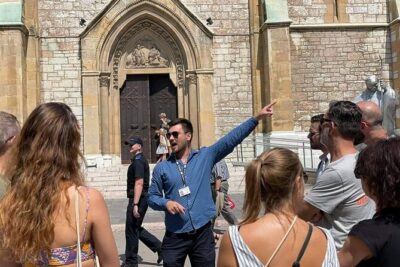
The opening introduction lasts about 10 minutes. Your guide sets out the broad story of Bosnia and Sarajevo before you begin walking, which helps the landmarks make sense instead of appearing as a string of unrelated buildings.
The company uses multilingual guides, and English is the offered language for this tour. Previous guides have included history students, a medical student, and guides with backgrounds in history and art. The names change, but the useful pattern is clear: the strongest part of the experience is the guide’s ability to connect dates and buildings with everyday life.
More Old Town Walks in Sarajevo
- Sarajevo: Old Town Walking Tour with Local Guide
★ 4.9 · 211 reviews - Sarajevo Grand Tour: Old Town, War Tunnel, Olympic Sites & More
★ 5.0 · 73 reviews - Sarajevo: Sarajevo City Market, Old Town Food Tasting Tour
★ 4.9 · 69 reviews
The oldest Orthodox church and Sarajevo’s layered faiths
The first formal stop is the Church of the Holy Archangels Michael and Gabriel. Your guide explains the age of the church, its legends, and its less obvious details while speaking outside.
This is a good early lesson in Sarajevo’s character. The city is not presented as belonging to one faith or one empire. Instead, the route shows how Orthodox Christians, Muslims, Catholics, and Jews have all shaped the city.
The drawback is simple: the church portion is about 10 minutes and does not include an admission ticket. You should expect an outdoor explanation rather than a full interior visit.
Baščaršija, Sebilj, and the copperworkers’ lane
From there, the route enters Baščaršija, Sarajevo’s best-known Ottoman quarter. At Baščaršija Square, you see Sebilj, the wooden Ottoman-style fountain that has become one of the city’s familiar symbols.
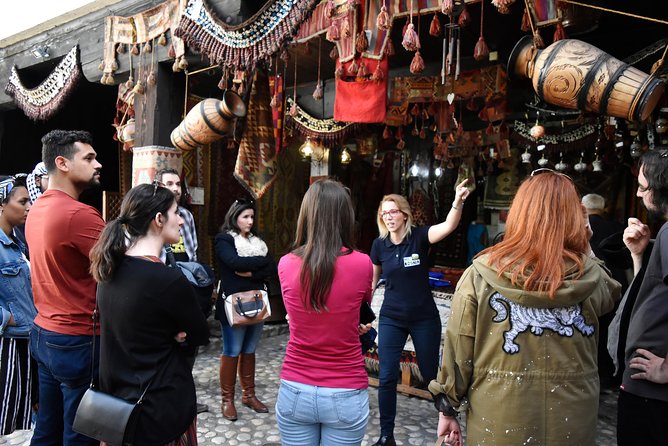
The guide explains the Ottoman period and points out how the old commercial quarter still reflects its original purpose. You then walk along Kazandžiluk, the city’s oldest street, where copperworkers continue to shape and sell handmade items.
I particularly like this part because it gives you something to look at beyond grand monuments. The copperware, narrow street, and small shops show Sarajevo as a working town, not just an open-air museum.
Sebilj itself receives only a brief stop of about two minutes, while Baščaršija and Kazandžiluk receive more time. That is enough for photographs and orientation, but not enough for a long browse through the shops. If you want copper coffee sets or other crafts, note the location and return later.
Sarajevo City Hall and the Austro-Hungarian chapter
The walk continues to Sarajevo City Hall, one of the city’s most striking Austro-Hungarian buildings. Your guide discusses its construction and its later use as a national library.
This stop adds an important change of mood. Baščaršija feels Ottoman in its layout and craft traditions, while City Hall reflects the Austro-Hungarian attempt to give Sarajevo a different civic and architectural identity.
The tour allows about 15 minutes here, but admission is not included. The description does not promise an interior visit, so you should confirm current entry arrangements if seeing the inside matters to you.
The building also carries a painful modern story because it served as a library. The guide’s historical context helps you understand why Sarajevo’s architecture cannot be separated from the losses and changes that affected the city.
More Walking Tours in Sarajevo
- Sarajevo: Grand Walking Tour Through Time and Cultures
★ 4.8 · 1,236 reviews - Private Walking Tour, Food Tasting and Bosnian Coffee in Sarajevo
★ 5.0 · 255 reviews - Sarajevo Grand Walking Tour
★ 5.0 · 232 reviews - Sarajevo Essential Full Walking Tour
★ 5.0 · 198 reviews
Morića Han, a caravanserai with a practical past
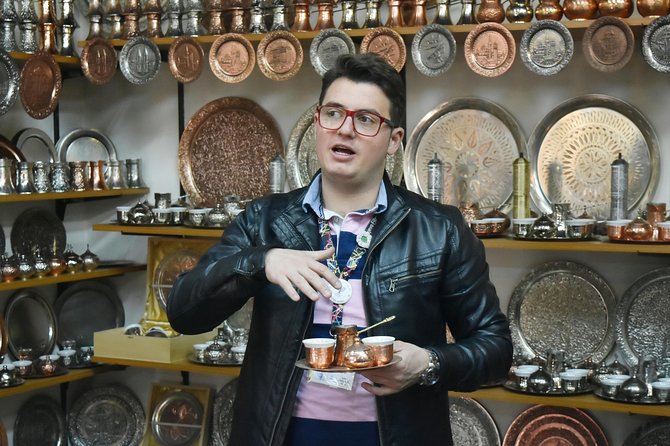
Morića Han is described as the most authentic surviving caravanserai in the Balkans region. It once provided lodging for merchants and other people moving through Sarajevo. Today, it serves a different purpose, but the courtyard still helps you picture how trade and travel worked during the Ottoman period.
The stop lasts around 10 minutes and is free. It is one of the places where a guide adds real value, since the building’s importance is easier to grasp when you know how a caravanserai functioned.
You may find the visit more interesting if you pay attention to the layout rather than expecting a major exhibit. This is a compact historical stop, not a large museum.
Gazi Husrev-beg Mosque and Sarajevo’s unusual clock
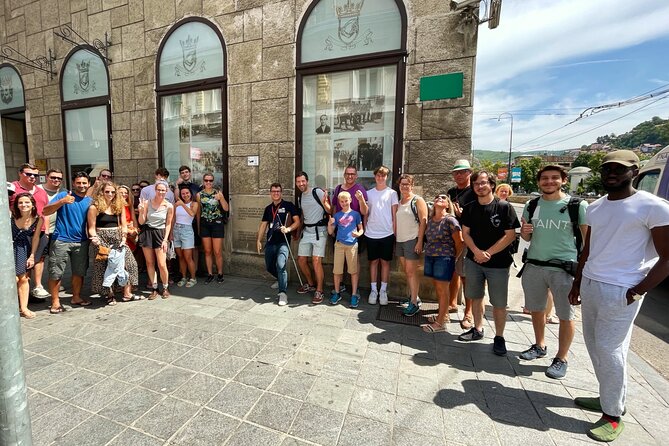
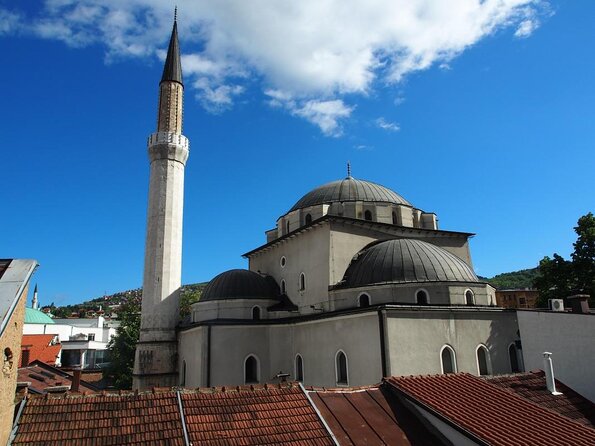
The Gazi Husrev-beg Mosque is one of Sarajevo’s major religious buildings and the largest mosque on the route. The guide points out its ornamentation and explains the role of Gazi Husrev-beg, whose endowment helped shape the old town.
The nearby clock tower adds one of Sarajevo’s most distinctive details. Its clock shows lunar time, a system connected with Muslim prayer times and sunset. That makes it different from the standard clocks you see elsewhere in Europe.
The mosque stop lasts about 20 minutes, the longest single stop on the route, though admission is not included. Dress and visitor rules may apply inside religious buildings, so modest clothing is the sensible choice. If entry is unavailable during your visit, the exterior and surrounding square still provide plenty for the guide to explain.
The clock tower receives about five minutes. That is enough for the basic story and a look at the landmark, but not a climb or an extended visit.
The Jewish Museum and Sarajevo Meeting of Cultures
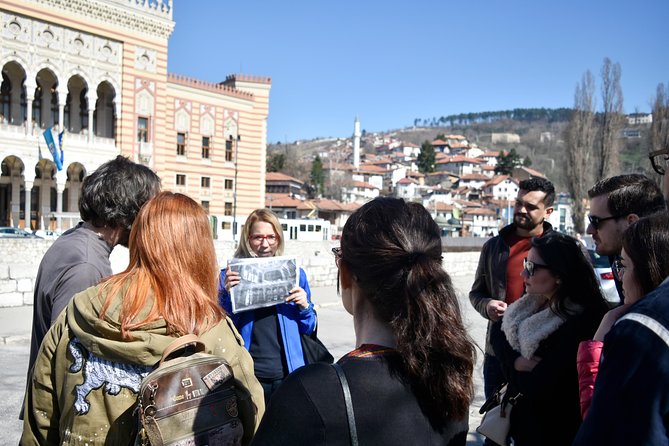
The next section brings Jewish heritage into the route. The Jewish Museum occupies a former Sephardic synagogue, and your guide explains the long presence of Jews in Bosnia and Herzegovina.
Entrance to the museum is optional and not included. This is worth keeping in mind when planning your budget, especially because the tour already includes several sites where interior admission may be separate.
Even if you do not enter, the stop matters. It prevents the city’s story from becoming only Ottoman, Austro-Hungarian, or wartime. Sarajevo’s Jewish history is a key part of the city’s cultural mix.
Nearby, the guide pauses at Sarajevo Meeting of Culture. This marked point represents the meeting of East and West, with Ottoman and Austro-Hungarian parts of the city close together.
It is a quick five-minute stop, but a useful one. You can look around and see the transition for yourself rather than treating the phrase East meets West as a vague slogan.
The Sacred Heart Cathedral and Catholic Sarajevo

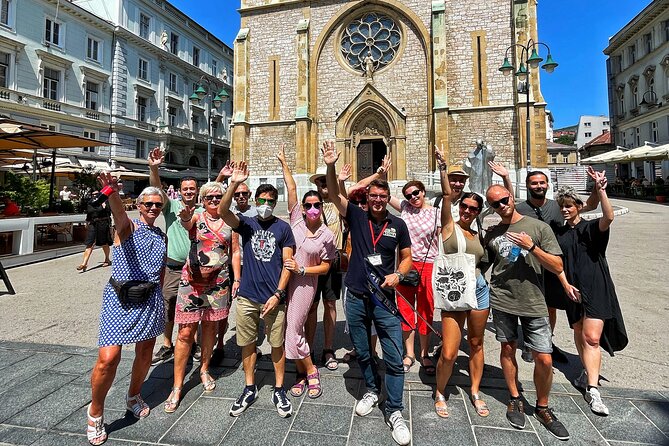
The Cathedral of the Sacred Heart of Jesus is the main Catholic landmark on the walk. The guide discusses Catholics in Bosnia and Herzegovina and gives you time to see the church.
The cathedral adds another piece to the city’s religious picture. Within a short walk, you have encountered Orthodox, Muslim, Jewish, and Catholic traditions, each with its own building and story.
The stop is listed as free and lasts about 15 minutes. As with any active place of worship, quiet behavior and respectful clothing are appropriate.
This is also a good point to consider the tour’s main strength. It is not simply checking off buildings. The route is arranged so that each monument helps explain how different communities lived side by side, with periods of cooperation, tension, change, and loss.
Latin Bridge and the event that changed Europe
The final major stop is Latin Bridge, where the guide tells the story of the assassination of Archduke Franz Ferdinand and his wife Sophie in 1914. The event helped trigger the First World War.
This is often the most memorable stop for history-minded visitors because the location is so ordinary. You are looking at a bridge and a street corner, yet the consequences reached far beyond Sarajevo.
A good guide will explain what happened before the assassination, not just point to the spot and name the date. The strongest guiding examples on this tour have been praised for explaining the political context and the effects that followed.
The Latin Bridge stop lasts about 20 minutes, and the tour ends back at the original meeting point. That return is convenient because you finish in the center, already oriented for independent exploring.
Why the two-hour format works
Sarajevo’s old town is compact, so a two-hour walk can cover a surprising amount of ground. You are not spending time on buses or waiting for transfers. Instead, the guide keeps the route moving through streets where the shift from Ottoman to Austro-Hungarian design is easy to see.
I like this length for a first introduction. You get the major landmarks without giving up half a day, and you can then decide which places deserve a longer return visit.
The tradeoff is depth. You cannot fully explore City Hall, the Jewish Museum, the mosque, the cathedral, and the crafts shops in two hours. Think of the tour as a well-organized first pass, not a replacement for museum visits or a dedicated religious-heritage walk.
Small groups, changing guides, and the human touch
The group limit of 10 is one of the best practical features. A group of five or six should feel interactive, while a very small booking may become almost private. The tour has continued even when only one person booked, creating a more personal experience.
Guides praised by name include Ahmed, Ilma, Hanan, Benjamin, Azra, Sara, Arna, Cecilia, Alen, Viki, Amina, and Muhammad. Their strengths vary, but several useful qualities appear again and again: clear English, a warm manner, historical context, and willingness to answer questions.
Arna has been especially appreciated for linking history with local food, community life, and practical suggestions. Cecilia has handled heavy rain while keeping the route going, and other guides have adjusted their pace for weather, shade, families, and questions.
One guide also shared personal memories of being a child during the 1990s conflict. That kind of perspective can add meaning, but the tour itself is not designed as a war-tour route. If your main goal is the siege, tunnels, or 1990s battle sites, book a different experience.
Weather, footwear, and what to bring
This is a walking tour, so comfortable shoes matter more than anything else. The route includes old streets and several stops where you may stand while the guide talks.
Bring water, especially in warm weather. One account specifically praised a guide for finding shade, and another described the tour continuing through rain. Still, a light rain jacket and an umbrella are sensible choices.
You may want a little extra money for optional admissions, food, drinks, or purchases on Kazandžiluk. The listed price covers the local professional guide, not these extras.
Service animals are allowed, and the activity is near public transportation. Most people can take part, but the supplied information does not give a detailed mobility assessment, so contact the provider if you have specific access needs.
Is $14.51 good value?
At $14.51, the tour offers strong value if you want orientation and context. You are paying for two hours with a local guide, a small-group setting, and a route that links many of Sarajevo’s key cultural landmarks.
The value is not in admission inclusions. Several interiors are optional or charge separately, and there is no food or drink included. The value comes from saving time, avoiding confusion in the old town, and hearing the connections between places that might otherwise seem unrelated.
A free walk with a large group may cover some of the same streets. The smaller group here gives you a better chance to ask about food, shopping, religion, architecture, and local life. For a modest fee, that extra interaction is worthwhile.
Who should book this Sarajevo walking tour?
I would recommend it to first-time visitors, short-stay visitors, families, and anyone arriving without much planning. It is also a good fit if you want to understand Sarajevo’s long story without focusing only on the 1990s war.
History fans will appreciate the Ottoman and Austro-Hungarian setting, the Jewish heritage, the religious landmarks, and the Franz Ferdinand connection. Families can benefit from the manageable two-hour length, though young children may need help keeping pace.
You may want another tour if you prefer long museum visits, a slow photography walk, or a detailed study of the siege. You should also budget extra time after the walk if you want to enter City Hall, the Jewish Museum, or the mosque.
Free cancellation is available if you cancel at least 24 hours before the start time. Changes made inside that period are not accepted, and a minimum number of participants is required, although the company has sometimes operated the tour with only one person booked.
Should you book it?
Yes, if you want a short, affordable, well-guided introduction to Sarajevo’s old town. The route is compact, the subject matter is varied, and the small group limit gives the guide space to respond to your interests.
I would book it for the first morning or afternoon of your stay, then return to Baščaršija, City Hall, the Jewish Museum, or the Latin Bridge on your own. Skip it only if you already know Sarajevo well or want a tour devoted mainly to the 1990s conflict.
FAQ
How long does the Sarajevo Old Town walking tour last?
The tour lasts approximately two hours.
Where does the tour begin?
It begins at the Meet Bosnia Tours office at Gazi Husrev begova 75, near the crossroads of Mula Mustafe Bašeskije and Gazi Husrev begova streets in Sarajevo.
Where does the tour end?
The activity ends back at the original meeting point.
What language is offered?
The tour is offered in English. The guide may be multilingual.
How many people can join the tour?
The maximum group size is 10 people.
Are admission tickets included?
No. Entry fees for places such as Sarajevo City Hall, Gazi Husrev-beg Mosque, and the Jewish Museum are not included. The Jewish Museum entrance is optional.
Are food and drinks included?
No. Food and drinks are not included in the tour price.
Can I cancel for a full refund?
Yes, if you cancel at least 24 hours before the experience start time. Cancellations made less than 24 hours before the start time are not refunded.
Newest around Sarajevo
- Understanding Srebrenica Genocide + Lunch with Local Family★ 4.9 · 14 reviews
- Private Full Day Safari Tour★ 5.0 · 8 reviews
- Sarajevo: Trebević Mountain Summit Hiking Tour★ 4.2 · 2 reviews
- From Sarajevo: Kozice Waterfalls Hiking Experience in Nature★ 5.0 · 2 reviews
- Sarajevo Under Siege: A War History Tour★ 5.0 · 10 reviews
- Mysterious Visoko Pyramids Driving and Walking Tour★ 5.0 · 7 reviews
- WAR TUNNEL – Sarajevo’s only way of a communication during the WAR – Top secret★ 5.0 · 12 reviews
- Ultimate Gastro Experience★ 4.5 · 14 reviews
Old Town Walks, compared.
Sarajevo Grand Tour: Old Town, War Tunnel, Olympic Sites & More
Read our review →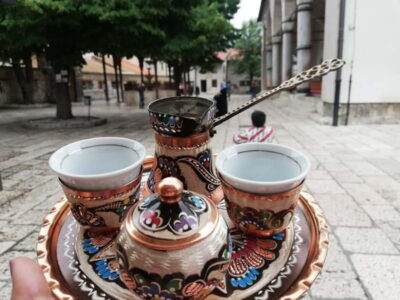
Sarajevo City Market, Old Town Food Tasting Tour
Read our review →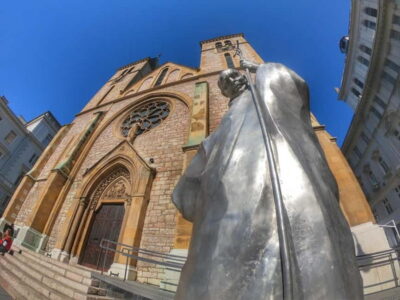
Sarajevo Grand Tour: 5 Hours Old Town, War Tunnel, Olympics
Read our review →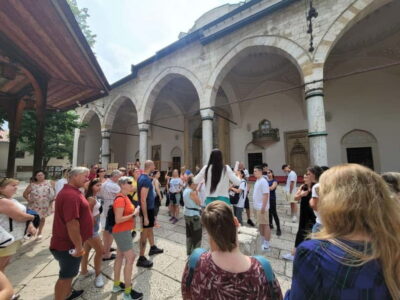
Sarajevo Old Town: Bosnian Coffee, Baklava & Panoramic Views
Read our review →Browse the lists this tour appears in