
Review · WALKING TOURS
PROFESSIONAL SARAJEVO WALKING TOUR – With guide who guided STING!
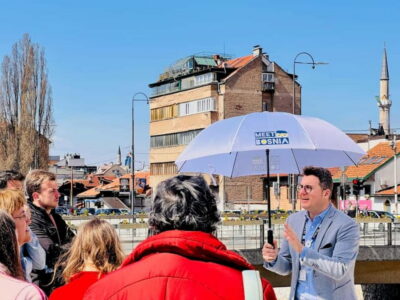
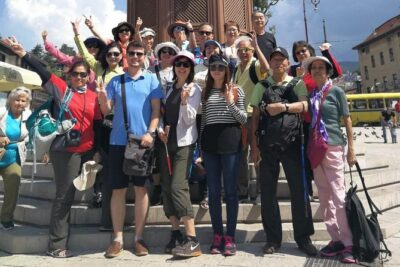
Sarajevo rewards a good first walk. This evening tour packs the city’s key sights into two to three hours, moving from the Sacred Heart Cathedral and Orthodox church to Ottoman lanes, wartime memorials, and the famous Latin Bridge. I like the small-group format and the way guide Mak explains Sarajevo through both major events and small local details. The main drawback is pace: with many stops, you will see a lot, but some places receive only a brief look.
I also like the low $31.24 price, especially if you want a useful introduction before exploring alone. Mak has guided Sting, according to the tour description, and his approach appears well suited to families, since he checked that both adults and teenagers understood the English. You should be ready to walk in all weather, and confirm the final group limit when booking because the information gives both 10 and 15 as maximum figures.
In This Review
- Key points before you book
- Why this Sarajevo walk works well as a first introduction
- Catholic, Orthodox, and civic Sarajevo in the opening half-hour
- Ottoman Sarajevo around Gazi Husrev-Beg Mosque
- Latin Bridge and the event that helped start World War I
- City Hall, Inat House, and Sarajevo’s upper views
- Yellow Fortress, Kovaci Street, and food along the route
- Sebilj Fountain and the old craft quarter
- Markale Market and the Sarajevo Roses
- Jewish Park and the Sefardi synagogue
- A final look at the Eternal Flame
- Who will get the most from this $31.24 walk?
- Should you book this Sarajevo walking tour?
- FAQ
- Where does the Sarajevo walking tour begin?
- What time does the tour start?
- How long does the walking tour last?
- Is the tour offered in English?
- Where does the tour finish?
- Can I cancel for a full refund?
Key points before you book
- Start at 6:15 pm: The evening timing gives you cooler streets and a natural transition from daylight into Sarajevo’s evening atmosphere.
- A compact lesson in Sarajevo: You cover Catholic, Orthodox, Jewish, and Muslim landmarks, along with Ottoman, Austro-Hungarian, Yugoslav, wartime, and Olympic history.
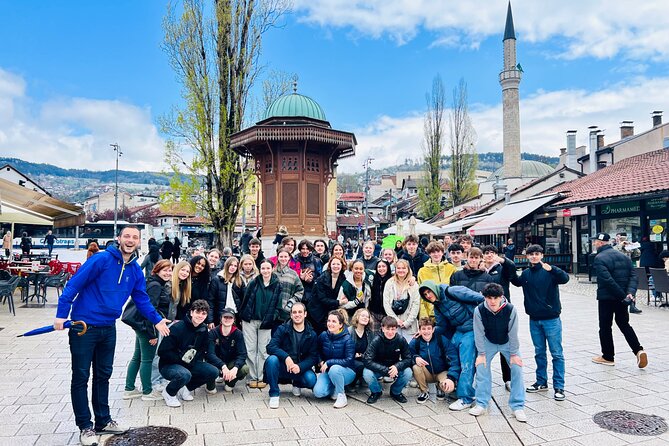
- Guide Mak gets personal praise: He is described as patient, clear, and happy to check that families understand the English explanations.
- The route is packed: Twelve named stops and many sights within them mean efficient orientation, not long visits inside monuments.
- Expect a small group: The tour is promoted for up to 15 people, while the additional details state a maximum of 10, so ask for clarification.
- Dogs are welcome in at least some cases: Service animals are allowed, and one family completed the walk with an energetic Hungarian pointer.
Why this Sarajevo walk works well as a first introduction
Sarajevo is a city where a few streets can carry several centuries of change. A Catholic cathedral, an Orthodox church, a mosque, a Jewish synagogue, Ottoman markets, Austro-Hungarian buildings, and Yugoslav reminders all sit within a walkable central area. That makes a guided walk especially useful here. You are not just checking off buildings. You are learning how the city’s different communities and political eras fit together.
The route begins at Đulagina 2 and returns to the same meeting point. That is practical because you do not need to arrange a ride from a distant finish. The walk lasts about two to three hours, starting at 6:15 pm, so it should finish between roughly 8:15 and 9:15 pm. The later start may suit you if daytime heat is a concern, though evening light can change during the walk and affect how clearly you see some details.
The price is $31.24 per person, which is fair for a guided city orientation lasting several hours. You are paying mainly for the guide’s local explanation rather than entry tickets, since the listed stops have no admission charge. If you want detailed interior visits or plenty of time at each monument, this is not that kind of tour. If you want a strong first map of central Sarajevo, the price makes sense.
More Walking Tours in Sarajevo
- Sarajevo: Grand Walking Tour Through Time and Cultures
★ 4.8 · 1,236 reviews - Sarajevo: 2 Hours Old Town Walking Tour With Local Guide
★ 5.0 · 505 reviews - Private Walking Tour, Food Tasting and Bosnian Coffee in Sarajevo
★ 5.0 · 255 reviews
Catholic, Orthodox, and civic Sarajevo in the opening half-hour
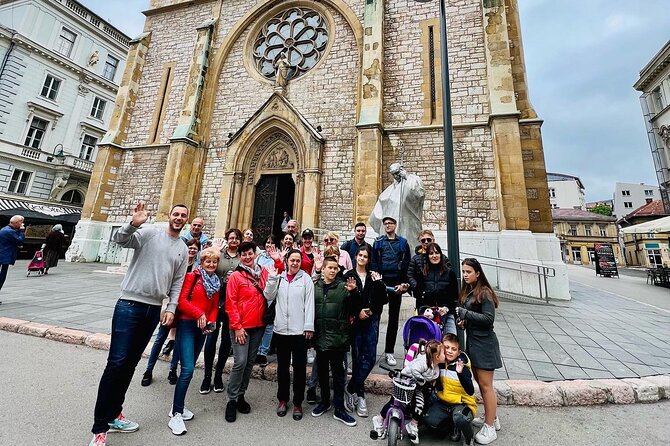
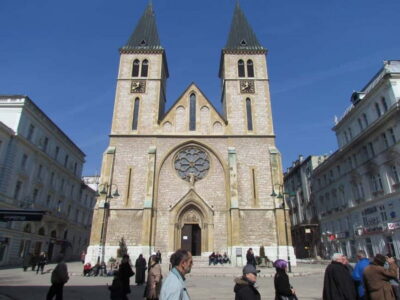
The first stop is the Sacred Heart of Jesus Cathedral, known locally as Katedrala Srca Isusova. Its presence helps you understand Sarajevo as a city with several religious traditions living close together. The stop also introduces the Roses of Sarajevo, the red markings associated with mortar impacts and civilian deaths during the siege. They are a sobering reminder that the recent past is never far from the city center.
The tour then moves to the Serbian Orthodox Church of the Nativity of the Theotokos. Here, the focus shifts to another major religious community and another architectural layer of Sarajevo. The nearby Mondo sculpture and city park add a lighter urban pause, though the short 15-minute allocation means you should expect an explanation and a look around rather than a long stop.
Next comes Ferhadija Pedestrian Street, including the Eternal Flame, Tito Street, and the First Rose of Sarajevo. The Eternal Flame honors Sarajevo’s liberation from fascism in the Second World War. Tito Street points to the city’s Yugoslav period, while the First Rose connects the modern street scene to the violence of the 1990s.
I appreciate this early sequence because it gives you a framework before the tour reaches the old bazaar. You see that Sarajevo cannot be reduced to one religion or one conflict. The only limitation is the short timetable. If you want photographs, listen closely while walking and take pictures during pauses rather than expecting long free time.
Ottoman Sarajevo around Gazi Husrev-Beg Mosque
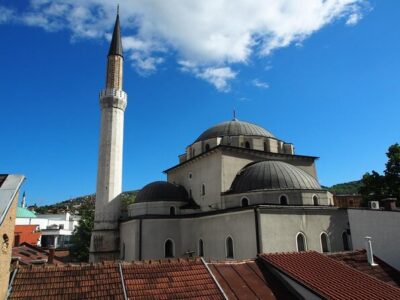
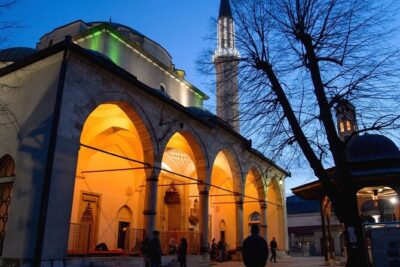
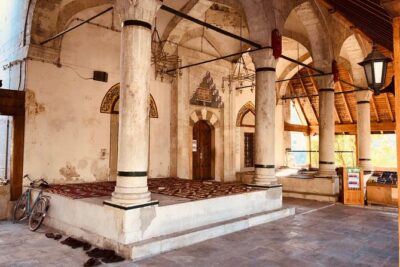
The fourth stop brings you into the old Ottoman heart of the city. Gazi Husrev-Beg Mosque is the main landmark here, joined by the Gazi Husrev-Beg Medresa, Bezistan Bazaar, the Clock Tower, and Jewel Street. This is where the route should feel most different from a standard European city walk.
Bezistan Bazaar and Jewel Street help you picture Sarajevo as a place shaped by trade and craft. The Clock Tower gives you another marker of the old town’s rhythm, while the mosque and school point to the importance of religious and educational institutions under Ottoman rule. The tour allows about 20 minutes, one of the longer stops, which is sensible because there is more to take in here.
You will also pass toward Kazandziluk Street later in the route, an area linked with coppersmiths and metalwork. Even if you do not buy anything, the narrow lanes and shopfronts help make the old town feel like a living part of the city rather than a preserved display.
The walk is conducted in English, and the information provided about Mak suggests that he adjusts his delivery for mixed-age groups. That matters in a place where a rapid list of dates can become tiring. For families, the ability to pause and check understanding may be more useful than a long academic lecture.
Latin Bridge and the event that helped start World War I
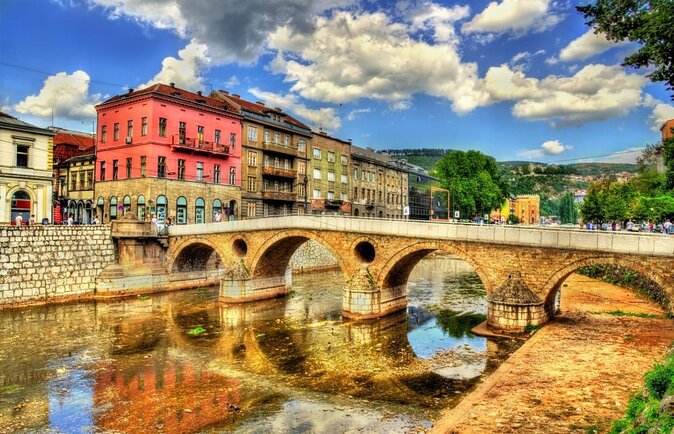
The route reaches the Latin Bridge and the nearby assassination site connected with Archduke Franz Ferdinand and his wife Sophie. This is one of Sarajevo’s most famous historical points. The killing in 1914 helped trigger the chain of events that led to the First World War, making this modest bridge and nearby street unusually important in world history.
The itinerary includes the assassination location more than once, first near the Mausoleum of Princip Gavrilo and again as a separate Latin Bridge stop. That repetition may reflect the way the route approaches the area from different directions. It also means you should not be surprised if the same subject returns later.
The value here comes from hearing the local setting explained rather than only reading a caption. You can connect the bridge, the street, and the political consequences in one view. The drawback is that the stop lasts about 15 minutes, so you will not have time for a long museum visit or extended reflection.
This is a good place to pay attention to the guide’s wording. Sarajevo’s past includes strong national and political interpretations, and a balanced explanation matters. The supplied information presents the stop plainly as the assassination spot and the WWI connection, so you should expect historical context rather than a theatrical reenactment.
Same corner of the country, a different kind of day:
- Sarajevo: Mostar, Konjic, Blagaj Tekke, Pocitelj & Waterfall
★ 4.9 · 1,666 reviews - Fall of Yugoslavia, Sarajevo War Tour with Tunnel of Hope Museum and Frontlines
★ 5.0 · 1,314 reviews - Sarajevo: Mostar, Konjic, Sufi House, Pocitelj & Kravice Falls
★ 5.0 · 1,179 reviews - Sarajevo: Tunnel Museum Yugoslavia War Tour with War Veteran
★ 5.0 · 1,111 reviews
City Hall, Inat House, and Sarajevo’s upper views
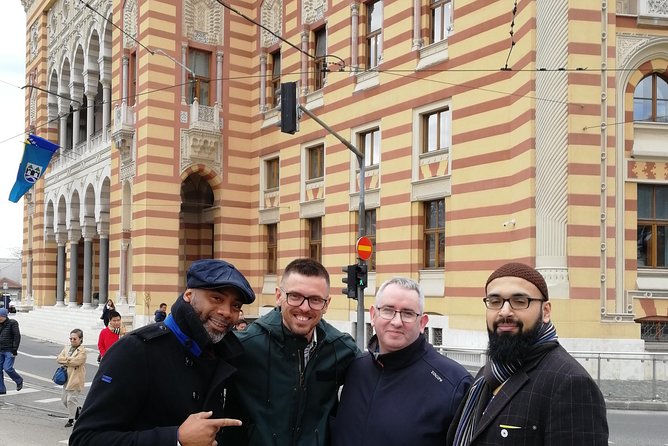
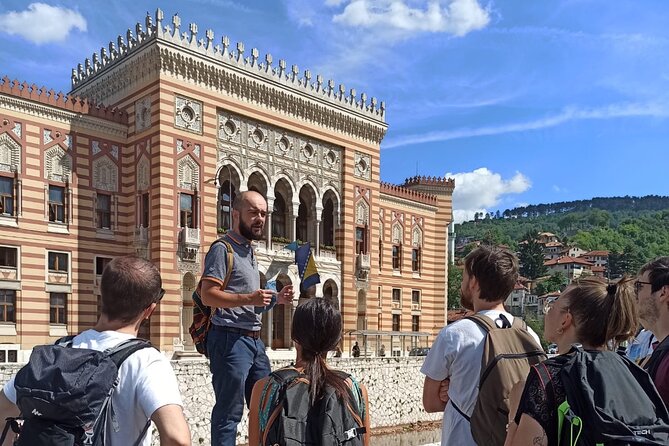
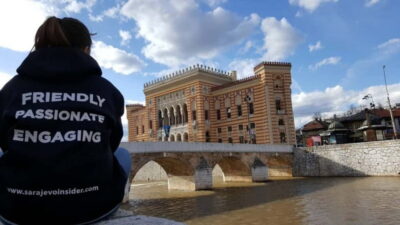
Sarajevo City Hall, or Vijećnica, is the next major landmark. The building is paired with Inat Kuca, the White Fortress, the Yellow Fortress, the Jajce Army House, and the 1984 Olympic mountains. That is a lot of material for about 20 minutes, so think of this section as a guided panorama of Sarajevo rather than a detailed visit to every place named.
City Hall represents the Austro-Hungarian chapter of Sarajevo’s development. Inat Kuca adds a local story and a contrasting architectural presence across the river. The fortresses point toward the city’s defensive past and also offer some of the best-known elevated views over Sarajevo, although this walking route may only explain or point toward them rather than take you inside each site.
The Olympic reference widens the story again. Sarajevo hosted the 1984 Winter Olympics, a period remembered as a major point of pride before the later siege changed the city’s public image. Seeing the mountains in the same discussion helps you understand that Sarajevo is not only a place of war memorials. It is also a city connected to sport, mountain recreation, and international attention.
Because the tour starts in the evening, views toward the hills may depend on the season and the available light. You should bring a phone or camera if that matters to you, but do not count on a dedicated photo stop at every viewpoint.
Yellow Fortress, Kovaci Street, and food along the route
The Yellow Fortress section takes you through Kovaci Street and the food street. It is one of the route’s more atmospheric portions, since you move from major historical landmarks into streets where daily life takes the lead.
The fortress name can sound grander than the actual time available. You get roughly 15 minutes here, so the guide’s explanation and orientation are likely to be the main benefit. If you want to sit and watch the city from a high point, you may need to return independently on another visit.
The food street is useful even if you do not stop to eat. It gives you a chance to note where local restaurants and snacks cluster, and you can return later with more time. Since the tour ends back at the original meeting point, you can ask the guide for practical suggestions during the walk, though the supplied details do not promise a meal or tasting.
Sebilj Fountain and the old craft quarter
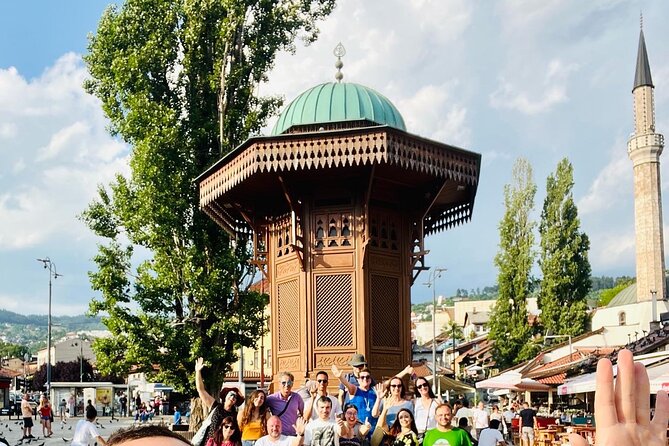
Sebilj Brunnen is one of Sarajevo’s best-known public symbols. The fountain sits by Pigeon Square and near Kazandziluk Street, the traditional copper-working lane. This is the kind of stop where you can take in the visual character of the old town quickly: the fountain, the open square, the birds, and the craft shops all create a strong sense of place.
I like that the tour includes the area as more than a quick postcard stop. The nearby street links the public square with older trades, giving you a practical way to understand how the bazaar district functioned. You may also find this one of the liveliest parts of the walk, so stay close to the group and listen for the meeting instructions.
Again, the scheduled time is about 15 minutes. That is enough for orientation and photographs, but not enough to browse every shop. If you are interested in copperware, make a note of the street and return after the tour.
Markale Market and the Sarajevo Roses
Pijaca Markale, also called the Yellow Market, brings the tour back to the siege and its civilian cost. The stop includes the largest Rose of Sarajevo and a massacre site. These marks in the pavement are not decorative. They preserve the memory of people killed during shelling and make the city’s wartime story visible at street level.
The market setting makes this section especially direct. You are looking at a working public place while learning about violence that affected ordinary shoppers and residents. That contrast can be difficult, but it is one of the reasons a guided walk is valuable. A guide can provide context and help you approach the site with respect.
The stop lasts about 15 minutes. I would avoid treating it as a dramatic photo opportunity. Listen first, take pictures only if appropriate, and give the place the same care you would give any memorial.
Jewish Park and the Sefardi synagogue
The Jewish Museum of Bosnia and Herzegovina section includes Jewish Park and the Sefardi synagogue. This is another important part of the route’s broad religious picture. Along with the Catholic cathedral, Orthodox church, and Gazi Husrev-Beg Mosque, it shows the range of communities that have shaped central Sarajevo.
The stop is brief, around 15 minutes, and the information does not state that museum admission is included or that you enter the synagogue. Plan to see the exterior area and hear the explanation rather than expect a full indoor tour.
For you, the value lies in the connection between separate parts of the walk. Sarajevo’s identity comes through most clearly when you notice how close these religious sites are to one another. This is also a good point to ask the guide a question if you want a clearer picture of the city’s cultural traditions.
A final look at the Eternal Flame
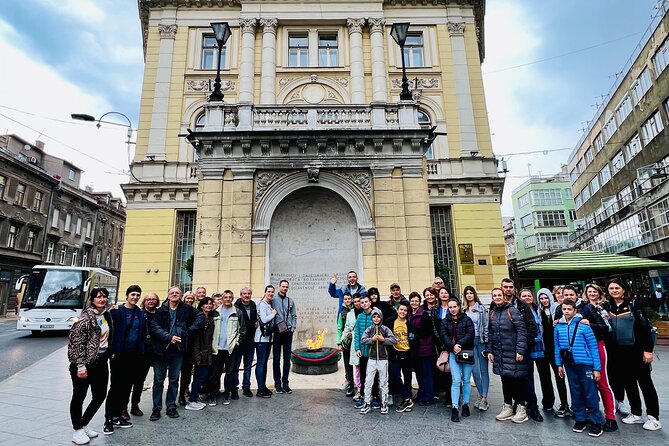
The tour finishes its named route at the Eternal Flame, with about five minutes devoted to the site. Because the flame also appears earlier on Ferhadija Pedestrian Street, this may feel like a repeated landmark. Still, ending with the Second World War memorial gives the walk a clear final note.
The flame marks Sarajevo’s liberation from fascism, while the earlier Roses and Markale stop addressed the 1990s siege. Together, these places show how the city remembers more than one period of violence. The route also places those memories beside Ottoman, Austro-Hungarian, Yugoslav, religious, and Olympic landmarks.
After this final stop, the activity ends back at Đulagina 2. The exact route length is not stated, but the schedule includes many central sights and should be treated as a sustained city walk. Wear practical shoes, dress smart casual if you like, and bring clothing suited to the weather. The tour runs in all weather conditions.
Who will get the most from this $31.24 walk?
I would choose this tour if you have only a short time in Sarajevo and want the main city story before exploring on your own. It suits first-time visitors, families, couples, and solo visitors who like meeting people in a small group. The English format and Mak’s reported patience with adults, teenagers, and a dog make it a comfortable option for mixed groups.
It is also a good fit if you want history presented through places rather than a classroom-style talk. You will see religious landmarks, Ottoman streets, wartime memorials, the assassination site, City Hall, market areas, and reminders of the Olympics in one outing.
I would hesitate if you want long interior visits, extensive free time, or a relaxed photography walk. The route contains at least 12 named stops, and several stops cover multiple sights in only 15 or 20 minutes. You will need to keep moving and accept that some locations are introductions for a later visit.
The group size needs one practical check. The tour is described as a group experience capped at 15, while the additional details state a maximum of 10. Either figure would be reasonably intimate, but I would confirm the expected number before paying if group size is central to your decision.
Free cancellation is available if you cancel at least 24 hours before the 6:15 pm start time. Last-minute changes are not accepted, and the activity requires a minimum number of participants. If that minimum is not reached, you are offered another date or experience, or a full refund.
Should you book this Sarajevo walking tour?
Book it if you want a compact, affordable orientation that treats Sarajevo as a meeting point of religions, empires, wars, crafts, markets, and mountain culture. The route is unusually broad for two to three hours, and the guide’s personal style appears to be a major strength. Mak’s care with a family of four and an energetic dog suggests a patient guide who can keep the walk welcoming without making it childish.
Skip it if you prefer slow sightseeing or detailed monument visits. For most first visits, though, $31.24 buys a useful framework. Take the walk early in your stay, note the places you want to revisit, and let Sarajevo’s streets fill in the details afterward.
FAQ
Where does the Sarajevo walking tour begin?
The tour begins at Đulagina 2, Sarajevo 71000, Bosnia and Herzegovina.
What time does the tour start?
The start time is 6:15 pm.
How long does the walking tour last?
The experience lasts approximately two to three hours.
Is the tour offered in English?
Yes. The tour is offered in English.
Where does the tour finish?
The activity ends back at the original meeting point.
Can I cancel for a full refund?
Yes, if you cancel at least 24 hours before the experience start time. Cancellations made less than 24 hours before the start are not refunded.
Newest around Sarajevo
- Understanding Srebrenica Genocide + Lunch with Local Family★ 4.9 · 14 reviews
- Private Full Day Safari Tour★ 5.0 · 8 reviews
- Sarajevo: Trebević Mountain Summit Hiking Tour★ 4.2 · 2 reviews
- From Sarajevo: Kozice Waterfalls Hiking Experience in Nature★ 5.0 · 2 reviews
- Sarajevo Under Siege: A War History Tour★ 5.0 · 10 reviews
- Mysterious Visoko Pyramids Driving and Walking Tour★ 5.0 · 7 reviews
- WAR TUNNEL – Sarajevo’s only way of a communication during the WAR – Top secret★ 5.0 · 12 reviews
- Ultimate Gastro Experience★ 4.5 · 14 reviews
Walking Tours, compared.
Private Walking Tour, Food Tasting and Bosnian Coffee in Sarajevo
Read our review →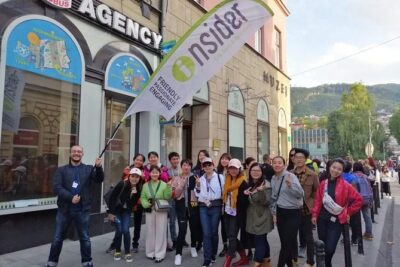
Browse the lists this tour appears in