
Review · WALKING TOURS
InstaSarajevo – Photography Walking Tour of Sarajevo
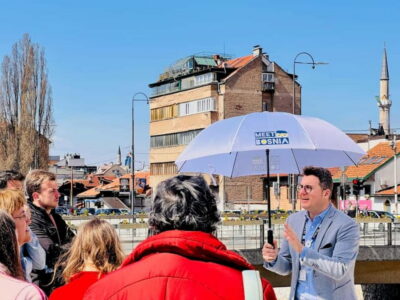
Sarajevo tells its story in a few city blocks. This small-group walk combines professional photography with a useful introduction to Sarajevo’s Ottoman, Austro-Hungarian, and modern past. I like the maximum group size of four, which should give you more room to ask questions and more chances to work with the photographer. I also like the route itself: it links major sights with strong visual contrasts instead of sending you to one isolated viewpoint.
The main consideration is that the advertised price of $34.92 per person covers the guide and photographer, not entrance tickets. The listed stops are viewed from outside or from public areas, so this may not matter much, but anyone hoping for a series of paid interior visits should check the plan before booking. The two to three hour length is also a little flexible, so allow room in your schedule.
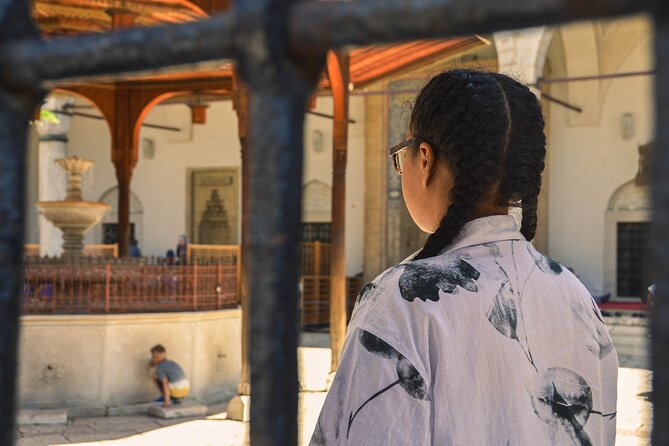
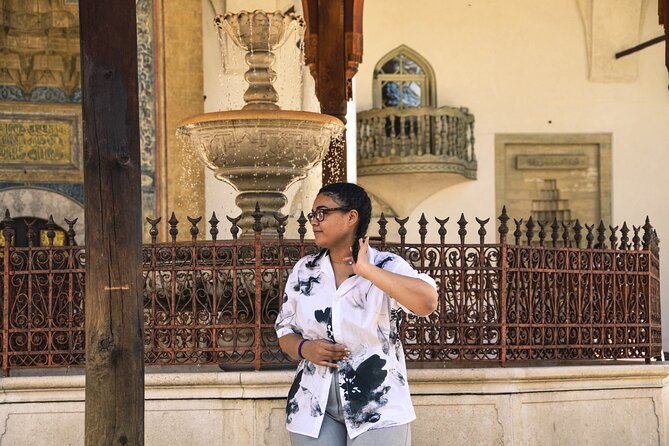
The tour suits solo visitors especially well. Kenan from Adventure in Bosnia has a clear interest in street photography, and the experience can give you more than snapshots of famous buildings. You can also come away with professional images of yourself, something that is useful when you are exploring alone and usually stuck taking every photo from arm’s length.
In This Review
- Key things to know before you book
- Why this short Sarajevo walk works
- Starting near Kovači and finding your way to Sebilj
- Copper craft and Ottoman Sarajevo in Baščaršija
- Sarajevo City Hall and the Austro-Hungarian chapter
- Latin Bridge and the event that changed Europe
- Gazi Husrev Bey’s Bezistan and the covered bazaar
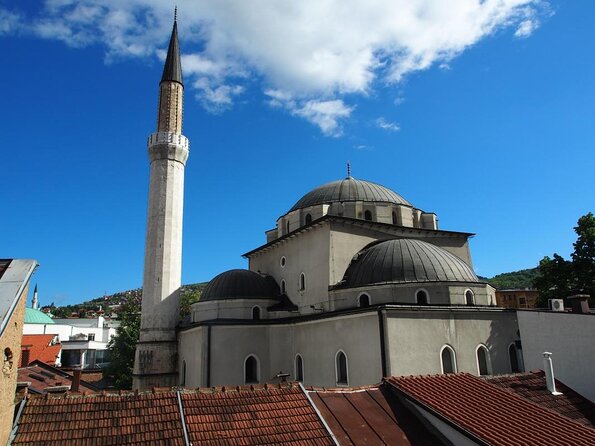
- Gazi Husrev-beg Mosque and the city’s Ottoman center
- Sarajevo Cathedral and the city’s religious contrasts
- The Sarajevo Meeting of Cultures
- What the photography service adds
- Is $34.92 a fair price?
- Practical details for planning your morning
- Who should book InstaSarajevo?
- Should you book this Sarajevo photography walk?
- FAQ
- Where does the tour begin?
- What time does the photography walk start?
- Where does the experience end?
- How long does the tour last?
- What language is offered?
- How many people can join the tour?
- Is a photographer included?
- Are entrance tickets included?
- What happens if the weather is poor?
Key things to know before you book
- A four-person maximum keeps the walk personal: You should have a better chance to ask about camera technique, pose for photos, and hear the guide without a large crowd around you.
- The route crosses Sarajevo’s cultural meeting point: You move from Baščaršija’s Ottoman lanes to Austro-Hungarian buildings, then to the famous meeting place of East and West.
- Street photography is part of the experience: The focus is not only on monuments. You can learn how to notice people, textures, shopfronts, signs, and changing light.
- You receive a professional photographer and certified guide: This gives the walk value for solo visitors who want usable photos as well as local context.
- The tour begins at 10:00 am and returns to Kovači 25: The start is near Sarajevo’s historic center, and the activity does not require transport between stops.
- Bad weather can affect the plan: You can reschedule or receive a full refund if the experience is canceled because conditions are unsuitable.
Why this short Sarajevo walk works
Sarajevo is unusually good for a compact walking tour. In a relatively small area, you can see Ottoman markets, an Islamic religious complex, a Catholic cathedral, Austro-Hungarian architecture, and the site linked to the assassination of Archduke Franz Ferdinand and Sophie.
That mix gives the photography a purpose. You are not simply collecting the usual postcard views. You are comparing shapes, materials, religions, and eras within a short walk. One street may show copperware and wooden shopfronts. A few minutes later, you are looking at a grand municipal building or a formal European cathedral.
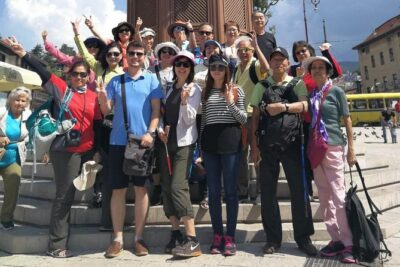
I also like the small group size. With no more than four participants, the photographer can spend time helping each person. That matters if you want portraits rather than only buildings. It also makes a difference if you are learning basic street photography and need to ask simple questions without holding up a large group.
The tour is offered in English. It lasts about two to three hours, which is long enough for a first look at the old center without taking up an entire day. You will still want comfortable shoes. The route includes several historic streets and squares, and the best pictures will often come from slowing down rather than rushing between stops.
More Walking Tours in Sarajevo
- Sarajevo: Grand Walking Tour Through Time and Cultures
★ 4.8 · 1,236 reviews - Sarajevo: 2 Hours Old Town Walking Tour With Local Guide
★ 5.0 · 505 reviews - Private Walking Tour, Food Tasting and Bosnian Coffee in Sarajevo
★ 5.0 · 255 reviews
Starting near Kovači and finding your way to Sebilj
The meeting point is Kovači 25 in Sarajevo, with a 10:00 am start. The walk ends back at the same meeting point, so you do not need to arrange a pickup or work out where to collect your belongings at the finish.
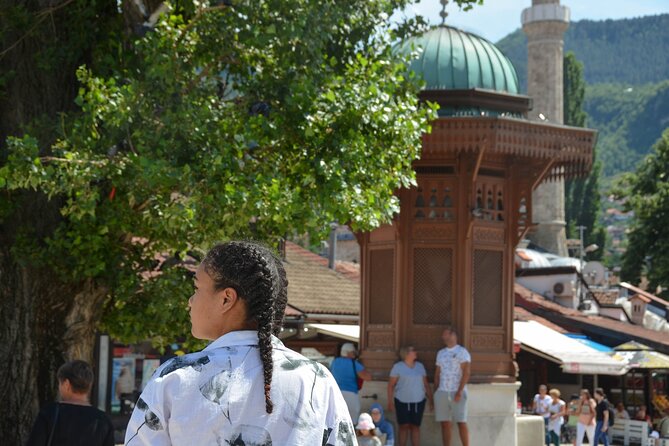
The first stop is Sebilj Fountain on Baščaršija Square. The fountain is the last surviving example of a type of kiosk-shaped public fountain that once numbered in the hundreds across Sarajevo. Today, it is one of the city’s most familiar symbols.
The square around it is known as Pigeon Square. That name tells you something about the visual character of the place. The fountain, open square, pigeons, and surrounding historic buildings create an easy first photo opportunity. You can expect about 15 minutes here, enough for establishing shots and a few portraits.
This is a popular spot, so your strongest photograph may not be a straight-on image of the fountain. Ask the photographer to help you find a cleaner angle or a frame that includes the surrounding square without making the picture feel crowded. The short stop also means you should not expect an extended photography lesson here.
Copper craft and Ottoman Sarajevo in Baščaršija
From Sebilj, the route continues through Baščaršija and Kazandžiluk, one of Sarajevo’s oldest and most recognizable streets. The name comes from the kazandžijas, the master metalworkers and coppersmiths who once produced kettles for the army and later made household objects such as coffee pots, trays, pitchers, ewers, and metal tabletops.
At the height of Sarajevo’s Ottoman period, coppersmiths produced around a hundred different kinds of goods. That detail helps you see the street as more than a row of souvenir shops. Its importance comes from the craft tradition that shaped daily life and trade in the old city.
For photography, Kazandžiluk gives you close subjects rather than grand views. Look for repeated copper patterns, hammered surfaces, narrow shopfronts, and the contrast between old tools and modern visitors. Your guide can also help you think about street photography as observation. You may be encouraged to notice the small details that are easy to miss when you only photograph famous landmarks.
The stop is listed at about 15 minutes. That is enough to introduce the street, but not enough to inspect every shop or spend a long time shopping. If you want copperware, return later with time to browse. This tour is designed to keep moving.
Sarajevo City Hall and the Austro-Hungarian chapter
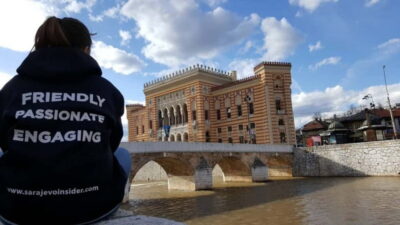
The next stop is Sarajevo City Hall, completed in 1896. It is the most representative building from Sarajevo’s Austro-Hungarian period and a strong example of Neo-Moorish design, drawing on Islamic art from Spain and North Africa.
This building is a good reminder that Sarajevo’s visual identity did not come from one empire or one faith. The architecture uses a European imperial setting but turns toward Moorish forms, colors, and decorative ideas. For a photographer, it offers arches, symmetry, ornament, and a broader facade that contrasts with the tighter Ottoman streets.
You will have about 15 minutes here. The guide can help you decide if the building works best as a full exterior view or through selected details. If you are carrying a phone rather than a dedicated camera, this is still a useful stop because the building’s strong geometry makes it easier to compose a balanced image.
Tickets and entrances are not included. Since the supplied route lists each stop with free admission, the plan appears focused on exterior viewing and public spaces, but you should not assume that an interior visit is part of the experience. Ask before booking if entering City Hall matters to you.
Same corner of the country, a different kind of day:
- Sarajevo: Mostar, Konjic, Blagaj Tekke, Pocitelj & Waterfall
★ 4.9 · 1,666 reviews - Fall of Yugoslavia, Sarajevo War Tour with Tunnel of Hope Museum and Frontlines
★ 5.0 · 1,314 reviews - Sarajevo: Mostar, Konjic, Sufi House, Pocitelj & Kravice Falls
★ 5.0 · 1,179 reviews - Sarajevo: Tunnel Museum Yugoslavia War Tour with War Veteran
★ 5.0 · 1,111 reviews
Latin Bridge and the event that changed Europe
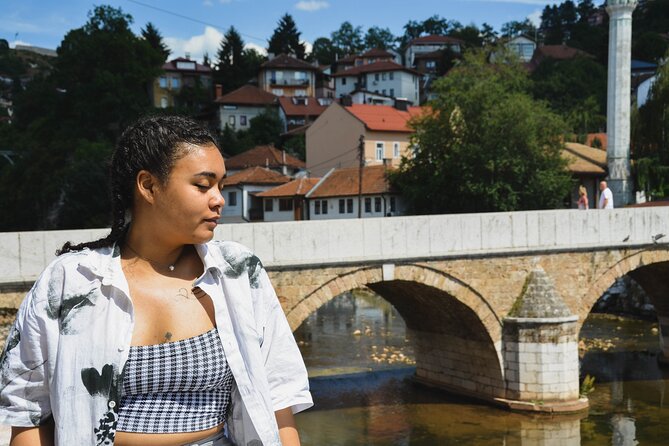
Latin Bridge sits beside the place associated with the assassination of Archduke Franz Ferdinand and Sophie. The guide uses this stop to explain an event that helped set off the First World War.
The site is important, but it is also easy to oversimplify. A good explanation should connect the location to Sarajevo’s position inside the Austro-Hungarian Empire and explain why this particular assassination had such wide consequences. The 15-minute stop will likely give you a clear orientation rather than a full political lecture.
This is one of the route’s strongest examples of photography and history working together. The bridge, street, and nearby buildings give you a physical setting for an event that is often reduced to a paragraph in a textbook. I like that the tour places the story in the city rather than treating it as an abstract date.
The drawback is that the stop may feel less visually dramatic than Sebilj or City Hall. Its value comes from the explanation and the connection between the site and world events. If you prefer only scenic views, this will be a quieter pause. If you want context, it earns its place.
Gazi Husrev Bey’s Bezistan and the covered bazaar
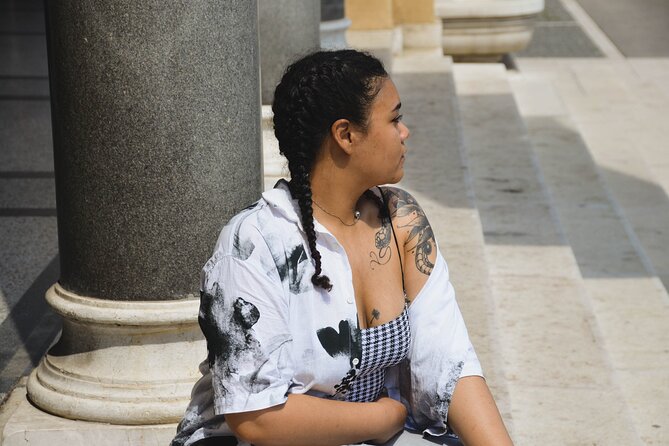
Gazi Husrev Bey’s Bezistan, also called the Old Bezistan or Great Bezistan, is a covered bazaar believed to date from around 1540. It formed part of Gazi Husrev Bey’s vakuf, or endowment, an institution that supported religious and civic life in Sarajevo.
The covered setting changes the rhythm of the walk. After open squares and exterior facades, you move into a more enclosed commercial space. The roof, passageways, and shop arrangements can give your photos a different feel, with stronger shadows and a tighter frame.
A 15-minute stop is enough to understand the building’s role and capture a few images. It is not enough for a detailed shopping session. Keep your camera ready, but remember that a working bazaar is also a place of business. Follow the photographer’s advice about when to take pictures and how close to stand.
This is an especially useful stop if you want to understand how Sarajevo’s Ottoman center functioned. The route does not treat the bazaar as a decorative backdrop. It connects the building to an endowment and to the commercial life of the old city.
Gazi Husrev-beg Mosque and the city’s Ottoman center
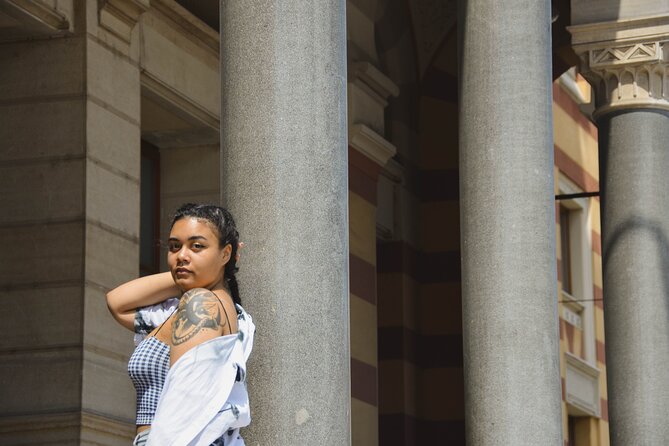
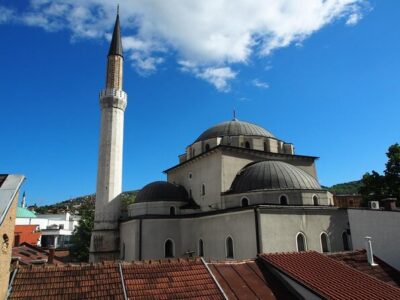
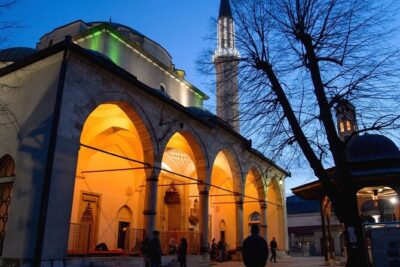
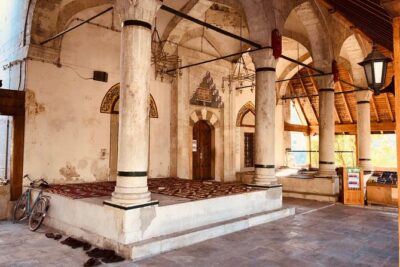
The Gazi Husrev-beg Mosque was built in the 16th century and is the largest historical mosque in Bosnia and Herzegovina. It is one of the most important Ottoman structures in the Balkans and has served as Sarajevo’s central mosque since its construction.
The mosque gives the tour a major architectural and religious landmark. Its importance is not only visual. It helps explain why Gazi Husrev Bey’s name appears across this part of Sarajevo, from the bazaar to the endowment buildings surrounding it.
The guide can point out how the mosque fits into the wider old center. You should expect about 15 minutes, not a full religious tour. Entrance arrangements are not specified, and tickets are not included, so confirm in advance if you want to enter rather than view the mosque from public areas.
Dress and behavior should be respectful at any active place of worship. The supplied information confirms that the stop is included, but it does not promise an interior visit or provide specific clothing rules. Treat the mosque as a functioning religious site first and a photo subject second.
Sarajevo Cathedral and the city’s religious contrasts
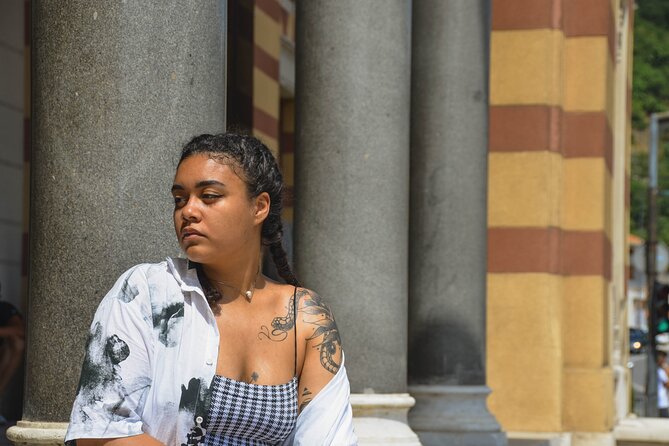
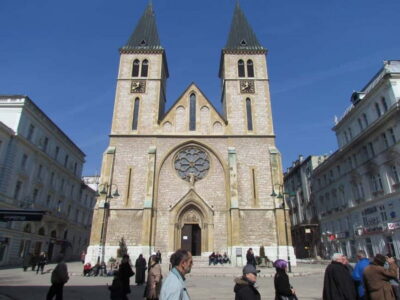
Katedrala Srca Isusova, or the Cathedral of the Sacred Heart of Jesus, adds a Catholic landmark to the walk. Architect Josip Vancaš drew inspiration from Notre Dame Cathedral in Dijon and St. Teyn Cathedral in Prague, yet the finished building became its own design.
The cathedral is particularly effective when viewed within its surroundings. The nearby Gazi Husrev Bey’s Hamam appears in the background, creating a striking contrast between Catholic and Ottoman architectural traditions. This is one of the route’s clearest visual lessons: Sarajevo’s identity comes from different communities sharing the same urban space.
You will have another 15-minute stop. The photographer can help you frame the cathedral as part of the street rather than isolating it from everything around it. That approach makes the image say more about Sarajevo.
As with the mosque and City Hall, the available details do not promise an interior visit. The listed price does not include entrance tickets. If you want to go inside the cathedral, ask the provider about timing and admission before you arrive.
The Sarajevo Meeting of Cultures
The final stop is Sarajevo Meeting of Cultures, a point where East meets West. From one location, you can take two very different photographs, each looking toward a different side of the city.
This is a simple idea, but it gives the entire walk a clear ending. Earlier stops showed individual buildings and streets. Here, you can compare the two broad architectural moods from one position. It is a visual summary of the route’s main theme.
I would save a little attention for this stop rather than treating it as a final quick photo. Ask the photographer to help you make the two images feel connected. Similar framing can make the contrast more obvious, while different angles may show how the city changes from one side to the other.
The stop lasts about 15 minutes, and the activity then returns to Kovači 25. That makes the finish practical if you have lunch plans or another appointment afterward, though I would not schedule anything too tightly because the full experience can run closer to three hours.
What the photography service adds
The certified guide and professional photographer are the main reasons to choose this walk over a standard city orientation. You are not only paying for information. You are also paying for help with composition, street scenes, and personal photographs.
This can be valuable for a solo visitor. A phone’s timer or a stranger’s quick snapshot rarely gives you the same result as having someone focused on the image. The experience was specifically appreciated as a way for solo nomads to get professional photographs for social profiles while also learning about Sarajevo.
The street photography angle matters too. You may already know how to point a camera at a landmark. A photographer can help you notice how people move through a square, how a copper surface catches light, or how two architectural styles share one frame.
Still, keep your expectations sensible. The supplied details do not specify how many edited photographs you receive, the delivery method, or the technical level of instruction. Before booking, ask what is included in the photography service if the final images are important to you.
Is $34.92 a fair price?
At $34.92 per person, the price is reasonable if you want both a compact Sarajevo introduction and professional photographs. A standard walking tour may give you history and orientation, but this experience adds a service that is particularly useful when you are alone or want better images of yourself.
The maximum of four also improves the value. You are not paying for a large group where the guide must divide attention among many people. A small group should make it easier to pause for a photo, ask about a building, or request help with a composition.
The price is less attractive if you only want to see the sights quickly. Most stops are short, and the route does not include confirmed paid entrances. In that case, you may prefer a simple self-guided walk. The tour earns its cost through the guide’s explanations and photography help, so use both.
Practical details for planning your morning
Confirmation is provided when you book. The tour is available in English, accepts mobile tickets, and is located near public transportation. Service animals are allowed, and most people can participate.
The walk requires good weather. If poor conditions cause cancellation, you are offered another date or a full refund. You can also cancel for a full refund up to 24 hours before the 10:00 am start time. Changes or cancellations inside that 24-hour window are not accepted.
Wear shoes suitable for city walking and bring a charged phone or camera. The itinerary moves through public squares, streets, religious sites, and covered commercial areas, so you will get more from the session if you are ready to photograph as you go rather than waiting only for formal portraits.
Who should book InstaSarajevo?
I would recommend this experience to solo visitors, first-time visitors who want a fast orientation, and anyone who values photographs as much as sightseeing. It is also a good fit if Sarajevo’s mix of Ottoman and Austro-Hungarian architecture interests you.
It may not suit you if you want a long museum visit, a private car, or a full-day historical lecture. The route is compact and efficient. Each stop receives about 15 minutes, so the guide must keep the pace moving.
Should you book this Sarajevo photography walk?
Book it if you want a small, visual introduction to Sarajevo and would like professional photos instead of relying on self-timers. The route covers the city’s major contrasts, the group size is excellent, and the price is fair for a guide who also works as a photographer.
Skip it if you only want interior access or a slow, highly detailed historical tour. Before paying, confirm what photographs you will receive and which buildings you can enter. For the right visitor, this is a smart way to meet Sarajevo: one short walk, several centuries of architecture, and a camera that helps you look more closely.
FAQ
Where does the tour begin?
The tour begins at Kovači 25, Sarajevo 71000, Bosnia and Herzegovina.
What time does the photography walk start?
The scheduled start time is 10:00 am.
Where does the experience end?
The activity ends back at the meeting point at Kovači 25.
How long does the tour last?
The experience lasts approximately two to three hours.
What language is offered?
The tour is offered in English.
How many people can join the tour?
The maximum group size is four participants.
Is a photographer included?
Yes. The experience includes a certified guide and professional photographer.
Are entrance tickets included?
No. Tickets and entrances are not included in the price.
What happens if the weather is poor?
The experience requires good weather. If it is canceled because of poor conditions, you will be offered a different date or a full refund.
Newest around Sarajevo
- Understanding Srebrenica Genocide + Lunch with Local Family★ 4.9 · 14 reviews
- Sarajevo: Trebević Mountain Summit Hiking Tour★ 4.2 · 2 reviews
- Private Full Day Safari Tour★ 5.0 · 8 reviews
- From Sarajevo: Kozice Waterfalls Hiking Experience in Nature★ 5.0 · 2 reviews
- Sarajevo Under Siege: A War History Tour★ 5.0 · 10 reviews
- Mysterious Visoko Pyramids Driving and Walking Tour★ 5.0 · 7 reviews
- WAR TUNNEL – Sarajevo’s only way of a communication during the WAR – Top secret★ 5.0 · 12 reviews
- Ultimate Gastro Experience★ 4.5 · 14 reviews
Walking Tours, compared.
Private Walking Tour, Food Tasting and Bosnian Coffee in Sarajevo
Read our review →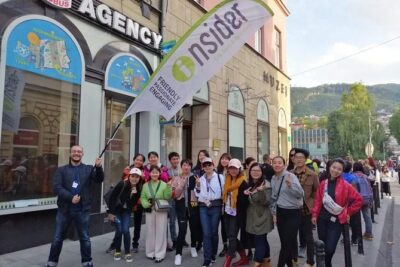
Browse the lists this tour appears in