
Review · WALKING TOURS
Experience the Soul of Sarajevo: A Walking Tour Through Time
One short walk explains Sarajevo remarkably well. This two-hour private tour links mosques, churches, the Jewish quarter, Ottoman-era streets, and Austro-Hungarian landmarks, giving you a clear sense of why Sarajevo is called the Jerusalem of Europe. I like the close-packed route, where major sites sit within easy walking distance, and I like the local guidance, which includes practical tips for food, drinks, and nightlife.
The main consideration is pace. You cover many stops in two hours, so some places are best understood from the outside rather than through a long interior visit. The tour is also on cobbled streets, making comfortable shoes a must, though the experience is listed as wheelchair accessible.
In This Review
- Key points at a glance
- Starting beneath Sarajevo City Hall
- Kazandžiluk and Bravadžiluk: Sarajevo heard through its crafts
- Sebilj and the pulse of Baščaršija
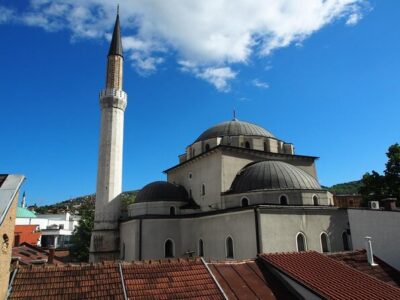
- The Old Orthodox Church and Gazi Husrev-beg Mosque
- Morića han and Sarajevo’s meeting point
- The Jewish Museum and the Sarajevo Rose
- Emperor’s Mosque and the route toward Latin Bridge
- What the guide adds beyond the landmarks
- Is $29 a fair price for two hours?
- Who should book this Sarajevo walk?
- Practical advice before you go
- Should you book it?
- FAQ
- Where does the tour start?
- Where does the tour finish?
- How long does the walking tour last?
- What language is the tour offered in?
- Is the tour private and wheelchair accessible?
- What should I bring?
Key points at a glance
- City Hall to Latin Bridge: The route crosses Sarajevo’s central story, from its Austro-Hungarian past to the event that ignited World War I.
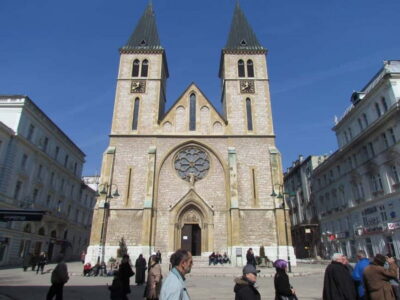
- Many faiths within minutes: You pass the Old Orthodox Church, Gazi Husrev-beg Mosque, the Cathedral area, and the Jewish quarter on one compact walk.
- A tour you hear as much as see: Calls to prayer, church bells, and coppersmiths working in Kazandžiluk help bring the old center to life.
- Private English-language format: Your guide can adjust the pace and focus to your interests.
- A useful local stop: Guide Ermin adjusted the tour for one guest and included a coffee break with baklava.
- Good value at $29: For two hours of guiding, local context, questions, and personal recommendations, the price is fair.
Starting beneath Sarajevo City Hall
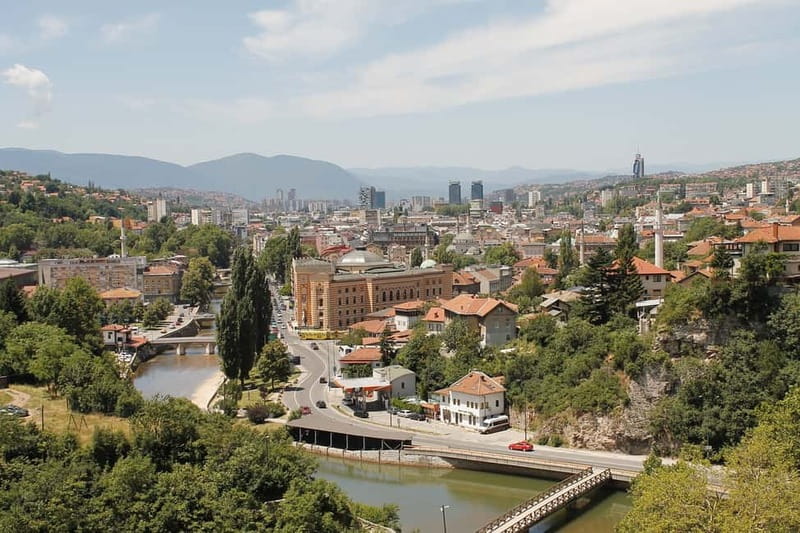
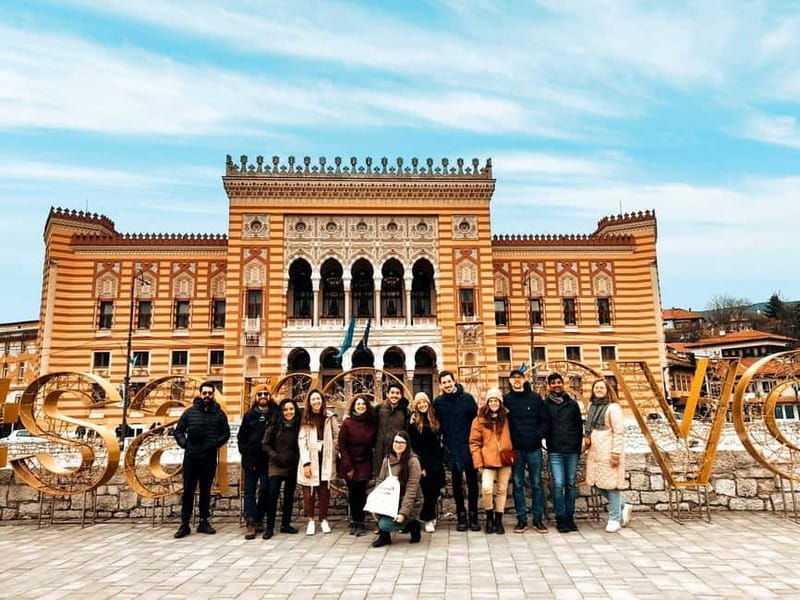
Meet your guide in front of Sarajevo City Hall, known locally as Vijećnica. This is a strong starting point because the building represents Sarajevo’s Austro-Hungarian period and gives you an immediate architectural contrast with the older streets ahead.
I like beginning here rather than in the middle of Baščaršija. You get a fixed landmark that is easy to find, and the tour begins with a sense of how several eras meet in one city. From the city hall, you walk toward the old market district, trading broad streets and grand façades for stone lanes and small workshops.
Your guide sets the tone here. The tour is in English and operates as a private group, so you are not locked into a large crowd or a rigid lecture. Ermin, who led one of the confirmed tours, was praised for courtesy and for changing the pace according to personal interests. That matters in Sarajevo, where you may want extra time for a religious site, a war memorial, a market detail, or a question that opens a new part of the story.
More Walking Tours in Sarajevo
- Sarajevo: Grand Walking Tour Through Time and Cultures
★ 4.8 · 1,236 reviews - Sarajevo: 2 Hours Old Town Walking Tour With Local Guide
★ 5.0 · 505 reviews - Private Walking Tour, Food Tasting and Bosnian Coffee in Sarajevo
★ 5.0 · 255 reviews
Kazandžiluk and Bravadžiluk: Sarajevo heard through its crafts
Kazandžiluk is the street where the sound of coppersmiths becomes part of the tour. You do not simply walk through an old market setting here. You hear craftsmen at work, which gives the street a practical, working character.
That sound is one of the best reasons to take this walk with a guide. A quick solo stroll can show you shopfronts and paving stones, but a guide can point out what you are hearing and help you connect the craft to the feel of the neighborhood. I would keep your eyes open for the details around the workshops rather than rushing toward the next landmark.
The route continues through Bravadžiluk. Together, these streets help establish Baščaršija as more than a photo stop. They are part of the living center of the city, where small businesses and old traditions share space with cafés and sightseeing.
The streets are cobbled, so wear shoes with a firm sole. If rain is possible, bring an umbrella. The supplied information does not promise time for shopping or a formal craft demonstration, so think of these streets as part of the guided city walk, not as a separate workshop.
Sebilj and the pulse of Baščaršija
Sebilj is one of the familiar focal points of Baščaršija. By reaching it on foot from the craft streets, you get a better sense of how the market district fits together instead of arriving by transport and seeing a single isolated landmark.
This is also where Sarajevo’s sounds begin to blend. The call to prayer, church bells, and metalwork create an unusual soundscape. That combination is central to the tour’s appeal because the city’s religious mix is not presented only as a list of buildings. You hear different traditions sharing the same urban space.
Your guide can add context while you walk, but the two-hour limit means you should expect concise explanations. If you want long visits inside every building, this tour may feel quick. If you want a readable introduction to the old center, the pace works well.
The Old Orthodox Church and Gazi Husrev-beg Mosque
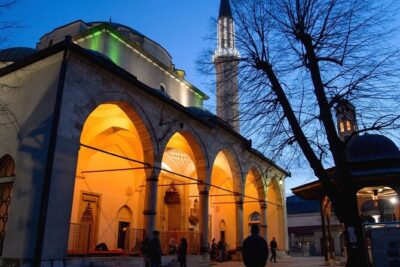
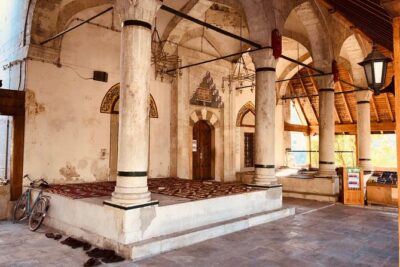
The Old Orthodox Church is the next major religious stop. Soon after, you reach Gazi Husrev-beg Mosque. The value here lies in the short distance between them. Sarajevo’s religious character becomes visible through the city plan itself, with important places of worship close enough to visit on the same walk.
The tour presents Sarajevo as a place where different faiths have coexisted in close quarters. That does not mean every part of the city’s past was simple or peaceful, and the route is not long enough to explain every historical turn. Still, seeing these sites together gives you a useful first picture of the city’s identity.
At the mosque, dress and visitor arrangements can matter, but no interior access details are provided for this experience. Your guide can tell you what is appropriate on the day. I would avoid assuming that every stop includes an inside visit. The strength of the tour is the connection among the places, not a promise of extended time in each one.
The Old Orthodox Church and Gazi Husrev-beg Mosque also help break up the walk. After the market sounds and commercial streets, you move into places where architecture and worship shape the atmosphere. Even if you have only a short visit in Sarajevo, this pairing gives you useful orientation.
Same corner of the country, a different kind of day:
- Sarajevo: Mostar, Konjic, Blagaj Tekke, Pocitelj & Waterfall
★ 4.9 · 1,666 reviews - Fall of Yugoslavia, Sarajevo War Tour with Tunnel of Hope Museum and Frontlines
★ 5.0 · 1,314 reviews - Sarajevo: Mostar, Konjic, Sufi House, Pocitelj & Kravice Falls
★ 5.0 · 1,179 reviews - Sarajevo: Tunnel Museum Yugoslavia War Tour with War Veteran
★ 5.0 · 1,111 reviews
Morića han and Sarajevo’s meeting point
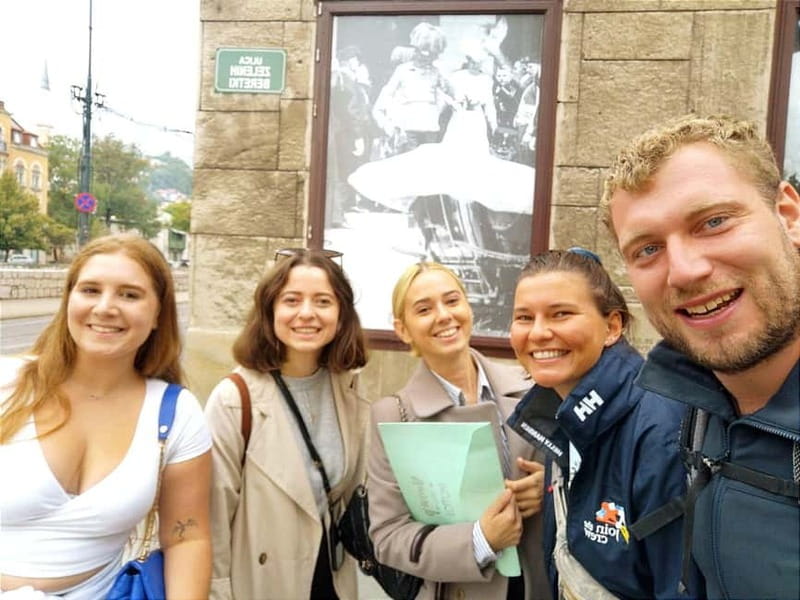
Morića han adds another layer to the old center. The stop belongs to the historic market setting and helps you see Sarajevo as a crossroads of movement, trade, and faith. The supplied details do not promise a full tour of the building, so your guide’s explanation and the time available will shape the visit.
Next comes Sarajevo Meeting of Cultures, a particularly useful point for understanding the city’s changing character. The name itself reflects the way Sarajevo brings different traditions and periods close together. I would listen carefully here, because this is the sort of stop that can tie the market streets, religious buildings, and European-style architecture into one larger picture.
This part of the route is valuable for first-time visitors who want a framework. Instead of collecting disconnected sights, you begin to understand how the center shifts from one cultural zone to another. The guide’s role is to explain those transitions without turning the walk into a classroom lecture.
The Jewish Museum and the Sarajevo Rose
The Museum of the Jews of Bosnia and Herzegovina introduces the Jewish quarter to the walk. This is an important inclusion because the tour does not reduce Sarajevo’s identity to only its Muslim and Christian landmarks. You see a wider account of the city’s religious and cultural life.
The information provided does not state whether admission to the museum is included or whether you enter during the two-hour route. Plan for this as a stop and explanation rather than assuming a full museum visit. If seeing the interior is important to you, ask the guide before the walk begins.
The Sarajevo Rose offers another change in tone. Its presence brings the city’s more recent painful past into the route, after the older religious and architectural sites. The stop is a reminder that Sarajevo’s story is not only about beautiful streets and historic buildings.
I appreciate this balance. The tour gives you the pleasures of market sounds and old architecture, but it also points toward memory and loss. That makes the walk more honest and more useful than a sightseeing loop that keeps history safely decorative.
Emperor’s Mosque and the route toward Latin Bridge
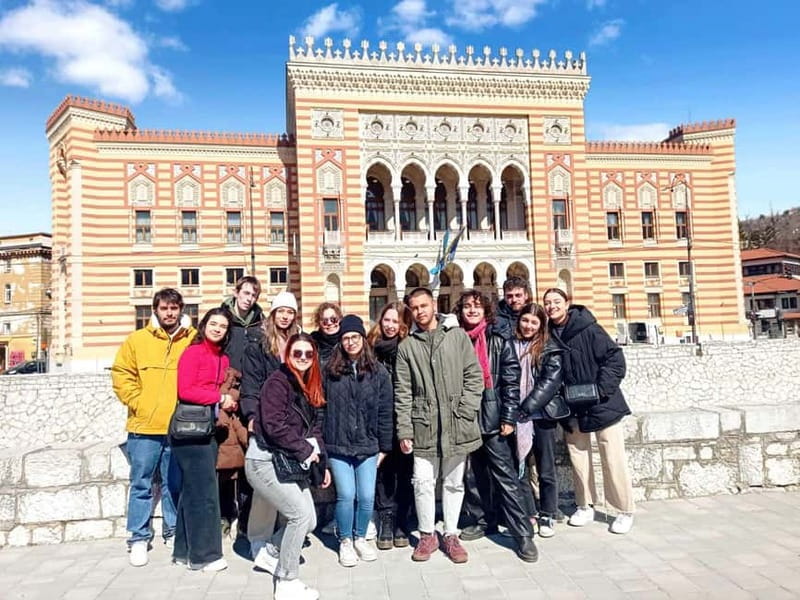
The Emperor’s Mosque continues the religious thread before the tour heads to its final stop. By this point, you have seen several traditions represented within a compact part of Sarajevo. The walk makes the city’s closeness easy to grasp: these places are not scattered across distant districts.
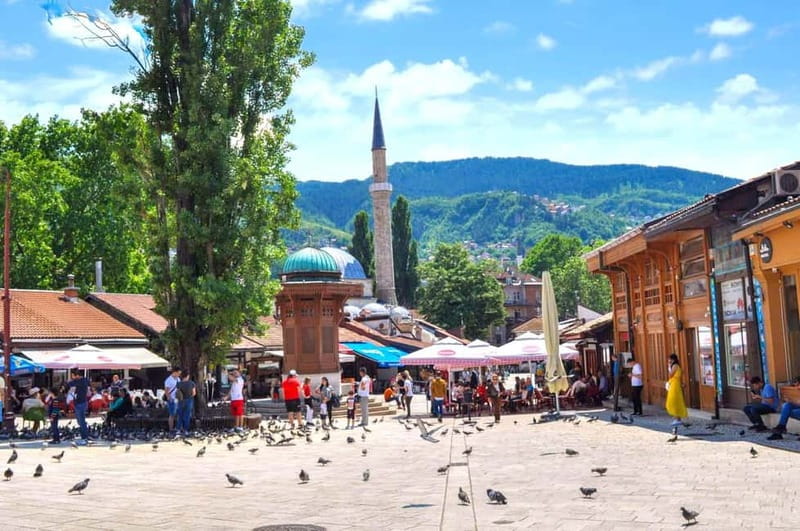
The route ends at Latin Bridge, also written as Latinska ćuprija. This is where World War I was ignited, giving the tour a clear historical finish. The bridge is not just another old crossing. It connects the physical streets you have walked with an event that changed Europe and the wider world.
Ending here is smart. You finish with a landmark that has a direct place in global history, but you reach it only after seeing Sarajevo as a lived city rather than a single textbook event. I like that order. It encourages you to understand the city first, then consider the weight of what happened at the bridge.
The stated finish is at Latinska ćuprija, so you should not expect a return to City Hall. That is convenient if you want to continue exploring from the bridge, but less convenient if you need to collect belongings at the starting point. Plan your next move before the tour begins.
What the guide adds beyond the landmarks
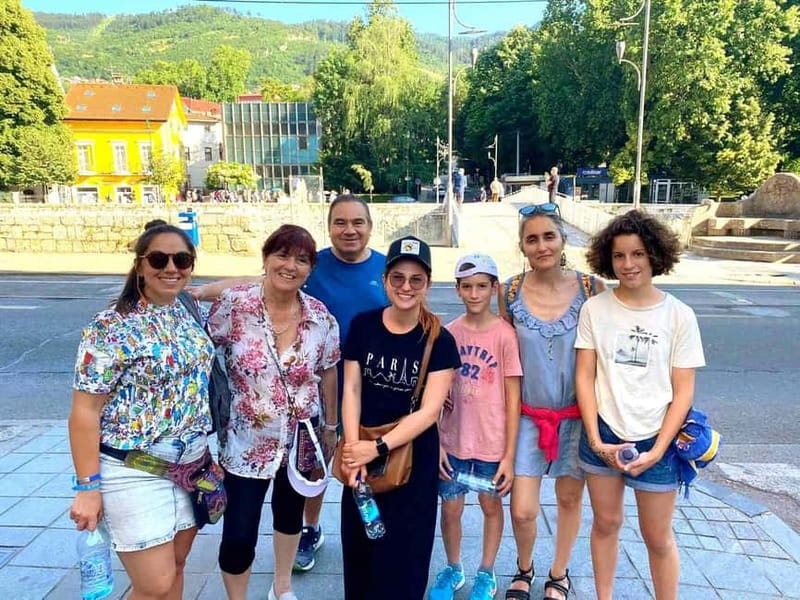
The guide is the main reason to book this as a private experience rather than simply follow a map. You receive explanations, a chance to ask questions, and local suggestions for food, drinks, and nightlife based on your preferences.
That last part can be especially useful after a short stay. You can ask for help choosing what to eat or where to spend the evening, though the supplied information does not name specific restaurants or bars. Think of the advice as a personalized starting point, not a fixed dining package.
The confirmed feedback gives one helpful example. Ermin adjusted the speed and focus as the guest’s interests changed, and a coffee stop included baklava. That small detail says a lot about the tone you can hope for. The walk is not only a sequence of markers. It can include a pause and a local treat when the timing and guide allow it.
The tour includes a Q&A session, so arrive with questions. You might ask about the city’s religious sites, the meaning of the Sarajevo Rose, the market crafts, or where to go after the walk. Since the tour lasts only two hours, a private format helps you spend those minutes on what matters most to you.
Is $29 a fair price for two hours?
At $29 per person, the value is good if you want orientation, context, and a private English-language guide. You are paying for more than a route between landmarks. The price includes the guide, local experiences, and time for questions, while the close spacing of the sights lets you see a lot without transport costs or wasted transfers.
The value is strongest for a first visit. In two hours, you get a useful map of Baščaršija, the central religious sites, the Jewish quarter, Sarajevo’s recent memory, and Latin Bridge. You also receive practical advice that can shape the rest of your stay.
There are limits. Private group does not mean every entrance fee or personal expense is included. The information specifically excludes private expenses, and it does not promise museum admission, food, drinks, or a full coffee break as part of the price. The baklava stop came as part of one guide-led experience, but you should not treat it as a guaranteed inclusion.
If you already know Sarajevo well, the tour’s value depends on the guide. The route itself is compact and can be explored independently. The extra money makes sense if you want a flexible conversation, historical explanation, and personal recommendations.
Who should book this Sarajevo walk?
I would recommend it to first-time visitors, history fans, and anyone who wants to understand Sarajevo through its religious and cultural mix. It suits you particularly well if you prefer walking over bus tours and want a guide who can adjust the conversation to your interests.
It is also a good choice for a short stay. The route gives you a practical first look at the center, and the finish at Latin Bridge leaves you positioned to continue on your own.
Families and mixed-interest groups may like the private format because you can control the speed better than on a large group tour. The activity is listed as wheelchair accessible, though cobbled streets can still affect comfort and pace. Ask about the route conditions when booking if that detail matters to you.
You may want something else if your main goal is extensive museum time, long interior visits, or a food-focused outing. This is a city history walk with local flavor, not a dedicated tasting tour or museum tour.
Practical advice before you go
Meet in front of Sarajevo City Hall, Vijećnica. The route lasts two hours and is offered in English with a live guide.
Wear comfortable shoes. The old streets include cobblestones, and you will get more from the walk if you are not distracted by sore feet. Bring an umbrella as well, since it is specifically recommended for the activity.
Book with enough time to ask for the starting hour that suits you. The schedule varies by availability. You can reserve now and pay later, and cancellation is allowed up to 24 hours in advance for a full refund.
I would also prepare two or three questions before meeting your guide. A private walk gives you a better chance to get useful answers than a standard group lecture. If food matters to you, say so early and ask for recommendations that fit your taste and budget.
Should you book it?
Yes, if you want a compact, personal introduction to Sarajevo. The route covers an unusually broad mix of sights, from coppersmiths and market lanes to mosques, churches, the Jewish quarter, a war memorial, and Latin Bridge. At $29, that is a sensible spend for a first look at the city.
Book it with realistic expectations. You will not have time for long visits at every stop, and personal expenses are extra. But if you value a flexible guide, clear historical context, and practical local tips, this walking tour offers a strong beginning to Sarajevo.
FAQ
Where does the tour start?
It starts in front of the entrance to Sarajevo City Hall, also called Vijećnica.
Where does the tour finish?
The tour finishes at Latin Bridge, at Latinska ćuprija.
How long does the walking tour last?
The tour lasts two hours.
What language is the tour offered in?
The live guided tour is offered in English.
Is the tour private and wheelchair accessible?
Yes. It is listed as a private group experience and wheelchair accessible.
What should I bring?
Bring comfortable shoes for the cobbled streets and an umbrella.
Newest around Sarajevo
- Understanding Srebrenica Genocide + Lunch with Local Family★ 4.9 · 14 reviews
- Private Full Day Safari Tour★ 5.0 · 8 reviews
- Sarajevo: Trebević Mountain Summit Hiking Tour★ 4.2 · 2 reviews
- From Sarajevo: Kozice Waterfalls Hiking Experience in Nature★ 5.0 · 2 reviews
- Sarajevo Under Siege: A War History Tour★ 5.0 · 10 reviews
- WAR TUNNEL – Sarajevo’s only way of a communication during the WAR – Top secret★ 5.0 · 12 reviews
- Mysterious Visoko Pyramids Driving and Walking Tour★ 5.0 · 7 reviews
- Ultimate Gastro Experience★ 4.5 · 14 reviews
Walking Tours, compared.
Private Walking Tour, Food Tasting and Bosnian Coffee in Sarajevo
Read our review →
Browse the lists this tour appears in