
Review · HISTORICAL TOURS
Sarajevo: Jewish Heritage Tour
Sarajevo’s Jewish story is easy to miss. This small-group tour brings it into view through former synagogues, the Old Jewish Cemetery, the Sarajevo Haggadah, and streets tied to Jewish life. I especially like the small maximum of eight people and the way the route connects Jewish history with Sarajevo’s wider Muslim, Christian, Ottoman, and Austro-Hungarian past.
I also like that the tour is guided by local people who can add personal context. Guides such as Armina, Arna, Ahmed, and Edin have been praised for clear storytelling, patience, and practical help around the city. The main consideration is cost: at $72.18 per person, this is not a cheap walking tour, and admission fees are not included.
In This Review
- Key things to know before booking
- Why Sarajevo’s Jewish story deserves a separate tour
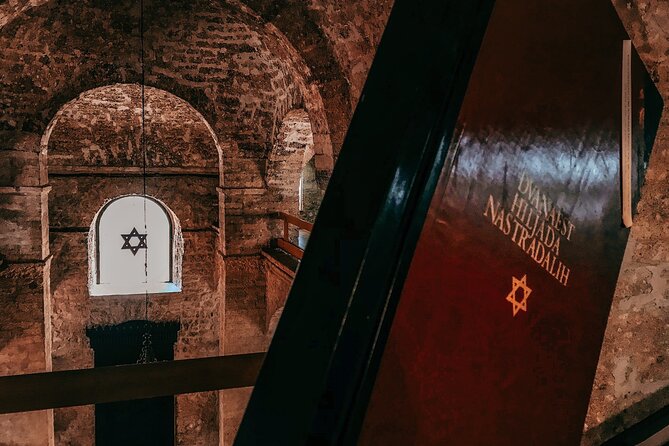
- Starting at the Jewish Museum in Sarajevo’s oldest synagogue
- Walking from the Eternal Flame to Jewish Sarajevo
- The Bosnian Cultural Center and a synagogue with a new role
- Entering the Ashkenazi Synagogue
- The Old Jewish Cemetery and its hillside memorials
- The Sarajevo Haggadah: a manuscript with a dangerous journey
- How the guides shape the experience
- What $72.18 includes, and what it does not
- Who will get the most from this tour
- Useful planning advice before you go
- Should you book the Sarajevo Jewish Heritage Tour?
- FAQ
- How long is the Sarajevo Jewish Heritage Tour?
- What time does the tour begin?
- Where does the tour start?
- Does the tour end at the same place?
- Is hotel pickup available?
- Is the tour offered in English?
- What is the maximum group size?
- Are admission tickets included?
- Can I see the Sarajevo Haggadah during the tour?
Key things to know before booking
- The Sarajevo Haggadah is the star: The tour explains the story of this 700-year-old manuscript and the Muslim librarian who helped protect it from the Nazis.
- You visit several meaningful Jewish sites: The route includes the Jewish Museum, Ashkenazi Synagogue, Old Jewish Cemetery, former Sephardic synagogue, and places connected with Jewish schools and businesses.
- The group is capped at eight: That makes questions and conversation easier than on a large city tour.
- Most of the experience is on foot: Wear comfortable shoes and expect city walking between historic stops.
- The Haggadah may not be displayed every day: The supplied information identifies Tuesdays and Thursdays as display days, but you should confirm the current schedule before booking.
- Hotel pickup can be arranged: The regular meeting point is Meet Bosnia Tours on Gazi Husrev begova Street.
Why Sarajevo’s Jewish story deserves a separate tour
Sarajevo is often introduced through its Ottoman bazaars, Austro-Hungarian buildings, war history, and religious coexistence. Those subjects matter, but they can leave out the Jewish community that helped shape the city from the Ottoman period onward.
This tour gives that community its own place in the story. You learn where Jews lived, worked, worshiped, studied, and were buried. Just as important, you see how Jewish life connected with the city around it rather than existing apart from it.
The route covers Sephardic and Ashkenazi history. Sephardic Jews arrived in Sarajevo during the Ottoman period after leaving Spain, while Ashkenazi Jews arrived in greater numbers under Austro-Hungarian rule in the late 19th century. The tour uses buildings and streets to explain those changes, which is far more memorable than hearing a list of dates indoors.
I like the emphasis on coexistence, too. The story is not presented as a simple tale of one community isolated from its neighbors. Sarajevo’s Jewish past is tied to Muslims, Christians, local officials, librarians, shopkeepers, and cultural institutions. That wider setting helps you understand why Sarajevo is sometimes called the Jerusalem of Europe.
More History Tours in Sarajevo
- Sarajevo Full Day Tour: History, Culture, Nature, War & Olympics
★ 5.0 · 27 reviews - Sarajevo genuine walking tour: Steps through history
★ 5.0 · 22 reviews - SARAJEVO STREET ART TOUR (art, history & mystery) – sARTajevo!
★ 5.0 · 18 reviews
Starting at the Jewish Museum in Sarajevo’s oldest synagogue
The tour begins at the Jewish Museum of Bosnia and Herzegovina. The museum occupies Sarajevo’s oldest synagogue, built in 1581. That gives the first stop unusual weight: you are not merely looking at objects in a gallery, you are entering a building connected directly to the community being discussed.
Plan on about 45 minutes here. One central feature is a 20-minute film about the Sarajevo Haggadah, the famous manuscript now associated with the National Museum of Bosnia and Herzegovina.
The museum admission is not included in the tour price. That is a small but important budget point. The total cost is easier to judge if you set aside money for entry fees at the Jewish Museum, Ashkenazi Synagogue, and National Museum.
The opening stop works well because it gives you a base before heading into the city streets. You begin with the community’s religious and cultural story, then see how that story played out in everyday Sarajevo.
Walking from the Eternal Flame to Jewish Sarajevo
After the museum, the tour continues through central Sarajevo, including the area around the Eternal Flame. This section is less about entering one major building and more about learning to read the city itself.
You hear about Jewish investments, businesses, shops, and the location of Sarajevo’s first hotel. The guide also points out the site of the first Jewish school and explains where the so-called singing synagogue once stood.
These details are valuable because they turn ordinary streets into historical evidence. On your own, you might walk past a shopfront or square without realizing that Jewish residents once worked there, taught there, or gathered nearby. A good local guide makes those connections quickly.
The tour also visits National Theatre Square and explains its connection to Sarajevo’s Jewish community. This is the kind of stop that does not always make it into a standard sightseeing route. It helps show that Jewish life was part of the city’s civic and cultural world, not confined to synagogues and cemeteries.
The walking portion lasts about 30 minutes around this part of the route. Sarajevo’s center is manageable on foot, but the experience still involves standing and walking on city streets. Comfortable shoes are sensible, especially if you plan to continue sightseeing afterward.
The Bosnian Cultural Center and a synagogue with a new role
The Bosnian Cultural Center is a quick stop of about 10 minutes. The building was once one of Europe’s largest Sephardic synagogues and now serves another function.
That change captures an important theme of the tour. Buildings can survive while their original communities shrink or move on. A former house of worship may become a cultural venue, carrying traces of its first purpose even after its use changes.
Because this stop is brief, do not expect a long interior visit or an extended museum presentation. Its value comes from the explanation and the connection to the larger story. You are seeing how Sarajevo’s Jewish architecture has been reused within the modern city.
This is also a reminder that the Jewish story is not limited to institutions that remain active today. Some sites are functioning synagogues, some are museums, and others survive through memory, documents, and the guide’s explanation.
Same corner of the country, a different kind of day:
- Sarajevo: Mostar, Konjic, Blagaj Tekke, Pocitelj & Waterfall
★ 4.9 · 1,666 reviews - Fall of Yugoslavia, Sarajevo War Tour with Tunnel of Hope Museum and Frontlines
★ 5.0 · 1,314 reviews - Sarajevo: Grand Walking Tour Through Time and Cultures
★ 4.8 · 1,236 reviews - Sarajevo: Mostar, Konjic, Sufi House, Pocitelj & Kravice Falls
★ 5.0 · 1,179 reviews
Entering the Ashkenazi Synagogue
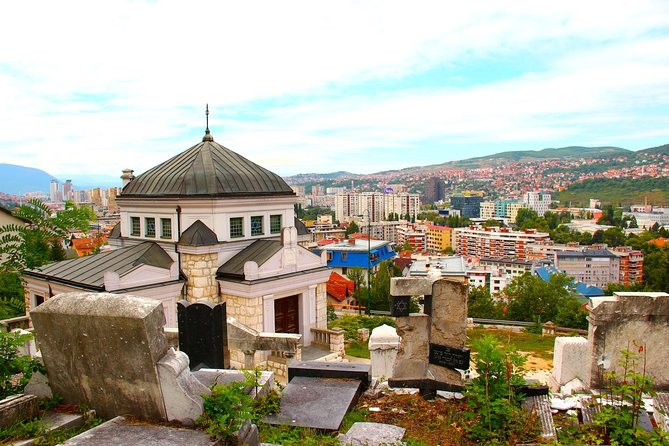
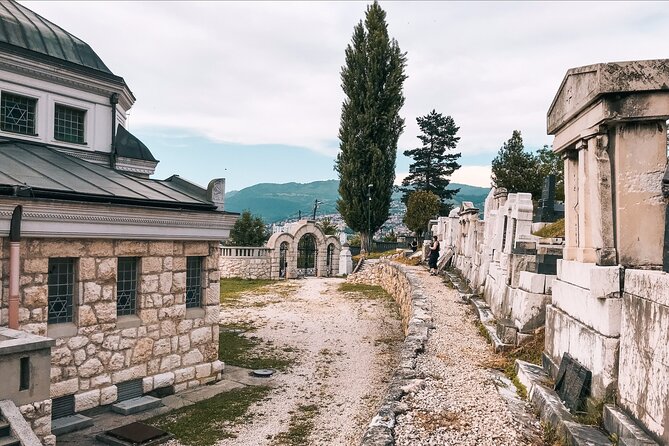
The Ashkenazi Synagogue is described as the center of Jewish life in Sarajevo today. The visit is scheduled for about 45 minutes, making it one of the tour’s longer stops.
Here the focus shifts from historic traces to the continuing Jewish presence in the city. That balance matters. A tour about a small community can easily feel like a visit to a vanished world, but this stop makes clear that Jewish life in Sarajevo did not simply end.
Admission is not included, so check the practical arrangements when you book. Religious sites can have opening rules or access limits, and the tour company is the right place to confirm what will be available on your date.
The synagogue visit should be especially useful if you want to understand the difference between Sarajevo’s Sephardic and Ashkenazi communities. The tour’s earlier stops establish the Sephardic foundations of Jewish Sarajevo, while the Ashkenazi Synagogue represents a later chapter and the community’s present-day center.
The Old Jewish Cemetery and its hillside memorials
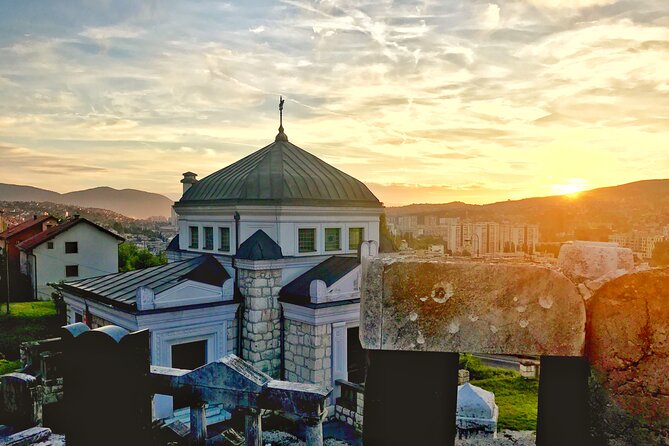
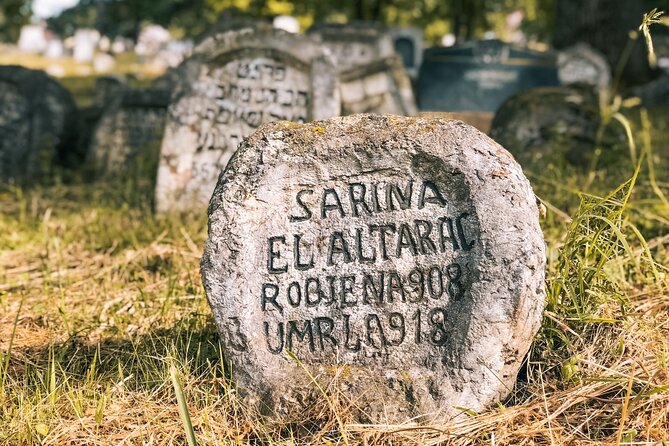
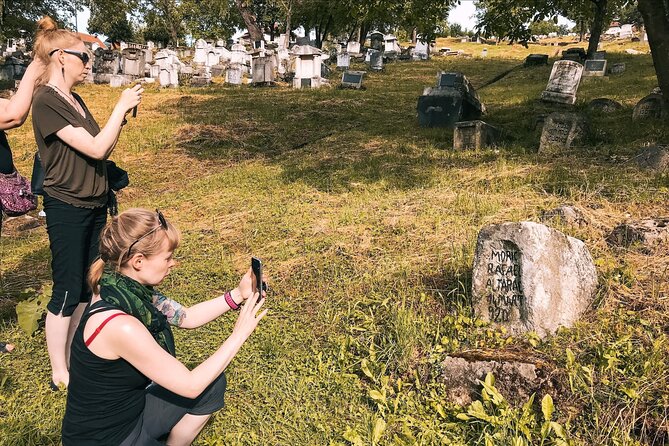
The Old Jewish Cemetery is about 500 years old. Sephardic Jews established it during the Ottoman period, and Ashkenazi Jews later used it after arriving under Austro-Hungarian rule.
The planned visit lasts around 30 minutes. That is enough time for a focused explanation and a look at the cemetery, though not an exhaustive study of every grave or inscription.
Cemeteries are often the most affecting part of a heritage tour because they make population changes visible. Names, dates, and burial traditions show the passage from the Ottoman period through Austro-Hungarian rule and into the modern era.
The cemetery is also a quiet contrast to the central streets. After hearing about hotels, schools, shops, and public squares, you see where members of the community were remembered. I would bring water in warm weather and expect some walking outdoors.
The tour description identifies the cemetery as nearly 500 years old and one of the important Jewish sites in Sarajevo. It is not simply an optional photo stop. It provides a physical record of the community’s long presence in the city.
The Sarajevo Haggadah: a manuscript with a dangerous journey
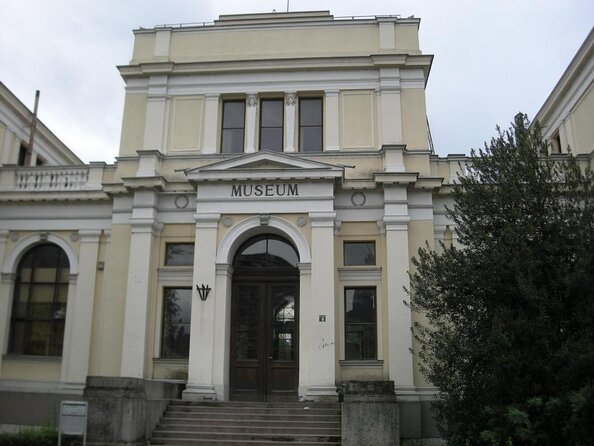
The National Museum of Bosnia and Herzegovina is the emotional and historical high point for many people on this tour. The visit is scheduled for about 20 minutes and focuses on the Sarajevo Haggadah.
The Haggadah is a collection of stories and illustrations made by Jews in Barcelona in the 14th century. A Jewish family brought it to Sarajevo in the 16th century, and the manuscript later survived three wars.
Its survival is remarkable on its own, but the story becomes even more powerful because of the Muslim librarian who helped save it from the Nazis. That act of protection gives the manuscript a human story about courage, trust, and shared responsibility. It also shows why Jewish heritage in Sarajevo cannot be understood without looking at the city’s other communities.
Admission to the National Museum is not included. More importantly, the Haggadah may not be on display every day. The practical tip attached to this tour is to aim for Tuesday or Thursday, when it was reported to be displayed, and to ask Meet Bosnia Tours to arrange the visit if seeing it is a priority.
Schedules can change, so confirm before you pay. If you are booking mainly for the manuscript, do not assume that the museum visit automatically means you will see the original book.
How the guides shape the experience
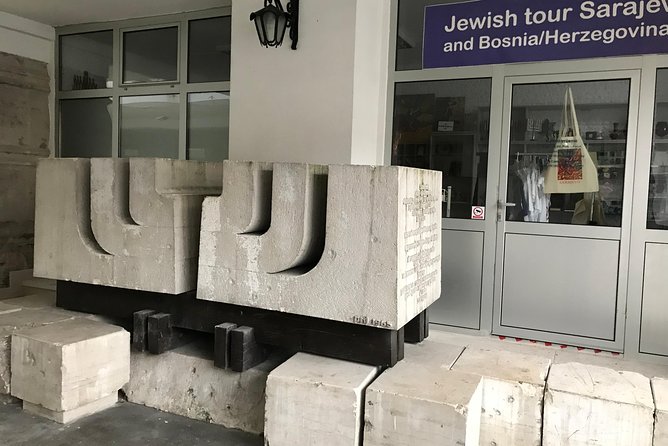
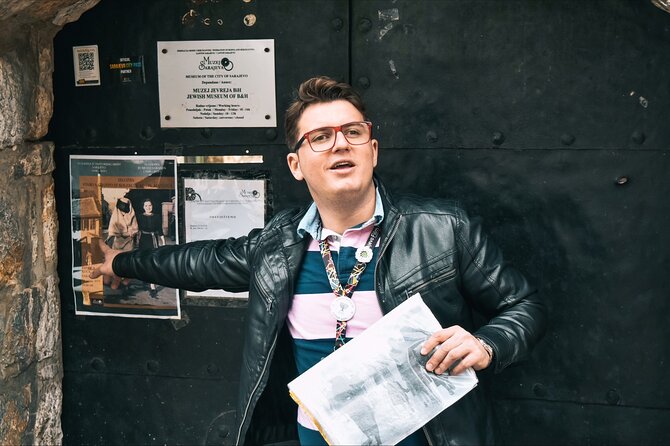
This tour depends heavily on the guide. The sites are meaningful, but many are ordinary streets, former buildings, or places that need explanation. A guide who can connect them makes a major difference.
Armina has been praised for combining historical detail with personal insight and for being especially patient with an older couple. Arna has been described as prepared, engaging, and able to plan a route covering many sites. Ahmed has been praised for storytelling, academic research, and answering detailed questions.
Edin, the owner of Meet Bosnia, has also led the tour. His approach emphasizes Sarajevo as a city where Jews, Christians, and Muslims lived alongside one another, with the Haggadah story as a clear example of that connection.
You may not receive a particular guide, so treat those names as examples of the company’s guiding team rather than a promise. One practical caution is that a guide on another Meet Bosnia walking tour was described as speaking English quickly. If you need a slower pace, say so early and ask questions when something is unclear.
The strongest feature here is not polished performance. It is the combination of local familiarity, patience, and willingness to discuss Sarajevo’s recent past and current Jewish community.
What $72.18 includes, and what it does not
The price is $72.18 per person. The tour lasts about two to three hours, includes a local professional guide, and offers an air-conditioned vehicle. Hotel pickup can be arranged on request, though the standard start is at the Meet Bosnia Tours office on Gazi Husrev begova Street.
The maximum group size is eight. For a specialist subject, that is a useful limit. You have a better chance of asking about family history, religious customs, the Haggadah, or Sarajevo’s wartime past without losing the guide in a crowd.
Still, the price requires careful thought. Food and drinks are not included, and admission fees are extra. You are paying mainly for the guide’s time, access to a carefully arranged route, local interpretation, and the convenience of linking several sites in one morning.
I see the value if Jewish history is a major reason for your visit, or if you want a more focused understanding of Sarajevo than a general city walk can provide. If you only want a quick overview of central Sarajevo, a less expensive general walking tour may suit you better.
Who will get the most from this tour
I would recommend this experience to anyone with a family, religious, cultural, or academic interest in Jewish history. It also suits people who want to understand Sarajevo through its smaller communities rather than only through its best-known monuments.
The tour is a good fit for first-time visitors because it places Jewish sites within the city center and links them to familiar landmarks such as the Eternal Flame and National Theatre Square. It also works for repeat visitors who have already seen the main Ottoman and Austro-Hungarian sights.
History-focused families can take part, but children must be accompanied by an adult. The two to three hour length is manageable, though the subject matter and walking may suit older children more than very young ones.
Most people can participate, and the route is near public transportation. Since the tour includes walking and cemetery visits, ask the company about your specific mobility needs before booking.
Useful planning advice before you go
Start at 9:00 a.m. from Meet Bosnia Tours at Gazi Husrev begova 75, near the crossroad of Mula Mustafe Bašeskije. The activity ends back at the same meeting point.
You can request hotel pickup, but do not assume it is automatic. Confirmation is provided when you book, and the company offers free cancellation up to 24 hours before the start time. Changes or cancellations inside that window are not accepted for a refund.
Wear comfortable shoes. Bring water if the day is warm, and leave room in your schedule for a late breakfast or lunch afterward since food is not included.
If the Sarajevo Haggadah matters most to you, ask two questions before booking: Is the original manuscript displayed on my date, and is the National Museum visit arranged? Those answers may determine if this tour meets your main goal.
Should you book the Sarajevo Jewish Heritage Tour?
Book it if you want a focused, human account of Jewish Sarajevo and are willing to pay extra for a small group and specialist guiding. The combination of the 1581 synagogue, the Ashkenazi center, the Old Jewish Cemetery, and the Sarajevo Haggadah gives the tour real substance.
I would be more cautious if you want a purely general city walk, dislike museum admission fees added to the headline price, or have limited time for outdoor walking. For everyone else, this is a thoughtful way to see Sarajevo beyond its most familiar sights, especially if you can schedule it when the Haggadah is on display.
FAQ
How long is the Sarajevo Jewish Heritage Tour?
The experience lasts approximately two to three hours.
What time does the tour begin?
The stated start time is 9:00 a.m.
Where does the tour start?
It starts at Meet Bosnia Tours, Gazi Husrev begova 75, Sarajevo, near the crossroad of Mula Mustafe Bašeskije.
Does the tour end at the same place?
Yes. The activity ends back at the meeting point.
Is hotel pickup available?
Hotel pickup can be organized upon request.
Is the tour offered in English?
Yes. The tour is offered in English.
What is the maximum group size?
The tour has a maximum of eight travelers.
Are admission tickets included?
No. Admission to the Jewish Museum, Ashkenazi Synagogue, and National Museum of Bosnia and Herzegovina is not included.
Can I see the Sarajevo Haggadah during the tour?
The Haggadah may be displayed on specific days. The supplied information identifies Tuesdays and Thursdays, so confirm the current display schedule with Meet Bosnia Tours before booking.
Newest around Sarajevo
- Understanding Srebrenica Genocide + Lunch with Local Family★ 4.9 · 14 reviews
- Private Full Day Safari Tour★ 5.0 · 8 reviews
- Sarajevo: Trebević Mountain Summit Hiking Tour★ 4.2 · 2 reviews
- From Sarajevo: Kozice Waterfalls Hiking Experience in Nature★ 5.0 · 2 reviews
- Sarajevo Under Siege: A War History Tour★ 5.0 · 10 reviews
- Mysterious Visoko Pyramids Driving and Walking Tour★ 5.0 · 7 reviews
- WAR TUNNEL – Sarajevo’s only way of a communication during the WAR – Top secret★ 5.0 · 12 reviews
- Ultimate Gastro Experience★ 4.5 · 14 reviews
Historical Tours, compared.
Sarajevo Full Day Tour: History, Culture, Nature, War & Olympics
Read our review →
Sarajevo genuine walking tour: Steps through history
Read our review →
SARAJEVO STREET ART TOUR (art, history & mystery) – sARTajevo!
Read our review →
BOSNIAN PYRAMIDS TOUR (nature, history & archeology)
Read our review →
Browse the lists this tour appears in