
Review · HISTORICAL TOURS
Sarajevo: Jewish Heritage Tour with Entry Tickets
Sarajevo’s Jewish story is woven into every quarter. This three-hour walking and driving tour traces five centuries of Sephardi and Ashkenazi life, from the Old Jewish Temple and Sarajevo’s market streets to the solemn cemetery on the city’s edge. I especially like the small groups of up to eight and the guides’ attention to difficult subjects, including the Holocaust and the Bosnian War. The main drawback is that some sites have limited opening hours, and one participant was asked to pay an extra entrance charge despite tickets being advertised as included.
The tour costs $94 per person, including hotel pickup and drop-off, museum entry, Jewish Community Center admission, water, and transport to the cemetery. That is not a bargain-basement price, but it can be good value if you want informed interpretation rather than a quick walk past buildings. Guide Arna received particular praise for her depth and clear English, while Ahmed was noted for his academic background and strong storytelling.
In This Review
- Key points before you book
- Why Jewish Sarajevo matters
- Starting at the Old Jewish Temple
- Sephardi trade and Sarajevo’s Old Town
- The Ashkenazi Synagogue and later arrivals
- The Sarajevo Haggadah and the problem of timing
- The cemetery, war, and memory
- Guides who shape the experience
- Is $94 a fair price?
- Who should book this tour?
- FAQ
- How long is the Sarajevo Jewish Heritage Tour?
- How much does the tour cost?
- What language is the tour conducted in?
- How large is the group?
- Is hotel pickup included?
- Is transportation to the Jewish Cemetery included?
- Are museum entrance fees included?
- Can I see the Sarajevo Haggadah?
- Is the Ashkenazi Synagogue open every day?
- Is the Old Jewish Temple open on weekends?
- Should I bring anything special?
- Can I cancel the tour?
- Should you book it?
Key points before you book
- Five centuries in three hours: The route connects Sephardi origins, Ashkenazi arrivals, religious life, commerce, war, and Sarajevo’s present-day Jewish community.
- The Jewish Museum is the starting point: The former Old Jewish Temple introduces the community’s story through objects, documents, and local context.
- The Sarajevo Haggadah is not always on view: It is generally shown on Tuesdays and Thursdays from noon to 1 p.m., with access also noted on the first day of each month. Check before booking.
- The cemetery requires transport: You walk through the Old Town, but a vehicle takes you to the Jewish Cemetery, described as Europe’s second oldest and also one of its largest.
- The Ashkenazi Synagogue is still active: It is Sarajevo’s only functioning synagogue today, though it closes on Sundays and Saturdays.
- The guides are a major strength: Arna, Armina, Ana, and Ahmed are praised for thoughtful explanations, strong English, and their ability to connect Jewish history with Sarajevo’s wider story.
Why Jewish Sarajevo matters
Sarajevo is often described as a city where several faiths lived close together. The Jewish chapter is a key part of that story, not a footnote. Sephardi Jews arrived after leaving Spain and found a place in the Ottoman Empire, where Jews were recognized as people of the book. They faced limits, but they also had important rights, including the ability to buy property.
That legal and social space helped Jewish families build businesses, synagogues, schools, credit institutions, and homes. By 1856, the Ottoman state had granted full equality to Jews and other non-Muslim subjects. A good guide will help you see how those broad political changes affected ordinary life in Sarajevo.
I like that this tour treats the Jewish community as part of the city’s economic and cultural development. You do not simply look at old religious buildings. You learn how merchants helped link Sarajevo to wider trade routes, and how Sephardi customs became part of the city’s sound and daily rhythm.
The tour also brings in sevdalinka, the traditional Bosnian musical form. Your guide may explain its connection with Sephardi religious songs, an especially useful reminder that culture does not stay inside neat community borders.
More History Tours in Sarajevo
- Sarajevo Full Day Tour: History, Culture, Nature, War & Olympics
★ 5.0 · 27 reviews - Sarajevo genuine walking tour: Steps through history
★ 5.0 · 22 reviews - SARAJEVO STREET ART TOUR (art, history & mystery) – sARTajevo!
★ 5.0 · 18 reviews
Starting at the Old Jewish Temple
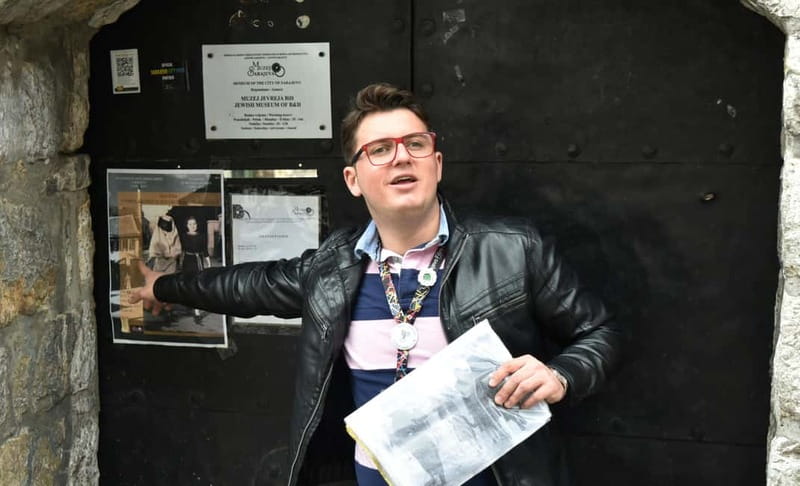
The route begins at the Old Jewish Temple, now home to the Jewish Museum of Bosnia and Herzegovina. This is the central indoor stop, and it gives the rest of the tour a clear frame. Instead of seeing isolated buildings, you begin with the story of a community that lived, traded, worshipped, studied, and adapted in Sarajevo for roughly 500 years.
The museum admission is included. The tour also includes entry to the Jewish Community Center, helping you compare the older community with Jewish life in Sarajevo today.
Allow yourself time to look closely at the museum displays. The value here comes less from the size of the museum than from the guide’s explanation of what the objects mean. A strong guide can connect religious practice to family life, commerce, migration, and the political changes that shaped Bosnia.
The building itself is also part of the story. It is commonly called the Old Jewish Temple, while another stop is known as the Grand Jewish Temple. Keeping those names straight can be confusing, so listen carefully when your guide explains which buildings changed use over time.
Opening hours matter. The Old Jewish Temple is closed on Saturdays, but on Sundays it is listed as open from 9 a.m. to 1 p.m. If your schedule is tight, confirm the exact hours before you set off.
Sephardi trade and Sarajevo’s Old Town
The Old Town portion gives the tour its most physical sense of place. You move through streets where commerce, craft, and religious life developed side by side. Your guide points out places linked to Jewish merchants and families, including the first hotel in Sarajevo, the first Jewish credit foundation, and the Salom family palace.
The tour also highlights crafts brought to Sarajevo by Sephardi Jews. That detail is easy to miss if you explore the market lanes alone. You may see familiar workshops and shopfronts, but the guide explains how Jewish families helped introduce or develop particular trades and connected Sarajevo with regional commerce.
This part is done on foot, so wear shoes suited to uneven Old Town surfaces and dress for the weather. The pace is likely manageable, but three hours includes several stops and a lot of listening. If you prefer a purely visual city walk, the amount of historical explanation may feel heavy. If you want context, this is where the tour earns its keep.
The route includes the Jewish Villa AMA in Sarajevo and the Ješua D. Salom Mansion. These buildings make the story more personal. A synagogue tells you about communal worship, while a mansion or villa can suggest the standing and success of particular families within Sarajevo’s urban society.
You also visit the first Jewish secondary school and learn about the former grand Jewish temple, a Moorish-style building now used as the Bosnian Cultural Center. The change of use is worth noting. Sarajevo’s Jewish past is not preserved in a single historic quarter with everything left untouched. It survives through buildings that have been reused, renamed, or given new civic roles.
The Ashkenazi Synagogue and later arrivals
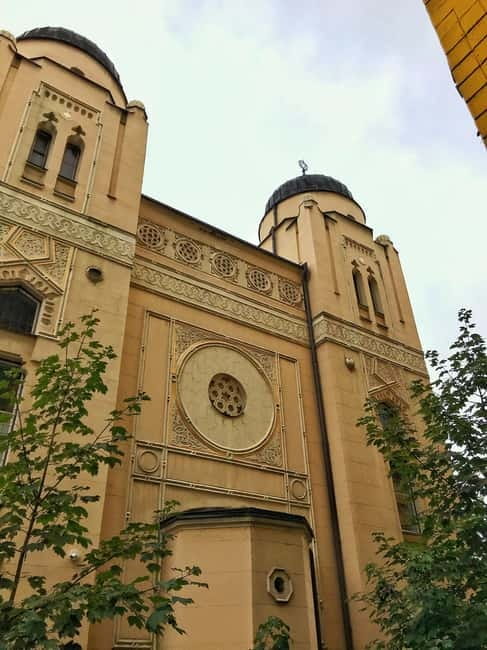
The Ashkenazi Synagogue marks a later stage in Sarajevo’s Jewish story. Ashkenazi Jews arrived after the Sephardi community had already established itself, adding another tradition, language background, and set of institutions to the city.
This is the only active synagogue in Sarajevo today. That makes it more than an architectural stop. It connects the older story of Jewish life with the small community that remains.
The synagogue is closed on Saturdays and Sundays, so weekend timing can affect the route. On Sunday, the Old Jewish Temple is listed as open in the morning while the Ashkenazi Synagogue is closed. On Saturday, both are closed. If you book around a weekend, ask whether the guide will substitute another site.
A useful feature of this tour is its flexibility when a building cannot be entered. One participant found the Ashkenazi Synagogue closed, but the guide used other locations and stories to keep the visit worthwhile. That is a sensible approach, although you should not assume that a substitute stop will feel identical to seeing the synagogue interior.
The Bosnian Cultural Center, once a grand Jewish temple, helps fill that gap. Its Moorish-style architecture points to the ambitions of Sarajevo’s Jewish community and the way religious buildings could also express civic pride.
Same corner of the country, a different kind of day:
- Sarajevo: Mostar, Konjic, Blagaj Tekke, Pocitelj & Waterfall
★ 4.9 · 1,666 reviews - Fall of Yugoslavia, Sarajevo War Tour with Tunnel of Hope Museum and Frontlines
★ 5.0 · 1,314 reviews - Sarajevo: Grand Walking Tour Through Time and Cultures
★ 4.8 · 1,236 reviews - Sarajevo: Mostar, Konjic, Sufi House, Pocitelj & Kravice Falls
★ 5.0 · 1,179 reviews
The Sarajevo Haggadah and the problem of timing
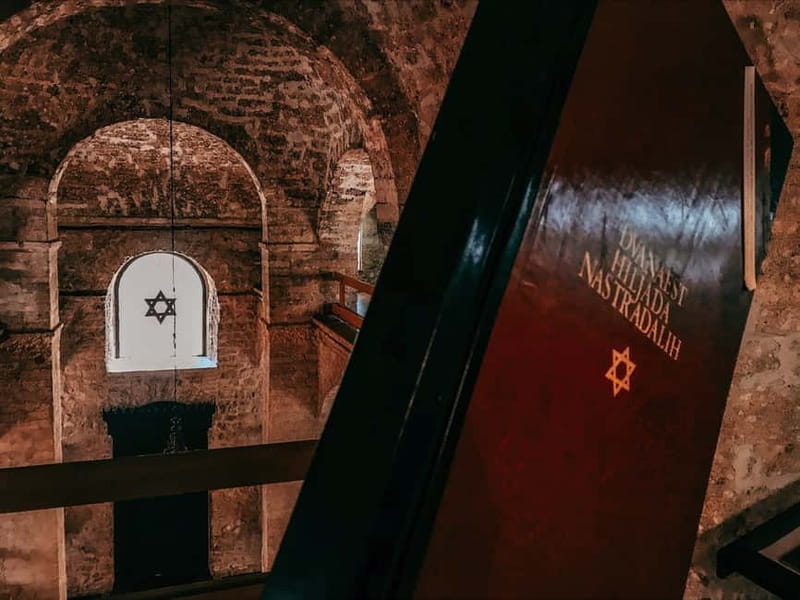
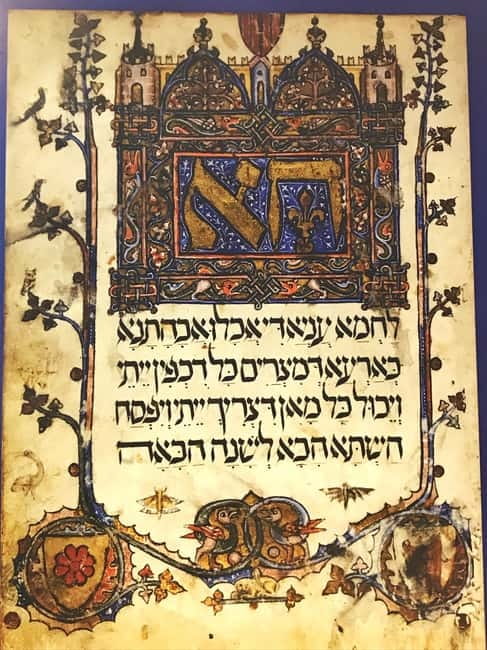
The Sarajevo Haggadah is the most famous object connected with Jewish Bosnia. It is a collection of stories created in 14th-century Barcelona and brought to Sarajevo by a Jewish family in the 16th century. The manuscript survived three wars and now represents a major part of Bosnia’s Jewish heritage.
The Haggadah is associated with the National Museum of Bosnia and Herzegovina. But seeing it is not guaranteed during every departure. The stated viewing period is Tuesdays and Thursdays from noon to 1 p.m., with access also noted on the first day of each month. Hours can change, so check with the tour provider before you book.
This narrow window creates a practical choice. A morning tour may cover the wider Jewish route but miss the Haggadah display. A departure that overlaps the viewing time may give you a chance to see it, but the rest of the schedule could be arranged differently.
I would not judge the tour only by whether the manuscript is on display. The Haggadah is important, but the city’s buildings, cemetery, and living Jewish institutions carry much of the tour’s meaning. Still, if this manuscript is your main reason for booking, confirm the date and time in writing.
The cemetery, war, and memory
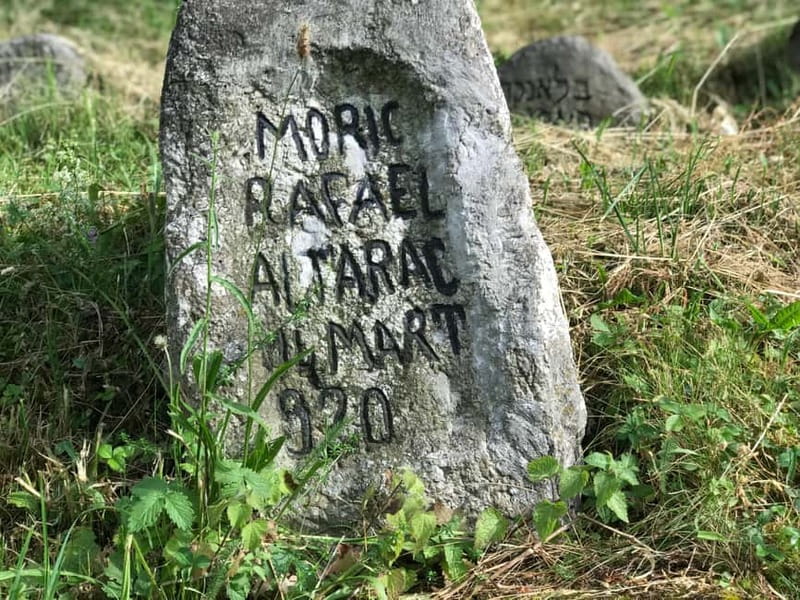
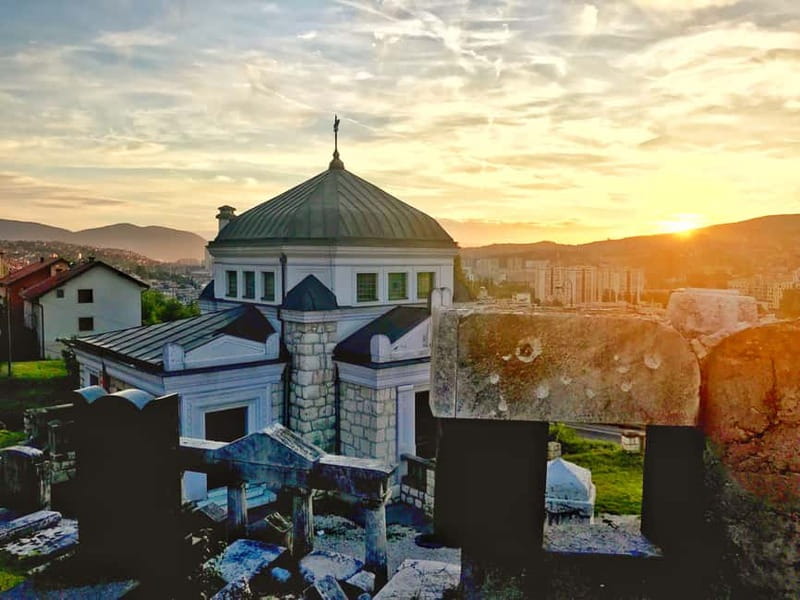
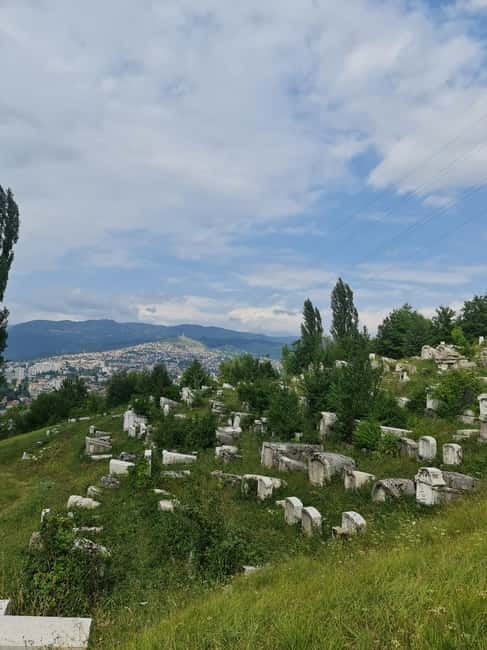
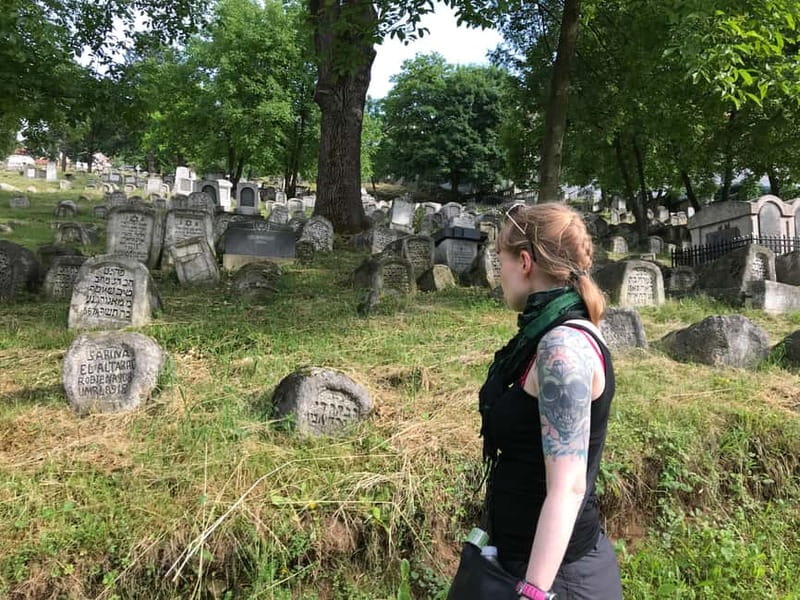
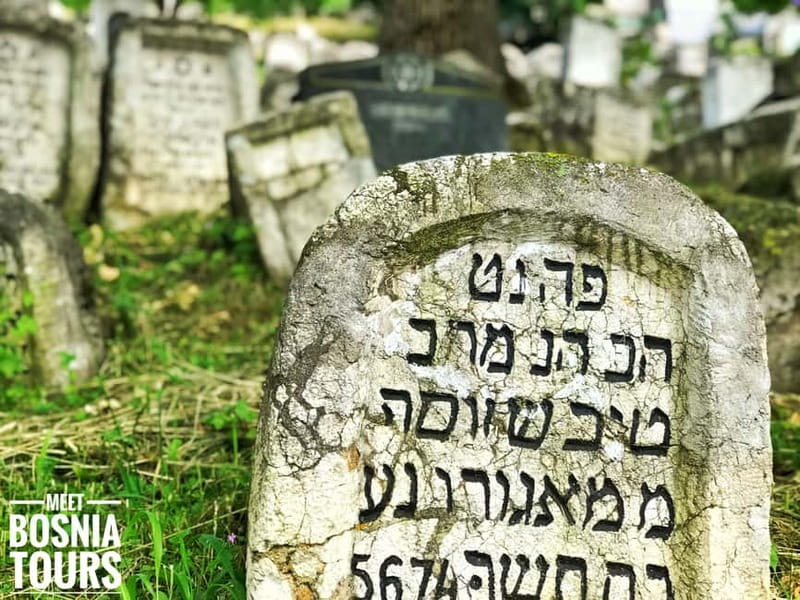
The final major stop is the Sarajevo Jewish Cemetery, reached by included transport. It is described as the second oldest Jewish cemetery in Europe and is also identified as the second largest. The cemetery contains Sephardi and Ashkenazi graves, allowing your guide to explain the two communities side by side.
This is a quieter and more serious part of the tour. You learn about important people buried there, the destruction of Jewish life during World War II, and the fate of Sarajevo’s Jewish population. The cemetery gives names and physical markers to a story that can otherwise remain abstract.
Its role during the Bosnian War adds another layer. The cemetery was damaged because its position made it a strategic location during the siege. That connection between Jewish memory and the modern war is one of the tour’s strongest features. You are not asked to separate Sarajevo’s Jewish past from the city’s more recent suffering.
Many Jews left Sarajevo during the 1990s war, yet the connection did not disappear. Foundations and trusts established by Jewish people helped support the besieged city. That detail complicates the usual story of departure. It shows that leaving Sarajevo did not necessarily mean abandoning it.
You should expect the cemetery stop to be emotionally weighty. It is not a casual photo stop, and the guide’s tone matters. Arna was praised for presenting war, interfaith relations, and current conditions with care and honesty. That kind of handling is especially valuable here.
Guides who shape the experience
The guide is the difference between a useful tour and a list of dates. This experience uses a local, licensed guide accredited by the Jewish community of Bosnia and Herzegovina, and the strongest praise goes to the people leading it.
Arna is singled out for sharing broad knowledge of Jewish life in Sarajevo in excellent English. She also took guests to less obvious places and explained stories beyond the three main attractions. Armina was praised for being prepared and helpful, while Ana was described as a thoughtful source of information about Sarajevo more generally.
Ahmed brings a different strength. He was described as an excellent storyteller and serious academic researcher who could answer detailed questions and help with practical needs in the city.
You should feel free to ask questions. The tour covers interfaith dialogue, the Ottoman period, Jewish customs, World War II, the siege, and the current community. Three hours goes quickly, so a guide who can adjust the discussion to your interests adds real value.
The group limit is eight people. That is small enough for a more personal conversation, and one booking remained at the advertised price even when only one person attended. That is a reassuring policy for solo visitors, though availability and final arrangements can vary.
Is $94 a fair price?
At $94, this is not the cheapest way to see Sarajevo. The price makes more sense when you count the included museum and community-center tickets, hotel pickup and drop-off, bottled water, and transport to the cemetery.
The guide is the main value. You are paying for access to a connected story, not just transport between buildings. A standard city walk may point out the Old Temple or a former synagogue, but it is less likely to explain Sephardi trade, Ashkenazi settlement, the Sarajevo Haggadah, Jewish institutions, and the cemetery’s role in the 1990s war within one short visit.
There is one cost warning. One participant reported being asked to pay an additional entrance fee even though tickets were said to be included. I would clarify this before departure and keep confirmation of what the $94 covers.
The tour includes no food or drinks beyond a bottle of water. That is easy to manage in Sarajevo, where you can eat before or after the visit. The duration is three hours, making it a practical addition to a short city stay.
Who should book this tour?
I would recommend it to anyone who wants Sarajevo’s Jewish story treated with seriousness and context. It suits visitors interested in religion, migration, architecture, trade, World War II, the Bosnian War, or the way minority communities shape a city.
It is especially useful if you are staying only a short time. The hotel pickup and drop-off reduce fuss, while the small group gives you a better chance to ask questions than a large coach tour.
You may want another activity if your main goal is shopping, food, or a light stroll. The cemetery and wartime material can be difficult, and the tour asks you to concentrate. It is also less suitable if you cannot walk through the Old Town or manage a visit with several standing stops.
Book with care around religious holidays and weekly closures. Confirm the Haggadah schedule, synagogue access, pickup arrangements, and included admissions. Free cancellation up to 24 hours before departure and reserve-now, pay-later booking give you some flexibility.
FAQ
How long is the Sarajevo Jewish Heritage Tour?
The tour lasts three hours.
How much does the tour cost?
The listed price is $94 per person.
What language is the tour conducted in?
The live tour guide speaks English.
How large is the group?
The tour is limited to eight participants.
Is hotel pickup included?
Yes. Hotel pickup and drop-off are included.
Is transportation to the Jewish Cemetery included?
Yes. Transportation to the Jewish Cemetery is included.
Are museum entrance fees included?
Entrance to the Jewish Museum of Bosnia and Herzegovina and the Jewish Community Center is included. One participant reported being asked for an extra entrance payment, so confirm the admission details before departure.
Can I see the Sarajevo Haggadah?
The Haggadah is open for viewing on Tuesdays and Thursdays from 12 p.m. to 1 p.m., although changes are possible. Access is also noted on the first day of each month. Check the schedule before booking.
Is the Ashkenazi Synagogue open every day?
No. It is closed on Saturdays and Sundays.
Is the Old Jewish Temple open on weekends?
The Old Jewish Temple is closed on Saturdays. On Sundays, it is listed as open from 9 a.m. to 1 p.m.
Should I bring anything special?
Bring weather-appropriate clothing. A bottle of water is provided, and food and drinks are not included.
Can I cancel the tour?
You can cancel up to 24 hours in advance for a full refund. Reserve-now, pay-later booking is also available.
Should you book it?
Yes, if you want a serious, compact introduction to Sarajevo’s Jewish past and present. The strongest reasons are the thoughtful guides, small group size, included admissions, and the way the tour links everyday commerce with synagogues, family homes, the Haggadah, and wartime memory.
Before paying, check the Haggadah viewing time and confirm that all advertised entry tickets are covered. If the schedule works, this is one of the better ways to understand why Jewish life belongs at the center of Sarajevo’s story, not at its margins.
Newest around Sarajevo
- Understanding Srebrenica Genocide + Lunch with Local Family★ 4.9 · 14 reviews
- Private Full Day Safari Tour★ 5.0 · 8 reviews
- Sarajevo: Trebević Mountain Summit Hiking Tour★ 4.2 · 2 reviews
- From Sarajevo: Kozice Waterfalls Hiking Experience in Nature★ 5.0 · 2 reviews
- Sarajevo Under Siege: A War History Tour★ 5.0 · 10 reviews
- Mysterious Visoko Pyramids Driving and Walking Tour★ 5.0 · 7 reviews
- WAR TUNNEL – Sarajevo’s only way of a communication during the WAR – Top secret★ 5.0 · 12 reviews
- Ultimate Gastro Experience★ 4.5 · 14 reviews
Historical Tours, compared.
Sarajevo Full Day Tour: History, Culture, Nature, War & Olympics
Read our review →
Sarajevo genuine walking tour: Steps through history
Read our review →
SARAJEVO STREET ART TOUR (art, history & mystery) – sARTajevo!
Read our review →
BOSNIAN PYRAMIDS TOUR (nature, history & archeology)
Read our review →
Browse the lists this tour appears in