
Review · SARAJEVO TOURS
Sarajevo: Islamic Traditions and Daily Life Tour
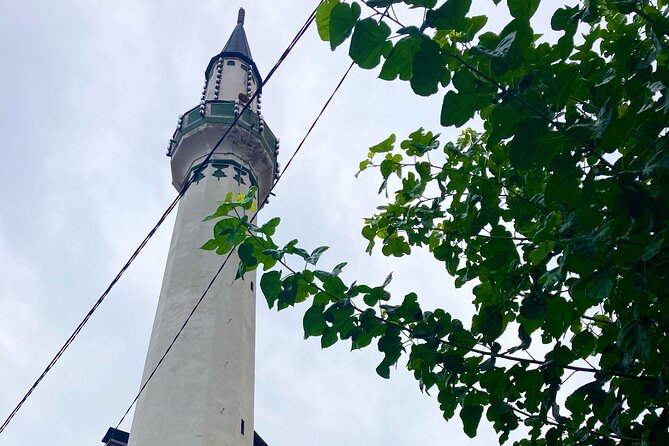
Sarajevo’s story is written in its mosques. This two-hour walk through the old city shows how Islamic traditions shaped Sarajevo’s streets, buildings, rituals, and daily life, not as a distant subject but as part of the city you see around you. I especially like the personal explanations from guides such as Suad, Emina, Aid, and Alam, and I like that the route includes both grand religious sites and an ordinary Ottoman-era home. The main drawback is that several stops require walking on old-town streets, and the tour is not suitable for wheelchair users or people with limited mobility.
The tour also does a good job of putting Bosnian Muslim life into its local setting. You hear about architecture, prayer, education, charity, household customs, and the city’s Ottoman past without being pushed into a narrow religious script. You should budget extra for the two paid visits, though at $29 per person, the experience offers strong value if you want more than a quick look at Sarajevo’s famous fountains and bazaars.
In This Review
- Key points to know before you go
- Starting at Zelenih beretki 30
- At Mejdan and the first look at Sarajevo’s Muslim past
- Emperor’s Mosque, Sarajevo’s oldest mosque
- Hotel Isa-begov hamam and the civic side of Ottoman Sarajevo
- Gazi Husrev Bey’s Mosque and the man who shaped Sarajevo
- The madrasa, library, and Sarajevo’s tradition of learning
- Sarajevo’s lunar Clock Tower
- Svrzo’s House and the details of an 18th-century home
- The Faculty of Islamic Studies and living tradition
- Baščaršija, the Sebilj Fountain, and a practical finish
- The viewpoint and what two hours can really cover
- Why the guides make the difference
- Price, extra costs, and overall value
- Who should book this Sarajevo walk?
- Should you book it?
- FAQ
- How long does the tour last?
- Where does the tour start?
- Where does the tour finish?
- What languages are available?
- Is a guide included?
- Is a city map included?
- Are entrance fees included?
- What should I wear?
- Are shorts or sleeveless shirts allowed?
- Is the tour suitable for wheelchair users?
Key points to know before you go
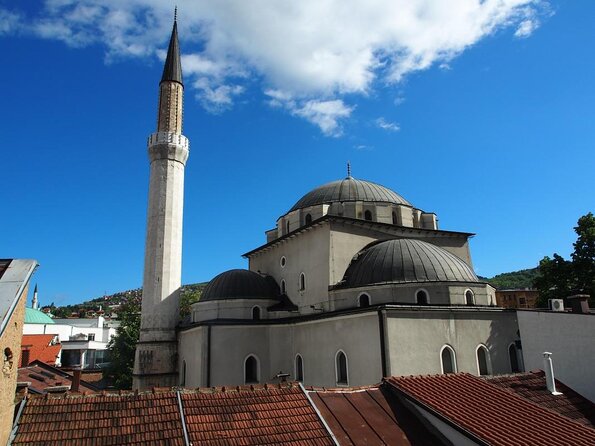
- The route links major Islamic landmarks with everyday life: You visit mosques, a madrasa, a library, an old house, a hamam, and Baščaršija.
- Guides are the heart of the experience: Suad is praised for his warmth and clear explanations, while Emina, Aid, Alam, Haris, and other guides have also led highly regarded tours.
- The lunar clock is a rare local detail: Sarajevo’s Clock Tower follows Islamic lunar time rather than the standard clock system used in most European cities.
- Two visits cost extra: Entry to Gazi Husrev Bey’s Mosque and Madrasa is 8 BAM per person, while Svrzo’s House costs 5 BAM.
- Dress modestly: Bring long sleeves, long pants, and a sarong. Shorts, short skirts, and sleeveless shirts are not allowed.
- The pace is manageable but the route is on foot: The walk lasts two hours and includes historic streets, steps, and uneven surfaces.
Starting at Zelenih beretki 30
You meet at the Sarajevo Insider Tour Agency at Zelenih beretki 30. This is a useful location near the old center, so you can pair the tour with time in Baščaršija before or after your walk.
The guide leads in Bosnian or English. A city map is included, which is handy if you are still finding your bearings in Sarajevo’s compact but layered center. The route returns to the same agency after roughly two hours.
The group size is not specified, and it can vary. Some departures may feel like a small private walk, as happened for several participants, while others may include a larger group. If you prefer a quieter conversation, ask at the start how the walk will run and take your chance to raise questions along the way.
Other Sarajevo trips worth an open tab:
- Sarajevo: Mostar, Konjic, Blagaj Tekke, Pocitelj & Waterfall
★ 4.9 · 1,666 reviews - Fall of Yugoslavia, Sarajevo War Tour with Tunnel of Hope Museum and Frontlines
★ 5.0 · 1,314 reviews - Sarajevo: Grand Walking Tour Through Time and Cultures
★ 4.8 · 1,236 reviews
At Mejdan and the first look at Sarajevo’s Muslim past
The route begins around At Mejdan, an open area near the Miljacka River. This first stop helps set the scene before the tour moves into the religious and commercial center of Sarajevo.
Here, your guide begins connecting the city’s geography with its Ottoman-era development. Sarajevo’s Muslim heritage is not confined to one building. It appears in the way fountains, mosques, schools, markets, baths, and homes were arranged together.
That approach is one of the tour’s strengths. You are not simply handed a list of dates and architectural labels. You are shown how religious buildings worked within a wider community, and how Islamic customs became part of the city’s ordinary routines.
Emperor’s Mosque, Sarajevo’s oldest mosque
The Emperor’s Mosque is one of the tour’s major early stops. It is presented as Sarajevo’s oldest mosque and an important part of the city’s Islamic heritage.
This is a place where your guide can explain the roots of Islamic architecture in Sarajevo and how Ottoman design influenced the city’s appearance. Look closely at the relationship between the mosque and its surroundings rather than rushing in, taking one photograph, and moving on.
The visit is also a chance to ask practical questions about mosque etiquette and Islamic rituals in Bosnia. The tour is intended for Muslims and non-Muslims alike, and the strongest guides explain religious customs in a calm, approachable way.
You should arrive dressed for a place of worship. Long sleeves and long pants are required, and a sarong is useful if you need additional coverage. Shorts, short skirts, and sleeveless shirts are not permitted.
Hotel Isa-begov hamam and the civic side of Ottoman Sarajevo
The former Isa-begov hamam adds an important piece to the route. A hamam was not merely a place to wash. It formed part of the social and civic life of an Ottoman city.
This stop gives the guide a chance to explain how public facilities supported community life alongside mosques and markets. It also broadens the tour beyond religious buildings. Sarajevo’s Islamic identity was expressed through services, education, commerce, and public spaces as well as prayer.
The hamam is a photo stop and guided walk rather than a separate bathing experience. Keep your expectations focused on context and architecture.
Same corner of the country, a different kind of day:
- Sarajevo: Mostar, Konjic, Sufi House, Pocitelj & Kravice Falls
★ 5.0 · 1,179 reviews - Sarajevo: Tunnel Museum Yugoslavia War Tour with War Veteran
★ 5.0 · 1,111 reviews - ROSES OF SARAJEVO (Official WAR + CITY tour)- Story of a Survivor
★ 5.0 · 770 reviews - Sarajevo: Tunnel of Hope Tour – Survival and Resilience
★ 4.8 · 630 reviews
Gazi Husrev Bey’s Mosque and the man who shaped Sarajevo
Gazi Husrev Bey’s Mosque is the main landmark on the route. It is one of Sarajevo’s most important Ottoman buildings and remains closely linked to Muslim life in the city.
The tour explains Gazi Husrev Bey’s legacy and his role in Sarajevo’s growth. His name appears across the surrounding district because his foundations supported religious, educational, charitable, and civic institutions.
The paid entry to the mosque and madrasa costs 8 BAM per person, listed as about 4.50 euros. This extra charge is worth considering when you compare the tour price with the total cost. At $29, the walk is inexpensive, but the added admissions should be part of your budget.
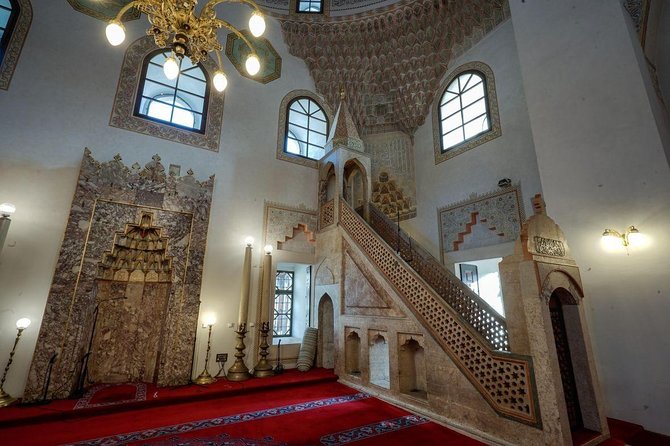
Inside, the value comes from having a guide explain what you are seeing. Without context, an Ottoman mosque can become a quick stop for patterned stone, arches, and a minaret. With a good guide, you begin to understand the building’s role in a working community and the way Gazi Husrev Bey’s endowment shaped the surrounding quarter.
Several guides receive strong praise for making this part easy to follow. Suad is frequently singled out for his historical explanations and friendly manner. Other guides, including Alam and Emina, are also described as clear, engaging, and ready to answer questions.
The madrasa, library, and Sarajevo’s tradition of learning
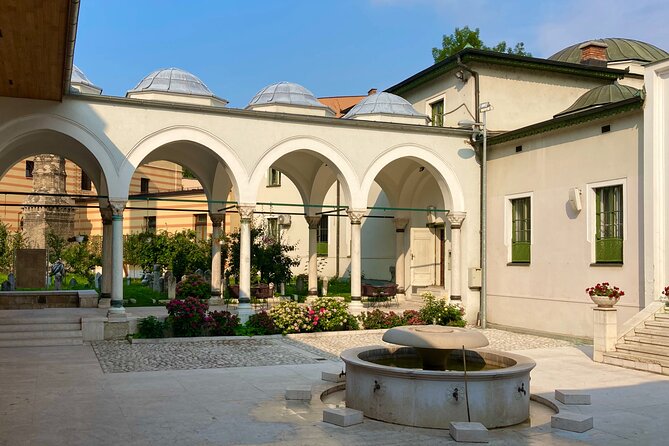
The Gazi Husrev Bey Madrasa and Gazi Husrev Bey Library show that Islamic heritage in Sarajevo is also a story about education.
A madrasa was a place of study, not just a decorative building beside a mosque. The library adds another layer, showing how books, scholarship, and the preservation of religious knowledge mattered to the community.
Your guide can help you see these sites as part of one connected foundation rather than separate attractions. Mosque, school, and library worked together. That connection is especially useful if you want to understand why Gazi Husrev Bey’s influence remains so visible in central Sarajevo.
The madrasa visit is included in the walking route, but the entrance fee for the mosque and madrasa is extra. The supplied information does not specify how long you spend inside each building, so the exact balance may depend on the group and the guide.
Sarajevo’s lunar Clock Tower
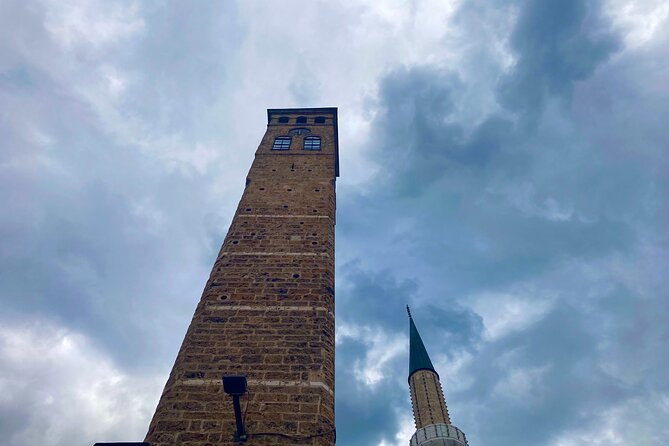
The Clock Tower offers one of the route’s most unusual details. Its clock reflects Islamic lunar time, a system connected to the daily rhythm of Muslim prayer and the changing position of the sun.
This is exactly the sort of small detail that can change how you look at a city. A clock tower usually suggests standard European civic time. Sarajevo’s version points to a different religious and cultural framework, one that remains visible in the middle of the old town.
The tower is discussed as part of the Islamic heritage route, though the listed itinerary does not give it a separate timed visit. You may view it while walking through the Gazi Husrev Bey quarter and hear the explanation from your guide.
Svrzo’s House and the details of an 18th-century home
Svrzo’s House is where the tour shifts from public institutions to private life. The museum preserves an 18th-century Muslim home and offers a look at how a household was arranged in Ottoman Sarajevo.
This is one of the most valuable stops because it makes the history easier to picture. Mosques and libraries tell you about public life. A house shows you how rooms, family spaces, household customs, and domestic routines fit together.
You spend about 20 minutes here. The museum entry costs 5 BAM per person, listed as about 3 euros. That is a modest extra fee for a stop that gives the tour its most tangible sense of daily life.
The museum is not simply a backdrop for photographs. Listen for the explanations of how Muslim traditions appeared in the home. This is also a good place to ask about differences between religious teaching and local Bosnian custom, a distinction the tour handles through its focus on everyday practice.
The Faculty of Islamic Studies and living tradition
The Faculty of Islamic Studies in Sarajevo brings the route into the present. After seeing Ottoman institutions and an old household, you are reminded that Islamic learning is not only part of the past.
This stop helps connect Sarajevo’s historic monuments with its current Muslim community. The tour’s purpose is not to present Islam as a museum subject. It shows how religious thought, education, and community life continue in a modern European city.
The exact format is a guided stop and photo opportunity. It is not described as a full campus visit, so expect an explanation from outside or along the walking route rather than an extended institutional tour.
Baščaršija, the Sebilj Fountain, and a practical finish
The route then moves through Baščaršija, Sarajevo’s famous old market quarter. This is where the religious, commercial, and social strands of the tour come together.
You see Ottoman-style streets, workshops, fountains, and shops woven into a functioning city center. The Sebilj Fountain is the best-known landmark here. You can drink from it, a simple local ritual that turns a photo stop into a small act of participation.
The fountain is also a useful point for discussing water in Islamic urban life. Fountains served practical needs and often carried religious meaning through ideas of cleanliness, charity, and public benefit.
One particularly memorable detail from the tour experience is the chance to learn about copper decoration made from bullets. That combination of craft, memory, and postwar life shows how Sarajevo’s past is not kept in one neat historical box.
You may also receive tips from the guide about food and things to try later. Suad was praised for offering useful suggestions beyond the formal route, and one participant appreciated a relaxed coffee break during the walk. Food and drinks are not included, so plan to pay separately if your group pauses for coffee.
The viewpoint and what two hours can really cover
The final stop is a viewpoint, with about 15 minutes set aside for photographs and looking back across the city.
The view helps you understand Sarajevo’s setting and the close relationship between its old quarters, hills, and religious landmarks. It is a fitting ending because the tour begins with individual buildings and finishes by showing you the wider city they helped shape.
Two hours is a useful length for this subject. You get a clear route and several interior visits without committing half a day. At the same time, you should not expect a slow architectural study of every site. The itinerary is full, and time inside the mosque, madrasa, library, and house may be limited.
If you want long periods for photography, private prayer, or detailed museum reading, you may feel hurried. If you have only one day in Sarajevo, the compact format works well. One participant who had just a day in Bosnia found the duration especially suitable.
Why the guides make the difference
The experience depends heavily on the person leading it. The strongest feedback centers on guides who combine historical detail with warmth and patience.
Suad is praised repeatedly for his explanations of Islam, Bosnian history, postwar life, and local customs. Aid is described as a strong guide for Islamic history, while Emina is praised for making the subject useful and clear. Alam is noted for humor, communication, and an approachable style. Haris and Alem are also described as enthusiastic and friendly.
You should feel comfortable asking questions. The tour is designed to challenge stereotypes, and its value comes partly from hearing how Islamic traditions function in the Bosnian context rather than treating them as abstract rules.
Guides may have different personalities and areas of emphasis. That is normal on a walking tour. What you can reasonably expect is a licensed local guide speaking Bosnian or English, with a focus on history, architecture, ritual, and daily life.
Price, extra costs, and overall value
The tour costs $29 per person. That is a fair price for a two-hour guided walk that includes a licensed guide, a map, several major landmarks, and visits to both religious and domestic sites.
You should add 13 BAM for the two listed admission charges:
- Gazi Husrev Bey’s Mosque and Madrasa: 8 BAM per person
- Svrzo’s House Museum: 5 BAM per person
Food and drinks are not included. The total remains reasonable, especially if you value explanation over simply ticking off sights. The real value is the connection between places. A standard old-town walk might show you Baščaršija and the Sebilj Fountain. This route explains why those places belong to a larger Islamic and Ottoman story.
Free cancellation is available up to 24 hours before the tour for a full refund. You can also reserve and pay later, which helps if your Sarajevo schedule is still changing.
Who should book this Sarajevo walk?
I would choose this tour if you want a focused introduction to Sarajevo’s Muslim heritage, especially if you are visiting the city for the first time.
It suits you particularly well if you:
- Want history explained through buildings and daily customs
- Are curious about Islam in a Bosnian, European setting
- Prefer a short walking tour with several meaningful stops
- Want to visit Svrzo’s House rather than see only mosques and markets
- Have one day in Sarajevo and need a compact route
- Enjoy asking questions and discussing culture with a local guide
It may not suit you if you have limited mobility, use a wheelchair, or dislike walking on historic streets. You also need to follow the dress rules, so pack long sleeves, long pants, and a sarong if needed.
Should you book it?
Book this tour if you want Sarajevo to make more sense, not just look picturesque. The Emperor’s Mosque, Gazi Husrev Bey’s institutions, the lunar Clock Tower, Svrzo’s House, and the Sebilj Fountain form a well-chosen path through both public faith and private life.
The $29 price is attractive, though you should allow for the 13 BAM in entry fees. I would especially recommend it for first-time visitors, curious non-Muslims, Muslim visitors seeking Bosnian context, and anyone who values a warm guide who can answer questions without turning the walk into a lecture.
FAQ
How long does the tour last?
The tour lasts two hours.
Where does the tour start?
It starts at the Sarajevo Insider Tour Agency, Zelenih beretki 30, in Sarajevo.
Where does the tour finish?
The tour returns to the Sarajevo Insider Tour Agency.
What languages are available?
The tour is offered in Bosnian and English.
Is a guide included?
Yes. A licensed local guide is included.
Is a city map included?
Yes. A city map is included.
Are entrance fees included?
No. Entry to Gazi Husrev Bey’s Mosque and Madrasa costs 8 BAM per person, and entry to Svrzo’s House Museum costs 5 BAM per person.
What should I wear?
Bring a long-sleeved shirt and long pants. A sarong is also recommended.
Are shorts or sleeveless shirts allowed?
No. Shorts, short skirts, and sleeveless shirts are not allowed.
Is the tour suitable for wheelchair users?
No. The tour is not suitable for wheelchair users or people with mobility impairments.
Newest around Sarajevo
- Understanding Srebrenica Genocide + Lunch with Local Family★ 4.9 · 14 reviews
- Private Full Day Safari Tour★ 5.0 · 8 reviews
- Sarajevo: Trebević Mountain Summit Hiking Tour★ 4.2 · 2 reviews
- From Sarajevo: Kozice Waterfalls Hiking Experience in Nature★ 5.0 · 2 reviews
- Sarajevo Under Siege: A War History Tour★ 5.0 · 10 reviews
- Mysterious Visoko Pyramids Driving and Walking Tour★ 5.0 · 7 reviews
- WAR TUNNEL – Sarajevo’s only way of a communication during the WAR – Top secret★ 5.0 · 12 reviews
- Ultimate Gastro Experience★ 4.5 · 14 reviews
Sarajevo Tours, compared.
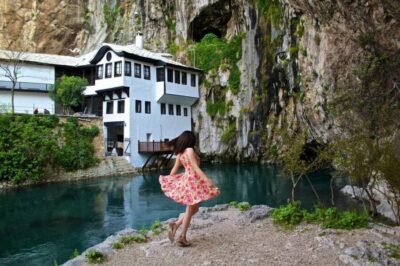
Mostar, Konjic, Blagaj Tekke, Pocitelj & Waterfall
Read our review →
Fall of Yugoslavia, Sarajevo War Tour with Tunnel of Hope Museum and Frontlines
Read our review →
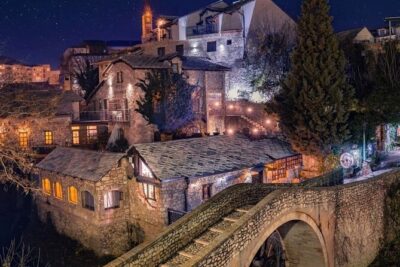
Mostar, Konjic, Sufi House, Pocitelj & Kravice Falls
Read our review →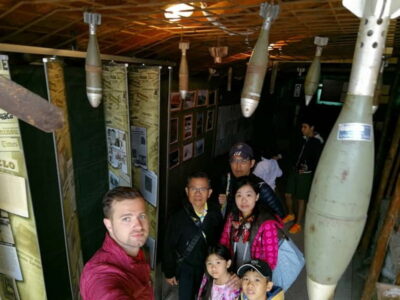
Tunnel Museum Yugoslavia War Tour with War Veteran
Read our review →
ROSES OF SARAJEVO (Official WAR + CITY tour)- Story of a Survivor
Read our review →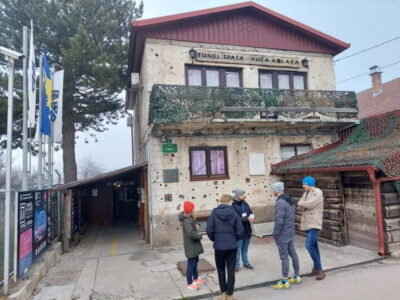
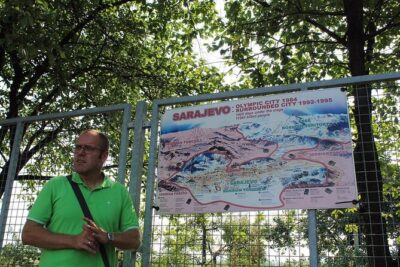
Tunnel Museum: Bosnian & Yugoslav Wars Tour with War Veteran
Read our review →Browse the lists this tour appears in