
Review · SARAJEVO TOURS
Sarajevo: Islamic Traditions and Daily Life Tour
Sarajevo tells its story through prayer, trade, food, and stone. This two-hour walking tour connects those parts of the city, taking you from the site of Sarajevo’s founding through mosques, a madrasa, an Ottoman home, the old bazaar, and a historic cemetery. I especially like the focus on daily Muslim life, not just grand monuments, and the chance to ask direct questions of guides such as Suad and Fuad. You also get a city map and a certified guide for $30.04, though extra entrance fees and some uphill walking add to the cost and effort.
I like the way the tour explains Sarajevo’s Islamic identity within the wider story of Bosnia and Herzegovina. I also like the small human touches reported by past participants, including coffee with a guide and helpful suggestions for places to eat. The main point to consider is pace: fourteen stops in about two hours means some locations receive only a quick look, and Svrzo’s House, the Gazi Husrev Bey Mosque, and its museum require extra payment.
In This Review
- Key points before you book
- Why Sarajevo’s Islamic story works best on foot
- Mejdan Park and the beginnings of Sarajevo
- Jedileri Sanctuary and the city’s sacred geography
- The Emperor’s Mosque and Sarajevo’s name
- Gazi Husrev-beg Mosque, the route’s main lesson
- Sarajevo’s lunar clock and a 1537 school
- Svrzo’s House and the feel of an Ottoman home
- The Faculty of Islamic Studies and Baščaršija
- Sebilj Fountain and Bravadžiluk Street
- Alifakovac Cemetery and Morića Han
- What the $30.04 price really covers
- Practical advice for a better walk
- Who will get the most from this experience?
- Should you book Sarajevo’s Islamic Traditions and Daily Life Tour?
- FAQ
- How long does the Sarajevo Islamic Traditions and Daily Life Tour last?
- What time does the tour begin?
- Where does the tour begin?
- Where does the tour end?
- Is the tour offered in English?
- Are entrance fees included?
- Can I cancel for a full refund?
Key points before you book
- The tour begins at Mejdan Park, a historic place linked to the official founding of Sarajevo and early public gatherings.
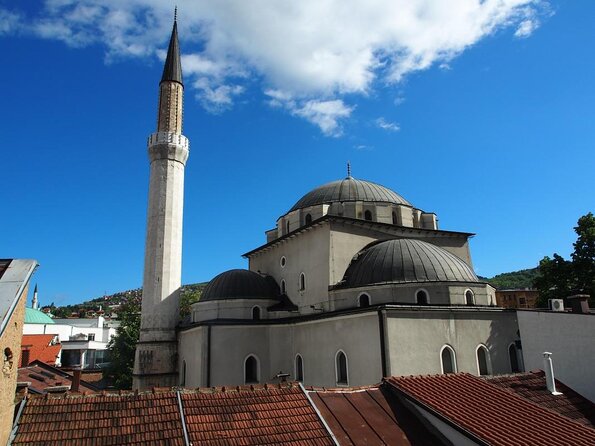
- Gazi Husrev-beg Mosque gets the most time, making it the central stop for understanding Sarajevo’s religious and civic life.
- Svrzo’s House offers the clearest look at home life, with an 18th-century Ottoman house preserved as a museum.
- The walk includes some uphill sections, so comfortable shoes matter more than stylish ones.
- The group can reach 25 people, although the experience may sometimes be much smaller, even private.
- The $30.04 price covers the guide and map, but museum and mosque charges cost an additional 13 BAM per person in total.
Why Sarajevo’s Islamic story works best on foot
Sarajevo’s Islamic traditions are not confined to one building. They appear in the shape of the old market, the location of fountains, the rhythm of the lunar clock, the design of homes, and the role of religious schools. Walking lets you see how these pieces fit together.
The route stays within central Sarajevo and returns to the starting point at Sarajevo Insider, on Zelenih beretki 30. The meeting time is 10:00 am. That morning start gives you a useful orientation before spending more time in Baščaršija or visiting other city sights on your own.
The guide is the key to making sense of the route. A short stop at a mosque can feel thin without context, but a good explanation turns it into part of a larger story about Ottoman rule, local customs, education, commerce, and modern Bosnian identity. Suad has been praised for being warm and willing to spend extra time with a participant, while Fuad was described as friendly, intelligent, and clear in his explanations.
The tour is offered in English. Confirmation arrives when you book, and the activity is near public transportation. Most people can take part, but this is a walking tour rather than a vehicle-based sightseeing trip. If you dislike hills or long periods on your feet, keep that in mind.
Other Sarajevo trips worth an open tab:
- Sarajevo: Mostar, Konjic, Blagaj Tekke, Pocitelj & Waterfall
★ 4.9 · 1,666 reviews - Fall of Yugoslavia, Sarajevo War Tour with Tunnel of Hope Museum and Frontlines
★ 5.0 · 1,314 reviews - Sarajevo: Grand Walking Tour Through Time and Cultures
★ 4.8 · 1,236 reviews
Mejdan Park and the beginnings of Sarajevo
The first stop is Mejdan Park, where Sarajevo was officially established. You spend only about five minutes here, so this is not a long historical lecture or a broad park visit. Its value is as a starting point, giving you a physical place to connect with the city’s earliest public life.
The park was also a gathering place for social activities. That detail matters because it frames Sarajevo as a lived-in city from the beginning, not simply a collection of religious monuments. The guide can use this opening to explain how community, trade, and faith developed together.
Admission is free. Since the stop is brief, I would treat it as a scene setter rather than a major attraction.
Jedileri Sanctuary and the city’s sacred geography
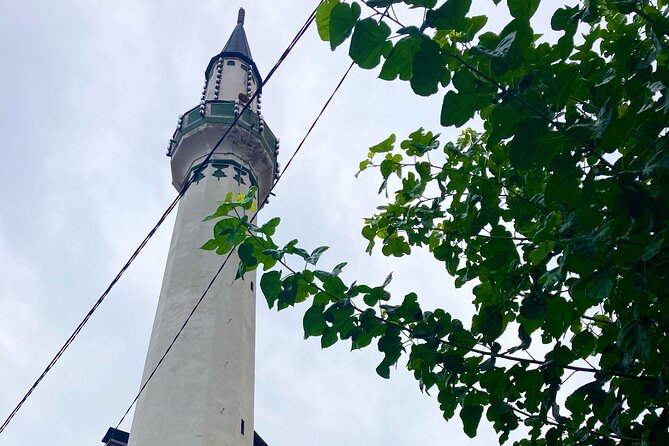
At the Turbe sedam braće, also called the Jedileri Sanctuary, the tour shifts from public history to personal faith. This sacred Islamic site has spiritual importance in Bosnian Muslim life, and the guide explains how such places fit into local religious practice.
You have about five minutes here. That is enough for an introduction and a moment to observe, but not enough for an extended visit or quiet reflection if the group is large. The stop works best for you if you want cultural context and are comfortable asking questions.
Admission is free. The sanctuary also helps show that Islamic tradition in Sarajevo includes more than formal mosques. Sacred spaces, local customs, and the memory attached to particular sites all form part of the city’s religious life.
The Emperor’s Mosque and Sarajevo’s name
The Emperor’s Mosque is presented as Sarajevo’s oldest mosque. The guide also connects it with the way the city got its name, adding a useful language and history lesson to the stop.
The scheduled visit lasts about three minutes. That is a very quick look, so do not expect a full architectural tour or extended time inside. Still, its place early in the route gives you a helpful reference point before the longer visit to Gazi Husrev-beg Mosque.
This stop is free, and its main value comes from the explanation. I would pay close attention here, since a short historical detail can give the rest of the walk more meaning.
Same corner of the country, a different kind of day:
- Sarajevo: Mostar, Konjic, Sufi House, Pocitelj & Kravice Falls
★ 5.0 · 1,179 reviews - Sarajevo: Tunnel Museum Yugoslavia War Tour with War Veteran
★ 5.0 · 1,111 reviews - ROSES OF SARAJEVO (Official WAR + CITY tour)- Story of a Survivor
★ 5.0 · 770 reviews - Sarajevo: Tunnel of Hope Tour – Survival and Resilience
★ 4.8 · 630 reviews
Gazi Husrev-beg Mosque, the route’s main lesson
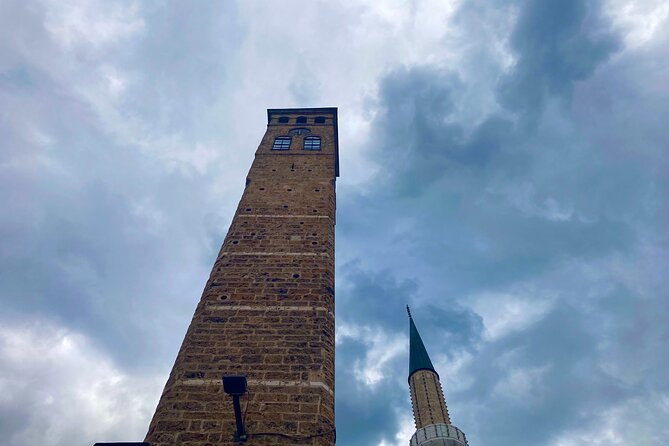
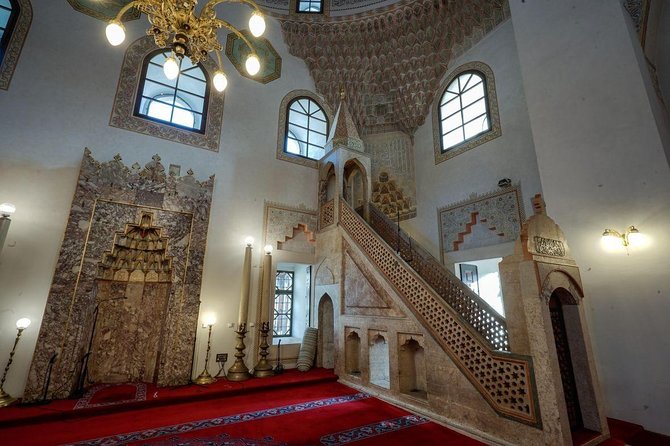
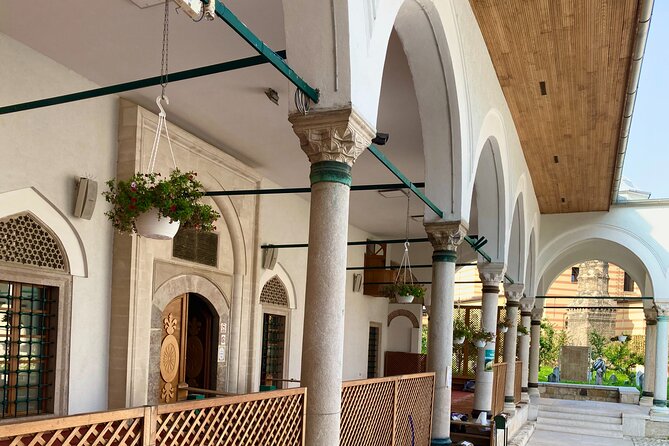
The 30-minute visit to Gazi Husrev-beg Mosque is the heart of the experience. This is where Sarajevo’s religious, cultural, and community life comes into sharper focus. The mosque is not treated only as an old building. It is explained as a central part of the city’s Islamic identity.
The tour describes the mosque as an important spiritual and cultural center. You can expect the guide to discuss its place in Sarajevo and Bosnia, along with the role of the surrounding religious institutions. This is the stop where a guide’s ability to explain rather than simply point becomes especially important.
Entrance to the Gazi Husrev Bey Mosque and Museum is not included. The listed charge is 8 BAM, about 4.50 euros, per person. That is a modest addition, but you should include it when comparing the tour price with other walking tours.
Because this is an active religious setting, respectful behavior and clothing are sensible. The supplied information does not specify a dress code, so ask the guide if you are unsure. The exact access inside the complex may depend on local conditions, but the tour does include time here.
Sarajevo’s lunar clock and a 1537 school
The historic Clock Tower is another short but unusual stop. It is a lunar clock, marking time according to the Islamic lunar calendar. That makes it a striking example of how religious practice shaped ordinary city routines.
The clock is easy to appreciate once you know what makes it different. Without the explanation, it might look like another old city feature. With context, it becomes a link between faith, timekeeping, and public life.
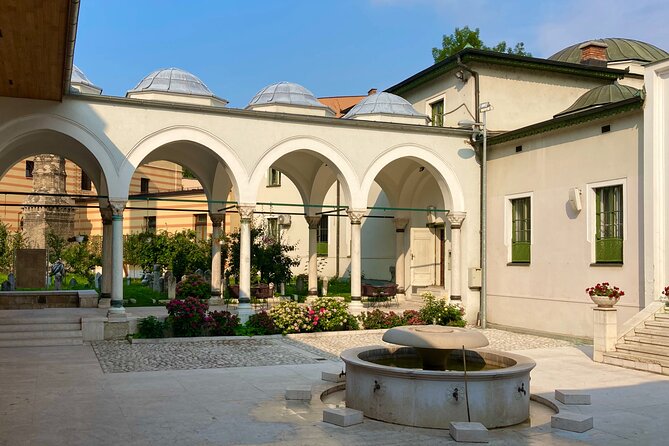
The route then reaches Gazi Husrev Begova Medresa, Sarajevo’s first Islamic high school. The school dates to 1537 and reflects the importance placed on education by one of Sarajevo’s major benefactors. You have around ten minutes here.
I value this stop because it broadens the tour beyond worship. It shows that Sarajevo’s Islamic institutions also supported learning and scholarship. Entrance is not included, and no separate fee is stated for this stop in the supplied details, so ask the guide what access is available on your date.
Svrzo’s House and the feel of an Ottoman home
Svrzo’s House is one of the most useful stops for understanding ordinary domestic life. This preserved 18th-century Ottoman house shows how Muslim families in Bosnia lived, arranged their rooms, and used their home space.
The visit lasts about 20 minutes, giving it more time than most of the early stops. One participant specifically valued the madrasa and this restored Ottoman home, and I can understand why. Religious buildings tell you what a community valued in public. A house shows how those values shaped private routines.
Admission costs 5 BAM, about 3 euros, per person, and is not included. That fee is worth considering because this is one of the few places on the route where history becomes physical and domestic rather than monumental.
The house also gives you a break from the fast rhythm of short photo stops. If you prefer architecture, interiors, and social history to quick explanations in the street, this may be your favorite part.
The Faculty of Islamic Studies and Baščaršija
The Faculty of Islamic Studies at the University of Sarajevo receives only about a minute on the route. That sounds brief, but the building itself is worth noting. Its design blends Neo-Moorish-inspired features with modern elements, linking older Islamic visual traditions with a contemporary educational setting.
The stop is free. You will not have much time to study the architecture, so listen for the guide’s explanation and consider returning later if the building interests you.
From there, the walk continues into Baščaršija, Sarajevo’s old bazaar. You have about 20 minutes to see the cobblestone streets, crafts, and former Ottoman-era trading atmosphere. This is not a separate shopping tour, but it explains how commerce and Muslim community life were tied together.
Baščaršija can be the most lively part of the walk, especially around its central streets. The guide helps you look past the souvenir shops and see the district as a working historic market. You may want to return on your own after the tour, since 20 minutes is enough for an introduction but not for a relaxed meal or serious shopping.
Sebilj Fountain and Bravadžiluk Street
The Sebilj Fountain is one of Sarajevo’s best-known symbols. The stop lasts only about one minute, yet the fountain has a role in Muslim traditions and remains a central meeting point in the old bazaar.
You may be invited to drink its water, making this a small but memorable part of the walk. It is a good example of the tour’s style: brief encounters become more meaningful when the guide explains their place in local customs.
Bravadžiluk Street gets around 20 minutes. Here the focus shifts toward Muslim culinary traditions and artisanal work. The stop is useful if you want to connect faith and culture with food, shops, and street life rather than seeing them as separate subjects.
No food purchase is included, and the tour price does not cover meals. Still, this is a good point to ask the guide for suggestions. One participant appreciated receiving restaurant advice and extra time in the city from Suad, so the personal exchange can add real value if your guide is able to offer it.
Alifakovac Cemetery and Morića Han
Alifakovac Cemetery is an optional stop and lasts about two minutes. It is a quiet place associated with notable Muslims in Bosnia, offering a pause for reflection on the city’s religious past.
Because it is optional and brief, it may not suit everyone’s priorities. If you are more interested in architecture and food, you might prefer to keep moving. If you want a closer look at memory, burial customs, and the people who shaped Sarajevo, it adds another layer to the tour.
The final stop is Morića Han, the best-preserved Ottoman inn in Sarajevo. It once served Muslim travelers and shows how trade routes, hospitality, and religious culture worked together. Three minutes is not long, but the guide can explain why an inn mattered in a city built around movement and commerce.
The route ends back at the original meeting point. That makes the tour easy to fit into a day of sightseeing, since you do not need to arrange a ride from a distant endpoint.
What the $30.04 price really covers
At $30.04 per person, the tour offers a certified English-speaking guide and a city map. The price is reasonable if you want an organized explanation of Sarajevo’s Islamic history rather than simply walking through the old town with a guidebook.
You should budget another 13 BAM per person for the listed entrance charges: 5 BAM for Svrzo’s House and 8 BAM for the Gazi Husrev Bey Mosque and Museum. In euros, the supplied prices total about 7.50 euros, although the exact conversion can change.
The value depends on what you want from a walking tour. If you only need landmarks and photographs, the cost may feel high for a two-hour route. If you want help understanding Bosnia’s Muslim traditions, Ottoman architecture, education, food, and daily customs, the guide’s interpretation makes the price more worthwhile.
The possible group size is 25 people. That is large enough to affect how easily you can hear, ask questions, or enter smaller spaces. Yet the experience can also be much more personal. One participant had Suad as a guide alone, while another enjoyed a relaxed conversation and coffee with a guide. You should not count on a private tour, but the possibility is worth knowing.
Practical advice for a better walk
Wear comfortable shoes. The route includes uphill walking, and that is the clearest practical warning from the experience. Sarajevo’s old streets are rewarding, but uneven or sloping sections can make a short tour feel longer.
Arrive at Sarajevo Insider, Zelenih beretki 30, before the 10:00 am start. The tour returns there, and public transportation is nearby. Bring enough money for the two listed entrance fees, and keep a little extra time afterward if you want to eat in Baščaršija or follow a guide’s restaurant suggestion.
The tour requires good weather. If poor conditions cancel it, you are offered another date or a full refund. It also requires a minimum number of participants, so a cancellation for that reason brings the same choice of a different date or a refund.
Free cancellation is available up to 24 hours before the start time. Changes or cancellations inside that window are not accepted, and the amount paid is not refunded.
Who will get the most from this experience?
I would choose this tour if you want Sarajevo explained through Islam, Ottoman institutions, and ordinary life. It suits visitors curious about Bosnia’s place as one of Europe’s Muslim-majority settings, as well as anyone interested in how religion shaped architecture, food, education, and public space.
You do not need to be Muslim to enjoy it. One of the strongest points is its welcoming tone toward both Muslim and non-Muslim participants. The best experience comes when you ask questions and stay open to subjects that may not appear on a standard old-town walk.
I would be less likely to choose it if you want a slow architectural tour, a large amount of free time inside each site, or a route with no hills. The two-hour schedule is efficient, but several stops are only one to five minutes long.
Should you book Sarajevo’s Islamic Traditions and Daily Life Tour?
Book it if you want an informed introduction to Sarajevo’s Muslim culture and do not mind walking at a steady pace. The strongest elements are the explanations at Gazi Husrev-beg Mosque, the madrasa, and Svrzo’s House, along with the chance to ask a guide about food, customs, and modern life.
I would book it near the start of your time in Sarajevo. The route gives you useful bearings in Baščaršija and points you toward places you may want to revisit. Just add the entrance fees to your budget, wear solid shoes, and remember that the tour’s value comes from conversation and context, not from spending a long time at every stop.
FAQ
How long does the Sarajevo Islamic Traditions and Daily Life Tour last?
The tour lasts approximately two hours.
What time does the tour begin?
The start time is 10:00 am.
Where does the tour begin?
The meeting point is Sarajevo Insider, Zelenih beretki 30, Sarajevo 71000, Bosnia and Herzegovina.
Where does the tour end?
The activity ends back at the original meeting point.
Is the tour offered in English?
Yes. The tour is offered in English.
Are entrance fees included?
No. Svrzo’s House costs 5 BAM per person, and entrance to the Gazi Husrev Bey Mosque and Museum costs 8 BAM per person.
Can I cancel for a full refund?
Yes. You can cancel at least 24 hours before the start time for a full refund. Cancellations or changes made less than 24 hours before the start are not accepted.
Newest around Sarajevo
- Understanding Srebrenica Genocide + Lunch with Local Family★ 4.9 · 14 reviews
- Private Full Day Safari Tour★ 5.0 · 8 reviews
- Sarajevo: Trebević Mountain Summit Hiking Tour★ 4.2 · 2 reviews
- From Sarajevo: Kozice Waterfalls Hiking Experience in Nature★ 5.0 · 2 reviews
- Sarajevo Under Siege: A War History Tour★ 5.0 · 10 reviews
- Mysterious Visoko Pyramids Driving and Walking Tour★ 5.0 · 7 reviews
- WAR TUNNEL – Sarajevo’s only way of a communication during the WAR – Top secret★ 5.0 · 12 reviews
- Ultimate Gastro Experience★ 4.5 · 14 reviews
Sarajevo Tours, compared.
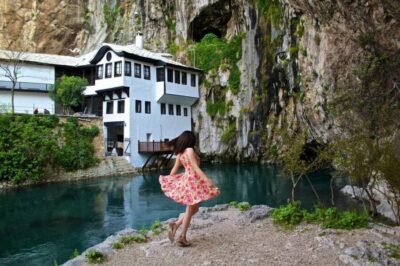
Mostar, Konjic, Blagaj Tekke, Pocitelj & Waterfall
Read our review →
Fall of Yugoslavia, Sarajevo War Tour with Tunnel of Hope Museum and Frontlines
Read our review →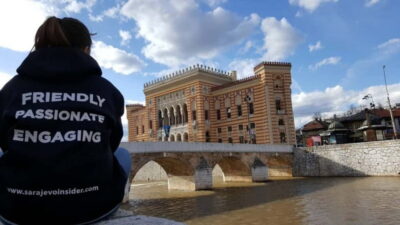
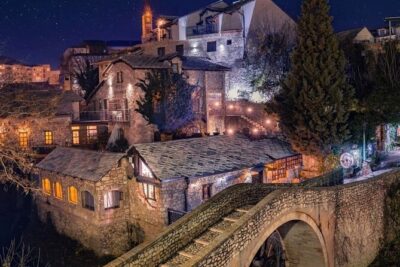
Mostar, Konjic, Sufi House, Pocitelj & Kravice Falls
Read our review →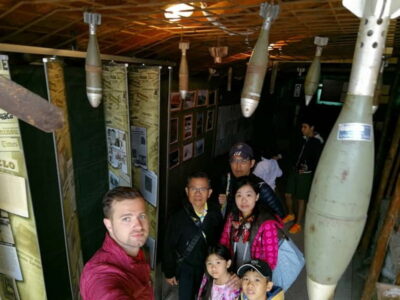
Tunnel Museum Yugoslavia War Tour with War Veteran
Read our review →
ROSES OF SARAJEVO (Official WAR + CITY tour)- Story of a Survivor
Read our review →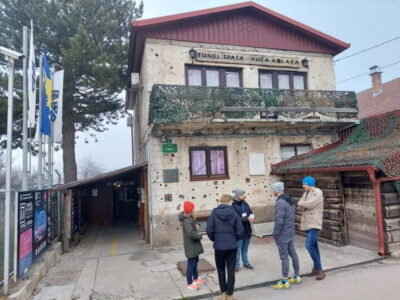
Tunnel Museum: Bosnian & Yugoslav Wars Tour with War Veteran
Read our review →Browse the lists this tour appears in