
Review · SARAJEVO TOURS
Sarajevo for beginners
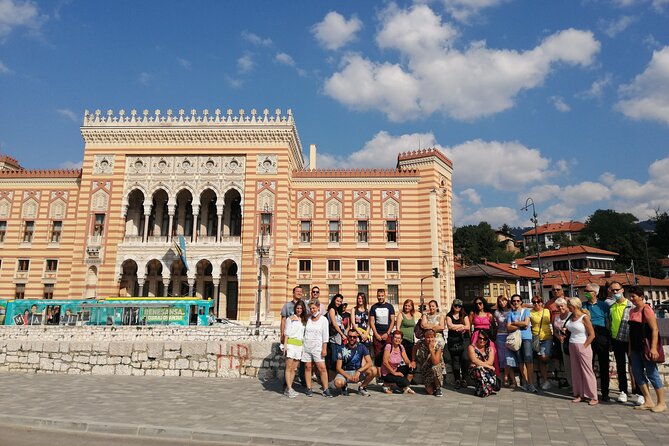
Sarajevo reveals itself one street at a time. This two-hour walking tour gives you a useful first look at the city through its churches, mosques, bridges, markets, and major historic sites, with a local guide adding the human stories that make the route more than a list of monuments. I especially like the strong mix of Ottoman and Austro-Hungarian Sarajevo, and I like that coffee or tea is included, giving you a small taste of local café culture along the way. The main consideration is time: 17 listed stops in about two hours means some visits are brief, and admission fees are not included.
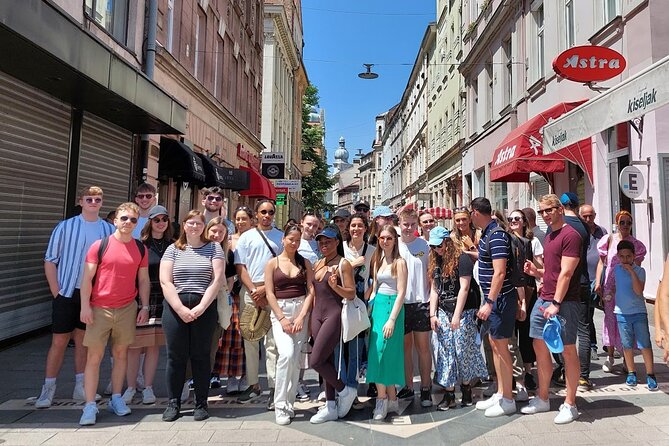
The tour begins at 9:00 a.m. at Trg fra Grge Martića and returns there at the end. It costs $34.92 per person, which is fair if you want a quick orientation and a guide who can explain Sarajevo’s layered past in clear English. The experience is capped at 18 people, so it should feel more manageable than a large bus tour, though the group may still be too big for long conversations at every stop.
In This Review
- Key points at a glance
- Why this short walk works well on a first morning
- From Sarajevo Cathedral to Hotel Europe
- The old market and the Sarajevo assassination site
- Ottoman Sarajevo beside the Miljacka River
- Kazandžiluk, Sebilj, and Baščaršija
- Morića Han and the Gazi Husrev-beg Mosque
- The Jewish Museum and Sarajevo’s wider story
- What the pace and group size mean
- The guide makes or breaks this experience
- Who should book Sarajevo for beginners?
- Should you book it?
- FAQ
- Where does the Sarajevo for beginners tour start?
- What time does the tour begin?
- How long does the tour last?
- Where does the tour finish?
- How much does the tour cost?
- Is coffee or tea included?
- Are attraction admission tickets included?
- What language is the tour offered in?
- How many people can join the tour?
- Can I cancel for a full refund?
Key points at a glance
- Seventeen central stops in about two hours: You cover the cathedral, Orthodox church, Ottoman market streets, Latin Bridge, City Hall, Baščaršija, and the Jewish Museum area.
- A city built from several traditions: The route moves between Catholic, Orthodox, Muslim, and Jewish landmarks, showing how Sarajevo’s identity developed.
- The assassination site gets proper context: The stop near Latin Bridge connects one street corner to the event that helped trigger the First World War.
- Bosnian coffee is part of the experience: Coffee or tea is included, and one guide specifically helped a guest learn how to drink Bosnian coffee.
- Local guides are a major strength: Samra is praised for warmth, humor, excellent English, personal insight, and a strong command of Sarajevo’s story.
- Good for first-time visitors: You return to the starting point with a practical sense of the Old Town and ideas for what to explore next.
Why this short walk works well on a first morning
Sarajevo can feel compact at first, but its story is not simple. A single street may show Ottoman architecture, Austro-Hungarian design, religious buildings from several communities, and reminders of the city’s more recent conflicts. This tour helps you read those layers before you wander on your own.
The route is especially useful if you have only a short stay or prefer to begin with a local introduction. You are not being driven from sight to sight. You walk through the central area, hear explanations in English, and get a basic map of the city through its important buildings and public spaces.
The guide is central to the experience. Samra is repeatedly praised for her humor, openness, historical accuracy, and ability to answer difficult questions. One group spent two full hours walking with her without feeling that the time dragged. Irfan is also praised as a friendly and informative guide connected with the same company. Your assigned guide may be different, but the strongest part of the experience is clearly the personal storytelling rather than the physical route alone.
At $34.92, the value depends on what you want. If you simply need someone to point out buildings, it is not the cheapest way to walk around Sarajevo. If you want context, local advice, and a confident introduction to the city’s religious and political past, the price is reasonable. The included coffee or tea adds a small but welcome extra.
Other Sarajevo trips worth an open tab:
- Sarajevo: Mostar, Konjic, Blagaj Tekke, Pocitelj & Waterfall
★ 4.9 · 1,666 reviews - Fall of Yugoslavia, Sarajevo War Tour with Tunnel of Hope Museum and Frontlines
★ 5.0 · 1,314 reviews - Sarajevo: Grand Walking Tour Through Time and Cultures
★ 4.8 · 1,236 reviews
From Sarajevo Cathedral to Hotel Europe
The opening stop is Katedrala Srca Isusova, the Cathedral of the Sacred Heart of Jesus. It is described as simple but beautiful, and the ten-minute visit gives the tour an early chance to explain Sarajevo’s Catholic presence. You should not expect a long interior visit, since admission is not included and the planned stop is short. The value is in seeing the cathedral as part of the city’s larger religious mix.
Next comes the Orthodox Church of the Nativity of the Theotokos. This Serbian Orthodox church provides a natural contrast with the cathedral. The two stops together make an important point: Sarajevo is not defined by one faith or one architectural style. You get ten minutes here, again without admission included, so listen closely to the guide rather than counting on an extended church visit.
Hotel Europe adds another layer. It is presented as Sarajevo’s first hotel and the oldest in southeastern Europe. The five-minute stop is brief, but the building helps mark the transition toward the Austro-Hungarian period and the city’s changing role as a modern urban center. This is the kind of place that can be easy to pass without understanding why it matters.
A short stop at Tašlihan follows. Only remains survive, but ruins often need explanation more than intact buildings do. The guide can help you picture the commercial center that once occupied this space. Five minutes will not allow for a long archaeological lesson, but it is enough to connect the site with Sarajevo’s old trading life.
The old market and the Sarajevo assassination site
Gazi-Husrev Beg’s Bezistan is described as the original shopping mall of Sarajevo. That comparison makes the place easy to understand: this was a covered commercial space serving the Ottoman city. The five-minute visit will be more about orientation and storytelling than browsing every corner, but it places the surrounding market streets in context.
The most famous historical stop is the Location of the Sarajevo Assassination. The route allows 15 minutes here, more than at most earlier stops. That extra time matters. The event is often reduced to a single sentence about Archduke Franz Ferdinand, but the location deserves a clearer explanation of the political tension surrounding it and why the shooting had consequences far beyond Sarajevo.
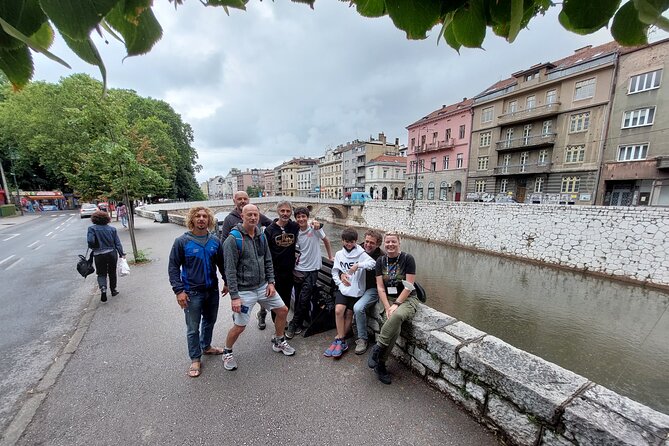
Latin Bridge is next, with ten minutes planned. The bridge is known for three names, a detail that hints at the city’s changing languages, rulers, and communities. It is also closely tied to the assassination story. You will get more from this stop if you pay attention to how the bridge, street, and nearby buildings fit together rather than treating it as a quick photo point.
This section is one of the tour’s best uses of time. It gives you a concrete place to connect local geography with world events. Just keep your expectations measured. The tour is an introduction, not a full seminar on the First World War, and the schedule moves quickly.
Ottoman Sarajevo beside the Miljacka River
The Emperor’s Mosque is described as Sarajevo’s oldest mosque. The ten-minute stop adds another major religious building to the route and shifts the focus back to the Ottoman period. Along with the bezistan, bridges, and market streets, it helps you see that Ottoman Sarajevo was not just a collection of old façades. It was a working city shaped by worship, trade, water, and public life.
Inat kuća, or the House of Spite, brings a more personal story. The point is to learn what inat means, a word associated with stubborn defiance and doing something out of principle. The five-minute stop is short, but the story gives you a memorable way to understand a local attitude that may otherwise be hard to explain in a guidebook.
Seher Cehaja’s Bridge follows. It is described as the oldest bridge in Sarajevo, and the second one built. At five minutes, this is another stop where the guide’s explanation makes the difference. You may not spend long on the bridge itself, but its position along the river helps you understand how Sarajevo developed around crossings and connections.
Sarajevo City Hall receives 15 minutes, making it one of the more substantial stops. Built during the Austro-Hungarian period in the center of the Old Town, it is notable for fitting beside Ottoman architecture rather than replacing it. That contrast is one of Sarajevo’s great visual lessons. A grand Austro-Hungarian building and an Ottoman market district can exist within the same short walk.
The itinerary also includes the development of Bravadžiluk street. No separate time is listed, so this appears to be explained while you walk. That is useful because the street story links architecture with everyday commerce. You are not only looking at famous buildings. You are also hearing how streets gained their purpose and character.
Same corner of the country, a different kind of day:
- Sarajevo: Mostar, Konjic, Sufi House, Pocitelj & Kravice Falls
★ 5.0 · 1,179 reviews - Sarajevo: Tunnel Museum Yugoslavia War Tour with War Veteran
★ 5.0 · 1,111 reviews - ROSES OF SARAJEVO (Official WAR + CITY tour)- Story of a Survivor
★ 5.0 · 770 reviews - Sarajevo: Tunnel of Hope Tour – Survival and Resilience
★ 4.8 · 630 reviews
Kazandžiluk, Sebilj, and Baščaršija
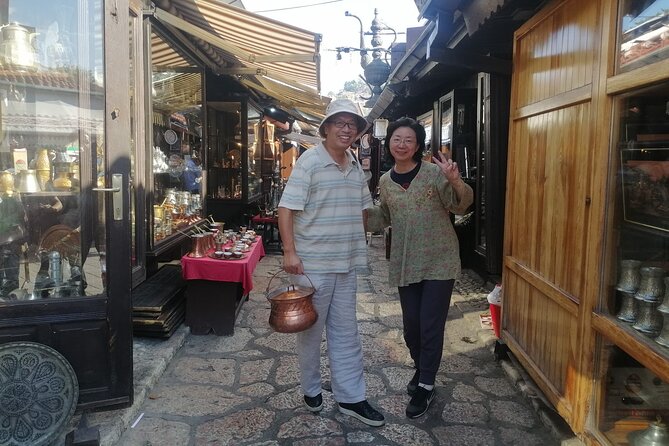
Kazandžiluk is one of the most authentic streets on the route. Its name points to the traditional coppersmith trade, and the street gives you a stronger sense of Sarajevo as a place of working crafts rather than only monuments. Ten minutes is enough to notice the shopfronts and hear why the street matters.
Sebilj is the familiar fountain and meeting point at the center of Baščaršija. The planned stop is five minutes, but you will likely remember it because it works as a visual anchor. Once you know Sebilj, you can use it to orient yourself when returning to the Old Town on your own.
Baščaršija itself gets ten minutes. As Sarajevo’s main square and central Ottoman market district, it is the natural heart of the walking route. This is where the tour’s themes come together: trade, religion, craft, public life, and the city’s mix of eastern and western influences.
The limitation is that the schedule gives you little free time here. You will not have a relaxed shopping session or a long café break during the main walk. Think of this visit as an introduction. You can return later, when you know which streets and courtyards deserve a slower look.
Morića Han and the Gazi Husrev-beg Mosque
Fotokopirnica Morića Han is described as probably the coolest place in Sarajevo. The name may sound like a copy shop, but the stop concerns Morića Han, a historic inn in the market district. The ten-minute visit gives you a chance to see the kind of place where merchants and visitors once stayed while doing business in the Ottoman city.
The Gazi Husrev-beg Mosque is the central mosque in Sarajevo and receives ten minutes. It is one of the route’s most important Ottoman landmarks. The guide can help you understand its role in the city, but remember that admission is not included. If you want to enter any religious building, practical access may depend on current rules and timing, so treat the scheduled stop as an exterior and orientation visit unless told otherwise.
The itinerary notes that different times tell different stories. That is a useful way to approach the whole tour. Sarajevo is not one historical period with a few old buildings scattered around it. The meaning of a place changes with the people who use it, the government in power, and the events that take place nearby.
The Jewish Museum and Sarajevo’s wider story
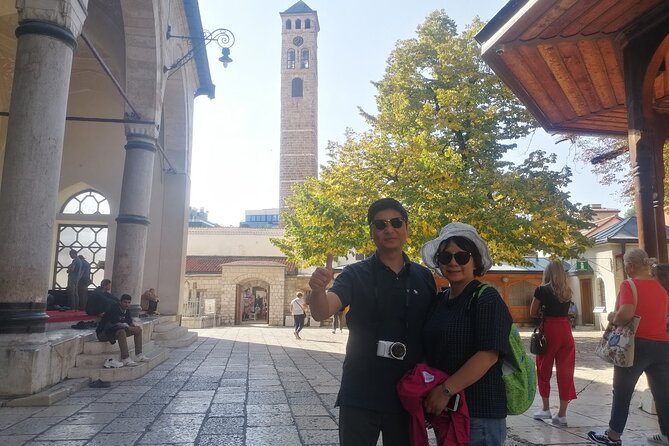
The final listed stop is the Jewish Museum of Bosnia and Herzegovina, with 15 minutes in the surrounding square and an explanation of Jewish life in Bosnia and Herzegovina. This is an important inclusion. A tour that focused only on Ottoman and Austro-Hungarian landmarks would leave out a major part of Sarajevo’s identity.
The stop appears designed mainly for the square and the story rather than a full museum visit. Admission is not included, and the two-hour schedule does not leave much room for a long indoor visit. If the museum is a priority for you, ask about visiting separately after the tour.
Ending with the Jewish Museum gives the route a broader frame. You have moved through Catholic, Orthodox, Muslim, and Jewish places, as well as commercial and civic sites. That range is the tour’s real strength. It helps you see Sarajevo as a meeting point of communities, not just a collection of dramatic photographs.
What the pace and group size mean
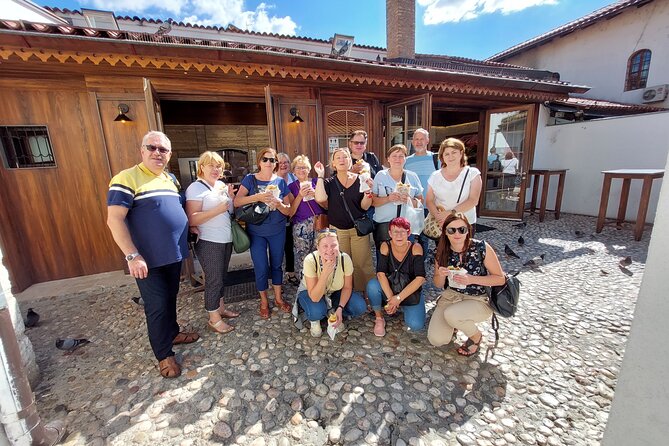
The tour lasts about two hours and includes a maximum of 18 people. That is small enough for a guide to address the group without a microphone, but large enough that you should not expect a private conversation at every stop. The itinerary lists many stops, so the pace is purposeful.
Most visits last five or ten minutes. The longer 15-minute stops are the assassination location, Sarajevo City Hall, and the Jewish Museum area. You will spend more time walking and listening than entering attractions. Wear comfortable shoes and keep your morning open enough to stay with the group.
The 9:00 a.m. start is practical. It gives you an early orientation before you spend the rest of the day exploring independently. You return to Trg fra Grge Martića, so the tour does not leave you searching for a final drop-off point.
Confirmation arrives at booking. Service animals are allowed, public transportation is nearby, and most people can participate. The tour is offered in English only. Coffee or tea is included, but attraction admission is not, so bring a little extra money if you decide to enter a site afterward.
The guide makes or breaks this experience
The most consistent praise goes to Samra. She is described as warm, funny, direct, historically accurate, and able to answer questions from people with very different levels of background knowledge. One especially useful detail is her help with Bosnian coffee. That small lesson can turn a standard refreshment into a local custom you understand better.
She also gives practical suggestions for other places to visit, eat, and explore. That matters because the tour itself is short. A good guide does not try to cover all of Sarajevo in two hours. Instead, the guide gives you enough context to choose what deserves more of your time later.
Samra has guided individuals, families, and groups as large as 12 people on longer Bosnia trips. Her English is praised as excellent. Irfan is also described as friendly and informative. Still, guide assignments can vary, so book this experience for the company’s style and route rather than assuming a particular person is guaranteed.
Who should book Sarajevo for beginners?
I would choose this tour if you are visiting Sarajevo for the first time, have limited time, or want the city’s main themes explained before exploring alone. It suits people who enjoy walking, architecture, local stories, and historical context more than long museum visits.
It is also a good fit if you want to see how several traditions occupy one compact city center. The route gives you a Catholic cathedral, Serbian Orthodox church, Ottoman mosques and markets, Jewish history, Austro-Hungarian buildings, bridges, and the assassination site in one morning.
I would hesitate if you want a slow photographic walk, substantial time inside each attraction, or a private guide. The schedule is tight, admission is extra, and 17 stops in two hours leaves no room to linger. In that case, use this tour as an orientation and plan a second, slower outing afterward.
Should you book it?
Book Sarajevo for beginners if you want a lively first lesson in the city, especially at the start of your stay. The $34.92 price is sensible for an English-language walking tour with coffee or tea included, a central meeting point, and a route that covers an impressive range of Sarajevo’s landmarks.
The best reason to choose it is the guide-led interpretation. Samra’s warmth, humor, personal perspective, and practical tips receive the strongest praise, while the route itself gives you a clear framework for later exploring. Just remember that this is a fast introduction, not a full-day historical study. Arrive ready to walk, listen, and return to Baščaršija later for a slower look.
FAQ
Where does the Sarajevo for beginners tour start?
The tour starts at Trg fra Grge Martića, Trg Fra Grge Martića, 71000 Sarajevo, Bosnia and Herzegovina.
What time does the tour begin?
The scheduled start time is 9:00 a.m.
How long does the tour last?
The experience lasts approximately two hours.
Where does the tour finish?
The tour ends back at the original meeting point.
How much does the tour cost?
The listed price is $34.92 per person.
Is coffee or tea included?
Yes. Coffee and/or tea is included in the experience.
Are attraction admission tickets included?
No. Admission tickets are not included for the listed stops.
What language is the tour offered in?
The tour is offered in English.
How many people can join the tour?
The activity has a maximum group size of 18 people.
Can I cancel for a full refund?
Yes, you can cancel up to 24 hours before the experience start time for a full refund. Changes or cancellations made less than 24 hours before the start are not accepted for a refund.
Newest around Sarajevo
- Understanding Srebrenica Genocide + Lunch with Local Family★ 4.9 · 14 reviews
- Private Full Day Safari Tour★ 5.0 · 8 reviews
- Sarajevo: Trebević Mountain Summit Hiking Tour★ 4.2 · 2 reviews
- From Sarajevo: Kozice Waterfalls Hiking Experience in Nature★ 5.0 · 2 reviews
- Sarajevo Under Siege: A War History Tour★ 5.0 · 10 reviews
- Mysterious Visoko Pyramids Driving and Walking Tour★ 5.0 · 7 reviews
- WAR TUNNEL – Sarajevo’s only way of a communication during the WAR – Top secret★ 5.0 · 12 reviews
- Ultimate Gastro Experience★ 4.5 · 14 reviews
Sarajevo Tours, compared.
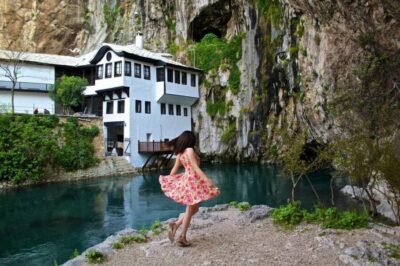
Mostar, Konjic, Blagaj Tekke, Pocitelj & Waterfall
Read our review →
Fall of Yugoslavia, Sarajevo War Tour with Tunnel of Hope Museum and Frontlines
Read our review →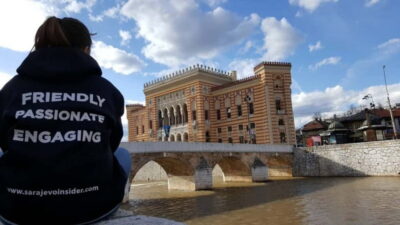
Mostar, Konjic, Sufi House, Pocitelj & Kravice Falls
Read our review →
Tunnel Museum Yugoslavia War Tour with War Veteran
Read our review →
ROSES OF SARAJEVO (Official WAR + CITY tour)- Story of a Survivor
Read our review →
Tunnel Museum: Bosnian & Yugoslav Wars Tour with War Veteran
Read our review →Browse the lists this tour appears in