
Review · SARAJEVO TOURS
Sarajevo: Best of Sarajevo – Ultimate Full-Day Experience
Sarajevo’s story is packed into one remarkable day. This seven-hour tour connects the Ottoman lanes of Baščaršija with Austro-Hungarian landmarks, the 1984 Olympic venues, and the painful history of the Siege of Sarajevo. I especially like the wide historical sweep and the chance to taste Bosnian coffee and local food instead of simply looking at monuments. The main drawback is the pace: you cover a lot of ground, and the separate 30 euro entry package pushes the real cost above the advertised $81.
I also like the human side of the experience. Guides such as Denis, Fariz, Safet, Emir, and Bojan have been praised for clear English, warmth, and thoughtful conversation. A guide who served as a police officer during the war has also led the wartime portion, giving the Tunnel of Hope visit a personal edge. You should expect a serious day, though, with walking, mountain transport, religious-site rules, and difficult war history.
In This Review
- Key points to know before booking
- Why this tour works for a first day in Sarajevo
- Baščaršija, coffee, and the Ottoman heart
- Sarajevo’s religious landmarks and shared city story
- The Franz Ferdinand assassination site
- Trebević Cable Car and the 1984 Olympic memory
- Driving through Sniper Alley
- The Tunnel of Hope and Sarajevo’s survival
- What the guides add to the experience
- Price, transport, and the real value
- Who should book this Sarajevo day tour?
- Should you book Best of Sarajevo?
- FAQ
- How long does the Best of Sarajevo tour last?
- How much does the tour cost?
- Are entrance tickets included?
- What is included in the tour price?
- Where does the tour meet?
- What languages are available?
- Can I cancel the booking?
- Can I reserve the tour and pay later?
- Is the tour suitable for wheelchair users or people with mobility impairments?
Key points to know before booking
- One day, three eras: You move from Ottoman Sarajevo to Austro-Hungarian rule, the 1984 Winter Olympics, and the city’s wartime survival.
- Trebević adds fresh air and views: The cable car takes you above the city, followed by a walk along the old Olympic bobsled track.
- Bosnian coffee is part of the lesson: You learn how coffee fits into local hospitality, rather than treating it as a quick refreshment.
- The Tunnel of Hope is the emotional center: The small passage and wartime displays explain how Sarajevo stayed connected during the siege.
- The $81 price is not the full admission cost: Cable car, religious sites, and Tunnel Museum tickets cost an additional 60 BAM, listed as 30 euros per person.
- The tour demands comfortable, modest clothing: Shorts, short skirts, sleeveless shirts, open-toed shoes, high heels, and large bags are not allowed.
Why this tour works for a first day in Sarajevo
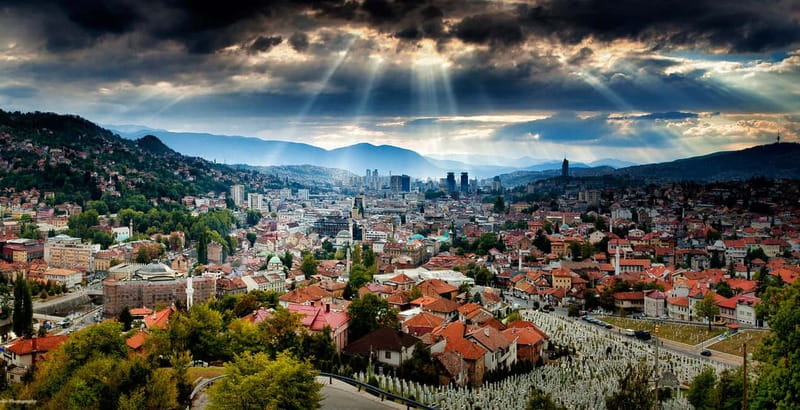
Sarajevo can be confusing at first because its past is not arranged in separate museum rooms. Ottoman mosques, Austro-Hungarian buildings, Jewish heritage, Orthodox churches, Olympic sites, and wartime scars all sit within one city story.
This tour gives you that structure. You are not only shown a famous corner or a single period. You are helped to understand how Sarajevo became a meeting point between Eastern and Western cultures, and why that mixture still shapes daily life.
The plan also saves you from organizing several separate visits. Transportation links the old center with Trebević and the Tunnel Museum, which are not best handled as one long walk. For a first visit, that makes the day efficient and useful.
The trade-off is time. Seven hours sounds generous, but Sarajevo has plenty to see, and the tour covers a lot. If you prefer slow museum visits, long coffee breaks, or photography at every stop, this may feel brisk. If you want a strong orientation before exploring alone, the pace makes sense.
Other Sarajevo trips worth an open tab:
- Sarajevo: Mostar, Konjic, Blagaj Tekke, Pocitelj & Waterfall
★ 4.9 · 1,666 reviews - Fall of Yugoslavia, Sarajevo War Tour with Tunnel of Hope Museum and Frontlines
★ 5.0 · 1,314 reviews - Sarajevo: Grand Walking Tour Through Time and Cultures
★ 4.8 · 1,236 reviews
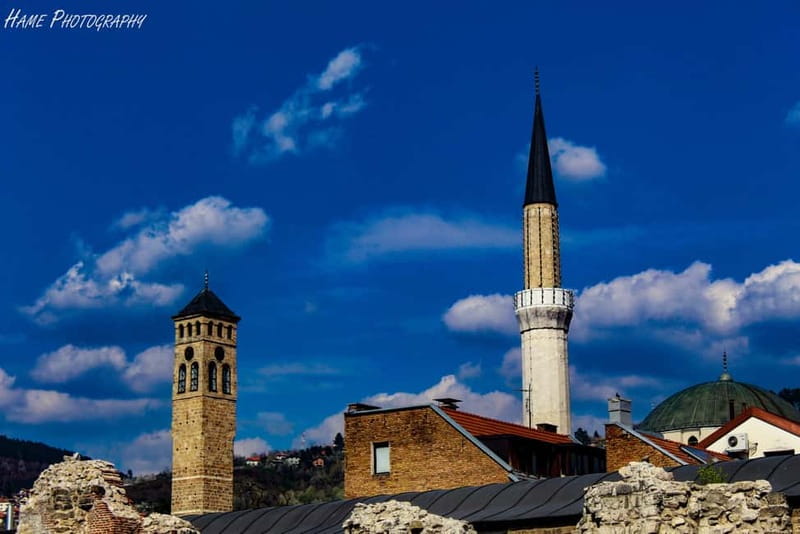
Baščaršija, coffee, and the Ottoman heart
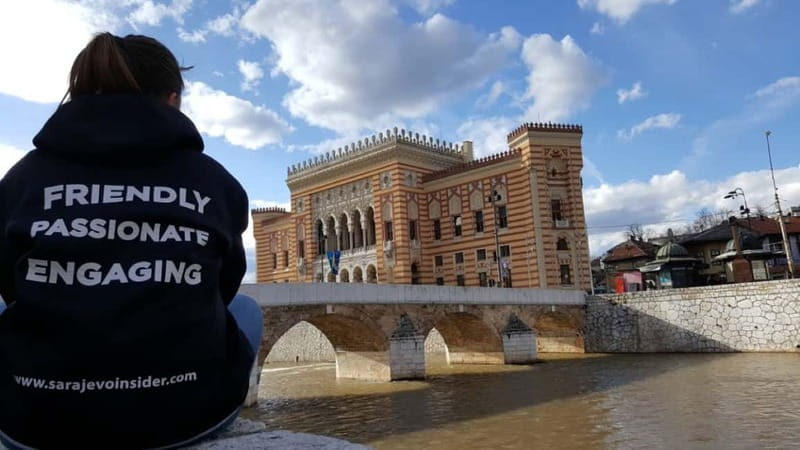
The day begins at Zelenih beretki 30, the Insider City Tours and Excursions office. From there, the historic center leads you into Baščaršija, Sarajevo’s Ottoman-era core.
Expect cobbled lanes, traditional architecture, craft shops, cafés, and landmarks tied to the city’s Muslim heritage. This is the best place to see how Sarajevo’s older identity still works as a living part of the city, not just as a preserved set of façades.
The guide’s role matters here. A good explanation can connect the streets to Sarajevo’s position between empires and cultures. Denis, Fariz, Emir, and Bojan have each been praised for making the past easy to follow and for answering questions without turning the walk into a dry lecture.
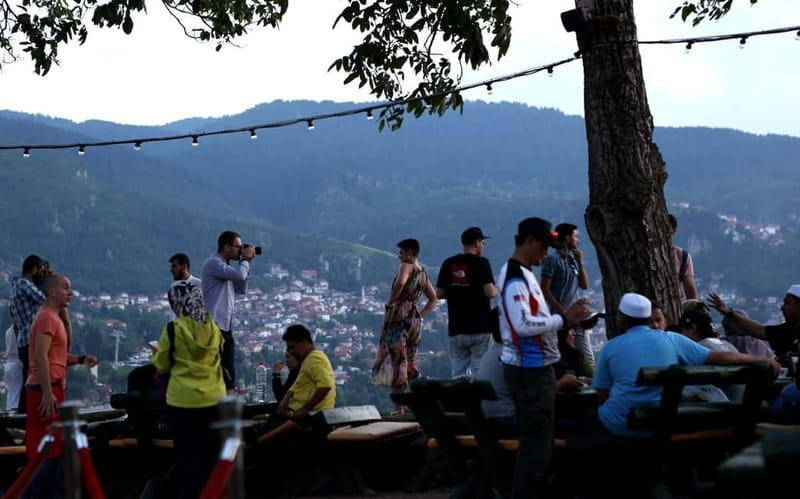
The Bosnian coffee tasting is a small but important part of the morning. Coffee in Bosnia and Herzegovina is linked to welcome, conversation, and taking time with another person. You get more from this stop if you treat it as a cultural custom, not simply a caffeine break.
Traditional food is included as well. One guide introduced a local dish that a visitor had not encountered before, a useful reminder that Bosnian food extends beyond the familiar names found on tourist menus. The exact tasting can vary, so do not book this expecting a fixed restaurant meal or a specific dish.
Sarajevo’s religious landmarks and shared city story
The tour includes several important religious sites: Bey’s Mosque, an Orthodox church, and a synagogue. These visits help show why Sarajevo is often described as a place where different religious traditions have lived close together.
The value here is comparison. You can see how buildings, worship traditions, and communities contribute to the same urban story. The tour is not limited to one religious viewpoint, and that broad approach fits Sarajevo’s long role as a crossroads.
Entry to these sites is part of the 60 BAM, or 30 euro, package that is not included in the advertised price. The package also covers the cable car and Tunnel Museum. Check the amount when booking, since the listing presents both BAM and euro figures and currency conversion can change.
Dress rules are important. Shorts, short skirts, sleeveless shirts, and open-toed shoes are not allowed. High heels are also prohibited, and large bags or luggage cannot be taken along. Modest, practical clothing is the sensible choice for the entire day.
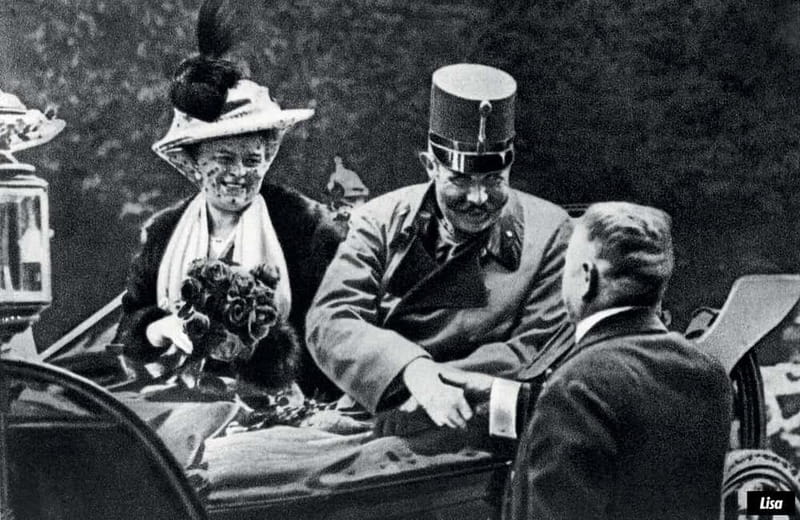
The Franz Ferdinand assassination site
Sarajevo’s modern European story includes the assassination of Archduke Franz Ferdinand and his wife, Sophie. The event took place in Sarajevo in 1914 and helped set off the chain of events that led to World War I.
The site is valuable because it connects an ordinary city street with a world-changing event. Your guide can explain the political pressures around the assassination and why this moment mattered far beyond Bosnia.
Do not expect the stop itself to fill the day. Its importance comes from the explanation around it. Without context, it can look like a simple point on a street. With context, it becomes one of the clearest examples of how Sarajevo’s local history connects to European history.
Same corner of the country, a different kind of day:
- Sarajevo: Mostar, Konjic, Sufi House, Pocitelj & Kravice Falls
★ 5.0 · 1,179 reviews - Sarajevo: Tunnel Museum Yugoslavia War Tour with War Veteran
★ 5.0 · 1,111 reviews - ROSES OF SARAJEVO (Official WAR + CITY tour)- Story of a Survivor
★ 5.0 · 770 reviews - Sarajevo: Tunnel of Hope Tour – Survival and Resilience
★ 4.8 · 630 reviews
Trebević Cable Car and the 1984 Olympic memory
The ride up Trebević changes the mood. After the close streets of the old center, you head toward the Olympic mountain for broad views over Sarajevo.
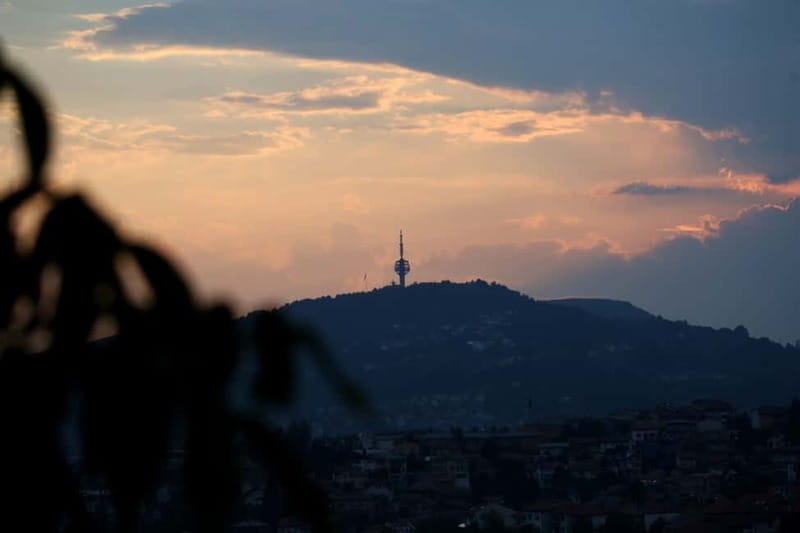
The cable car is one of the tour’s strongest visual moments. It gives you a sense of how the city sits in a mountain basin, and it helps explain why Trebević played such an important part in the 1984 Winter Olympics.
You then walk along the former Olympic bobsled track. The track is a striking remnant of Sarajevo’s sporting past. It also carries a more complicated memory because the Olympic venues later became linked with the city’s wartime years.
This part suits you if you like history with a physical setting. You are not just told that Sarajevo hosted the Games. You see one of the places built for them and consider what happened to the city afterward.
There are practical limits. The tour is not designed as a long mountain hike, but you still need to walk on uneven ground. People with mobility impairments, wheelchair users, and people with epilepsy are advised not to book. Comfortable closed shoes are essential, especially since open-toed shoes are not permitted.
Cloud and snow can make Trebević particularly atmospheric, as one winter booking described, but mountain conditions also affect comfort. Bring layers and be ready for a cooler, less urban setting than Baščaršija.
Driving through Sniper Alley
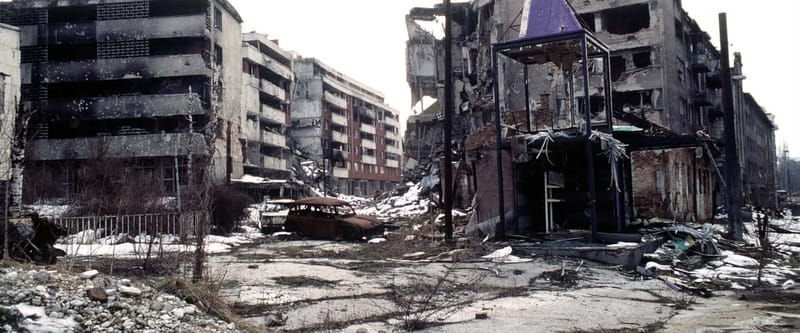
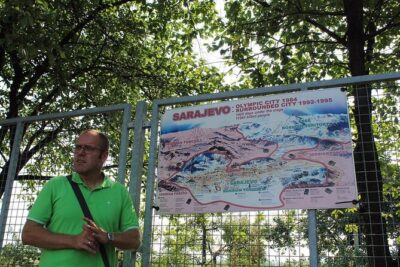
The afternoon turns to the Siege of Sarajevo. The drive through Sniper Alley gives geographic context to a subject that can otherwise feel like a series of disconnected dates and photographs.
The tour explains how the siege affected ordinary movement through the city. Roads that look normal today were once dangerous corridors. Seeing them in relation to the city center helps you understand the scale of the crisis.
This is also where the quality of the guide becomes especially important. One guide who worked as a police officer during the war has led this portion and explained the competing forces, the front lines, and the realities of life under siege. The information is not presented as a simple good-versus-evil story. That matters in Bosnia, where the recent past remains personal and politically sensitive.
A useful preparation tip is to look at a map of the Siege of Sarajevo before the tour. One person who took the tour suggested this because the front lines can be hard to picture while riding in a van. A map on your phone may help you follow the locations during the drive, though you should keep your attention on the guide.
The Tunnel of Hope and Sarajevo’s survival
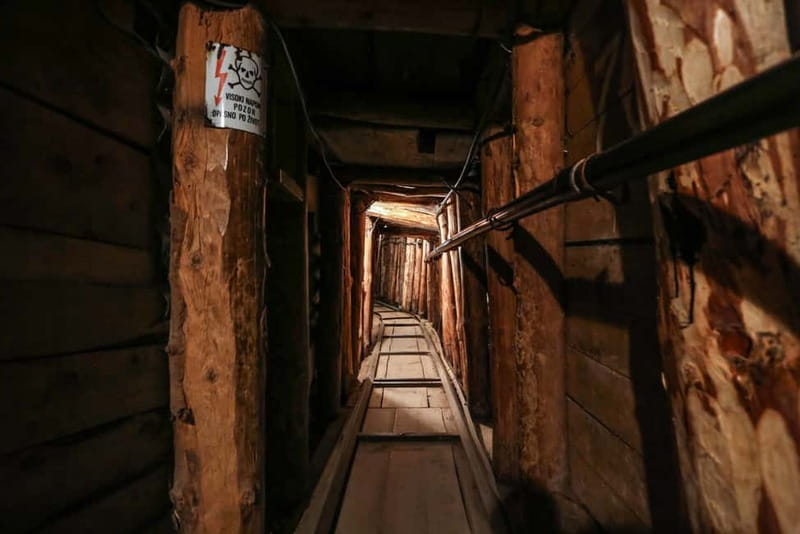
The War Tunnel Museum is the day’s most moving stop. During the siege, the tunnel served as Sarajevo’s link to the outside world and helped carry supplies, people, and communication into and out of the city.
Walking through part of the Tunnel of Hope makes the story physical. The passage is not grand or polished. Its power comes from its cramped scale and the knowledge that it was a working lifeline during a long period of danger.
The museum and the map showing the wartime front lines help place the tunnel within the wider siege. You learn not only what the tunnel was, but why it was needed and how it fit into the city’s fight to survive.
This is difficult material. I would not recommend treating the stop as a casual attraction or squeezing it between lighter activities. Give yourself room to listen. The guide’s personal connection can make the visit more affecting, but it can also make the subject feel heavier.
The Tunnel Museum entry is part of the additional 60 BAM, or 30 euro, package. The visit is one of the main reasons the extra fee feels worthwhile, especially if modern Bosnian history is a priority for you.
What the guides add to the experience
The strongest praise for this tour centers on the guides, not on the vehicles or ticket handling. Denis has been described as easy to talk with and generous with his perspective on Sarajevo and its culture. Fariz has been praised for fluent English, courtesy, and an interactive approach.
Safet received especially warm praise for caring about comfort and adapting the day to the group. Emir was described as kind and well informed, while Bojan was praised for a relaxed style that made the city’s history come alive.
The exact guide lineup can vary, so you should not book with the promise that one named person will lead every section. Still, the repeated pattern is encouraging: the human explanation is the main product here.
Some departures may use two guides, with one handling the morning and another leading the wartime portion. That can work well because the city’s cultural history and the siege require different kinds of storytelling.
Price, transport, and the real value
The advertised price is $81 per person. It includes a licensed guide, transportation, and traditional food and drinks tasting.
The separate entry package costs 60 BAM, listed as 30 euros, per person. It covers the cable car, Bey’s Mosque, the synagogue, the Orthodox church, and the Tunnel Museum. That puts the practical total at about $81 plus 30 euros, rather than $81 all in.
That is not a cheap walking tour, but it is a fair price if you want all three parts of Sarajevo in one day. Private transport between the old center, Trebević, and the tunnel area would take planning and add cost. You also receive interpretation from guides who can explain sensitive history in context.
The value is weaker if you only want Baščaršija. You could explore the old center on foot and visit cafés independently. This tour earns its price through the mountain ride, wartime sites, transportation, and connected storytelling.
Transportation received a perfect rating from 86 percent of the people who rated that part of the experience. That is useful because the driving sections are not filler. They link the separate chapters of the day and give you a sense of Sarajevo beyond the central streets.
Who should book this Sarajevo day tour?
I would choose this tour for a first visit, especially if you have only a day or two in Sarajevo. It gives you a working map of the city and introduces the subjects you are most likely to want to explore later.
It is also a good fit if you want history explained by local guides rather than read from plaques. The tour covers the Ottoman period, Austro-Hungarian rule, World War I, the Olympics, religious life, and the 1990s siege without requiring you to arrange separate transport.
You should think twice if you dislike emotionally serious museums, uneven walking, or a full schedule. The war portion is not a quick photo stop, and the mountain section may be uncomfortable for anyone with mobility or medical concerns.
The tour is offered in Bosnian and English. The English-language feedback is particularly strong, but you should confirm the language at booking if that affects your decision.
Free cancellation is available up to 24 hours before the start for a full refund, and you can reserve now and pay later. Starting times depend on availability, so check the schedule before committing to other plans.
Should you book Best of Sarajevo?
Book it if you want Sarajevo’s major stories connected in one day. The combination of Baščaršija, religious landmarks, Bosnian food, Trebević, the Olympic bobsled track, Sniper Alley, and the Tunnel of Hope gives you a much better sense of the city than a short old-town walk.
The strongest reason to go is the guiding. Denis, Fariz, Safet, Emir, and Bojan have all been praised for making the day personal, clear, and welcoming. The wartime guide with police experience adds a rare first-hand perspective.
Just budget for the extra 30 euro admission package, wear modest closed-toe clothing, and prepare for difficult history. If those conditions suit you, this is an efficient and worthwhile introduction to Sarajevo.
FAQ
How long does the Best of Sarajevo tour last?
The tour lasts seven hours.
How much does the tour cost?
The listed price is $81 per person.
Are entrance tickets included?
No. The entry package costs 60 BAM, listed as 30 euros per person, and covers the cable car, Bey’s Mosque, the synagogue, the Orthodox church, and the Tunnel Museum.
What is included in the tour price?
A licensed tour guide, transportation, and traditional food and drinks tasting are included.
Where does the tour meet?
The meeting point is Insider City Tours and Excursions Sarajevo at Zelenih beretki 30.
What languages are available?
The tour is available in Bosnian and English.
Can I cancel the booking?
Yes. You can cancel up to 24 hours in advance for a full refund.
Can I reserve the tour and pay later?
Yes. The reserve now and pay later option lets you book without paying immediately.
Is the tour suitable for wheelchair users or people with mobility impairments?
No. The tour is not suitable for wheelchair users or people with mobility impairments. It is also not suitable for people with epilepsy.
Newest around Sarajevo
- Understanding Srebrenica Genocide + Lunch with Local Family★ 4.9 · 14 reviews
- Private Full Day Safari Tour★ 5.0 · 8 reviews
- Sarajevo: Trebević Mountain Summit Hiking Tour★ 4.2 · 2 reviews
- From Sarajevo: Kozice Waterfalls Hiking Experience in Nature★ 5.0 · 2 reviews
- Sarajevo Under Siege: A War History Tour★ 5.0 · 10 reviews
- Mysterious Visoko Pyramids Driving and Walking Tour★ 5.0 · 7 reviews
- WAR TUNNEL – Sarajevo’s only way of a communication during the WAR – Top secret★ 5.0 · 12 reviews
- Ultimate Gastro Experience★ 4.5 · 14 reviews
Sarajevo Tours, compared.
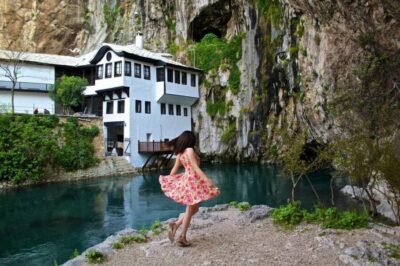
Mostar, Konjic, Blagaj Tekke, Pocitelj & Waterfall
Read our review →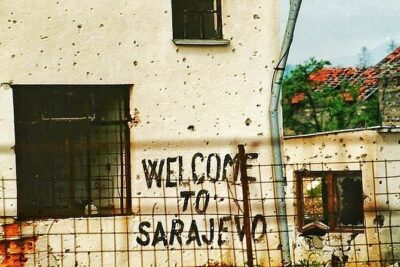
Fall of Yugoslavia, Sarajevo War Tour with Tunnel of Hope Museum and Frontlines
Read our review →
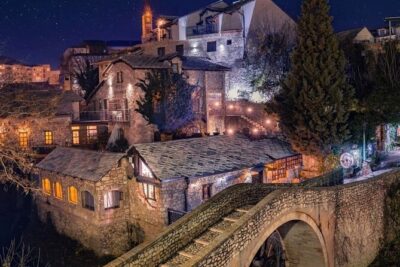
Mostar, Konjic, Sufi House, Pocitelj & Kravice Falls
Read our review →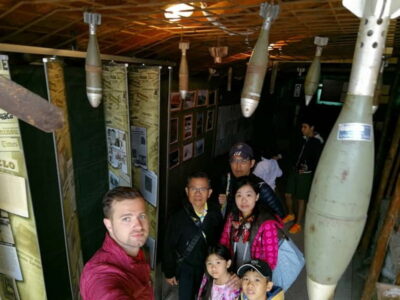
Tunnel Museum Yugoslavia War Tour with War Veteran
Read our review →
ROSES OF SARAJEVO (Official WAR + CITY tour)- Story of a Survivor
Read our review →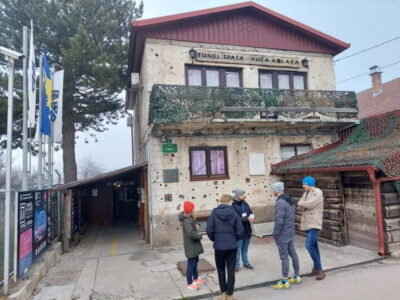
Tunnel Museum: Bosnian & Yugoslav Wars Tour with War Veteran
Read our review →Browse the lists this tour appears in