
Review · WALKING TOURS
Discover Banja Luka: Guided Walking Tour
Banja Luka rewards curious walkers. This private tour brings together Ottoman, Austro-Hungarian, Orthodox, Catholic, and Yugoslav influences in one compact city center. I like the way it treats the city as more than a list of monuments, and I especially like the chance to walk beside the river and visit Castel Fortress. The main consideration is that much of Banja Luka’s older architecture disappeared after the earthquake, so this is a tour of surviving places, later buildings, and historical clues rather than a preserved old town.
I also like the human side of the experience. Guide Jakša has been praised for clear explanations, friendly conversation, and his ability to connect local sights with politics, religion, Yugoslavia, and the Balkan wars. A private format gives you room to ask questions, though the $23 price does not include food, drinks, or a coffee stop.
In This Review
- Key things to know before you book
- Why Banja Luka makes a good walking tour
- Starting in central Banja Luka
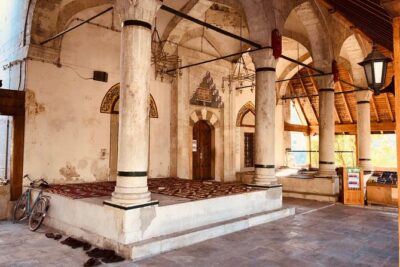
- Ferhadija Mosque and Banja Luka’s Ottoman past
- Three religious buildings, three different perspectives
- Castel Fortress beside the river
- The Vrbas River and Banja Luka’s greener side
- Austro-Hungarian remains and Brutalist Banja Luka
- Food, coffee, and the practical side of the visit
- Guide quality and language options
- Is $23 a fair price for three hours?
- Who should book this Banja Luka walk?
- Final call: book it for context, not just monuments
- FAQ
- How long does the Banja Luka walking tour last?
- What sights are included?
- Is Castel Fortress part of the tour?
- Does the tour include a meal or drinks?
- Which languages can the guide speak?
- Is this a private tour?
- Is the tour wheelchair accessible?
- What should I bring?
- Where does the tour start and finish?
- Can I cancel for a full refund?
Key things to know before you book
- The tour covers several faiths: You visit Ferhadija Mosque, the Cathedral of Christ the Saviour, and the Cathedral of Saint Bonaventure.
- Castel Fortress is the visual high point: Its position beside the river gives you a useful view of Banja Luka and its past.
- The Vrbas River shapes the walk: The river is treated as the city’s artery, not just a photo stop.
- Jakša receives especially strong praise: He speaks English, German, Italian, Serbo-Croatian, and Bosnian, and explains difficult subjects in an approachable way.
- The city’s missing buildings matter: The earthquake and later rebuilding help explain the mix of old religious sites and bold Brutalist structures.
- Plan on a full three hours: Comfortable shoes and water matter, and the tour returns to Banja Luka after the walking circuit.
Why Banja Luka makes a good walking tour
Banja Luka is the capital of the Republika Srpska entity within Bosnia and Herzegovina. Its identity is not easy to reduce to one period or one faith. Ottoman rule, Austro-Hungarian administration, Yugoslav urban planning, and the painful events of the 20th century have all left marks on the city.
That layered past is exactly why walking works here. You can move from a mosque to an Orthodox cathedral, then to a Catholic church and a concrete Yugoslav-era building without needing a long transfer between sights. The city’s surviving pieces make more sense when a guide explains what was lost, rebuilt, or altered.
I would not book this expecting Dubrovnik-style walls or Sarajevo’s dense Ottoman quarter. Banja Luka has fewer intact old buildings. Its appeal lies in contrast: religious buildings beside modern city blocks, traces of Austro-Hungarian design beside Brutalist forms, and a calm river corridor cutting through the center.
The tour is private, so the pace can suit your group. That matters in a city where the value comes from explanation. You can stop to ask why a building looks the way it does, how different communities shaped the city, or what changed after the earthquake.
More Walking Tours in Banja Luka:
- Unveiling Banja Luka’s urban soul: Walk & Enjoy
★ 4.5 · 5 reviews - Sarajevo: Grand Walking Tour Through Time and Cultures
★ 4.8 · 1,236 reviews - Sarajevo: 2 Hours Old Town Walking Tour With Local Guide
★ 5.0 · 505 reviews
Starting in central Banja Luka
The meeting point is simply Banja Luka, with the walk beginning in the city and returning there. The supplied details do not specify one exact street or monument as the starting point, so you should confirm the precise meeting place and start time when booking.
The opening part of the walk is designed to give you your bearings. Rather than rushing straight to one famous building, the guide places Banja Luka in its wider setting. You begin to see how the city combines religious landmarks, civic buildings, green public spaces, and later concrete construction.
I like this approach for a first morning in town. A good city walk should help you understand where you are before you start exploring on your own. It can also help you decide where to return later for lunch, a longer river walk, or another look at one of the churches and mosques.
The route is described as a sightseeing walk with scenic views along the way. Since it lasts two to three hours, you should expect steady walking rather than a quick highlights circuit. Wear shoes that can handle city pavement and carry water, especially in warm weather.
Ferhadija Mosque and Banja Luka’s Ottoman past
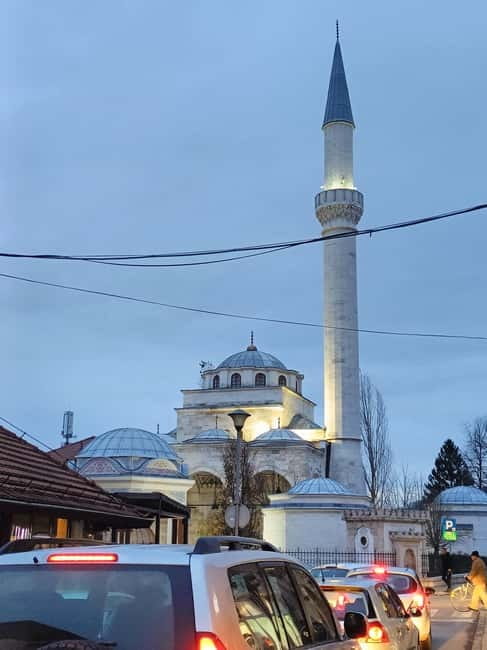
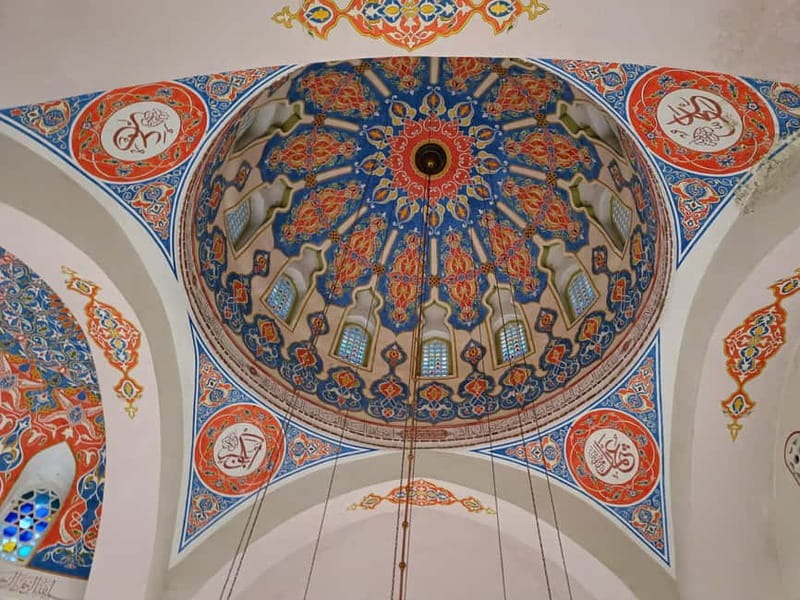
Ferhadija Mosque is one of the tour’s most important stops. It gives you a direct connection to the Ottoman period and to the Muslim presence that remains a central part of Banja Luka’s story.
The value here is not just the building itself. The mosque helps you understand that Banja Luka’s past was shaped by more than one religious community. Your guide can connect the site to the city’s changing political and cultural life, making it easier to read other buildings you see later.
The supplied information calls the city’s Ottoman mosques stunning, but you should keep your expectations measured. The earthquake destroyed much of the older city, and Banja Luka has also passed through periods of war and rebuilding. The architectural experience is therefore about what survived and what was restored, as well as what no longer exists.
This is a good place to ask questions. If family history or religious heritage matters to you, the private format is useful. One visitor received help from Jakša while trying to find information about a family church, which suggests that he is willing to respond to personal questions rather than deliver only a fixed speech.
Three religious buildings, three different perspectives
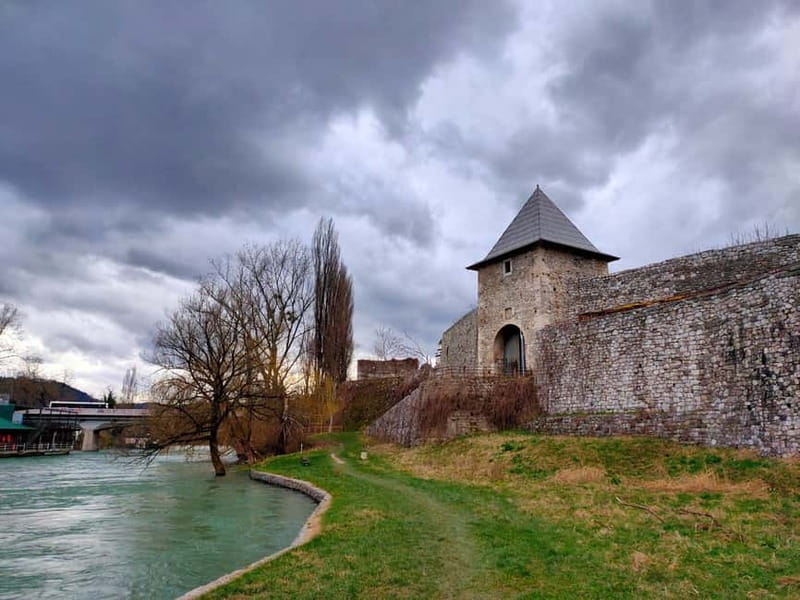
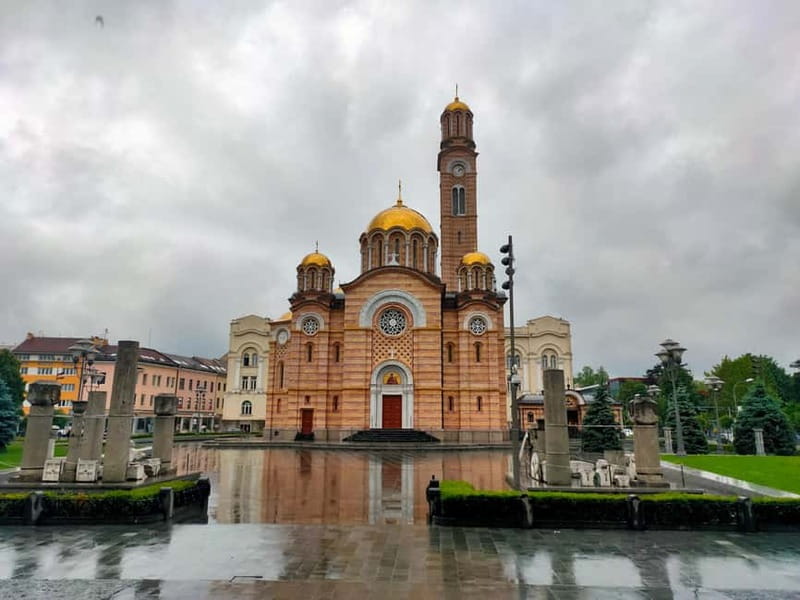
The Cathedral of Christ the Saviour gives the tour its Orthodox Christian focus. It is one of the city’s key religious landmarks and helps explain the strong Serbian Orthodox identity associated with Banja Luka.
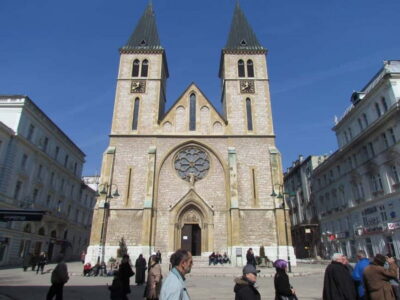
The Cathedral of Saint Bonaventure adds a Catholic perspective. Seeing these buildings on the same walk is one of the strongest reasons to book this tour. You are not simply checking off churches. You are seeing how different religious traditions occupy the same urban setting.
I value this part of the route because it encourages a more careful understanding of Bosnia and Herzegovina. The country’s religious map is closely tied to its political and social past, but the tour does not appear to treat that subject as a slogan. The praise for Jakša often centers on his explanations of religion, government, and history, which are useful subjects in a city shaped by shifting borders and identities.
The buildings also provide a visual break from the city’s modern blocks. Even if you are not a specialist in church architecture, you can compare the scale, symbols, and role of each place. Ask the guide what is original, what was rebuilt, and how each congregation fits into modern Banja Luka.
Same corner of the country, a different kind of day:
- Krupa on Vrbas
★ 5.0 · 28 reviews - Banja Luka City Tour & A magical journey on Dayak boat
★ 5.0 · 14 reviews - Vrbas River Rafting Adventure with Breakfast
★ 4.0 · 5 reviews
Castel Fortress beside the river
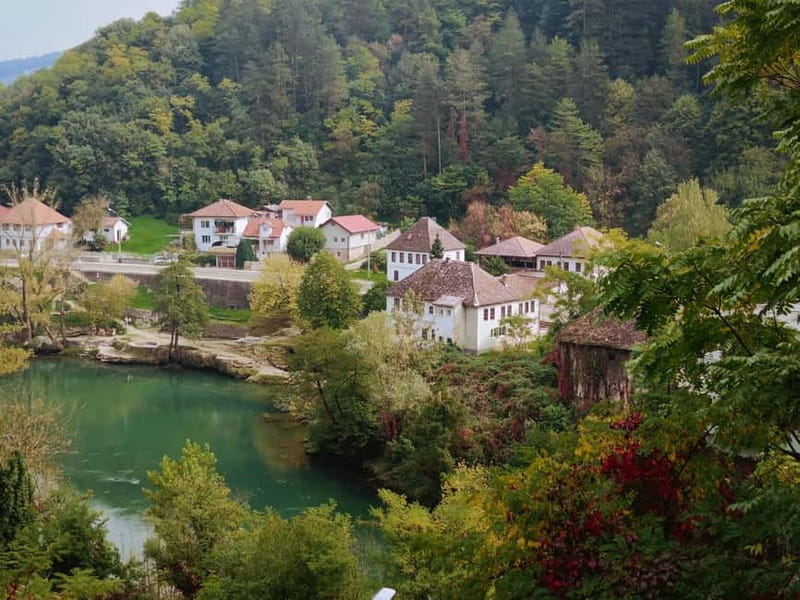
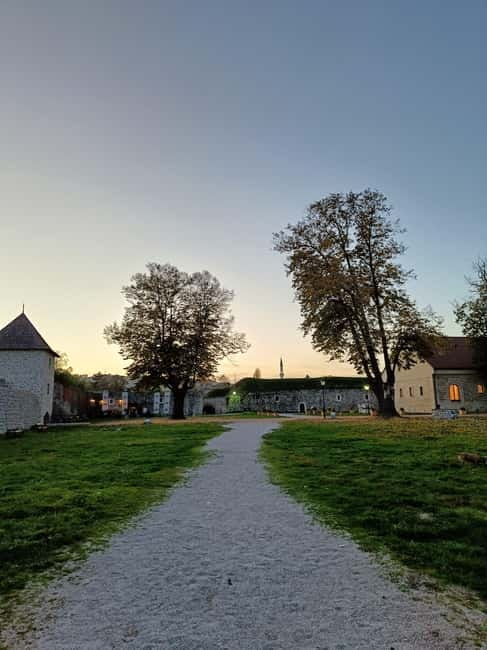
Castel Fortress is the tour’s clearest historical setting. Built beside the river, it gives you a place to imagine Banja Luka in earlier centuries while looking across the modern city.
The fortress also supplies the best scenic pause. From here, you can take in views of the city and understand why this position mattered. The river and the defensive site are linked, and the stop gives shape to the story of Banja Luka rather than leaving it as a series of unrelated buildings.
I would allow time for photographs here. The tour includes a camera among its suggested items, and Castel is the place where that advice makes the most sense. The setting should appeal to you even if fortresses are not your main interest because it combines open views, a sense of age, and a useful perspective on the city below.
Do not expect a vast citadel packed with furnished rooms or museum displays based on the information provided. The appeal is the fortress setting, the river position, and the stories your guide supplies. If you want a long, detailed fortress visit, ask how much time the walking route allows.
The Vrbas River and Banja Luka’s greener side
The river walk is a welcome change of pace. After the churches, mosque, and urban history, you get a quieter stretch where the city’s daily rhythm is easier to notice.
The Vrbas is described as Banja Luka’s artery of life. That phrase points to the river’s importance to the city’s identity, not simply its appearance. Walking beside it lets you see why Banja Luka is often described as the greenest city of the former Yugoslavia.
I like this part because it keeps the tour from becoming a string of indoor or architectural stops. You get fresh air, scenic views, and a chance to absorb the city without a new date or political event arriving every few minutes. It is also a practical way to see how public space and nature fit into the urban center.
The river segment may be the easiest part for many people with mobility concerns, but the activity is still a walking tour. The experience is listed as wheelchair accessible, yet exact surfaces, slopes, and access at every religious or fortress site are not described. If you use a wheelchair, confirm the route details before setting out.
Austro-Hungarian remains and Brutalist Banja Luka
Banja Luka’s architecture becomes most interesting when you look for contrast. The tour points out remains of Austro-Hungarian buildings as well as bold Brutalist structures from the Yugoslav period.
The Austro-Hungarian traces connect the city to a period of administrative change and new building styles. The Brutalist buildings tell a different story, one linked to postwar Yugoslavia and the modern city that followed.
This is also where the earthquake becomes important. Much of the historic architecture was destroyed, so the city does not offer a single, continuous old center. Instead, you see fragments, replacements, and later buildings sharing the same streets.
I find that kind of city more rewarding with a guide than alone. Without context, a concrete building may look like an ordinary block. With an explanation of when and why it was built, it becomes part of the city’s political and social record. The tour’s strength is its willingness to include these less romantic structures rather than showing only attractive facades.
You should also accept that some stops may be more about interpretation than visual drama. If every moment of your tour must involve a perfectly preserved monument, this may feel uneven. If you enjoy reading a city through its changes, the variety is a benefit.
Food, coffee, and the practical side of the visit
Food and drinks are not included in the $23 price. The tour description says you will have a chance to take a break and try Banja Luka’s culinary tradition, but you should budget separately for anything you order.
The personal touch depends on the guide and the shape of your private tour. Jakša has been praised for including a relaxed coffee stop, recommending lunch, and taking the time to help with a restaurant choice. One person also described being collected from a hotel and receiving historical commentary during the ride, but hotel pickup and transportation are not listed as standard inclusions, so you should not assume they are guaranteed.
That distinction matters. The formal experience is a walking tour, not a food tour or an included café visit. Still, a guide who can point you toward a local meal adds real value, especially if Banja Luka is your first stop in the region.
I would ask about the break at the beginning. You can then decide whether you prefer a quick coffee, a longer food stop, or uninterrupted sightseeing. Since personal expenses are separate, bring a payment method and enough money for what you want to try.
Guide quality and language options
The strongest praise centers on Jakša. He is described as friendly, easy to talk with, and generous with his time. Several people valued his explanations of Banja Luka’s history, government, religions, geography, former Yugoslavia, and the Balkan wars.
That range is important. The city cannot be understood through architecture alone. A good explanation of the political setting can help you make sense of why certain buildings matter and why some older parts of the city are missing.
Jakša speaks English, German, Italian, Serbo-Croatian, and Bosnian. German-speaking visitors have particularly praised his language ability, while English-speaking visitors found him clear and approachable. Since the tour is private, you can ask for the language that best suits your group.
I would use the private setting well. Ask about subjects that interest you, such as religious coexistence, the earthquake, Yugoslav urban planning, or a family connection to the city. The available feedback suggests that Jakša handles questions well, but the experience will be better if you arrive with a few of your own.
Is $23 a fair price for three hours?
At $23 per person, the tour is reasonably priced for a private three-hour city walk, particularly if your group wants direct access to a guide rather than a large public outing.
The value comes from the interpretation. You are paying to connect Ferhadija Mosque, two cathedrals, Castel Fortress, the river, Austro-Hungarian traces, and Brutalist buildings into one readable story. If you explored these places without context, you would save the tour fee but might miss the links between them.
The price does not cover meals, drinks, or personal purchases. It also does not promise a separate museum visit or transportation. That keeps the cost clear, but you should add your own food budget.
For a solo visitor, $23 is especially appealing if the private price is truly per person as stated. For a couple or small group, the amount buys a more personal pace and the ability to steer the conversation. I would consider it good value for a first visit, provided you want history and local context rather than only photographs.
Who should book this Banja Luka walk?
I would recommend it most strongly if you are visiting Banja Luka for the first time and want a quick orientation. It also suits you if religious history, Yugoslavia, architecture, or the Balkan wars are central to your interests.
The tour is a good fit for:
- Couples and families who prefer a private pace
- Solo visitors who want a local conversation
- People interested in several religious traditions
- Architecture fans who enjoy modern and Brutalist buildings as much as older ones
- Anyone with a family connection to Banja Luka
- Visitors who want restaurant or coffee suggestions from a local guide
It may be less suitable if you want a long museum visit, a food-focused outing, or a preserved medieval center. The earthquake and later rebuilding mean that the city’s story is often told through gaps and contrasts.
Book it early in your stay if possible. You will then know where the main sights are, understand the city’s broad background, and have better guidance for your remaining meals and walks.
Final call: book it for context, not just monuments
I would book this tour if you want Banja Luka to make sense. The combination of Ferhadija Mosque, the Orthodox and Catholic cathedrals, Castel Fortress, the river, and the city’s modern buildings gives you a useful introduction to a place that is easy to underestimate.
The clearest reason to choose it is the guide. Jakša’s friendly manner, language skills, and ability to explain politics and religion add more value than a simple walk between landmarks. The main limitation is the city’s missing historic fabric, so expect a mixed urban story rather than an intact old quarter.
At $23, with free cancellation up to 24 hours before the tour and the option to reserve without paying immediately, it is an easy choice for a flexible first-day activity. Bring comfortable shoes, water, and a camera. Keep a little extra money for coffee or food, and ask about the exact meeting place and any desired pickup before you go.
FAQ
How long does the Banja Luka walking tour last?
The tour lasts approximately two to three hours, with the listed duration being three hours.
What sights are included?
The tour includes Castel Fortress, Ferhadija Mosque, the Cathedral of Christ the Saviour, the Cathedral of Saint Bonaventure, the river walk, and sightseeing around Banja Luka.
Is Castel Fortress part of the tour?
Yes. Castel Fortress is included, with time to enjoy views of the city from its position beside the river.
Does the tour include a meal or drinks?
No. Food, drinks, and other personal expenses are not included. You may have an opportunity to stop for coffee or food, but you pay for anything you order.
Which languages can the guide speak?
The listed languages are English, German, Italian, Serbo-Croatian, and Bosnian.
Is this a private tour?
Yes. The experience is offered for a private group.
Is the tour wheelchair accessible?
Yes, the activity is listed as wheelchair accessible. Since exact route surfaces and access details are not provided, confirm any specific mobility needs before booking.
What should I bring?
Bring comfortable walking shoes, water, and a camera.
Where does the tour start and finish?
The tour starts in Banja Luka and returns to Banja Luka. The exact meeting location should be confirmed when booking.
Can I cancel for a full refund?
Yes. You can cancel up to 24 hours in advance for a full refund. You can also reserve now and pay later.
Newest around Banja Luka
- Unveiling Banja Luka’s urban soul: Walk & Enjoy★ 4.5 · 5 reviews
- Vrbas River Rafting Adventure with Breakfast★ 4.0 · 5 reviews
- Rafting Trip on the Vrbas river★ 5.0 · 3 reviews
- Banja Luka City Tour & A magical journey on Dayak boat★ 5.0 · 14 reviews
- Enjoying the River Vrbas★ 4.5 · 5 reviews
- Krupa on Vrbas★ 5.0 · 28 reviews
Walking Tours, compared.
Private Walking Tour, Food Tasting and Bosnian Coffee in Sarajevo
Read our review →
Browse the lists this tour appears in