
Review · SARAJEVO TOURS
Bosnia Croatia Montenegro – 7 Days Balkan Tour
Three countries, one very full week. This Balkan tour links Sarajevo, Mostar, Split, Dubrovnik, Kotor, and several smaller towns with an English-speaking driver, local guides, hotels, breakfasts, and entrance fees. I like the smart route and the mix of Ottoman, Austro-Hungarian, Yugoslav, and Adriatic sights.
I also like the small maximum group of 15 and the careful planning praised in the available feedback, including prompt help from Elvis with a longer custom trip. The main drawback is the pace: several days involve long drives and short visits, so you trade leisurely exploration for broad coverage.
In This Review
- Key points at a glance
- What this seven-day Balkan tour does well
- Day one: Sarajevo’s Ottoman and Austro-Hungarian quarters
- Day two: Olympic Sarajevo, mountain views, and wartime memory
- Day three: Konjic, Blagaj, Počitelj, Kravice, and Mostar
- Day four: Split’s Roman palace and a night in Neum
- Day five: Dubrovnik and Budva after the sea road
- Day six: Kotor Bay, Perast, Trebinje, and the return to Sarajevo
- Hotels, transport, meals, and group size
- Price, planning help, and the strongest praise
- Who should book this Balkan tour?
- Should you book it?
- FAQ
- How long does the Bosnia, Croatia, and Montenegro tour last?
- Where does the tour start and finish?
- How many countries does the tour visit?
- How many nights of accommodation are included?
- Are breakfasts included?
- Are lunch and dinner included?
- What kind of transportation is provided?
- How large can the group be?
- Are entrance fees included?
- Can I cancel for a full refund?
Key points at a glance
- Sarajevo receives two full sightseeing days, including the Old Town, Olympic sites, the War Tunnel Museum, and Vrelo Bosne.
- Mostar is paired with Herzegovina’s best stops, including Blagaj, Počitelj, Konjic, and Kravice Falls.
- Split and Dubrovnik include licensed local guides, followed by free time to explore independently.
- Montenegro adds both Kotor and Perast, with a boat ride to Our Lady of the Rocks.
- Six nights in four-star hotels and six breakfasts are included, while lunch and dinner are left to you.
- The maximum group size is 15, though the actual group may be smaller.
What this seven-day Balkan tour does well
This is a route for seeing a lot without having to arrange every transfer yourself. You start and finish in Sarajevo, crossing through Bosnia and Herzegovina, Croatia, and Montenegro in a logical loop. That saves you from planning separate buses, border connections, hotels, guides, and day trips.
The tour also gives you more than postcard stops. Sarajevo brings the Ottoman quarter, religious landmarks, and wartime memory. Herzegovina adds rivers, waterfalls, stone towns, and Mostar’s famous bridge. Croatia supplies Split and Dubrovnik, while Montenegro brings Kotor Bay and Perast.
The price is $2,268.95 per person, which is not a budget tour. Still, the cost includes an air-conditioned vehicle, six hotel nights, six breakfasts, taxes, listed entrance fees, an English-speaking driver or tour director, and local guides in several cities. If you value convenience and want to cover three countries in one week, that package can make sense.
You should know what the price does not include. Lunches, dinners, and some admission charges are extra. The schedule also leaves little room for changing plans. This is a guided route with a clear timetable, not a slow trip built around long café breaks.
Other Sarajevo trips worth an open tab:
- Sarajevo: Mostar, Konjic, Blagaj Tekke, Pocitelj & Waterfall
★ 4.9 · 1,666 reviews - Fall of Yugoslavia, Sarajevo War Tour with Tunnel of Hope Museum and Frontlines
★ 5.0 · 1,314 reviews - Sarajevo: Grand Walking Tour Through Time and Cultures
★ 4.8 · 1,236 reviews
Day one: Sarajevo’s Ottoman and Austro-Hungarian quarters
Your first day begins in Baščaršija, Sarajevo’s old Ottoman center. The square and its wooden Sebilj fountain are a useful starting point because the city’s past is visible within a few minutes of walking. Narrow streets, small shops, and traditional craft businesses give the area a distinct feel.
The stop at the Hidic coppersmith shop adds a personal touch. You can see how the craft has passed from father to son and watch a demonstration of the basic work. Buying a handmade copper item is optional, but this is a better souvenir stop than a generic shop because you see how the object is made.
At Gazi Husrev-beg Mosque, the guide explains the large endowment that shaped Sarajevo’s old center. The complex once included a mosque, religious school, public kitchen, toilets, covered market, caravan hotel, clock tower, and shops. The mosque has an admission charge that is not included, so carry some local currency or a payment method accepted at the site.
The walk then moves to the Latin Bridge, linked to the assassination of Archduke Franz Ferdinand in 1914. That event helped trigger the First World War, and the site gives a compact lesson in how a local incident had global consequences.
Sarajevo’s religious variety comes into focus at the Jewish Museum, the Catholic Cathedral of the Sacred Heart, and the Serbian Orthodox Cathedral. The Jewish Museum covers Jewish life in Bosnia from the sixteenth century to the present, while the cathedral square shows the Austro-Hungarian side of the city.
At Markale Market, the tone changes. The guide discusses the siege of Sarajevo, the marketplace massacre, and Sarajevo roses, the red markings used to remember mortar explosions. This is not light sightseeing, but it is important. You get a better sense of the city when its recent past is treated as part of the visit, not pushed aside.
Most stops are short, from five to 20 minutes, so the first day works best as an introduction. You will see the major symbols and understand the layout, but you should not expect long interior visits at every religious building.
Day two: Olympic Sarajevo, mountain views, and wartime memory
The second morning starts at the Yellow Fortress, where you can see how Sarajevo sits in the Miljacka River valley, surrounded by Olympic mountains. The view also helps explain the city’s layered architecture. The old Ottoman core, Austro-Hungarian center, and later neighborhoods spread out below.
Next comes Trebević Mountain and the abandoned Sarajevo Olympic bobsleigh and luge track from the 1984 Winter Olympics. Reaching it requires a light walk through the forest. The track is a striking reminder of an event that once put Sarajevo on the world stage, followed by the destruction and abandonment caused by war.
At Vrelo Bosne, the source of the Bosna River, the setting becomes quieter. The springs were developed about 140 years ago during the Austro-Hungarian period, and the river gives Bosnia and Herzegovina its name. The entrance fee is included, and the one-hour visit gives the itinerary a welcome natural pause.
The final major stop is the Sarajevo War Tunnel Museum. The tunnel was used during the siege of Sarajevo and became a lifeline for the city. The museum offers a clear explanation of survival during the war. Allow yourself time to listen rather than treating this as a quick photo stop.
Together, these four stops create a strong second day. You see the city from above, visit an Olympic remnant, reach the source of a national river, and confront the events that shaped modern Sarajevo. The only caution is emotional weight. This is a serious day, and the War Tunnel visit may stay with you long after the tour ends.
Day three: Konjic, Blagaj, Počitelj, Kravice, and Mostar
Day three leaves Sarajevo for Herzegovina. Konjic is about an hour away and provides an early stop in its Ottoman old town. The seventeenth-century stone bridge over the Neretva River is the main focus, with around 30 minutes to walk around.
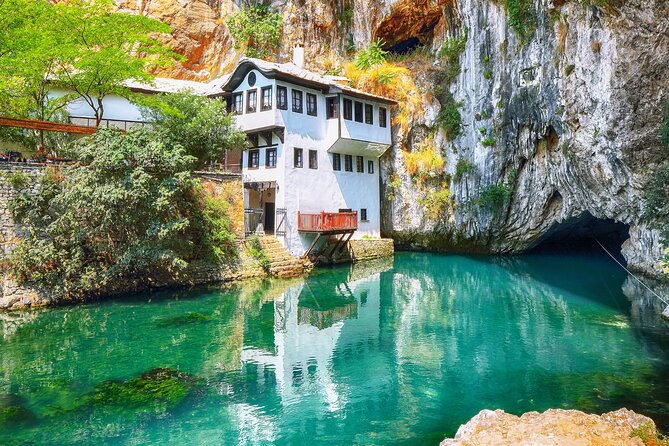
Blagaj offers a very different sight: the Buna River spring, where a full river emerges from a cave. The visit lasts about an hour and gives you time to appreciate the water and the setting. Admission is listed as free, though any personal spending nearby is your responsibility.
Počitelj is a small medieval stone town on a hill beside the Neretva. Its traditional buildings and steep position make it photogenic, but the short 30-minute stop means you will only get a taste. If walking uphill is difficult, take the brief timing seriously and ask the tour director what is practical for you.
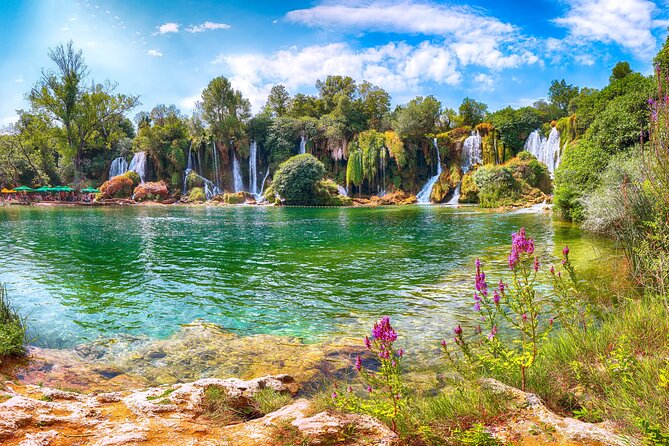
Kravice Falls is the day’s big nature stop. The waterfall forms a broad amphitheater, with water dropping into a pool below. The scheduled hour allows time to rest and take photographs. The entrance fee is included, which is useful because this is one of the paid sites built into the route.
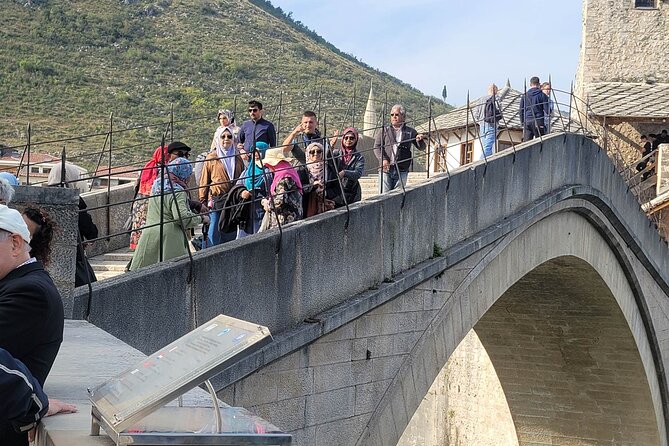
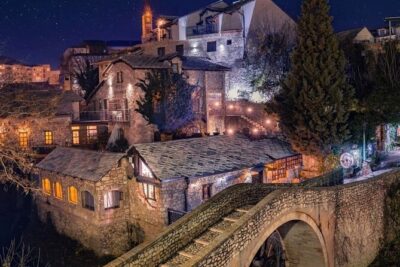
Mostar comes late in the day, with about two hours for the Old Town. The main sights include the famous Old Bridge, the Crooked Bridge, the bazaar, and Mehmet Koski Pasha Mosque. Mostar is worth more than a quick pass through, but the tour at least puts you in the right area and gives you an evening setting for the old streets.
This is one of the most demanding days by road and sightseeing. You get a strong selection of Herzegovina, but the schedule will suit you best if you prefer variety over lingering in one place.
Same corner of the country, a different kind of day:
- Sarajevo: Mostar, Konjic, Sufi House, Pocitelj & Kravice Falls
★ 5.0 · 1,179 reviews - Sarajevo: Tunnel Museum Yugoslavia War Tour with War Veteran
★ 5.0 · 1,111 reviews - ROSES OF SARAJEVO (Official WAR + CITY tour)- Story of a Survivor
★ 5.0 · 770 reviews - Sarajevo: Tunnel of Hope Tour – Survival and Resilience
★ 4.8 · 630 reviews
Day four: Split’s Roman palace and a night in Neum
The drive from Mostar reaches Split, where a licensed local guide leads you through the waterfront and Diocletian’s Palace. The palace is not an isolated ruin. It forms the core of the modern city, with streets, shops, and daily life built into and around the Roman structure.
The total Split visit lasts about five hours, including the guided walk and three hours of free time. That balance is good. The guide gives you the essential story and orientation, then you can choose your own pace for lunch, shopping, or another look at the palace area.
After Split, the group continues to Neum for the night. Neum is Bosnia and Herzegovina’s small Adriatic coastal town, and the evening is free after hotel check-in. Since dinner is not included, this is a useful chance to plan your own meal.
The day is simpler than the previous one, but it is still a transfer day. The three free hours in Split are valuable, though they are not enough for a full city visit beyond the center.
Day five: Dubrovnik and Budva after the sea road
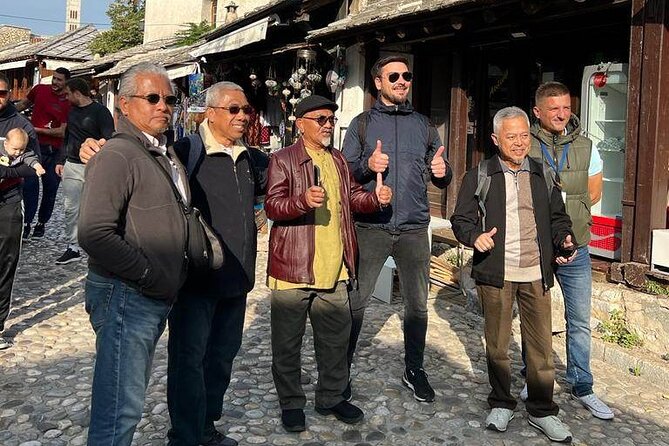
From Neum, the drive to Dubrovnik covers about 80 kilometers. Inside Dubrovnik’s stone walls, a licensed guide leads the walking tour. You then have three hours of free time, which is enough to revisit a favorite street, stop for a meal, or explore at your own speed.
Dubrovnik can feel crowded and expensive, so the organized timing has both benefits and limits. You avoid having to work out the main route yourself, but three free hours will disappear quickly if you want to walk the walls, visit several museums, and sit down for lunch.
The itinerary continues to Budva in Montenegro. After checking in, you visit the old town inside its stone walls. The overnight stop gives you a useful first look at Montenegro, though the late arrival means this is more of an evening introduction than a full Budva day.
Dinner is again your own expense. Keep that in mind when comparing the tour price with a package that includes meals.
Day six: Kotor Bay, Perast, Trebinje, and the return to Sarajevo
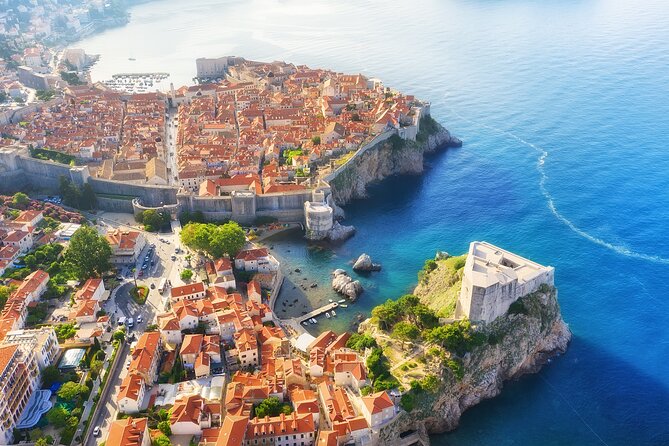
Kotor receives a guided walking tour followed by free time, for a total of about three hours. The old town is compact, and a local guide can help you make sense of its streets and landmarks before you explore alone.
The route then goes to Perast, a smaller settlement on Kotor Bay. A boat ride takes you to Our Lady of the Rocks, the island church that forms the centerpiece of the visit. The combined stop lasts about two hours and adds a pleasant change from walking tours and road travel.
Trebinje provides a short break on the way back to Sarajevo. With about 30 minutes in the old town, you can stretch your legs and get a quick look before the final transfer.
The return to Sarajevo is practical, but demanding. By this point, you have crossed three countries and covered many historic centers. The final hotel night in Sarajevo is useful because it avoids an airport transfer immediately after the long ride.
Hotels, transport, meals, and group size
Six nights in four-star hotels are included, along with six breakfasts. The exact hotel names are not provided, so you should not book this expecting a particular property or neighborhood. The practical benefit is that accommodation is arranged across a route where changing hotels every night could otherwise become tiring.
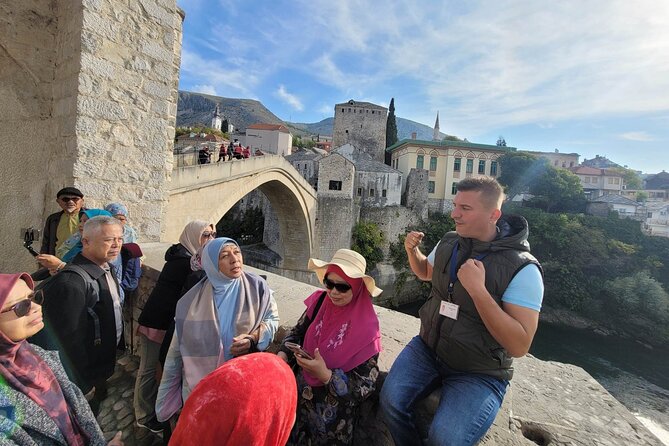
Transport is by air-conditioned vehicle with an English-speaking driver or tour director. This is one of the tour’s strongest practical features. You can look out the window, listen to the guide, and avoid arranging connections between Sarajevo, Mostar, the Croatian coast, and Montenegro.
The group maximum is 15 people. That is small enough for a more personal feel than a large coach tour, but not necessarily intimate. One earlier booking had only three participants, including a parent, daughter, and friend, which shows that the actual group can sometimes be much smaller.
Breakfast is included, but lunch and dinner are not. I consider that a fair choice on a route with many stops, since you can choose when and where to eat. Still, you need to budget for two daily meals and any optional admissions not covered by the package.
Price, planning help, and the strongest praise
At $2,268.95 per person, this tour asks you to pay for structure and convenience. The value is strongest if you want one company to handle the vehicle, six hotel nights, city guides, breakfasts, taxes, and listed entry fees. If you are comfortable arranging buses and hotels yourself, you may find a self-planned trip cheaper, but it will require much more coordination.
The available feedback gives special credit to Elvis for prompt replies and help planning a custom two-week route through Slovenia, Croatia, Bosnia and Herzegovina, and Montenegro. That suggests the operator may be a good fit if you want to ask questions before committing or discuss an altered plan.
Organization is another clear positive. The route uses local guides in Split, Dubrovnik, and Kotor rather than relying only on one general escort for every city. That matters because local guides can focus a short walking tour on the sights that matter most.
The rating is based on only two written ratings, so I would treat it as encouraging rather than final proof. The comments are strongly positive about planning, organization, and the value of having a driver with local guides.
Who should book this Balkan tour?
I would recommend it if you want a first look at the western Balkans and prefer not to manage transport between three countries. It suits visitors who enjoy history, old towns, religious buildings, war memory, waterfalls, and scenic road journeys.
It is also a good match for parents and adult children, friends traveling together, and people who want a small-group format with hotel arrangements already made. The earlier small booking with a daughter and her companions suggests the pace can work well for a mixed-age private group.
I would hesitate if you want beach time, long museum visits, or several free evenings. You will see many places, but you will not fully explore every one. The route is best understood as a well-organized sampler, not a slow coastal holiday.
Free cancellation is available if you cancel at least 24 hours before the start time. Changes made within 24 hours are not accepted, and no refund is given for cancellations inside that window. The tour also requires a minimum number of participants, so a cancellation by the operator could result in another date, another experience, or a full refund.
Should you book it?
Book this tour if your priority is maximum regional coverage with minimum transport stress. Sarajevo, Mostar, Dubrovnik, Kotor, and Split are major draws, and the route adds worthwhile stops such as Blagaj, Kravice Falls, Perast, and the Sarajevo Olympic track.
Skip it if you want to settle into one place or control every hour. Seven days is a short time for three countries, and the road miles are part of the bargain. For a first Balkan visit, though, the combination of included transport, local guides, four-star hotels, and a group capped at 15 makes the cost easier to justify.
FAQ
How long does the Bosnia, Croatia, and Montenegro tour last?
The tour lasts approximately seven days, beginning and ending in Sarajevo.
Where does the tour start and finish?
The tour starts in Sarajevo and ends with a transfer to Sarajevo Airport or another location in Sarajevo after checkout on day seven.
How many countries does the tour visit?
It visits Bosnia and Herzegovina, Croatia, and Montenegro.
How many nights of accommodation are included?
Six nights of accommodation in four-star hotels are included.
Are breakfasts included?
Yes. Six breakfasts are included during the seven-day tour.
Are lunch and dinner included?
No. Lunch and dinner are not included, so you pay for those meals yourself.
What kind of transportation is provided?
Transportation is provided in an air-conditioned vehicle with an English-speaking driver or tour director.
How large can the group be?
The tour has a maximum group size of 15 people.
Are entrance fees included?
Some entrance fees are included, including Vrelo Bosne, the Sarajevo War Tunnel, and Kravice Falls. Other sites, such as Gazi Husrev-beg Mosque and the Jewish Museum, list admission as not included.
Can I cancel for a full refund?
Yes, if you cancel at least 24 hours before the experience start time. Cancellations made less than 24 hours before the start time are not refunded.
Newest around Sarajevo
- Understanding Srebrenica Genocide + Lunch with Local Family★ 4.9 · 14 reviews
- Private Full Day Safari Tour★ 5.0 · 8 reviews
- Sarajevo: Trebević Mountain Summit Hiking Tour★ 4.2 · 2 reviews
- From Sarajevo: Kozice Waterfalls Hiking Experience in Nature★ 5.0 · 2 reviews
- Sarajevo Under Siege: A War History Tour★ 5.0 · 10 reviews
- Mysterious Visoko Pyramids Driving and Walking Tour★ 5.0 · 7 reviews
- WAR TUNNEL – Sarajevo’s only way of a communication during the WAR – Top secret★ 5.0 · 12 reviews
- Ultimate Gastro Experience★ 4.5 · 14 reviews
Sarajevo Tours, compared.
Mostar, Konjic, Blagaj Tekke, Pocitelj & Waterfall
Read our review →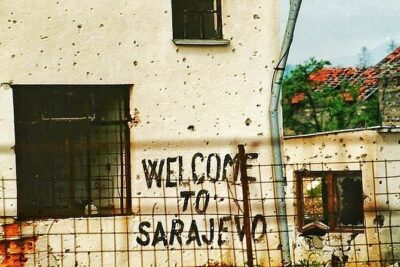
Fall of Yugoslavia, Sarajevo War Tour with Tunnel of Hope Museum and Frontlines
Read our review →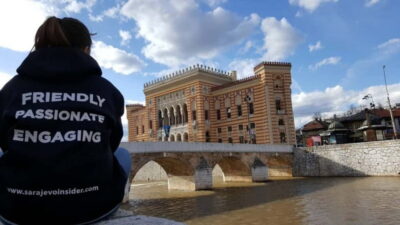
Mostar, Konjic, Sufi House, Pocitelj & Kravice Falls
Read our review →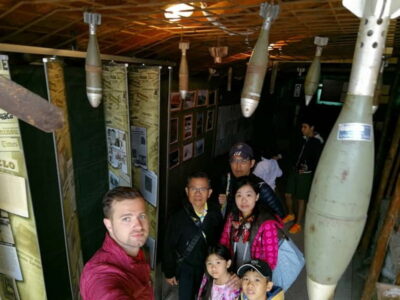
Tunnel Museum Yugoslavia War Tour with War Veteran
Read our review →
ROSES OF SARAJEVO (Official WAR + CITY tour)- Story of a Survivor
Read our review →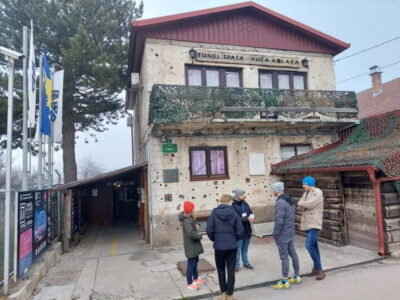
Tunnel Museum: Bosnian & Yugoslav Wars Tour with War Veteran
Read our review →Browse the lists this tour appears in