
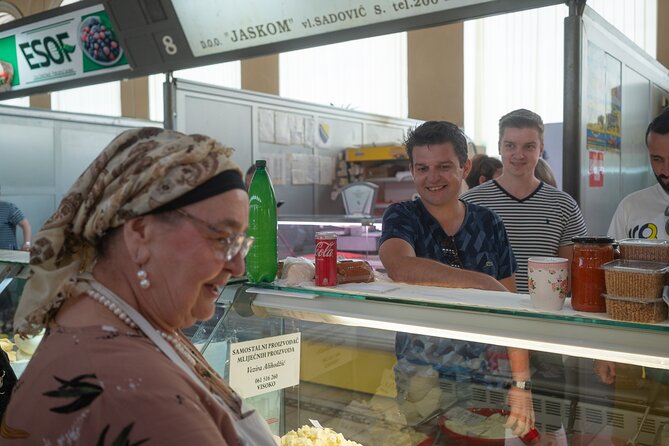
Review · HIKING & TREKKING
Urban Hiking city tour through Sarajevo
Sarajevo rises into the hills fast. This half-day urban hike shows you why, moving from the cathedral and Austro-Hungarian center through old mahalas, hillside homes, forest paths, and wartime viewpoints. I especially like the sharp change from city streets to quiet nature and the chance to see Sarajevo through local stories rather than only famous monuments. The main tradeoff is the climb: this is a real uphill walk, not a gentle stroll.
I also like that the price includes snacks, lunch, and a small group capped at eight people. Guides Numa and Kathi are praised for answering questions, adjusting the conversation, and sharing details about daily life. Plan for roughly four to five hours, though one outing lasted about seven hours, so leave room in your schedule.
In This Review
- Key points to know before you book
- Why this Sarajevo walk feels different
- Starting at Sacred Heart Cathedral
- Mejtaš and Sarajevo’s Sephardic story
- Vrbanjuša and the old Ottoman hillside
- Grdonj: gardens, hillside homes, and a wide view
- Vidikovac Špicasta stijena and the siege
- Ending with Bosnian food in Sedrenik
- How much value do you get for $72.25?
- What to bring for the climb
- The guide style and group atmosphere
- Who should choose this urban hike?
- Practical booking details
- Should you book the Sarajevo urban hike?
- FAQ
- Where does the tour start?
- What time does the hike begin?
- Where does the hike finish?
- How do I return to central Sarajevo afterward?
- How long does the experience last?
- Is lunch included?
- What language is the tour offered in?
- How many people can join the group?
- What happens if the weather is poor?
Key points to know before you book
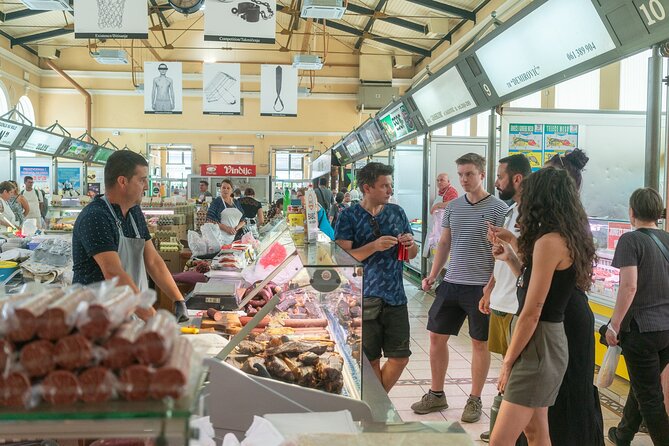
- From cathedral to hillside forest: You begin at Sacred Heart Cathedral and finish above the city in Mahala Sedrenik.
- Six very different Sarajevo settings: The route passes the Austro-Hungarian center, an old Jewish quarter, Ottoman neighborhoods, informal hillside settlements, woodland, and former trenches.
- A proper uphill workout: The walk includes steep sections and roughly 45 minutes at the Grdonj viewpoint area.
- War history handled in context: The stop at Vidikovac Špicasta stijena brings the siege and surviving Serb trenches into the story.
- Lunch is part of the experience: The hike ends at Restoran 7 šuma Minjo, with Bosnian food included.
- Best for small-group explorers: English guiding, a maximum of eight people, and local perspective make this a strong choice for curious visitors who want more than the central sights.
Why this Sarajevo walk feels different
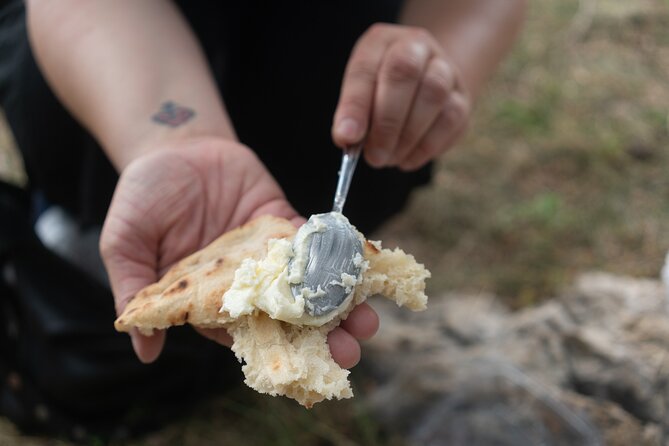
Most city walks keep you close to the main streets. This one uses the city center as a starting point, then climbs into the mahalas, Sarajevo’s traditional hillside neighborhoods. You see how the city spreads upward from the valley, with homes, gardens, religious buildings, and remnants of recent conflict all appearing along the way.
That variety is the real appeal. In a single outing, you move past Austro-Hungarian buildings, Jewish heritage, Ottoman-era streets, socialist housing, informal settlements, woodland, and mountain views. The route gives you a practical sense of how Sarajevo grew, changed, and adapted.
The guides add much of the value. Numa is described as exceptionally clear and able to explain complicated subjects in a compact, understandable way. He also shares personal observations and local anecdotes, which can make an ordinary house, monastery, or hillside path more meaningful than it would be on your own.
The experience is also flexible in tone. You can ask about architecture, religion, the war, present-day Sarajevo, food, or everyday life. That makes it better suited to a small group than a large scripted walk.
More City Tours in Sarajevo
- ROSES OF SARAJEVO (Official WAR + CITY tour)- Story of a Survivor
★ 5.0 · 770 reviews - Sarajevo: Guided City Highlights Tour with Sarajevo Tunnel
★ 4.8 · 79 reviews - Sarajevo: Sarajevo City Market, Old Town Food Tasting Tour
★ 4.9 · 69 reviews
Starting at Sacred Heart Cathedral
Meet at 9:30 am beside Sacred Heart Cathedral on Trg Fra Grge Martića. This is a convenient place to begin because you are already in central Sarajevo, near public transportation and the city’s main pedestrian zone.
The opening stop is Ferhadija Pedestrian Street. Your guide gives a short introduction to Sarajevo’s past, including the Ottoman and Austro-Hungarian periods, the city’s religious mix, and the reason Sarajevo is often called the Jerusalem of the Balkans. The cathedral is a fitting starting point because the surrounding center reflects several layers of the city’s identity.
This first section is brief, about 10 minutes. That is useful if you have already seen the central sights and want to get moving, but it also means the introduction will be a quick orientation rather than a full city-history lecture. You will have time later to ask for more detail.
Mejtaš and Sarajevo’s Sephardic story
The route then reaches Mejtaš, identified as Sarajevo’s historic Jewish quarter. Here, the focus turns to the city’s Sephardic roots and the ways Jewish, Muslim, Orthodox, and Catholic communities lived alongside one another.
The important point is not simply that Sarajevo had several faiths. The walk helps you see how those communities shaped the same neighborhoods and influenced one another over time. The city’s cultural mixture becomes easier to understand when you move through the streets where people actually lived, rather than treating religious history as a list of monuments.
Expect another short stop of about 10 minutes. The old quarter may interest you most if you care about religious history, architecture, or the daily patterns of city life. If you want a long visit inside a museum or synagogue, this outing is not designed for that. Its strength is the connected story told while walking.
Vrbanjuša and the old Ottoman hillside
At Vrbanjuša, the route enters the mahalas more fully. These old Ottoman neighborhoods climb the slopes above the center, and their narrow streets and homes show a side of Sarajevo that many standard walking routes miss.
One special detail here is an old dervish monastery tucked into the hillside. The guide uses it to explain dervishes, Islamic traditions, and the overlap between different religious communities. This is one of the moments when local guidance matters most. A building that might look modest or easy to pass can open a much larger conversation about faith and neighborhood life.
The stop lasts about 10 minutes, but the walking between stops is part of the lesson. You are not simply transferred from one landmark to another. You watch the architecture change as the route rises, and you begin to see how the mahalas form the city’s distinctive shape from below.
Same corner of the country, a different kind of day:
- Sarajevo: Mostar, Konjic, Blagaj Tekke, Pocitelj & Waterfall
★ 4.9 · 1,666 reviews - Fall of Yugoslavia, Sarajevo War Tour with Tunnel of Hope Museum and Frontlines
★ 5.0 · 1,314 reviews - Sarajevo: Grand Walking Tour Through Time and Cultures
★ 4.8 · 1,236 reviews - Sarajevo: Mostar, Konjic, Sufi House, Pocitelj & Kravice Falls
★ 5.0 · 1,179 reviews
Grdonj: gardens, hillside homes, and a wide view
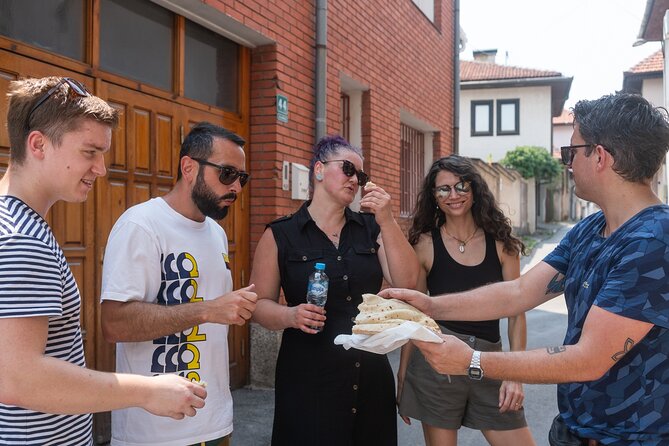
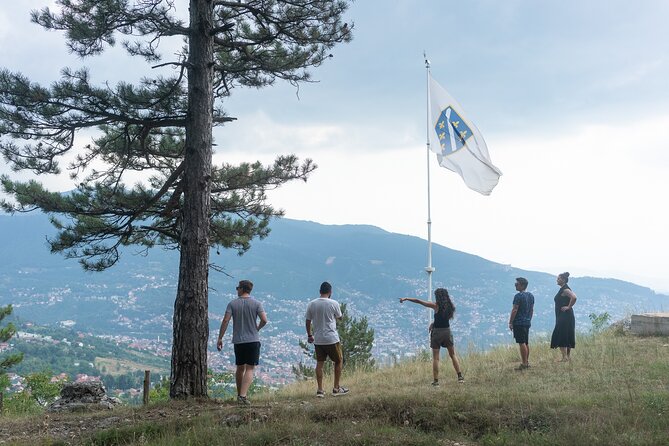
The walk becomes more demanding as you continue toward Grdonj. The urban setting begins to thin out. You may pass makeshift gardens, clotheslines, and hillside homes in informal settlements, with the city still visible below.
This is a useful part of the route because it shows present-day Sarajevo as well as its older architecture. You see how people use steep land for homes and food gardens, and how rural-looking spaces can sit surprisingly close to the city center. The change is gradual, not staged. One minute you are on a neighborhood street, and soon you are among open slopes and small plots.
The Grdonj section includes about 45 minutes at a viewpoint area. You should expect pauses for photographs, conversation, and rest. The guides are accustomed to taking their time, and that matters on a steep route. You will not be rushed past the view simply to keep a rigid pace.
Still, bring sensible footwear. The experience is called an urban hike for a reason. It is not a technical mountain outing, but the climb can feel strenuous, especially in warm weather. Snacks are included, and they help, but you should still arrive ready to walk uphill for several hours.
Vidikovac Špicasta stijena and the siege
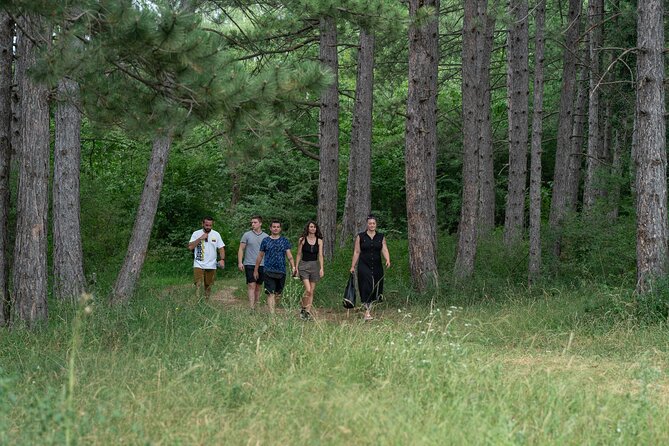
The next high point is Vidikovac Špicasta stijena. The route passes former Serb trenches and connects the view with Sarajevo’s siege, the most painful chapter in the city’s recent past.
This section gives the walk emotional weight. The city below is beautiful, but the hillside also holds evidence of the fighting that shaped modern Sarajevo. Seeing the trenches in their setting can make the geography of the siege easier to grasp than a museum display alone. The guide can connect the ground under your feet with the city’s wider story.
The planned stop is about 15 minutes. That is enough for an introduction and quiet reflection, but not a full war-history program. If you are interested in military history or the siege, ask questions as you walk. The tour treats the subject as part of Sarajevo’s wider life, rather than making the entire outing a form of war tourism.
That balance is one of the experience’s strongest features. You get honest context about the conflict, but the day also gives space to food, neighborhoods, nature, religion, architecture, and ordinary life.
Ending with Bosnian food in Sedrenik

The hike finishes at Restoran 7 šuma Minjo in Mahala Sedrenik. The planned meal lasts about an hour, and lunch is included in the $72.25 price.
After an uphill walk, a proper Bosnian meal is more than a convenient extra. It gives the day a social finish and lets you continue asking questions when you are no longer trying to catch your breath. The restaurant is described as an insider choice for Bosnian cuisine, and vegetarian food is available according to the experience details shared by past participants.
The restaurant setting also fits the route. You do not finish at a generic tourist cafe in the center. You end in a hillside neighborhood, where the meal feels connected to the local character of the walk.
Drinks are not specifically listed as included, so you should confirm what is covered if that matters to your budget. One past outing also included rakija tasting, but that is not stated as a standard feature of this specific experience. Treat it as a possible extra, not a promise.
How much value do you get for $72.25?
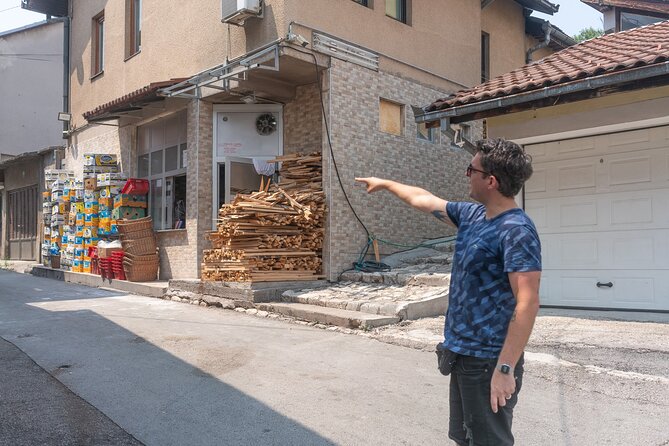
At $72.25 per person, this is not the cheapest way to walk around Sarajevo. It can be good value if you want a guide, snacks, lunch, a small group, and access to neighborhoods you might not find easily on your own.
The value comes from the range of the day. You are not paying only for transport between sights or a standard downtown explanation. You receive several hours of guiding, a demanding route through the mahalas, viewpoints, wartime context, and a Bosnian meal at the end.
The group limit of eight is important. A small group gives you more room to ask questions and makes it easier for the guide to adjust the pace. The guides are described as friendly and accommodating, with a style that feels more like spending time with local friends than following a large tour party.
The price makes less sense if you want a short, easy introduction to Sarajevo or prefer to explore at your own pace. You could walk parts of the central city for free. The fee is justified by the local interpretation, route planning, food, and access to the city’s upper neighborhoods.
What to bring for the climb
You should prepare for a half-day walk with steep uphill sections. Wear comfortable shoes with a good grip, and bring water even though snacks are provided.
A light layer is useful because the route moves between exposed viewpoints, residential streets, and shaded woodland. The weather matters enough that the experience may be canceled in poor conditions.
Your phone is enough for the mobile ticket, but keep it charged for the viewpoints and for coordinating the end of the outing. The hike finishes at the restaurant, not back at the cathedral. From there, you return to the city by taxi or on foot, and the guide can help arrange the way back.
Because the route includes old neighborhoods, gardens, uneven streets, and wooded paths, I would not choose it if you need a completely flat or highly controlled walking surface. The information says most people can participate, but individual fitness and comfort with hills still matter.
The guide style and group atmosphere
The strongest praise centers on the guiding. Numa is described as a walking encyclopedia who explains history and everyday life in clear language. Kathi is also described as warm and accommodating, and the small .Cheyf team appears to put real effort into personal interaction.
That matters because Sarajevo has subjects that need care. Religious identity, informal settlements, and the siege are not simple talking points. A good guide can give context without turning the city into a museum piece or reducing it to its wartime past.
The small group also helps with pacing. The route includes rest breaks and time to look around. You can ask about a building, a neighborhood, or a custom when the question occurs to you, rather than waiting for a formal question period.
One point to keep in mind is that the experience may run longer than the advertised four to five hours. A previous outing took about seven hours, including the walk, food, and conversation. If you have an afternoon train, a fixed appointment, or a museum booking, leave generous space afterward.
Who should choose this urban hike?
I would choose this experience if you want to see how Sarajevo connects to its hills, and if you enjoy walking through ordinary neighborhoods rather than visiting only major landmarks.
It suits you especially well if you:
- Enjoy a moderate physical challenge with frequent pauses
- Want local explanations of architecture and daily life
- Care about Ottoman, Jewish, Austro-Hungarian, and recent war history
- Like views and woodland as much as city streets
- Prefer a small English-language group
- Want lunch included at the end
- Have already seen the central sights and want a different side of Sarajevo
I would hesitate if you dislike uphill walking, need a guaranteed four-hour finish, or want a tour focused only on museums and formal monuments. The route is broad in subject and varied in setting, but it is not a conventional highlights tour.
Practical booking details
The meeting point is Sacred Heart Cathedral, Trg Fra Grge Martića 2, Sarajevo. The start time is 9:30 am, and confirmation is sent within 48 hours of booking, subject to availability.
The experience is offered in English and accepts mobile tickets. It is limited to a maximum of eight people. Most people can participate, and the meeting point is near public transportation.
Free cancellation is available up to 24 hours before the local start time for a full refund. Changes or cancellations inside that window are not accepted for a refund. Since good weather is required, a weather cancellation brings an alternative date or a full refund. If the minimum number is not reached, you will also be offered another date or experience, or a full refund.
Should you book the Sarajevo urban hike?
Book it if you want Sarajevo in motion: cathedral streets, old Jewish neighborhoods, Ottoman mahalas, hillside gardens, forest shade, war history, wide views, and Bosnian food in one day.
The best reason to go is the route’s range. You get to see how close the city is to nature and how its neighborhoods climb the slopes. The second reason is the guiding. Numa, Kathi, and the .Cheyf team bring the personal detail that turns a steep walk into a useful lesson about Sarajevo.
Skip it if you want a flat walk or a strict finish time. For most active visitors with room in their schedule, $72.25 is a fair price for the small group, included lunch, and access to a side of Sarajevo that is easy to miss from the valley floor.
FAQ
Where does the tour start?
It starts at Sacred Heart Cathedral, Trg Fra Grge Martića 2, Sarajevo 71000, Bosnia and Herzegovina.
What time does the hike begin?
The scheduled start time is 9:30 am.
Where does the hike finish?
It ends at Restoran 7 šuma Minjo, Sedrenik 65, Sarajevo 71000, Bosnia and Herzegovina.
How do I return to central Sarajevo afterward?
You return from the restaurant by taxi or on foot. The guide can assist you with the return.
How long does the experience last?
The stated duration is approximately four to five hours. One past outing lasted about seven hours, so you should allow extra time.
Is lunch included?
Yes. Lunch is included, along with snacks.
What language is the tour offered in?
The experience is offered in English.
How many people can join the group?
The maximum group size is eight people.
What happens if the weather is poor?
The experience requires good weather. If it is canceled because of poor weather, you will be offered a different date or a full refund.
Hiking from Sarajevo
- Lukomir Highland Village Hike
★ 5.0 · 116 reviews - From Sarajevo: Full-Day Hike to Lukomir Village
★ 5.0 · 90 reviews - From Sarajevo: Full-Day Hike to Lukomir Village
★ 5.0 · 59 reviews - Lukomir Nomad Village Hiking from Sarajevo – Local Lunch Included
★ 5.0 · 21 reviews
Newest around Sarajevo
- Understanding Srebrenica Genocide + Lunch with Local Family★ 4.9 · 14 reviews
- Private Full Day Safari Tour★ 5.0 · 8 reviews
- Sarajevo: Trebević Mountain Summit Hiking Tour★ 4.2 · 2 reviews
- From Sarajevo: Kozice Waterfalls Hiking Experience in Nature★ 5.0 · 2 reviews
- Sarajevo Under Siege: A War History Tour★ 5.0 · 10 reviews
- Mysterious Visoko Pyramids Driving and Walking Tour★ 5.0 · 7 reviews
- WAR TUNNEL – Sarajevo’s only way of a communication during the WAR – Top secret★ 5.0 · 12 reviews
- Ultimate Gastro Experience★ 4.5 · 14 reviews
Hiking & Trekking, compared.
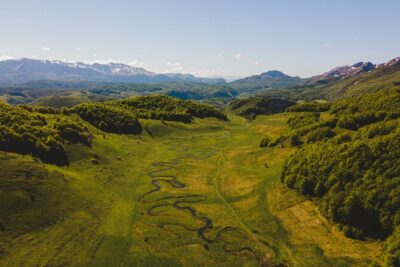
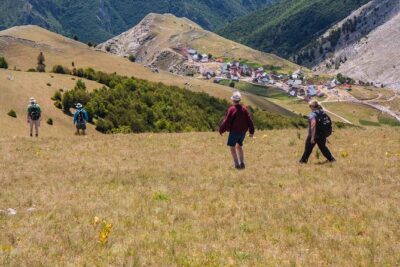
Lukomir Nomad Village Hiking from Sarajevo – Local Lunch Included
Read our review →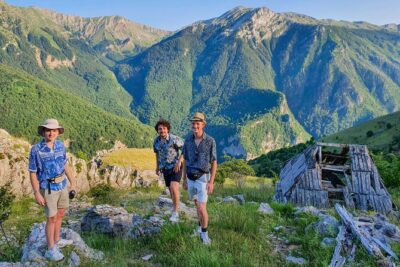
Umoljani Village to Lukomir Village via Obalj Hike from Sarajevo
Read our review →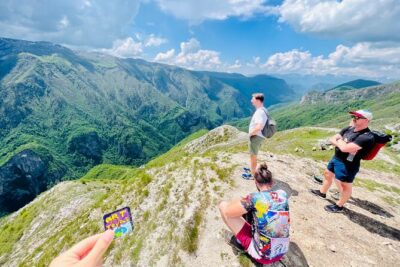
LUKOMIR VILLAGE HIKE & TREK TOUR (nature, hike, food & panorama)
Read our review →
Hiking around Sarajevo: Lukomir Village Full Day Hiking Tour
Read our review →Browse the lists this tour appears in