
Review · JAJCE & TRAVNIK DAY TRIPS
Bosnian Kingdom Capitals: Travnik & Jajce Tour from Sarajevo
Bosnia rewards the curious visitor. This full-day trip links Travnik and Jajce, two former capitals with very different personalities. I like the mix of Ottoman mosques, medieval fortresses, Roman remains, museums, waterfalls, and old watermills. I also like that the tour is private, with air-conditioned transport, bottled water, snacks, and WiFi included.
The main drawback is the length. At 10 to 12 hours, with about five hours spent driving, this is a big day. Some stops last only 10 or 15 minutes, so you will get an informed overview rather than a slow, leisurely visit to every site.
In This Review
- Key points to know before booking
- Why Travnik and Jajce make a strong pair
- Travnik begins with Plava Voda
- Travnik Fortress gives you the best view
- Šarena Džamija and Travnik’s religious mix
- Ivo Andrić adds a literary side trip
- Travnik’s museums and Ottoman memorials
- Jajce goes underground at the Catacombs
- Jajce Fortress and the last Bosnian kings
- Roman religion and Yugoslav politics in Jajce
- Pliva Waterfall is the day’s natural highlight
- Mlincici and the old watermills
- The long return drive matters
- Who should book this full-day Bosnia tour?
- Should you book Bosnian Kingdom Capitals?
- FAQ
- How long does the Bosnian Kingdom Capitals tour last?
- Where does the tour begin and end?
- Is this a private tour?
- What is included in the price?
- Are meals included?
- Is ćevapi included?
- What happens if I need to cancel?
Key points to know before booking
- Two former capitals in one day: See Travnik, once an Ottoman administrative center, and Jajce, the medieval seat of Bosnian kings.
- A private tour for $150.10 per person: Your group travels together rather than joining a large mixed coach.
- Travnik offers the fuller cultural program: Expect mosques, churches, mausoleums, museums, a fortress, and the birthplace of Nobel Prize winner Ivo Andrić.
- Jajce adds Roman, medieval, Yugoslav, and natural sights: The program includes a Mithraic temple, catacombs, a fortress, AVNOJ Museum, waterfall, and watermills.
- Meals are not included: Plan for lunch and dinner costs, including the suggested chance to try ćevapi.
- Free cancellation is available up to 24 hours before departure: Poor weather or an unmet minimum may also lead to a new date or full refund.
Why Travnik and Jajce make a strong pair
If you have only seen Sarajevo, this tour gives you a wider view of Bosnia. Travnik brings Ottoman-era streets, religious buildings, and literary history. Jajce shifts the focus to kings, Roman soldiers, World War II politics, rushing water, and old mills.
That range is the real value. You are not spending the day looking at one type of monument. Instead, you move through several layers of Bosnian history, often within a short distance of one another.
The private format helps. The tour is designed for only your group, and transportation is provided in an air-conditioned vehicle. A bottled water supply, a snack such as a chocolate bar or chips, onboard WiFi, and entrance fees are included. You still pay for lunch, dinner, drinks, and personal purchases.
The advertised price is $150.10 per person. That is not a budget excursion, especially once meals are added. But for a private full-day trip with transport from Sarajevo, admission fees, and a driver, the price can make sense if you want both towns without arranging several separate connections.
One past booking produced a particularly useful outcome: Markus booked what was expected to be a group tour but ended up as the only client. The operator, Muhmmnad, still ran the trip and arranged local guides in Travnik and Jajce. You should not assume the same arrangement every time, but it shows that the operator can adapt when group numbers are small.
Other day trips out to Jajce and Travnik:
- From Sarajevo: Travnik, Jajce, Pliva Lakes & Watermills Trip
★ 4.9 · 519 reviews - From Sarajevo: Jajce, Travnik, Pliva Lake, & Watermills Tour
★ 4.8 · 317 reviews - Jajce, Travnik and Pliva watermills – Day Tour from Sarajevo
★ 5.0 · 295 reviews
Travnik begins with Plava Voda
The first stop, Plava Voda, is a calm introduction to Travnik. This national monument includes the Derventa cemetery, Lutvina Kahva café, and the tomb of mufti Mehmed Efendi and his wife Ajiša.
You have about 20 minutes here. That is enough to look around, take in the setting, and hear why the place matters, but not enough for an extended café stop or a slow photographic session. I would use this time to get your first feel for Travnik’s Ottoman character.
Plava Voda is also a useful reminder that historic sites are not always grand castles or large museums. Cemeteries, cafés, tombs, and old public spaces can explain a town just as well. If you enjoy atmosphere more than checklists, this should be one of the more pleasant early stops.
Travnik Fortress gives you the best view
Travnik’s Old Town fortress is one of the day’s major highlights. Built on a hill, it offers a look at medieval defenses, stone walls, towers, and narrow routes between the old structures.
The scheduled visit lasts 35 minutes and admission is included. The time is fairly tight, so you should expect a focused walk rather than a full exploration of every corner. Wear practical shoes, since a hilltop fortress naturally involves uneven surfaces and some uphill movement.
The reward is the view over Travnik and its surroundings. The fortress also gives context to the town below. After seeing Ottoman mosques and later religious buildings, you can understand how military power shaped the town before and during later periods.
Šarena Džamija and Travnik’s religious mix
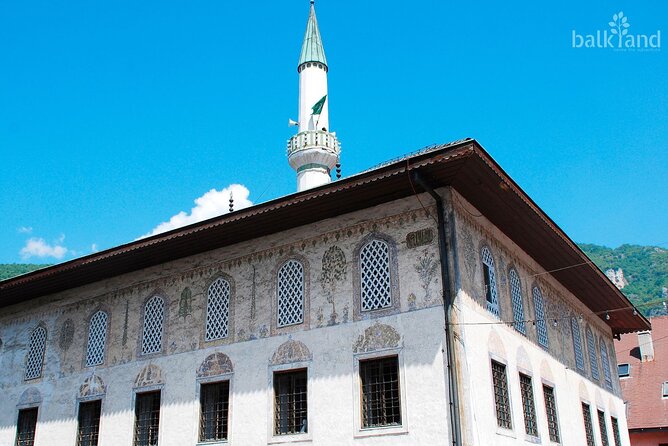
Šarena Džamija, or the Colorful Mosque, dates from the 16th century and is known for detailed decoration and Ottoman design. You have 20 minutes, with admission included.
This is a quick visit, but it helps explain why Travnik is more than a stop for photographs. The town’s identity was shaped by Ottoman rule, and the mosque’s ornamentation gives you a direct example of that cultural influence.
The tour then moves through several religious and historic sites. The Church of St. John the Baptist represents the Catholic heritage of the area, while Hadži Ali Beg’s Mosque adds another Ottoman-era landmark. Each visit lasts about 10 minutes.
Those short stops are useful for comparison, but you should keep your expectations realistic. You will not have much time for quiet reflection or detailed architectural study. The strength of this program is variety, not depth at every building.
Same corner of the country, a different kind of day:
- Sarajevo: Mostar, Konjic, Blagaj Tekke, Pocitelj & Waterfall
★ 4.9 · 1,666 reviews - Fall of Yugoslavia, Sarajevo War Tour with Tunnel of Hope Museum and Frontlines
★ 5.0 · 1,314 reviews - Sarajevo: Grand Walking Tour Through Time and Cultures
★ 4.8 · 1,236 reviews - Sarajevo: Mostar, Konjic, Sufi House, Pocitelj & Kravice Falls
★ 5.0 · 1,179 reviews
Ivo Andrić adds a literary side trip
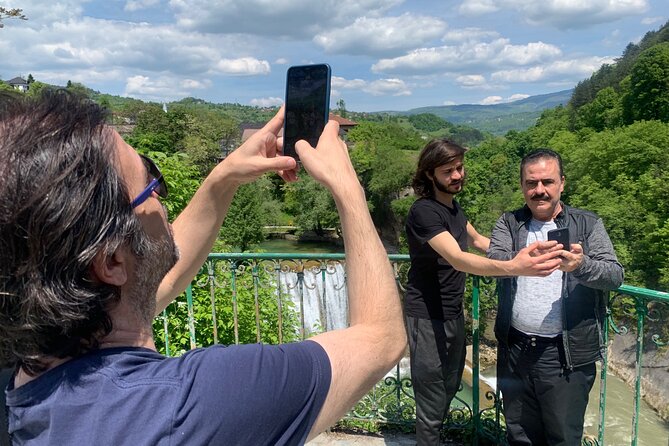
The Birth House of Nobel Prize winner Ivo Andrić is a worthwhile stop for anyone interested in literature or Bosnia’s cultural figures. Andrić was born in Travnik on October 9, 1892, and his restored birthplace opened as a memorial museum in 1974.
The permanent display covers his life and literary work. The visit lasts 15 minutes, so you will receive an introduction rather than a long museum session.
Even if you have not read Andrić, this stop gives the day a more personal angle. Fortresses and mosques tell you about rulers and institutions. A writer’s birthplace shows how a town can shape an individual voice and become part of a wider literary world.
Travnik’s museums and Ottoman memorials
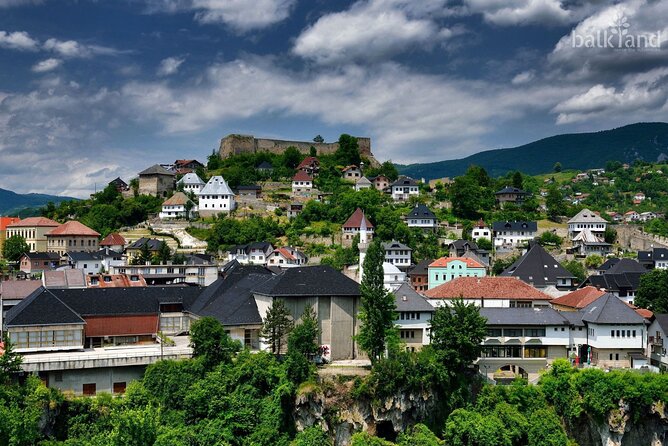
The Regional Museum of Travnik occupies a building constructed in 1928 for medical and health purposes with funding from the Rockefeller Foundation. Its permanent exhibition opened in 1975, after the museum had used several other buildings around town.
You have only 10 minutes here. That may be enough for a quick look at selected displays, but not enough to absorb a large collection. If museums are your main reason for booking, you may find this pace frustrating. If you prefer a broad day with many subjects, the short visit keeps the schedule moving.
The Vizier’s Grave adds another Ottoman-era memorial. It is an Ottoman-style mausoleum marking the burial place of a prominent vizier. Hadži Ali Beg’s Mosque follows, with another brief look at Islamic architecture and local religious heritage.
The program also includes Travnik’s Catholic church. Taken together, these sites show a town shaped by several communities and political periods. You should not expect a complete study of religious life, but you will see more than a single historical viewpoint.
Jajce goes underground at the Catacombs
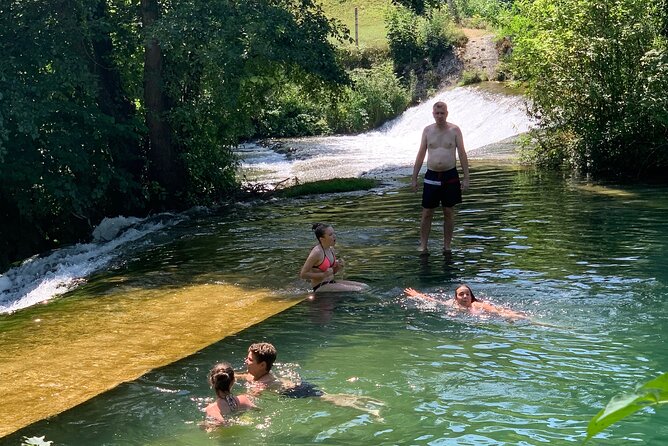
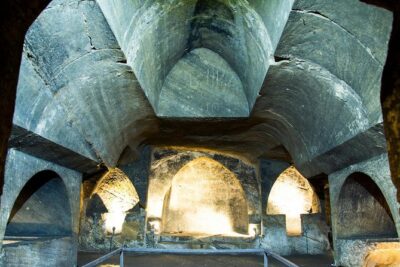
Jajce changes the mood. The Catacombs are an underground tunnel system from the medieval period, and the scheduled visit lasts 30 minutes with admission included.
This is one of the more unusual stops. Instead of viewing a monument from the outside, you enter a confined historic space and learn about its purpose and past. The tour data does not specify the exact conditions inside, so you should be ready for an underground visit rather than assuming a polished museum setting.
The catacombs also prepare you for Jajce’s medieval story. The town was the former capital of the Bosnian Kingdom and the residence of its last two kings. That royal role is the reason the next stop, the fortress, matters so much.
Jajce Fortress and the last Bosnian kings
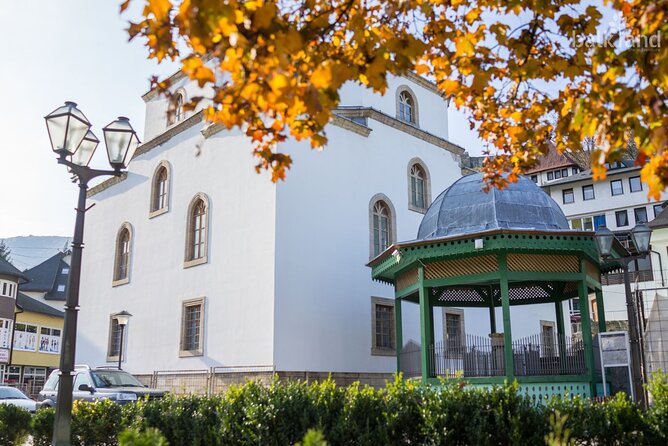
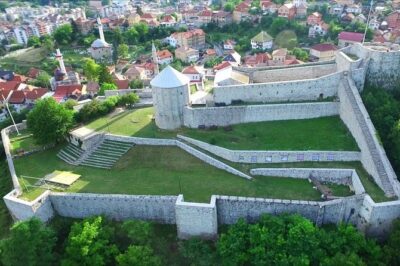
Jajce Fortress sits above the town and gives broad views of the area. The castle was tied to the final period of the Bosnian Kingdom, and below it is the Coronation Church of St. Mary, associated with the crowning of the last Bosnian king.
You have 30 minutes here. I would spend the first part taking in the view, then use the remaining time to examine the fortress interior and listen carefully to the guide’s explanation. The site has more meaning once you know that Jajce was not simply a walled town, but a royal center.
As with Travnik Fortress, the visit is short for such an important place. You will leave with a clear outline of Jajce’s medieval role, but you may wish for more time if you like reading every panel or exploring at a slow pace.
Roman religion and Yugoslav politics in Jajce
Jajce’s Temple of Mithras takes the story back to the 3rd century AD. Roman soldiers built the temple for the Indo-Iranian god Mithra, and the site is noted as one of the best-preserved Mithraic icons in the Balkans.
The 20-minute visit offers a striking contrast with the fortress. In one town, you move from Roman religious practice to medieval kingship within the same afternoon. That range is one of the tour’s strongest features.
The AVNOJ Museum covers a much later period. Jajce hosted the second session of the Anti-Fascist Council of the People’s Liberation of Yugoslavia in 1943, an event tied to the creation of postwar Yugoslavia.
The museum contains original items and artifacts connected with that session and the partisan resistance movement. You have 20 minutes, enough for a concise introduction to the political decisions that shaped Yugoslavia and later affected the Western Balkans.
This is a valuable stop, but also one that benefits from context. If you know little about Yugoslavia, ask the guide to explain the basic timeline. The visit is brief, and the subject can be dense.
Pliva Waterfall is the day’s natural highlight
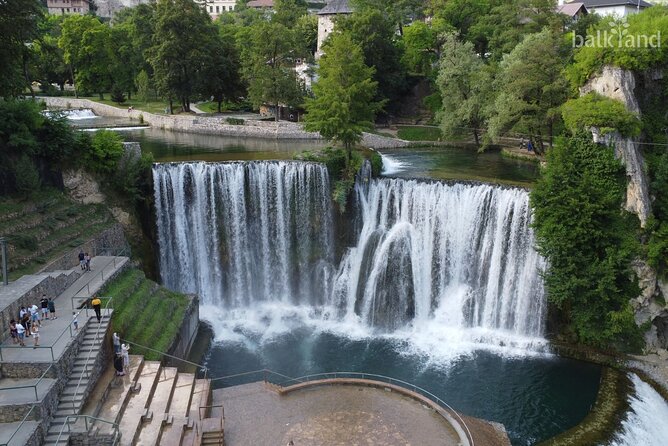
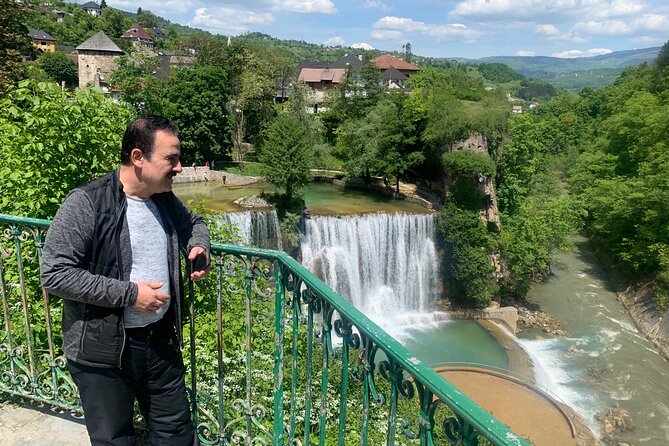
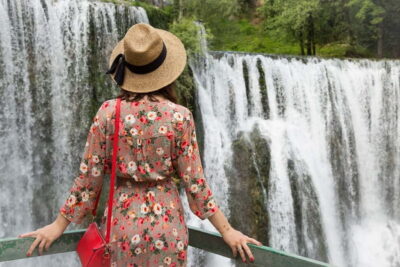
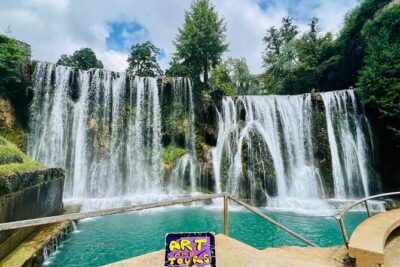
The Pliva Waterfall gives you a break from stone walls and museum interiors. Clear water drops over moss-covered rocks in the center of Jajce, creating a powerful rush of sound and motion.
You have 30 minutes here, with admission included. That allows time for photographs and a good look at the falls. The description also mentions natural pools and the possibility of a refreshing dip, but do not build your whole plan around swimming. The schedule is limited, and conditions can vary.
For me, this is the point where Jajce becomes especially memorable. The waterfall is not just another scenic stop added to a historical tour. It explains why the town developed where it did and gives the long day a welcome change of pace.
Mlincici and the old watermills
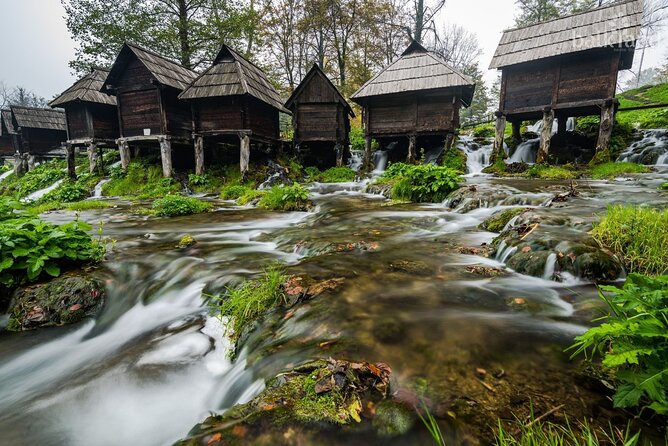
The final sightseeing stop is Mlincici, the group of historic watermills powered by the Pliva River. These mills once ground grain into flour and helped support the local community, especially during the Ottoman period.
You have about 20 minutes. The mills are a compact way to see how people used the river for daily work, not just for scenery. They also connect naturally with the waterfall and Pliva Lakes, showing the practical side of the area’s waterways.
After this stop, you get a 45-minute to one-hour dinner break in Jajce. Dinner is not included, and the tour description specifically points to ćevapi as a national dish worth trying. I would budget for the meal and keep the break focused, since the drive back to Sarajevo takes about 2.5 hours.
The long return drive matters
The full day lasts about 10 to 12 hours. The remaining time is travel, and the return through the Bosnian countryside takes roughly two and a half hours after dinner.
That driving time is the main tradeoff. You cover a lot of ground, but you will spend a large part of the day in the vehicle. The air conditioning, bottled water, snack, and WiFi help, though none can replace a good night’s sleep before departure.
Pickup begins at Sarajevo City Hall on Brodac 1, and the tour returns to the same meeting point. Public transportation is nearby, and confirmation is received when you book. Most people can participate, but anyone who finds long drives or hilltop sites difficult should consider the physical demands of the day.
The tour requires good weather and a minimum number of participants. If poor weather or low numbers cause cancellation, you are offered another date or a full refund. You can cancel for a full refund up to 24 hours before the start time. Within 24 hours, refunds are not available.
Who should book this full-day Bosnia tour?
I would choose this trip if you have limited time in Bosnia and want to see more than Sarajevo. It suits you especially well if you enjoy history, religious architecture, museums, old fortifications, and scenic stops in equal measure.
The private format is another reason to consider it. You can ask questions and keep your group together without the feel of a large coach excursion. The past booking that was handled as a private day for one client also suggests a personal approach, though arrangements can vary.
I would hesitate if you want long museum visits, extended meals, or a relaxed pace. The schedule is packed, and the 10-minute stops are designed to introduce a place, not exhaust its possibilities. You should also add lunch, dinner, and personal expenses to the advertised $150.10 price.
Should you book Bosnian Kingdom Capitals?
Book it if you want a broad, efficient look at central Bosnia from Sarajevo. Travnik gives you Ottoman architecture, literature, religious landmarks, and a hilltop fortress. Jajce adds royal history, Roman remains, Yugoslav politics, a major waterfall, and traditional mills.
Skip it if you prefer to travel slowly or dislike long drives. For the right visitor, though, the variety and private transport make this a useful way to reach two difficult-to-combine destinations in one day. I would arrive ready for a long schedule, save room for ćevapi, and treat the tour as an overview that helps you decide where you might return for a longer visit.
FAQ
How long does the Bosnian Kingdom Capitals tour last?
The tour lasts approximately 10 to 12 hours. About 2.5 hours of the return journey from Jajce to Sarajevo is spent driving, and the remaining duration also includes travel between stops.
Where does the tour begin and end?
The meeting point is Sarajevo City Hall, Brodac 1, Sarajevo 71000. The tour ends back at the same meeting point.
Is this a private tour?
Yes. Only your group participates in the activity. Group discounts are also available.
What is included in the price?
The price includes bottled water, a snack such as a chocolate bar or chips, all fees and taxes, an air-conditioned vehicle, and WiFi onboard.
Are meals included?
No. Lunch and dinner are not included. The schedule includes a 45-minute to one-hour dinner break in Jajce, where you can pay for your own meal.
Is ćevapi included?
No. Ćevapi is suggested as a national Bosnian dish to try, but food is a personal expense and is not included in the tour price.
What happens if I need to cancel?
You can cancel up to 24 hours before the experience for a full refund. Cancellations or changes made within 24 hours are not refunded or accepted. If poor weather or an unmet minimum number of participants causes cancellation, you are offered a different date or a full refund.
Newest around Sarajevo
- Understanding Srebrenica Genocide + Lunch with Local Family★ 4.9 · 14 reviews
- Private Full Day Safari Tour★ 5.0 · 8 reviews
- Sarajevo: Trebević Mountain Summit Hiking Tour★ 4.2 · 2 reviews
- From Sarajevo: Kozice Waterfalls Hiking Experience in Nature★ 5.0 · 2 reviews
- Sarajevo Under Siege: A War History Tour★ 5.0 · 10 reviews
- WAR TUNNEL – Sarajevo’s only way of a communication during the WAR – Top secret★ 5.0 · 12 reviews
- Mysterious Visoko Pyramids Driving and Walking Tour★ 5.0 · 7 reviews
- Ultimate Gastro Experience★ 4.5 · 14 reviews
Jajce & Travnik Day Trips, compared.
Jajce, Travnik and Pliva watermills – Day Tour from Sarajevo
Read our review →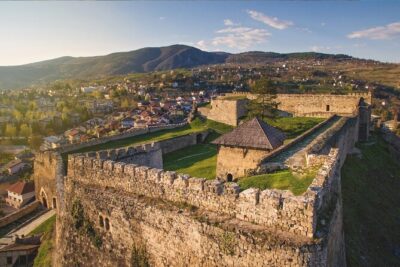
Travnik, Jajce & Pliva Lakes Day Tour From Sarajevo (fees Incl.)
Read our review →
CENTRAL BOSNIA | A medieval tour (Jajce + Travnik + Pliva lakes)
Read our review →Browse the lists this tour appears in