
Review · MOSTAR & KRAVICE WATERFALLS DAY TRIPS
Break-up of Yugoslavia & The War in Mostar: Life Under Siege
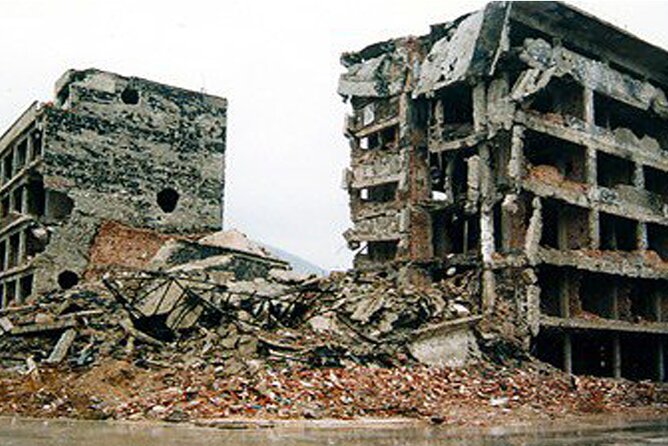
War leaves marks. This three-hour Mostar tour helps you read them, linking the breakup of Yugoslavia with the Bosnian War and the city’s divided present. I especially like the small group of up to eight and the chance to hear personal family stories from local guides such as Esmer, Harun, Huran, and Vedad. The main consideration is that this is serious, information-heavy sightseeing, not a light city outing.
I also like the mix of places: an abandoned Yugoslav military aircraft hangar, a war museum, and front-line streets in central Mostar. Pickup from your hotel makes the morning easy, but the tour may feel emotionally heavy, and some stops are valuable mainly for context rather than pretty photographs.
In This Review
- Five things to know before you book
- Why Mostar needs more than the Old Bridge
- The abandoned aircraft hangar south of Mostar
- The Mostar War Museum and a map that makes sense of the conflict
- Walking the former front line through central Mostar
- A local guide changes the tone
- Is $42.33 good value for three hours?
- Who should take this Mostar war tour?
- Practical details that affect your morning
- Should you book Break-up of Yugoslavia and the War in Mostar?
- FAQ
- How long does the Mostar war tour last?
- What places are included?
- Is hotel pickup available?
- Is the museum entrance included?
- How many people can join the tour?
- Is the tour offered in English?
- Can I cancel for a full refund?
Five things to know before you book
- The tour links three very different places: a secret aircraft hangar, a war museum, and streets once split by fighting.
- Personal stories are central: guides explain what their families and neighbors experienced during the siege of Mostar.
- The group is capped at eight people: that leaves room for questions and a more direct conversation.
- You will see war damage beside ordinary city life: bunkers, ruined buildings, murals, and former front lines sit close to modern cafes and shops.
- The $42.33 price includes useful extras: transport in an air-conditioned vehicle, hotel pickup and drop-off if selected, and museum admission.
Why Mostar needs more than the Old Bridge
Mostar is easy to visit as a picturesque stop. You can cross the famous bridge, browse the stone lanes, and have coffee near the river in a few hours. Yet that postcard view tells only part of the city’s story.
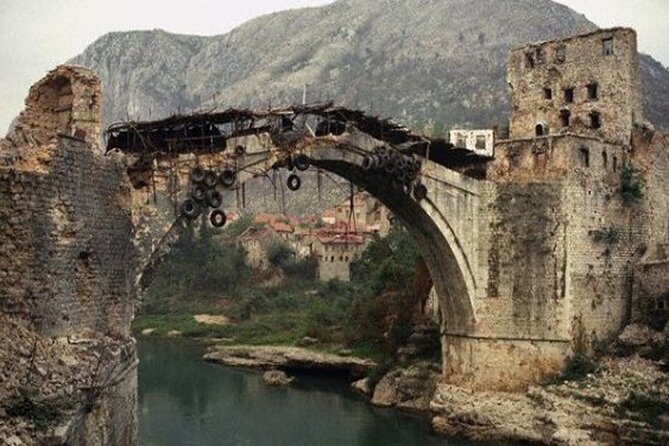
The war in Mostar from 1992 to 1995 is not a distant chapter here. The conflict shaped neighborhoods, families, buildings, politics, and the invisible boundary that still affects daily life. This tour gives you a framework for understanding what you are seeing instead of leaving you to guess why a ruined building remains beside a restored street.
The guide begins by placing the breakup of Yugoslavia into a wider setting. That matters because the conflict is difficult to follow if you start only with Mostar. The tour addresses the political changes, military movements, and divisions that led to fighting, then narrows the focus to the city itself.
I would take this tour early in a Mostar stay. Once you understand the wartime geography, the Old Bridge, Boulevard Street, Spanish Square, and the city’s two sides carry more meaning.
More Waterfall Day Trips in Mostar:
- Dubrovnik: Kravica Waterfalls, Mostar and Pocitelj Day Trip
★ 4.5 · 3,045 reviews - From Mostar: Blagaj, Počitelj & Kravice Waterfalls Day Tour
★ 5.0 · 1,310 reviews - Discover Herzegovina Day Tour from Mostar: Kravice Waterfalls, Blagaj, Počitelj
★ 5.0 · 742 reviews
The abandoned aircraft hangar south of Mostar
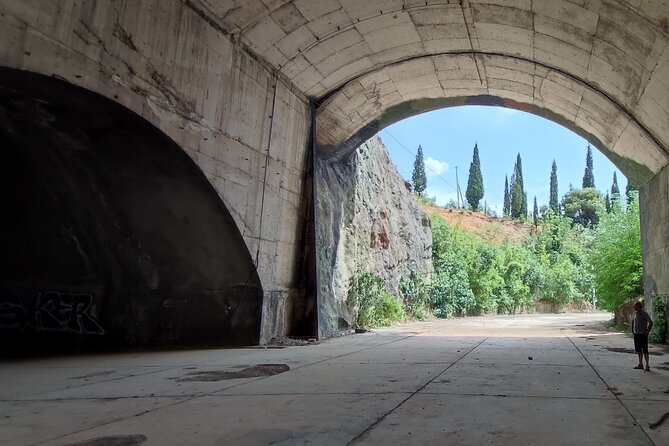
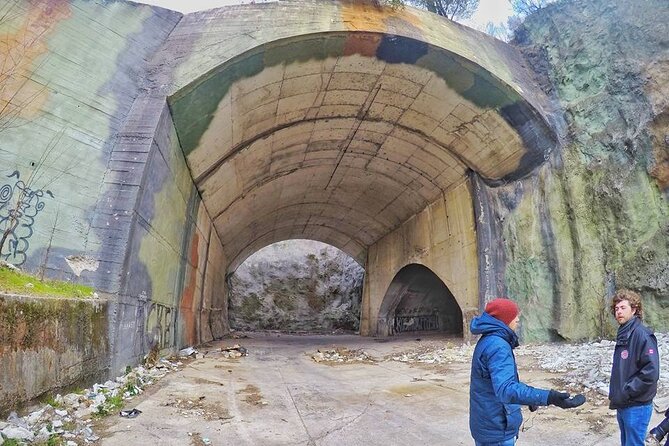
The first stop is an abandoned aircraft hangar about five minutes south of Mostar. It was built into the mountain as a protected base for Yugoslav fighter jets under Josip Broz Tito. The rock offered cover from attack and kept the installation out of public view.
This is a striking start because it shows the military logic behind Yugoslavia’s defenses. You are not simply looking at an old tunnel or empty building. You are seeing a place designed around secrecy, protection, and the fear of outside attack.
The stop lasts about 50 minutes, and admission is included. Your guide explains how the base worked and why it was placed deep inside the mountain. Personal stories and local details help turn a cold military site into part of Mostar’s twentieth-century story.
Do not expect a polished museum. The hangar is abandoned, and its appeal comes from its atmosphere and historical purpose. Some people will find it fascinating; others may find it rough and less visually rewarding than the Old Town. I would not choose this tour for scenic photography alone.
The transport matters here. The tour uses an air-conditioned vehicle, and hotel pickup can save you the trouble of arranging a taxi for an out-of-town stop. The exact pickup option depends on the booking you select, so provide your Mostar accommodation address if it is not listed.
The Mostar War Museum and a map that makes sense of the conflict
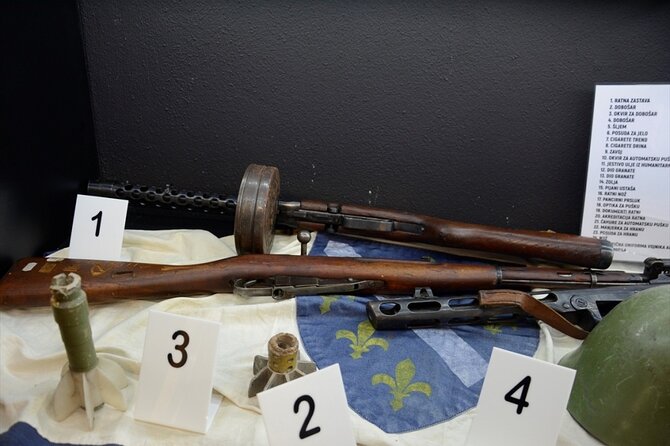
The second stop is the Mostar War Museum on Gojka Vukovića Street. You spend roughly 50 minutes here, with entrance included in the price.
This is where the tour becomes more personal. The guide explains how civilians lived through the siege, what happened between the lines, and what it means to live in a city still divided by wartime history. The museum is connected with families of Bosnian soldiers who fought in the war, giving the stop a local focus rather than a distant military overview.
One of the most useful teaching tools is simple: the guide draws a map of former Yugoslavia on a board. That visual explanation helps sort out the political and military relationships that can become confusing in books or documentaries. Guides such as Esmer have been praised for explaining the sequence of events in clear language and answering difficult questions without rushing.
The personal accounts can be painful. Stories about civilians being targeted and families enduring the siege have left some visitors in tears. You should come ready for an emotional experience, especially if you know little about the war or are bringing older children and teenagers.
The tone is not presented as a one-sided victory story. Esmer, in particular, is described as willing to discuss wrongdoing on all sides, forgiveness, current political tensions, and hopes for a peaceful future. That balance is important in a place where memory remains contested.
You may also get more than a museum visit. Guides have sometimes shared Bosnian coffee customs, recommended local food such as ćevapi, pointed out small cafes, and offered documentaries or other material for further study. Those touches are not the formal focus, but they connect the war story to life in Mostar now.
Walking the former front line through central Mostar
The final section follows streets around Kujundžiluk and Šantića Street before continuing toward Spanish Square and Boulevard Street. The whole stop is planned for about 50 minutes.
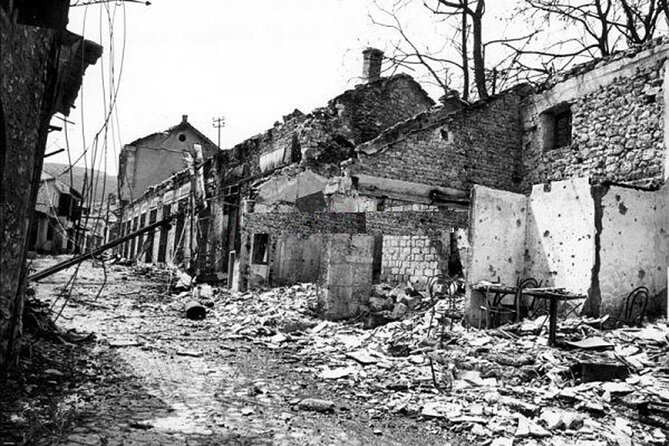
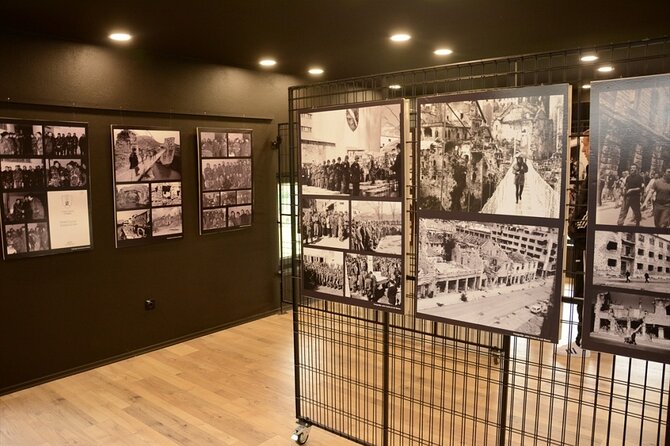
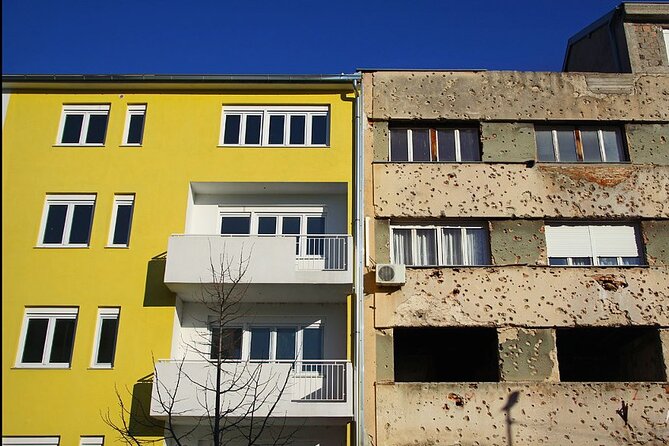
Here, the war is encountered in the middle of the modern city. You may see bunkers still built into damaged structures, ruined buildings, murals, and traces of the positions used during the closest fighting between Bosnian and Croatian forces. The guide uses wartime photographs to compare the same streets with their present appearance.
That comparison is one of the tour’s strongest ideas. A street that now looks ordinary may once have been a front line. A square where people meet today may have been associated with shelling, separation, or fear. You begin to understand that Mostar’s division is not simply a political phrase. It is connected to specific roads, buildings, and neighborhoods.
The route also points out an invisible line between two parts of Mostar. You will not find a dramatic border checkpoint. Instead, the guide explains how the boundary developed and how it continues to influence the city.
The walk is not a sightseeing circuit built around perfect views. The remains can be stark, and some locations may feel quiet or even anticlimactic until the guide explains what happened there. That is exactly why the interpretation matters. Without it, a bunker may look like a random chunk of concrete. With it, the same object becomes evidence of how close the fighting came to ordinary homes.
Other tours covering the siege years and their sites:
- Mostar War Heritage Walking Tour
★ 5.0 · 6 reviews - Fall of Yugoslavia, Sarajevo War Tour with Tunnel of Hope Museum and Frontlines
★ 5.0 · 1,314 reviews - Sarajevo: Tunnel Museum Yugoslavia War Tour with War Veteran
★ 5.0 · 1,111 reviews - ROSES OF SARAJEVO (Official WAR + CITY tour)- Story of a Survivor
★ 5.0 · 770 reviews
A local guide changes the tone
The guide is the heart of this experience. Several guides have led the tour, including Esmer, Harun, Huran, and Vedad. Esmer receives especially strong praise for combining personal experience, patience, and a calm approach to painful subjects.
You should understand one point clearly: a guide may have been a child during the war rather than an adult combatant. That does not make the account less useful. Guides can explain what they, their relatives, and their communities experienced, while also placing those memories within the larger political story.
The best part of the guiding style is the willingness to take questions. The tour is not a memorized speech that ends when the clock runs out. The small group allows you to ask about the breakup of Yugoslavia, the siege, the current division of Mostar, and the way people live with the past today.
Guides have also been described as friendly and connected to the city. You might pass people they know, hear about a small coffee place, or receive advice on ćevapi and other local food. These moments help prevent the tour from becoming only a lesson about suffering. Mostar is also a living city, and the guide shows you how history and daily life sit beside each other.
The emotional balance matters. The stories are tragic, but the guides also speak about moving forward. That does not erase the past. It gives you a more honest picture of a city trying to remember without remaining trapped in the war.
Is $42.33 good value for three hours?
At $42.33 per person, the tour is reasonably priced for a guided experience with transport and museum entry. You are paying for more than admission to a single site. The cost covers roughly three hours, an air-conditioned vehicle, a professional guide, the Mostar War Museum, and hotel pickup and drop-off if you choose that option.
The maximum group size of eight is important. A large bus tour would make personal discussion harder, especially during the museum stop. Here, you have a better chance to ask a follow-up question or clarify a confusing part of the conflict.
The tour is also a good use of time if you are passing through Mostar from Split, Dubrovnik, Montenegro, or another nearby destination. It fits into a morning and can be arranged around the rest of your visit. Some groups have found the tour lasted longer than three hours because the guide continued answering questions. That can be a benefit if you want detail, but allow extra time rather than scheduling something immediately afterward.
The value is lower for someone who wants a broad city tour with shopping, architecture, and scenic stops. This experience is focused. You will see parts of Mostar that matter historically, but you will not receive a full introduction to every major attraction.
Who should take this Mostar war tour?
I recommend it most strongly to adults, history-minded visitors, and anyone who wants to understand the city beyond the bridge. It is also suitable for teenagers when an adult feels they are ready for difficult wartime material.
You will get the most from it if you:
- Have at least three hours in Mostar
- Want local explanation rather than a self-guided walk
- Are willing to ask questions about complicated political events
- Prefer real places and personal accounts to polished attractions
- Plan to visit other parts of Bosnia and Herzegovina, Croatia, or Montenegro and want regional context
You may want to skip it if you are looking only for cheerful sightseeing, scenic views, or a relaxed food tour. The subject is heavy, and the museum and damaged buildings can be upsetting.
The tour works well for repeat visitors too. Even if you have already crossed the Old Bridge, you may leave with a different understanding of why the city feels divided and why its restored beauty can never be separated entirely from its recent past.
Practical details that affect your morning
Hotel pickup and drop-off are offered when that option is selected. If your accommodation is not listed, send the full address in Mostar so the operator can arrange the meeting point.
The tour is offered in English, includes a mobile ticket, and confirmation is sent within 48 hours, subject to availability. Children must be accompanied by an adult, and most people can participate.
Because the experience combines vehicle travel and walking, wear practical shoes and bring water. The supplied details do not give a strict accessibility description, so contact Mostar Travel Agency before booking if you have mobility needs or questions about the hangar and street route.
You can cancel for a full refund up to 24 hours before the local start time. Changes or cancellations made later are not accepted for a refund.
Should you book Break-up of Yugoslavia and the War in Mostar?
Yes, if you want to understand Mostar rather than simply photograph it. The abandoned military base gives you a sense of Yugoslavia’s defensive system, the museum explains the human cost, and the former front line shows how the conflict remains tied to the city’s streets.
The strongest reason to book is the guide. Esmer and the other local guides bring patience, personal memory, and a clear effort to present more than one side. The tour can be intense, but it also leaves room for hope and ordinary Bosnian life.
I would book it near the beginning of your stay, keep the rest of that morning flexible, and treat it as a serious history experience. At $42.33, the small group, transport, museum entry, and local perspective make this one of the better uses of a half-day in Mostar.
FAQ
How long does the Mostar war tour last?
The scheduled duration is approximately three hours. Some tours may run longer when the guide spends extra time answering questions.
What places are included?
The experience includes an abandoned Yugoslav military aircraft hangar south of Mostar, the Mostar War Museum on Gojka Vukovića Street, and former front-line areas around Šantića Street, Spanish Square, and Boulevard Street.
Is hotel pickup available?
Hotel pickup and drop-off are available if that option is selected. If your accommodation is not listed, provide its address in Mostar.
Is the museum entrance included?
Yes. Entrance to the Mostar War Museum is included.
How many people can join the tour?
The maximum group size is eight people.
Is the tour offered in English?
Yes. The tour is offered in English and includes a mobile ticket.
Can I cancel for a full refund?
Yes. You can cancel at least 24 hours before the experience start time for a full refund. Cancellations or changes made less than 24 hours before the start time are not accepted for a refund.
Newest around Mostar
- Mostar Old Town Walking Tour – Best Seller★ 5.0 · 4 reviews
- Mostar Panorama Glass Bridge★ 4.0 · 2 reviews
- Wine Tasting & Private Walking Tour Mostar★ 5.0 · 5 reviews
- Private Transfer Mostar–Dubrovnik English Speaking Local Driver★ 5.0 · 13 reviews
- Private Transfer from Mostar to Split★ 5.0 · 3 reviews
- Stolac, the crossroads of civilisations, private walking tour.★ 5.0 · 9 reviews
- Biking in Mostar ,Ćiro trail Mostar-Čapljina★ 5.0 · 4 reviews
- Neretva kayak canoe safari★ 5.0 · 12 reviews
Mostar & Kravice Waterfalls Day Trips, compared.
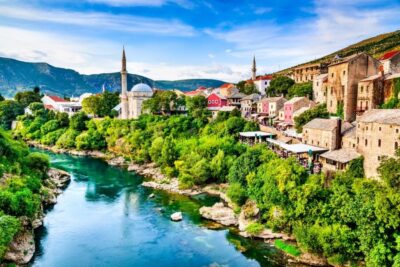
Dubrovnik: Kravica Waterfalls, Mostar and Pocitelj Day Trip
Read our review →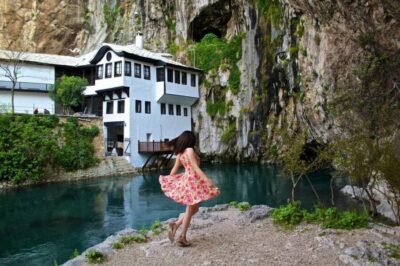
Mostar, Konjic, Blagaj Tekke, Pocitelj & Waterfall
Read our review →
Blagaj, Počitelj & Kravice Waterfalls Day Tour
Read our review →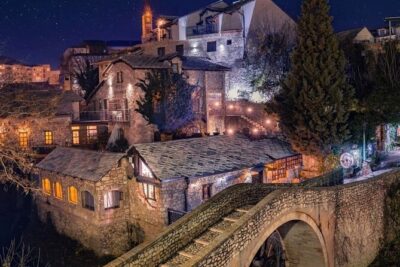
Mostar, Konjic, Sufi House, Pocitelj & Kravice Falls
Read our review →
From Dubrovnik: Mostar and Medjugorje Full-Day Tour
Read our review →
Discover Herzegovina Day Tour from Mostar: Kravice Waterfalls, Blagaj, Počitelj
Read our review →
Mostar, Konjic, Dervish House, Pocitelj & Kravica Falls
Read our review →Browse the lists this tour appears in