
Review · MOSTAR & KRAVICE WATERFALLS DAY TRIPS
The Death of Yugoslavia: Unique thematic Tour in Mostar
Mostar’s recent past has four secret addresses. The Death of Yugoslavia tour makes the region’s political story easier to follow by linking each stop to a different chapter, from the birth of socialist Yugoslavia to Bosnia and Herzegovina today. I like the secret locations and the way music, photographs, and documents give the past a human scale. I also like that the guides bring family memory into the story, not just dates and political slogans.
The main caution is that this is a serious history tour. War, nationalism, dictatorship, economic hardship, and loss are central subjects, so it may feel heavy if you want a light sightseeing outing. The four sites are not revealed in advance, either. That makes the trip more curious and atmospheric, but it gives you less control over exactly what you will see.
In This Review
- Four things that make this Mostar tour different
- Why this tour adds something beyond Mostar’s Old Bridge
- Meeting near the Old Bridge and setting out
- Chapter One: Gnojnice and the Yugoslav Paranoia
- Chapter Two: Rodoč and ordinary life under Tito
- Chapter Three: Španski trg and the road to war
- Chapter Four: Bijeli Brijeg and Bosnia today
- The guides make or break the experience
- Music, photographs, and secret documents
- Is $41 a fair price?
- Who should book this experience?
- Should you book The Death of Yugoslavia tour?
- FAQ
- Where does the tour start?
- How long does the tour last?
- What language is the tour conducted in?
- Are the tour locations listed in advance?
- What should I bring?
- What is included in the price?
Four things that make this Mostar tour different
- Four undisclosed stops: Each location represents a period in Yugoslavia’s story, and the mystery keeps you watching the road.
- A clear four-part structure: The tour moves from World War II and the Cold War to Tito’s socialism, the Yugoslav wars, and modern Bosnia and Herzegovina.
- History through music and images: Popular songs, old photographs, and secret documents help explain how ordinary people experienced political change.
- Guides with a personal connection: Simon drew on the experiences of his grandfather and father, while Marco and Saddy were also praised for clear, lively storytelling.
- Transport between sites: A modern car or van connects places that would not make sense as a normal walking tour.
- A strong value at $41: For about two and a half hours of guiding, transport, equipment, and access to unusual sites, the cost is reasonable for Mostar.
Why this tour adds something beyond Mostar’s Old Bridge
Mostar is often reduced to its famous bridge, stone lanes, and river views. Those sights matter, but they do not explain the political pressures that shaped the city and the country around it.
This tour gives you a wider frame. You hear how Yugoslavia formed after World War II, why Tito broke with Stalin, how people lived under a distinctive socialist system, and why the country later fractured into war. You also get a look at the problems Bosnia and Herzegovina still faces today.
I find the four-chapter format useful because Yugoslav history can quickly become a blur of names, borders, dates, and competing national stories. Instead of throwing everything at you at once, the guide builds a route through time. Each stop has a job.
The undisclosed locations add a small sense of theater. You do not know in advance where the van is heading or how the next place fits the story. The tradeoff is simple: you cannot judge the tour by a published list of monuments. Its value comes from the guide’s explanation and the way the places are used.
More Waterfall Day Trips in Mostar:
- Dubrovnik: Kravica Waterfalls, Mostar and Pocitelj Day Trip
★ 4.5 · 3,045 reviews - From Mostar: Blagaj, Počitelj & Kravice Waterfalls Day Tour
★ 5.0 · 1,310 reviews - Discover Herzegovina Day Tour from Mostar: Kravice Waterfalls, Blagaj, Počitelj
★ 5.0 · 742 reviews
Meeting near the Old Bridge and setting out
The tour starts in front of iHouse Travel, a short walk from Mostar’s Old Bridge. That is convenient if you are already spending the morning or afternoon in the historic center. Look for the office rather than expecting a large coach parked in the street.
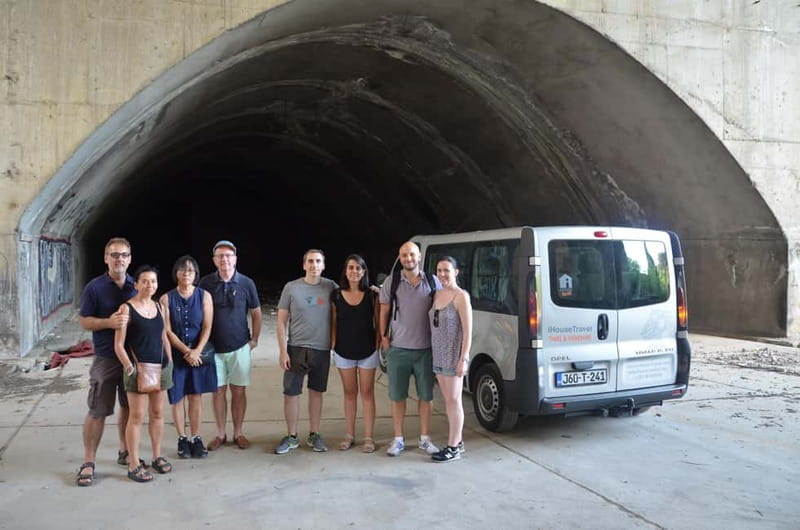
Transport is provided in a modern car or van. The driving time gives the guide room to introduce the next chapter, and this is one of the tour’s strengths. You are not simply being moved from one photo stop to another. The road becomes part of the lesson.
The planned route includes drives of about 20 minutes, 15 minutes, 15 minutes, and 10 minutes between the stops and the office. The guided portions are listed at roughly 45 minutes, 30 minutes, 40 minutes, and 45 minutes. The advertised duration is 150 minutes, so allow at least two and a half hours and keep a little flexibility if the discussion runs long.
Bring comfortable shoes. You will not be walking all day, but several stops involve getting out of the vehicle and moving through the site while listening.
Chapter One: Gnojnice and the Yugoslav Paranoia
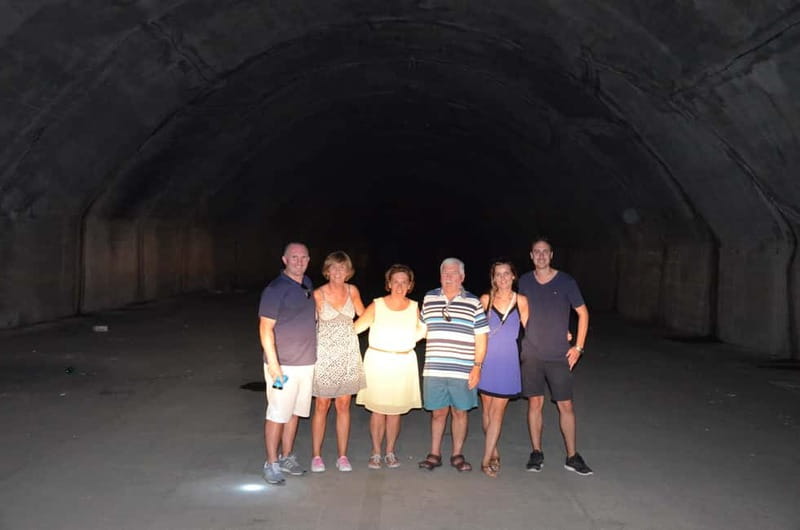
The first stop is in Gnojnice, reached after about 20 minutes by van. This part of the route deals with World War II, the creation of socialist Yugoslavia, and the Cold War.
The key subject is the Informbiro period. In the 1950s, Yugoslavia broke with the Soviet Union and began following its own political path. That split created fear and pressure inside the country. The state responded with heightened security and militarization, and the guide uses the first location to show how international politics affected daily life.
This is a smart opening because it corrects a common misunderstanding. Yugoslavia was communist, but it was not simply a Soviet satellite. Tito’s government built a different model and guarded its independence. The country’s position between East and West shaped its politics, military planning, culture, and public mood.
The first stop is described as a place connected with the pressures of that period. You get historical pictures and documents rather than a standard monument visit. This may be the most abstract chapter for anyone who knows little about the Balkans, so listen for the basic sequence: World War II, socialist rule, the split with Stalin, and the fear that followed.
Chapter Two: Rodoč and ordinary life under Tito
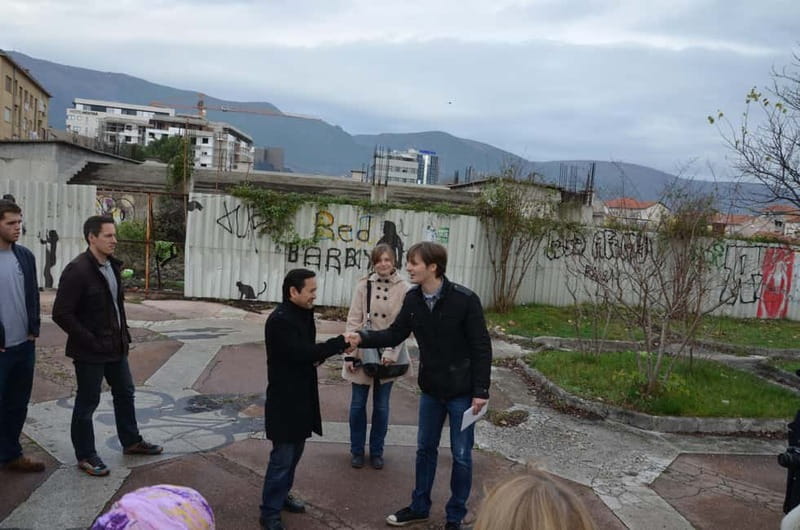
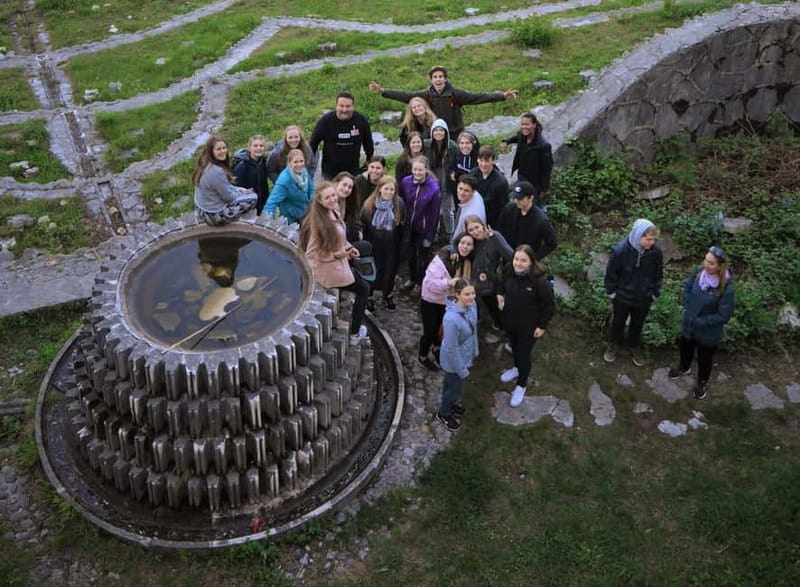
The second stop is in Rodoč, after about 15 minutes of driving. Here the focus shifts from state paranoia to people’s lives under Josip Broz Tito.
The guide discusses Tito’s personal life, political achievements, and attempt to create a form of socialism that was distinct from both Soviet communism and Western capitalism. That distinction matters. The tour does not present Yugoslavia as a simple success story or a simple failure. It looks at the hopes and limits of the system.
One useful subject is the Youth Work Actions. Young people took part in large public projects tied to work, loyalty, and the building of the country. These efforts helped create a shared Yugoslav identity, at least for some citizens. They also show how the state used collective work and public ceremony to shape society.
Industrialization in the 1950s and 1960s is another part of the story. Factories, new products, and modern infrastructure changed how many people saw their future. The guide then moves into the 1970s and 1980s, when popular culture, music, cars, brands, and consumer habits became important signs of modern life.
I especially like this chapter because political history can feel distant until you hear about the things people bought, listened to, drove, and talked about. Music is used as part of the tour’s experimental approach, helping mark the change from postwar austerity to the more confident culture of later Yugoslavia.
This stop may appeal most to anyone who enjoys social history. You are not only learning what Tito’s government did. You are considering what the system felt like to people who grew up inside it.
Same corner of the country, a different kind of day:
- From Mostar: Kravice Waterfalls, Blagaj, & Počitelj
★ 5.0 · 565 reviews - Herzegovina Day Tour from Mostar: Blagaj, Pocitej, Kravice falls (Join Us! :D)
★ 5.0 · 372 reviews - Mostar and Kravice Waterfalls Full-Day Tour from Split
★ 4.8 · 308 reviews - From Mostar: Kravice Waterfalls, Pocitelj & Blagaj Day Trip
★ 5.0 · 245 reviews
Chapter Three: Španski trg and the road to war
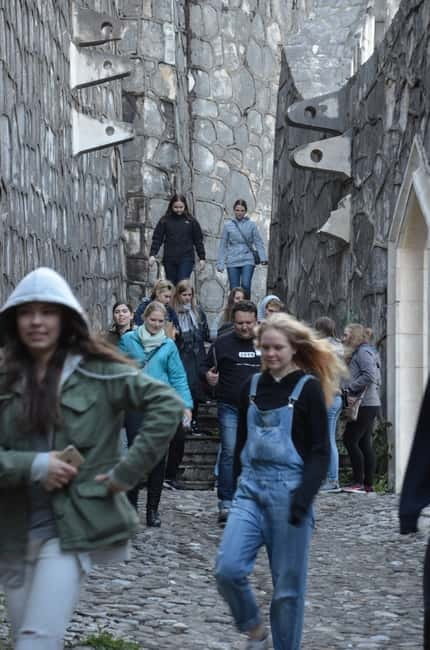
The third stop is at Španski trg, following another drive of about 15 minutes. The focus turns to the 1980s, the 1984 Sarajevo Winter Olympics, and the collapse of Yugoslavia.
The Olympics are an important marker. They are presented as part of the country’s golden period, when Yugoslavia could show the world a modern, capable, united face. The event also captures the optimism of the time. A country with a difficult past could still project confidence and international respect.
From there, the guide explains the pressures that weakened the federation. Economic decline and rising nationalism are central causes. The wars began in Slovenia and Croatia before spreading into Bosnia and Herzegovina, where the conflict became especially destructive and complicated.
This section needs careful handling, and the guide’s tone matters. The experience aims to explain the breakdown of the Yugoslav dream rather than reduce it to one villain or one simple cause. Victor from the United States singled out Marco’s objective presentation, and that quality is valuable on a subject where family background and national identity can strongly affect interpretation.
The tour also addresses the consequences: ruined communities, lost lives, and the damage left behind. Do not expect this chapter to avoid painful subjects. It should give you a better sense of why the war remains present in Bosnia and Herzegovina, even when buildings have been repaired and visitors are enjoying the city.
At around 40 minutes, this is a substantial stop. The photographs and documents help keep the discussion tied to real places and people. The drawback is that a short tour cannot explain every faction, event, or political dispute in detail. Think of this as a strong framework, not a full course in the Yugoslav wars.
Chapter Four: Bijeli Brijeg and Bosnia today
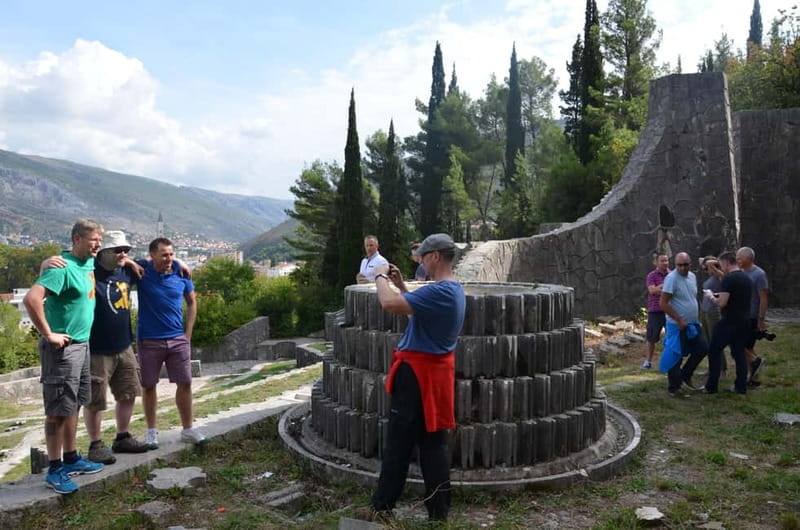
The final location is Bijeli Brijeg 1, reached after roughly 10 minutes. The last chapter brings the story into the present.
The guide explains Bosnia and Herzegovina’s political structure and the problems facing the country in the early 21st century. This is an essential part of the experience. A tour about Yugoslavia should not stop with the war, because the country’s current institutions and political tensions are closely tied to the breakup.
You also discuss possible European Union membership and the need for economic, cultural, and political recovery. The setting is used for reflection, with remnants of an earlier period placed beside the complicated reality of modern Bosnia and Herzegovina.
That contrast gives the ending its weight. You have spent the tour hearing about a country that no longer exists but remains alive in memory. At the final site, you consider what survived, what was lost, and what kind of future Bosnia and Herzegovina might build.
The last walk is listed at about 45 minutes, so comfortable footwear matters. The tour then returns to iHouse Travel in Mostar.
The guides make or break the experience
This tour depends heavily on storytelling. The locations are secret, and several subjects are difficult to understand without a clear explanation. A guide who only recites facts would leave the route feeling thin.
The available feedback points to a strong guiding team. Simon was praised for making the rise and fall of Yugoslavia understandable through different places and for bringing in the experiences of three generations, including his grandfather and father. That kind of family connection can make the past feel close without turning the tour into a private family story.
Marco was praised for an objective approach to local history. Saddy, also referred to as Saddat, was described as a funny, engaging storyteller who kept the sessions enjoyable. Another guest noted that the guide spoke very good English and continued offering useful information during the drives.
That combination is important. You need accuracy for a subject this sensitive, but you also need a guide who can keep the group alert during a long explanation. Humor appears to be used lightly, not as a way to make the war itself seem casual.
Music, photographs, and secret documents
The tour’s use of music is more than decoration. Popular songs can show how a society changes, what people wanted to hear, and how cultural identity crossed internal borders.
Historical photographs help put faces and places to the story. Documents add another layer, especially during the chapters on the Cold War and the state’s security concerns. These visual materials are useful if you learn better from examples than from a list of political terms.
The approach is experimental, but it still serves a practical purpose. Music and images create breaks between long explanations and help you remember the sequence of events. You may not recall every date after leaving Mostar, but you are more likely to remember the mood of Tito’s era, the confidence of the Olympic years, and the shock of the country’s collapse.
Is $41 a fair price?
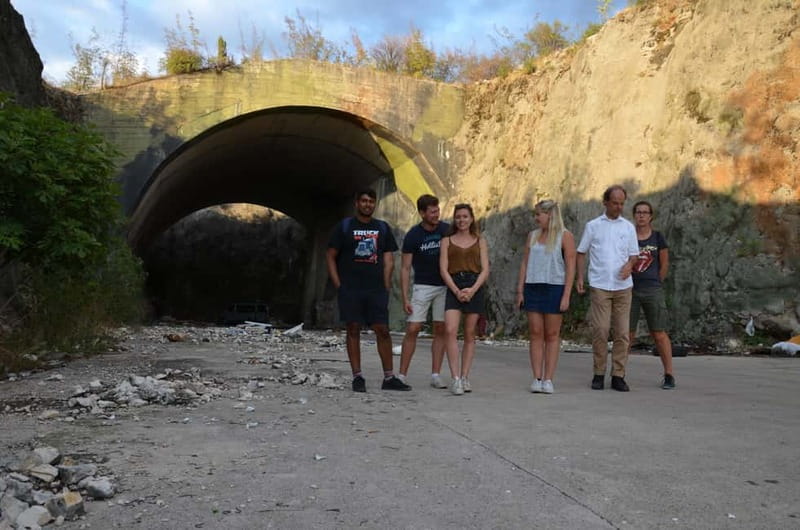
At $41 per person, this is not the cheapest way to spend an afternoon in Mostar. You can walk the Old Bridge area for free, and several city sights cost less than this tour.
Still, the price is fair for what is included. You receive transport, a live English-speaking guide, additional equipment, and access to four locations that are not presented as ordinary public sightseeing stops. The route also covers several decades of political and social change in about 150 minutes.
I would call it good value if you have a serious interest in the Balkans or want context for what you see around Mostar. It is less compelling if you only want scenic views or a relaxed ride. The tour’s value rests on explanation, not luxury, food, or a long list of famous monuments.
Free cancellation up to 24 hours before the start gives you some planning room, and you can reserve now and pay later. Those policies are useful if your Mostar schedule is still shifting.
Who should book this experience?
I would recommend it to you if you want to understand the region before making quick judgments about its politics. It suits history students, independent visitors, and anyone who has heard the name Yugoslavia but never understood how the country worked.
It is also a good choice if you have already seen the Old Bridge and want to move beyond the usual Mostar route. The van saves time and lets the guide connect places that would be difficult to visit together on foot.
People with family ties to the former Yugoslavia may find the subject especially personal. The tour does not promise a single final answer about the country’s breakup, which is a strength. It gives you a structure for thinking about competing memories.
I would skip it if you want a cheerful sightseeing trip, dislike van rides, or prefer to know every stop before booking. The secret-site format is part of the appeal, but it also means you must trust the tour’s concept.
Should you book The Death of Yugoslavia tour?
Book it if you want Mostar to make more sense. The tour offers an unusual mix of local places, personal stories, music, images, and political context, all tied to a clear four-chapter route.
Its strongest features are the guides, the undisclosed locations, and the effort to explain ordinary life as well as government policy. At $41, it is a sound choice for a focused history experience, especially when you consider the transport and the amount of ground covered.
Go with comfortable shoes and an open mind. You will leave with a clearer picture of how Yugoslavia was built, why it fell apart, and why its memory still shapes Bosnia and Herzegovina.
FAQ
Where does the tour start?
It starts in front of iHouse Travel, a few steps from Mostar’s Old Bridge. The provided meeting point is in Herzegovina-Neretva Canton, Bosnia and Herzegovina.
How long does the tour last?
The advertised duration is 150 minutes. The route includes transport between four guided locations and a return to iHouse Travel.
What language is the tour conducted in?
The tour is conducted in English with a live local guide.
Are the tour locations listed in advance?
No. The four locations are kept secret to make the experience more engaging and immersive.
What should I bring?
Bring comfortable shoes because the tour includes guided walks at the four locations.
What is included in the price?
The price includes transport in a modern car or van, a local tour guide, and additional equipment provided by the company staff.
Newest around Mostar
- Mostar Old Town Walking Tour – Best Seller★ 5.0 · 4 reviews
- Mostar Panorama Glass Bridge★ 4.0 · 2 reviews
- Wine Tasting & Private Walking Tour Mostar★ 5.0 · 5 reviews
- Stolac, the crossroads of civilisations, private walking tour.★ 5.0 · 9 reviews
- Private Transfer Mostar–Dubrovnik English Speaking Local Driver★ 5.0 · 13 reviews
- Private Transfer from Mostar to Split★ 5.0 · 3 reviews
- Biking in Mostar ,Ćiro trail Mostar-Čapljina★ 5.0 · 4 reviews
- Neretva kayak canoe safari★ 5.0 · 12 reviews
Mostar & Kravice Waterfalls Day Trips, compared.
Dubrovnik: Kravica Waterfalls, Mostar and Pocitelj Day Trip
Read our review →
Mostar, Konjic, Blagaj Tekke, Pocitelj & Waterfall
Read our review →
Blagaj, Počitelj & Kravice Waterfalls Day Tour
Read our review →
Mostar, Konjic, Sufi House, Pocitelj & Kravice Falls
Read our review →
From Dubrovnik: Mostar and Medjugorje Full-Day Tour
Read our review →
Discover Herzegovina Day Tour from Mostar: Kravice Waterfalls, Blagaj, Počitelj
Read our review →
Mostar, Konjic, Dervish House, Pocitelj & Kravica Falls
Read our review →Browse the lists this tour appears in