
Review · MOSTAR & KRAVICE WATERFALLS DAY TRIPS
The Death of Yugoslavia Tour in Mostar
History gets more honest after dark. The Death of Yugoslavia Tour takes you beyond Mostar’s famous bridge to four lesser-known places tied to Tito’s Yugoslavia, the Cold War, and the Bosnian War. I like the local storytelling, especially when guides such as Marco, Miran, Dario, and Marin connect politics with daily life. I also like the music presentation, which gives the changing eras an emotional sound.
The main drawback is simple: the sites are abandoned, decaying, and sometimes visually underwhelming. If you expect polished monuments, you may feel disappointed. This tour earns its price through explanation, not scenery, and one unhappy customer called the locations poor value despite praising guide Marko.
At about $47.17 per person, this is a useful history lesson at a fair price, especially since transport between the secret locations is included. The tour lasts around two and a half hours, begins at 5:00 pm, and ends back at iHouse Travel in central Mostar.
In This Review
- Key points about Mostar’s Yugoslav past
- Why this tour adds something Mostar’s old town cannot
- Gornje Gnojnice and the fear of the Cold War
- Rodoč and the ordinary life of Tito’s Yugoslavia
- Španski trg and the collapse of a shared country
- Partisan Cemetery and Bosnia and Herzegovina today
- The guides are the real heart of the experience
- What $47.17 buys you
- Timing, comfort, and practical planning
- Who should book the Death of Yugoslavia Tour
- FAQ
- Where does the Death of Yugoslavia Tour begin?
- What time does the tour start?
- How long does the experience last?
- How many places does the tour visit?
- Are the exact locations announced before the tour?
- Is hotel pickup included?
- What is the cancellation policy?
Key points about Mostar’s Yugoslav past
- Four secret locations: You visit sites connected with Cold War paranoia, everyday life under Tito, the Yugoslav wars, and Bosnia and Herzegovina today.
- A local guide leads the story: Guides including Marco, Miran, Dario, Marin, and Sebi have been praised for clear explanations, humor, passion, and personal memories.
- Music is part of the teaching: Songs and popular culture help explain how people felt during different periods, from socialist optimism to the country’s collapse.
- The locations are not pretty attractions: Their abandoned condition is intentional. They show forgotten projects, broken ideals, and the physical remains of a vanished state.
- Small group transport is included: The group can reach up to 16 people, with a driver-guide handling the round trip from the meeting point.
- The tour suits history-minded visitors: You will get more from it if you want context about Tito, nationalism, communism, and modern Bosnia rather than a standard sightseeing ride.
Why this tour adds something Mostar’s old town cannot
Mostar is easy to read as a postcard: stone lanes, the Neretva River, and the rebuilt Stari Most. That view matters, but it can leave out the political story that shaped modern Bosnia and Herzegovina.
This tour shifts your attention from medieval beauty to the 20th century. You travel outside the usual sightseeing circuit and visit places you would probably not find on your own. The locations are kept secret before the tour, which is meant to preserve a sense of discovery and keep the focus on the guide’s story.
I find that approach useful here. The history of Yugoslavia covers World War II, socialism, the split with the Soviet Union, economic decline, nationalism, and a brutal war. A list of dates would quickly become a headache. The four-part structure gives you a clear route through that difficult subject.
The guide’s role matters more than the physical stops. Marco and Marko are praised for explaining complicated events in an understandable way, while Miran and Myran are noted for strong storytelling and links between the sites and the larger history. Sebi has also been praised for combining facts with humor and practical advice about Bosnia.
Your guide may be someone else, but the experience depends heavily on who leads your group. That is not a flaw unique to this tour. It is simply worth understanding before you book a history tour built around spoken explanation.
More Waterfall Day Trips in Mostar:
- Dubrovnik: Kravica Waterfalls, Mostar and Pocitelj Day Trip
★ 4.5 · 3,045 reviews - From Mostar: Blagaj, Počitelj & Kravice Waterfalls Day Tour
★ 5.0 · 1,310 reviews - Discover Herzegovina Day Tour from Mostar: Kravice Waterfalls, Blagaj, Počitelj
★ 5.0 · 742 reviews
Gornje Gnojnice and the fear of the Cold War
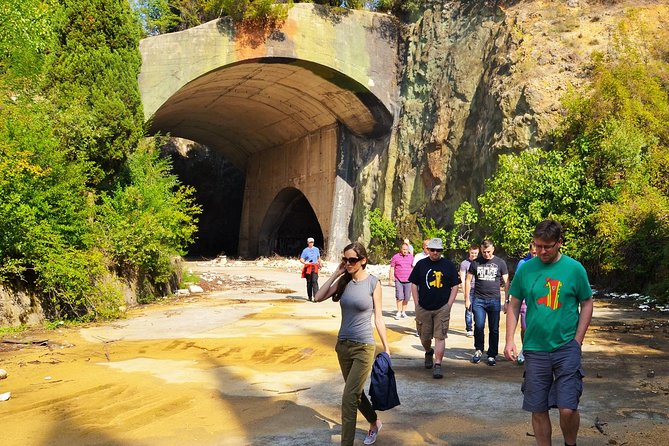
The first chapter begins during the drive to Gornje Gnojnice. Your guide sets the scene with World War II and the birth of Socialist Yugoslavia, then explains how the new country tried to find its place between East and West.
The central subject is the Informbiro period. After Josip Broz Tito broke with Stalin and the Soviet Union, Yugoslavia faced fear, suspicion, and pressure from both outside and within. The country responded with increased military planning and security measures. This period shaped Yugoslavia in the 1950s and created a culture where political loyalty could carry serious weight.
The first location is secret until you arrive. It is not presented as a grand attraction with signs and restored rooms. Instead, the setting helps your guide explain the paranoia of the era and the way Cold War politics touched ordinary life.
Allow about 30 minutes here. The drive is part of the lesson, so do not think of the vehicle time as wasted time between attractions. It lets the guide build the story in order.
The honest warning is that the site may look rough. You are paying for access, transport, and interpretation rather than a preserved museum. If you enjoy forgotten military or industrial places, the condition adds meaning. If you need visual polish, this stop may test your patience.
Rodoč and the ordinary life of Tito’s Yugoslavia
The second chapter moves to Rodoč and turns from state fear to everyday hopes. Along the way, the guide discusses Tito’s personal life, political achievements, and effort to create a form of socialism suited to Yugoslavia rather than copied directly from Moscow.
This section is valuable because it avoids treating the country only as a failed political experiment. You learn about Youth Work Actions, industrial growth, and the hopes attached to a modern socialist society. The story includes factories, work, education, and the idea that collective effort could build a better future.
The guide then moves into popular culture during the 1970s and 1980s. Yugoslav brands, music, cars, and lifestyle become clues to how people saw themselves. That detail gives the period a human scale. Instead of hearing only about government structures, you get a sense of what people bought, listened to, drove, and dreamed about.
This is where the music presentation can be especially effective. A song can explain the mood of an era faster than a paragraph about economic policy. Several guides have used music to show changing attitudes, and that creative touch is one of the most praised elements of the tour.
Rodoč also helps explain why the breakup of Yugoslavia felt so painful. The country was not just a political arrangement on a map. It was home, school, work, popular culture, and personal identity for millions of people.
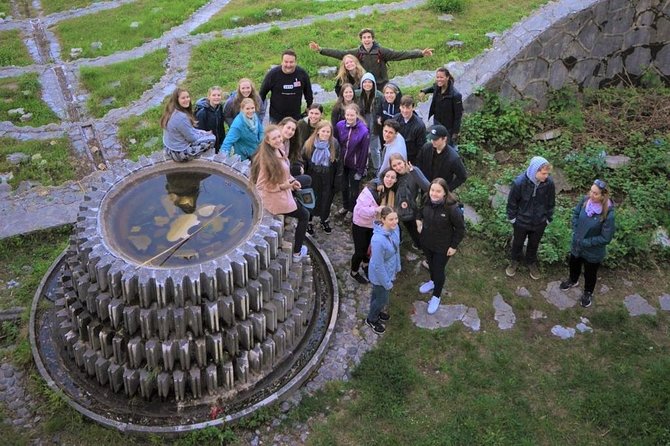
Expect another 30 minutes at this stop. The setting itself may not offer much to photograph, but the explanation gives it purpose. Keep your attention on the guide rather than waiting for a conventional attraction to appear.
Španski trg and the collapse of a shared country
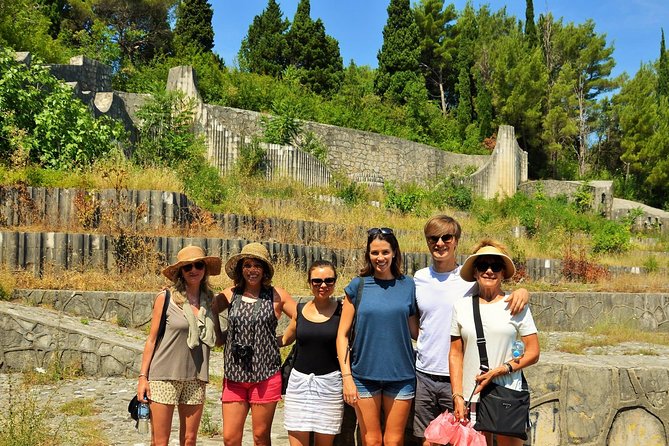
The third chapter takes place at Španski trg, after a discussion of the 1980s and the 1984 Sarajevo Winter Olympics. The guide uses the Olympics to explain why many people remember that decade as a high point for Yugoslav socialism.
The Olympics represented international confidence and shared pride. They also came before the country’s economic and political troubles became impossible to ignore. That contrast helps the guide explain how a period remembered fondly could lead into one of Europe’s worst conflicts since World War II.
The tour then follows the breakup of Yugoslavia through economic depression and growing nationalisms. You hear how war began in Slovenia and Croatia, then reached Bosnia and Herzegovina a year later. Here, the guide connects national politics with the human cost: destruction, displacement, and loss of life.
This is the heaviest section, and it deserves serious attention. Mostar’s own wartime scars make the subject immediate, even when the tour is discussing events across the former country. You are not being handed a simple story with one villain and one clean explanation. The aim is to show how economic pressure, political ambition, competing identities, and fear combined to break apart a shared state.
The stop lasts around 30 minutes, but the discussion may run longer depending on the guide and group. One guide has extended the tour beyond the advertised two and a half hours, which was appreciated because the conversation never felt rushed.
The tour’s title focuses on the death of Yugoslavia, but the wider story matters just as much. You need the earlier chapters about socialism, culture, and shared identity to understand why the collapse was both politically explosive and personally shattering.
Same corner of the country, a different kind of day:
- From Mostar: Kravice Waterfalls, Blagaj, & Počitelj
★ 5.0 · 565 reviews - Herzegovina Day Tour from Mostar: Blagaj, Pocitej, Kravice falls (Join Us! :D)
★ 5.0 · 372 reviews - Mostar and Kravice Waterfalls Full-Day Tour from Split
★ 4.8 · 308 reviews - From Mostar: Kravice Waterfalls, Pocitelj & Blagaj Day Trip
★ 5.0 · 245 reviews
Partisan Cemetery and Bosnia and Herzegovina today
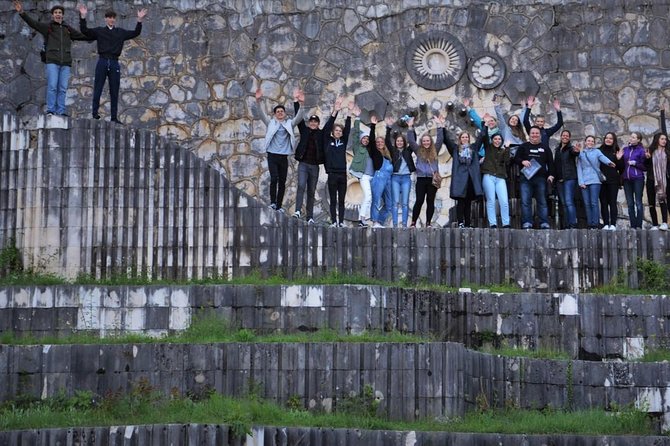
The final stop is the Partisan Cemetery, where the tour turns toward present-day Bosnia and Herzegovina. During the drive, your guide explains the country’s political structure and the problems that continue into the 21st century.
This section is not only a history recap. It asks what happens after a country has been divided by war and governed through a complicated political system. The guide places Bosnia and Herzegovina within the larger question of possible European Union membership, along with the need for economic, cultural, and political recovery.
The Partisan Cemetery is a fitting final setting because it links an earlier antifascist past with the difficult present. Its condition supports the tour’s larger idea: public places can carry old hopes even when the political world around them has changed.
You should not expect a neat final answer. Bosnia and Herzegovina’s current challenges cannot be solved in a 30-minute stop. What you can expect is a clearer sense of why the country’s politics are complicated and why the past remains part of daily public life.
This final chapter gives the tour weight. You leave thinking not only about what ended, but also about what Bosnia still has to build.
The guides are the real heart of the experience
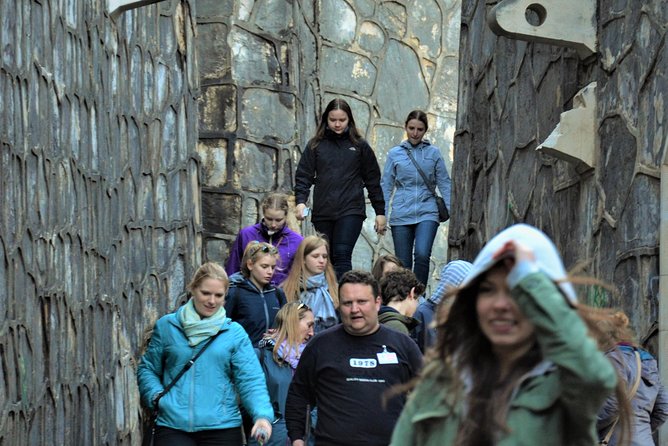
The strongest praise for this tour goes to the guides. Marco is repeatedly described as an excellent storyteller with strong communication skills. Marko is praised for humor, clear explanations, and an ability to make difficult history easier to follow.
Miran and Myran are singled out for connecting physical places with the wider story of Yugoslavia. Dario is praised for making Balkan history understandable, while Marin is remembered for passion and relatable storytelling. Sebi has also been praised for sharing helpful information about Bosnia beyond the formal tour subject, including personal memories of growing up in the country.
Names may vary from day to day, so you cannot book a specific guide based on the information provided. Still, the pattern is clear: this is a personality-led experience. The guide is not simply pointing out buildings. The guide is interpreting political events, explaining local memory, and sometimes adding family stories.
That personal element needs a little balance. A local perspective can make history vivid, but it is still one perspective. Listen closely, ask questions, and remember that the former Yugoslavia contained many different experiences. The best guides make room for complexity rather than forcing every event into a single national story.
What $47.17 buys you
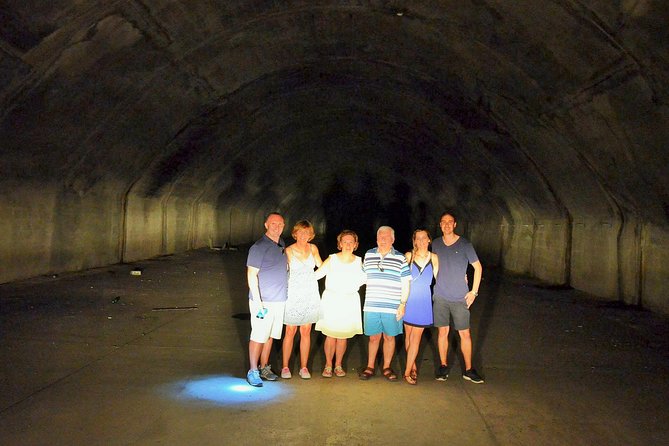
At $47.17 per person, the price is reasonable if you value access to places you could not easily reach independently. The fee includes taxes, local charges, a driver-guide, and transport between the four locations.
The tour is not cheap because the stops are grand. In fact, the abandoned condition of the sites is the source of the main criticism. You are paying for three things:
- The guide’s historical explanation
- Round-trip transport to locations kept secret until arrival
- A connected account of Yugoslavia from its creation to Bosnia today
A minimum of two people is required for the experience to operate. If you book alone, a single supplement may apply. This is important to clarify before committing, especially because that extra charge can change the value for a solo participant.
The group limit is 16 people. That is small enough for a guide to keep the talk personal, though the experience will feel different with a full group than with only a handful of people. Group discounts are available, and mobile tickets make arrival straightforward.
Food and drinks are not included. Hotel pickup and drop-off are also not included unless you select that option. The standard meeting point is iHouse Travel, Onešćukova 25, Mostar 88000, and the tour returns there.
Timing, comfort, and practical planning
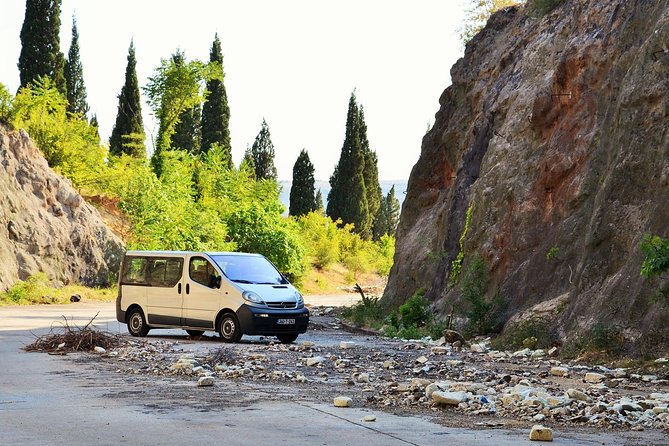
The tour starts at 5:00 pm and lasts about 150 minutes. That late start works well if you want to spend the earlier part of the day exploring Mostar’s old town, but you should keep enough time to reach Onešćukova 25 without rushing.
Wear practical shoes. The tour visits abandoned and decaying places, and the information does not promise smooth museum paths or polished facilities. Since the exact sites remain secret, you cannot plan around a particular building or surface.
Children must be accompanied by an adult, and most people can participate. The provider does not give more detailed accessibility information, so contact iHouse Travel before booking if you have mobility concerns.
The tour is offered in English. Bring your attention more than your camera. You may take home a few striking images, but the main value comes from listening to the explanation and noticing how each place fits the story.
Free cancellation is available up to 24 hours before the 5:00 pm start time. Cancellations or changes made within 24 hours are not accepted for a refund.
Who should book the Death of Yugoslavia Tour
I would choose this tour if you want to understand Mostar beyond its Ottoman-era center and wartime damage. It is especially useful if you know little about Yugoslavia but want a clear route through Tito’s rule, Cold War tensions, popular culture, the breakup, and Bosnia’s current political concerns.
It also suits anyone who enjoys unusual places. The secret locations are not conventional sightseeing stops, and their abandoned state is part of the subject. You will get a more honest sense of the country’s lost projects and changing ideals than you would from a polished display.
I would hesitate if your main goal is beautiful scenery, famous monuments, or a relaxed ride with little serious discussion. The war section can be painful, and the decaying sites may feel underwhelming if you expect admission halls and formal exhibits.
Book it if you want the story behind the streets. Skip it if you only want Mostar’s prettiest views. For most history-minded visitors, the guide’s stories, music, and access to otherwise unknown places make this one of the city’s more worthwhile cultural experiences.
FAQ
Where does the Death of Yugoslavia Tour begin?
It begins at iHouse Travel, Onešćukova 25, Mostar 88000, Bosnia and Herzegovina.
What time does the tour start?
The tour starts at 5:00 pm local time.
How long does the experience last?
It lasts approximately two hours and 30 minutes, or about 150 minutes. It may run slightly longer depending on the discussion.
How many places does the tour visit?
The tour visits four locations connected with Yugoslavia, the Cold War, the Yugoslav wars, and Bosnia and Herzegovina today.
Are the exact locations announced before the tour?
No. The locations are kept secret to create a more immersive and unexpected experience.
Is hotel pickup included?
Hotel pickup and drop-off are not included unless you select that option. The standard tour begins and ends at the iHouse Travel meeting point.
What is the cancellation policy?
You can cancel for a full refund up to 24 hours before the experience starts. Changes or cancellations made less than 24 hours before the start time are not accepted for a refund.
Newest around Mostar
- Mostar Old Town Walking Tour – Best Seller★ 5.0 · 4 reviews
- Mostar Panorama Glass Bridge★ 4.0 · 2 reviews
- Wine Tasting & Private Walking Tour Mostar★ 5.0 · 5 reviews
- Private Transfer from Mostar to Split★ 5.0 · 3 reviews
- Stolac, the crossroads of civilisations, private walking tour.★ 5.0 · 9 reviews
- Private Transfer Mostar–Dubrovnik English Speaking Local Driver★ 5.0 · 13 reviews
- Biking in Mostar ,Ćiro trail Mostar-Čapljina★ 5.0 · 4 reviews
- Neretva kayak canoe safari★ 5.0 · 12 reviews
Mostar & Kravice Waterfalls Day Trips, compared.
Dubrovnik: Kravica Waterfalls, Mostar and Pocitelj Day Trip
Read our review →
Mostar, Konjic, Blagaj Tekke, Pocitelj & Waterfall
Read our review →
Blagaj, Počitelj & Kravice Waterfalls Day Tour
Read our review →
Mostar, Konjic, Sufi House, Pocitelj & Kravice Falls
Read our review →
From Dubrovnik: Mostar and Medjugorje Full-Day Tour
Read our review →
Discover Herzegovina Day Tour from Mostar: Kravice Waterfalls, Blagaj, Počitelj
Read our review →
Mostar, Konjic, Dervish House, Pocitelj & Kravica Falls
Read our review →Browse the lists this tour appears in