
Review · MOSTAR & KRAVICE WATERFALLS DAY TRIPS
Mostar Private Walking Tour – where East meets West
Mostar tells its story in stone. This private two-hour walk brings together the Old Bridge, Ottoman-era lanes, Austro-Hungarian buildings, and the city’s difficult recent past. I like the personal format, with only your group taking part, and I like the way the route connects famous sights with smaller details, such as traditional bridge diving and old handicrafts.
The guide’s first-hand account of Mostar’s conflict is a major strength. One possible snag is the meeting arrangement: the tour information highlights hotel pickup and drop-off, yet it also lists Franjevačka Crkva as both the starting and ending point. Confirm that detail before booking, especially if you are counting on transport.
In This Review
- Key points to know before you book
- Why this short walk works in Mostar
- Starting beside Franjevačka Crkva
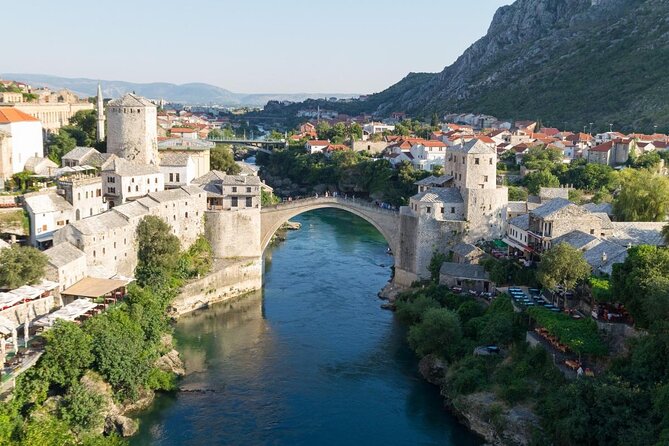
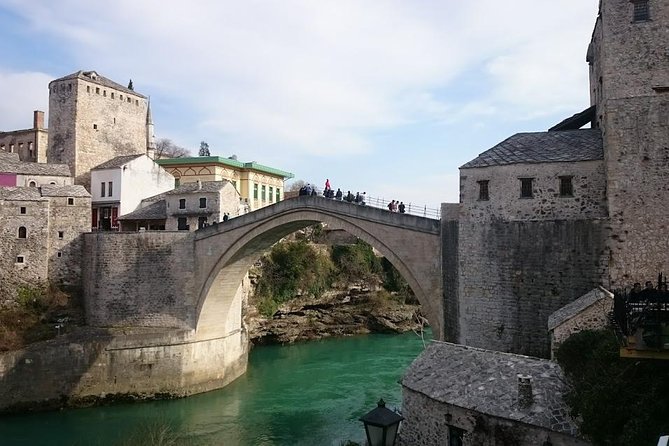
- Old Bridge: the heart of the experience
- Crooked Bridge and the Radobolja River
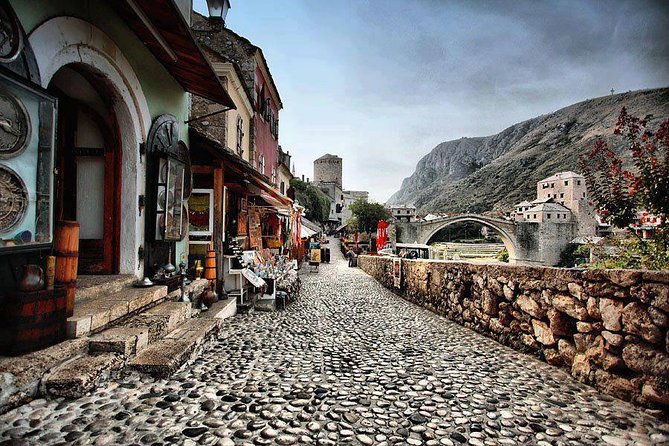
- Kujundžiluk Bazaar and old crafts
- Koski-Mehmed Pasha Mosque and the best bridge view
- Crossing into the Austro-Hungarian part of Mostar
- Spanish Square and the former front line
- Park Zrinjevac and the Austro-Hungarian promenade
- Mostar Peace Bell Tower
- Pace, group size, and value
- Who should book this Mostar walk?
- Should you book the Mostar Private Walking Tour?
- FAQ
- How long does the Mostar private walking tour last?
- Is the tour private?
- What language is the tour offered in?
- Where does the tour start and finish?
- Are entrance fees included?
- Is hotel pickup and drop-off available?
Key points to know before you book
- The Old Bridge is more than a photo stop: You hear about its history and visit the premises of the local bridge-jumping club.
- The route covers two sides of Mostar: Ottoman, Austro-Hungarian, religious, commercial, and wartime landmarks all appear within about two hours.
- The mosque visit costs extra: Entry to Koski-Mehmed Pasha Mosque and the minaret is not included.
- The war story is handled directly: Spanish Square and the former front line on Bulevar road add necessary modern context.
- It is genuinely private: Only your own group joins the walk, with an experienced local guide.
- The pace suits a first visit: Fifteen reviews produce a 4.9 rating, with 100 percent recommending the experience.
Why this short walk works in Mostar
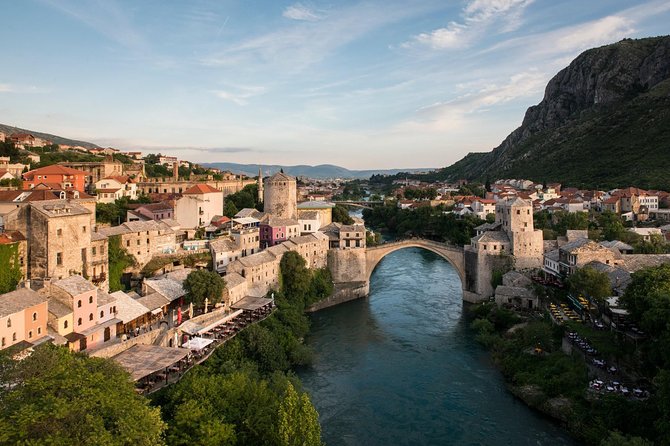
Mostar can feel like two cities sharing one river. On one side, old Ottoman lanes lead to small shops and mosques. On the other, Austro-Hungarian buildings, broad streets, parks, and reminders of the 1990s war tell a different part of the story.
This tour is designed to link those pieces rather than leave you with a single postcard view. In roughly two hours, you move from the Neretva River and the Old Bridge to a covered bazaar, a hilltop mosque, a former front line, and a central park. That range gives you a useful first look at Mostar without taking up an entire morning or afternoon.
I especially like the private setup. Your guide can explain details at your pace, pause when you want photographs, and spend more time on subjects that interest you. The available feedback gives this approach real weight: the strongest praise centers on the guide’s broad historical explanation and a calm pace that covers several parts of the city.
The walk is offered in English and includes an experienced local guide. It does not include entrance fees to monuments or museums, so you should allow a little extra money if you want to enter the mosque and climb its minaret.
More Walking Tours in Mostar
- Mostar Private Walking Tour
★ 5.0 · 93 reviews - Charming Mostar: Private Mostar Walking Tour
★ 5.0 · 23 reviews - Best of Mostar – Private Walking Tour
★ 5.0 · 21 reviews
Starting beside Franjevačka Crkva
The listed meeting point is Franjevačka Crkva, or the Franciscan church, at Franjevačka 1. The tour also ends back at this meeting point.
There is an important practical detail here. The highlights describe hotel pickup and drop-off as hassle-free, but the meeting information gives the church as the start and finish. Since both details appear in the tour information, I would confirm the exact arrangement with Herzeg Day Tours before you go. That small check can prevent a needless wait or a confused start.
The route begins in a useful part of Mostar, close to the Old Bridge and the historic center. From there, the guide can place the old city in context before the walk moves into its busiest and most famous section.
A minimum of two people is required per booking. Children must be accompanied by an adult, and most people can take part. The activity is private, so your group is not combined with strangers.
Old Bridge: the heart of the experience
The Old Bridge is the main reason many people come to Mostar, but it deserves more than a quick photograph. Your accredited guide explains the important facts and stories connected with this famous monument, helping you understand why the bridge matters so much to the city and the country.
The bridge also has a living tradition attached to it. The tour includes a visit to the premises of the local bridge-jumping club, made possible through the guide’s contact with its famous jumpers. You learn about the centuries-old practice of leaping from the bridge into the Neretva River, an activity that remains one of Mostar’s best-known customs.
That stop lasts about 20 minutes and has no admission fee. It is a strong use of time because it moves beyond architecture and adds a human element. You are not simply looking at an old crossing. You are hearing about the people who keep one of its most daring traditions alive.
The bridge area can be crowded, and the stone surfaces are uneven. The supplied information does not promise a quiet visit, so plan to share the scene with other people and allow time for photographs rather than expecting a private view of the bridge itself.
Crooked Bridge and the Radobolja River
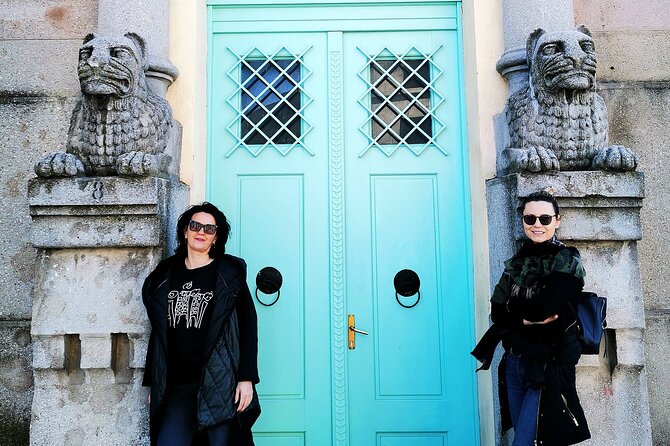
The next stop is Kriva Cuprija, usually called the Crooked Bridge. This small stone bridge crosses the Radobolja, a tributary of the Neretva, in the old town.
The stop lasts only about five minutes, but it gives you a different view of Mostar’s bridge-building traditions. The guide shares photographs and stories connected with the bridge, including its nickname, the bridge of love. The narrow crossing and the smaller river create a more intimate scene than the famous Old Bridge.
Do not judge this stop by its short length. It is mainly a quick look and a chance to hear a story, not a long visit with extensive sightseeing. If you enjoy old stonework and want a quieter counterpoint to the Old Bridge, it earns its place on the route.
More Waterfall Day Trips in Mostar:
- Dubrovnik: Kravica Waterfalls, Mostar and Pocitelj Day Trip
★ 4.5 · 3,045 reviews - From Mostar: Blagaj, Počitelj & Kravice Waterfalls Day Tour
★ 5.0 · 1,310 reviews - Discover Herzegovina Day Tour from Mostar: Kravice Waterfalls, Blagaj, Počitelj
★ 5.0 · 742 reviews - From Mostar: Kravice Waterfalls, Blagaj, & Počitelj
★ 5.0 · 565 reviews
Kujundžiluk Bazaar and old crafts
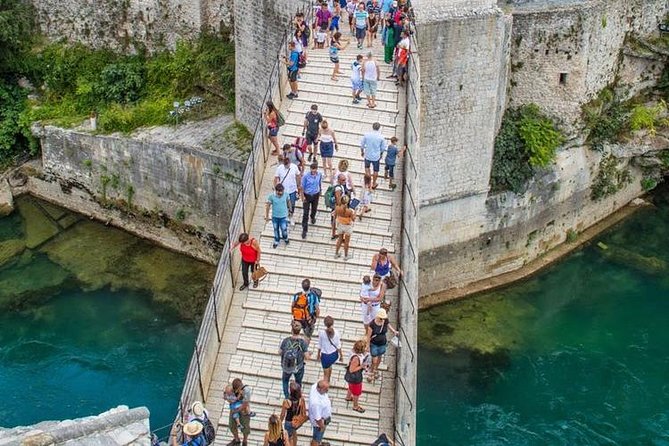
Kujundžiluk is the oldest bazaar in Herzegovina, and the walk gives you about 20 minutes here. Its value lies in meeting the working culture of the old town rather than simply passing through a row of souvenir shops.
The guide explains the old crafts, and the route offers contact with families who have made authentic handicrafts for centuries. You can ask about their work and get a sense of the hospitality that is treated as an important local value.
This is one of the better stops for anyone who wants a more grounded experience of Mostar. A bridge gives you an image of the city. A bazaar shows how people made a living, maintained skills, and welcomed visitors.
The practical limit is time. Twenty minutes is enough for an introduction, a little browsing, and conversation, but not enough for an extended shopping session. If you see something you want to buy, you may need to return later on your own. The tour ends back at the church, so you can ask your guide how to find the bazaar again.
Koski-Mehmed Pasha Mosque and the best bridge view
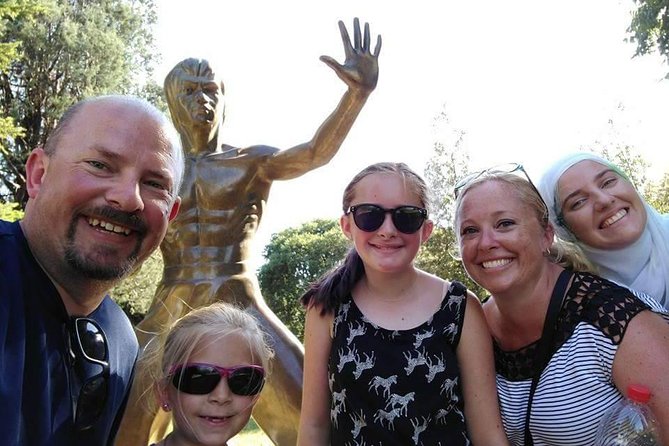
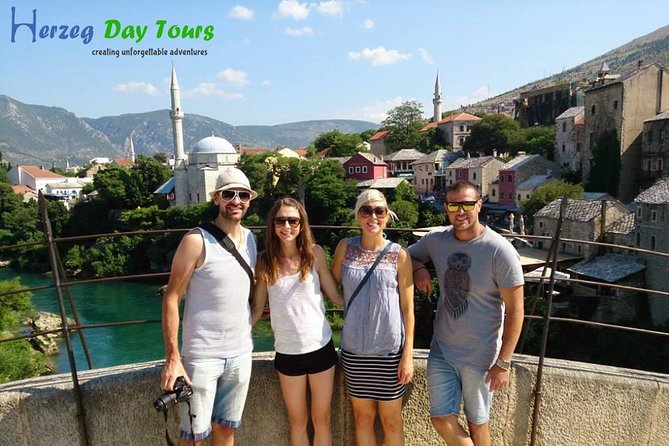
Koski-Mehmed Pasha Mosque is one of the most memorable stops because of its position on a high rock above the Neretva. The tour describes it as one of the most beautiful domed mosques in the country and one of the few where tourists may enter and climb the minaret.
The minaret offers what is described as the best view for photographing the Old Bridge. That makes this stop especially useful for photographers, though the climb is not included in the tour price. Admission to the mosque is listed separately, so check the current fee before you arrive.
The guide can explain the religious and architectural importance of the site, while the view helps you understand Mostar’s layout. From above, the river, bridge, old town, and surrounding buildings fit together in a way that is hard to grasp from street level.
The planned visit lasts about 15 minutes. That is enough for a focused stop, but it is not a long museum visit. You should also treat the minaret as an optional extra, not as part of the base tour. If you prefer to keep costs down, you can still enjoy the exterior and the surrounding streets without paying the additional monument fee.
Crossing into the Austro-Hungarian part of Mostar
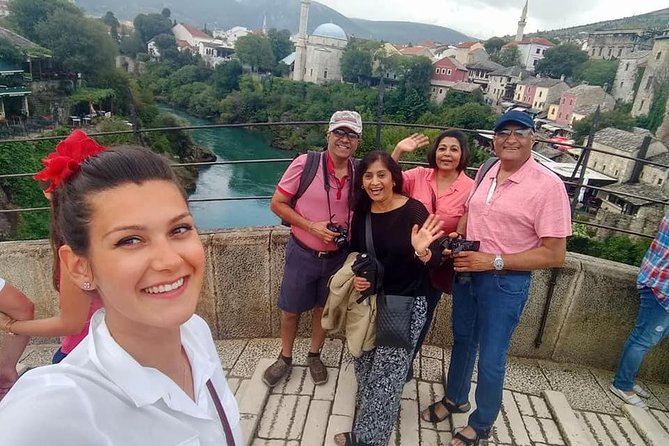
The route then crosses one of Mostar’s attractive Austro-Hungarian-era bridges and moves toward a more romantic part of the city, with parks and grander buildings.
This transition is one of the tour’s most useful features. Mostar is often presented through its Ottoman center alone, but the city also carries a strong Austro-Hungarian imprint. The change in street design and architecture helps you see how different ruling periods shaped the city.
The walk does not treat these areas as separate attractions. Instead, you move through them as part of one connected story. That makes the tour helpful on a first day, when you are still working out how the old town relates to the wider center.
Spanish Square and the former front line
Spanish Square introduces the most serious part of the walk. After crossing Bulevar road, once a front line during the last war, the guide discusses the conflict and its effect on Mostar.
The square was opened by King Juan Carlos of Spain to honor Spanish members of the United Nations peacekeeping forces who died here. The stop lasts about five minutes and is free.
This part may feel abrupt after the bazaar and bridges, but it should not be skipped. Mostar’s recent war cannot be separated from its buildings, divisions, and public spaces. A good city walk needs to explain both the beauty and the damage.
The guide’s first-hand account is particularly valuable here. One four-star assessment praises the guide for explaining the events that led to the conflict and for giving a direct account of Mostar during the fighting. Another five-star assessment praises the broad historical overview, the range of neighborhoods covered, and the well-judged pace.
Because this subject is painful, your experience may depend on your mood and the guide’s approach. The tour information promises that the topic will be addressed, but it does not suggest that this is a specialist war-history tour. Think of it as essential context within a wider city walk.
Park Zrinjevac and the Austro-Hungarian promenade
From Spanish Square, the tour follows the pedestrian area of Stefania’s promenade, created during the Austro-Hungarian period. You see buildings and villas in the pseudo-Moorish style before entering Park Zrinjevac, described as Mostar’s largest and most beautiful park.
The stop lasts about 15 minutes and is free. After the narrow lanes and river crossings, the park gives you space to slow down and look at the city’s later architectural period.
The guide also explains why public parks were used as cemeteries during the last war. That detail connects an ordinary civic space with the city’s wartime experience. It is the kind of information you might miss if you walked through the park alone.
I like the way this stop handles Mostar’s layers. The park is not presented only as a pleasant green break. It becomes another place where the city’s past remains visible, even when the surroundings seem peaceful.
Mostar Peace Bell Tower
The walk closes at the Mostar Peace Bell Tower, with about five minutes devoted to the site. Admission is not included.
The tower provides a fitting final point because the tour has moved through several religious, cultural, and political parts of Mostar. The guide uses it to discuss the city’s multicultural character and the way different communities have shaped its identity.
As a final stop, it works best as a summary rather than a major sightseeing visit. You should not expect a long interior tour or a separate museum experience based on the information provided. Its value comes from the meaning attached to the place and the way it brings the walking route together.
The tour then returns to the starting point at Franjevačka Crkva.
Pace, group size, and value
At approximately two hours, this is a compact introduction rather than a full-day exploration. I think that length works well if you are visiting Mostar on a tight schedule, arriving for a short stay, or wanting an orientation before exploring independently.
The private format gives the tour more value than a standard large-group walk, even though the listed price is not provided here. You are paying for a local guide, a route shaped around your own group, and access to explanations that connect the sights. The bridge-jumping club visit adds something that a basic walk may not offer.
The value is strongest for people who care about context. If you only want photographs of the Old Bridge, a self-guided stroll will cost less and may be enough. If you want the bridge, bazaar, mosque, Austro-Hungarian center, war history, and multicultural story linked together, the private guide earns the fee more easily.
Remember to budget separately for the mosque and minaret, along with the Peace Bell Tower if you choose to enter. Museum and monument fees are not included.
The tour is available daily from 9:00 a.m. to 6:00 p.m. for the stated operating period, December 19, 2025, through December 18, 2026. Confirmation is issued at booking. The activity is non-refundable and cannot be changed after booking, so check your date, group size, meeting point, and pickup arrangement carefully before paying.
Who should book this Mostar walk?
I would choose this tour if you want a clear first look at Mostar and prefer conversation over a fixed audio guide. It suits couples, families with an adult accompanying children, and small groups who want to ask questions without strangers sharing the route.
It is also a good fit if the war history matters to you. The guide’s first-hand explanation adds a human voice to Spanish Square and Bulevar road, while the rest of the walk covers religion, craft, architecture, and local customs.
You may want something else if you prefer a slow, unstructured visit or several hours inside monuments. The itinerary moves briskly, with several stops lasting only five minutes, and entrance fees are separate. The mosque and bell tower are not full-length visits in the schedule.
Should you book the Mostar Private Walking Tour?
Book it if you want a private, well-paced introduction that explains why Mostar looks and feels divided between East and West. The Old Bridge, bridge-jumping tradition, Kujundžiluk Bazaar, mosque viewpoint, Austro-Hungarian streets, and wartime sites give you a broad experience in a short time.
The clearest reason to choose it is the guide’s historical storytelling, especially the direct explanation of Mostar’s conflict. The main cautions are the extra monument fees, the non-refundable booking terms, and the need to confirm whether hotel pickup and drop-off are actually provided or whether you should meet at Franjevačka Crkva.
With a 4.9 rating from 15 assessments and 100 percent recommending it, the tour has a strong record. I would book it early in a Mostar stay, then return later to the bazaar, bridge, or mosque if one of the shorter stops deserves more time.
FAQ
How long does the Mostar private walking tour last?
The walking tour lasts approximately two hours.
Is the tour private?
Yes. Only your own group takes part in the activity.
What language is the tour offered in?
The tour is offered in English.
Where does the tour start and finish?
The listed meeting point is Franjevačka Crkva u Mostaru at Franjevačka 1. The activity ends back at the meeting point.
Are entrance fees included?
No. Fees for museums and monuments are not included. The Koski-Mehmed Pasha Mosque and the Mostar Peace Bell Tower are specifically listed with admission not included.
Is hotel pickup and drop-off available?
Hotel pickup and drop-off are highlighted as features, but the meeting information also lists Franjevačka Crkva as the start and end point. Confirm the exact pickup arrangement with Herzeg Day Tours before booking.
Newest around Mostar
- Mostar Old Town Walking Tour – Best Seller★ 5.0 · 4 reviews
- Mostar Panorama Glass Bridge★ 4.0 · 2 reviews
- Wine Tasting & Private Walking Tour Mostar★ 5.0 · 5 reviews
- Private Transfer Mostar–Dubrovnik English Speaking Local Driver★ 5.0 · 13 reviews
- Private Transfer from Mostar to Split★ 5.0 · 3 reviews
- Stolac, the crossroads of civilisations, private walking tour.★ 5.0 · 9 reviews
- Biking in Mostar ,Ćiro trail Mostar-Čapljina★ 5.0 · 4 reviews
- Neretva kayak canoe safari★ 5.0 · 12 reviews
Mostar & Kravice Waterfalls Day Trips, compared.
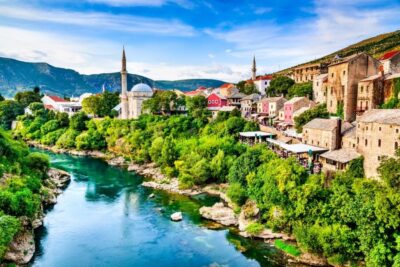
Dubrovnik: Kravica Waterfalls, Mostar and Pocitelj Day Trip
Read our review →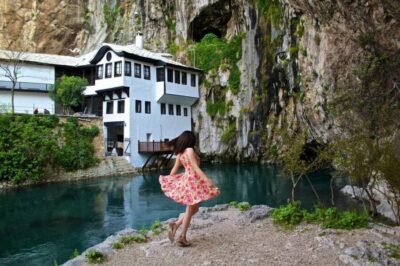
Mostar, Konjic, Blagaj Tekke, Pocitelj & Waterfall
Read our review →
Blagaj, Počitelj & Kravice Waterfalls Day Tour
Read our review →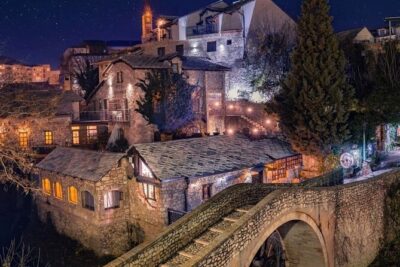
Mostar, Konjic, Sufi House, Pocitelj & Kravice Falls
Read our review →
From Dubrovnik: Mostar and Medjugorje Full-Day Tour
Read our review →
Discover Herzegovina Day Tour from Mostar: Kravice Waterfalls, Blagaj, Počitelj
Read our review →
Mostar, Konjic, Dervish House, Pocitelj & Kravica Falls
Read our review →Browse the lists this tour appears in